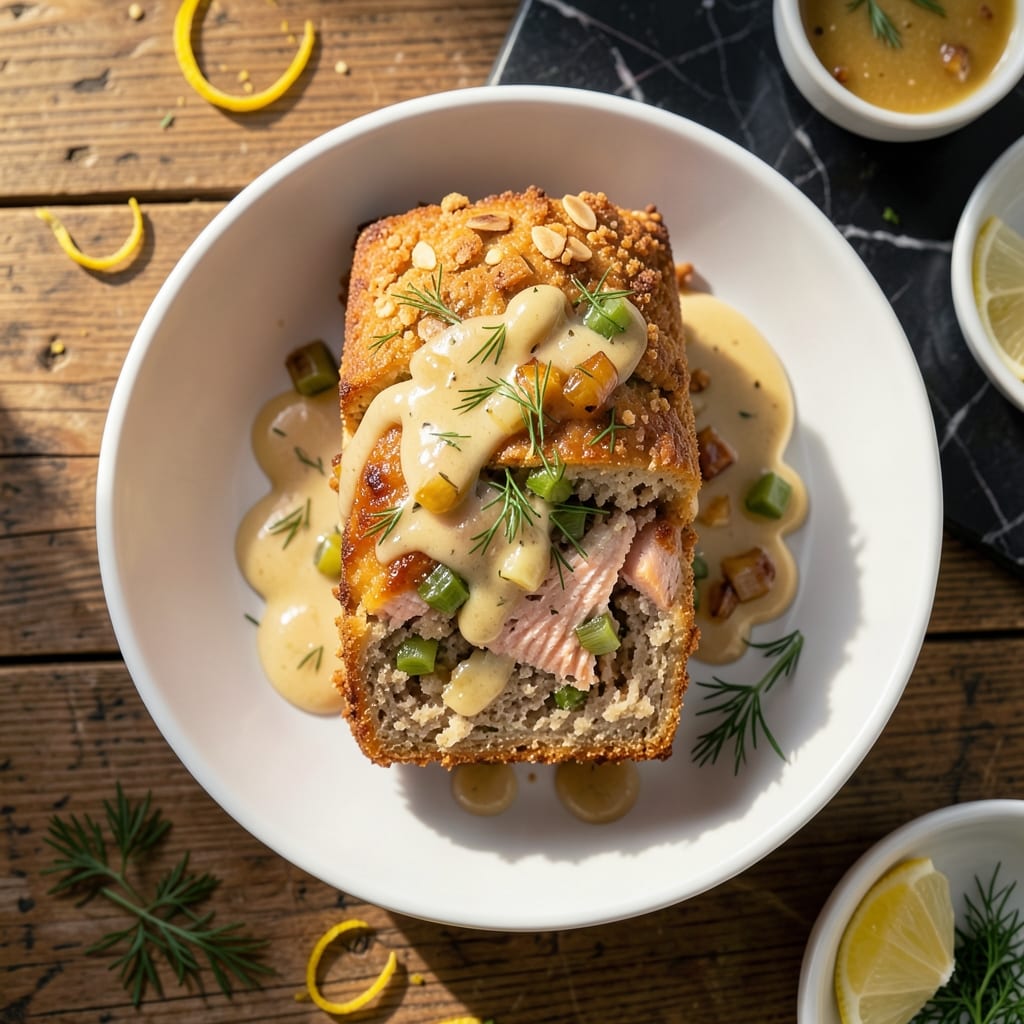
This gluten-free salmon loaf delivers flaky texture and rich ocean flavor without compromising on tradition. My Pacific Northwest version uses almond flour instead of breadcrumbs, creating a sturdy base that lets the salmon shine.
I developed this recipe after years of testing bindings that wouldn’t turn the loaf into dry sawdust. The secret is fresh salmon combined with egg and a touch of Dijon mustard for moisture and cohesion.
What emerges from the oven is a golden-brown loaf with a tender interior that flakes apart with each forkful. The almond flour adds a subtle nuttiness that complements the salmon’s natural richness.
Serve with lemon wedges and a side of roasted vegetables for a complete meal. Here’s how to make it perfectly every time.
Ingredients for Salmon Loaf Recipe Gluten Free
Fresh salmon and almond flour create a gluten-free loaf that’s rich and flaky every time.
| Ingredient | Amount | Notes |
|---|---|---|
| Fresh Salmon Fillets 🐟 | 1 ½ lb | Skin removed, deboned |
| Almond Flour 🌰 | 1 cup | Fine, blanched variety |
| Large Eggs 🥚 | 2 whole | Room temperature preferred |
| Dijon Mustard 🟡 | 2 tbsp | Smooth, not grainy |
| Fresh Lemon Juice 🍋 | 2 tbsp | About 1 medium lemon |
| Yellow Onion 🧅 | ½ whole | Finely diced |
| Celery Stalks 🥬 | 2 whole | Finely chopped |
| Fresh Parsley 🌿 | ¼ cup | Chopped, for freshness |
| Garlic Cloves 🧄 | 2 cloves | Minced finely |
| Worcestershire Sauce 🫒 | 1 tbsp | Gluten-free variety |
| Old Bay Seasoning 🌶️ | 1 tsp | Classic seafood seasoning |
| Salt 🧂 | ½ tsp | Sea salt or kosher |
| Black Pepper 🌶️ | ¼ tsp | Freshly ground |
| Unsalted Butter 🧈 | 2 tbsp | Melted for topping |
[recipe_ingredient_scaler]
The salmon needs to be super fresh—look for bright, firm fillets at Whole Foods or your local fishmonger (the good stuff, not the pre-cut frozen kind). Almond flour from Bob’s Red Mill is my go-to, but any fine, blanched variety works. Don’t skip the fresh lemon juice—those sad plastic lemons won’t cut it here.
No almond flour? Gluten-free breadcrumbs work, but they won’t give you that nutty depth. Swap Dijon for regular yellow mustard if that’s what’s in the fridge. Out of Old Bay? Half the amount of celery salt plus a pinch of paprika gets you close. The onion and celery add moisture, so don’t skip them—even if you’re tempted to.
Loaf keeps covered in the fridge for 3-4 days. Freeze extras wrapped tightly in foil for up to 2 months. Reheat in the oven (microwave makes it rubbery). Best served warm with extra lemon wedges.
Why You’ll Love This Recipe
- One Bowl Magic: I just dump everything in a single bowl—salmon, almond flour, eggs—and mix. No fancy prep, no extra dishes.
- Zesty Brightness: That Dijon and fresh lemon juice give it a tangy kick that cuts through the richness. Honestly, it’s the reason I crave this.
- Meals for Days: Bakes up firm enough to slice cold for sandwiches or reheat for dinner. Between us, leftovers taste even better.
- Pantry Friendly: Almond flour swaps in for breadcrumbs, and I always have eggs and mustard on hand. Took me three tries to get right, but now it’s foolproof.
Step-by-Step Instructions for Salmon Loaf
Here’s how to create this dish with the perfect flaky texture everyone will love.
Step 1: Prepare the Fresh Salmon Fillets
Preheat your oven to 375°F. Check the 1.5 lb fresh salmon fillets carefully—make sure all skin is removed and there are no bones. I run my fingers lightly over the surface to catch any missed pin bones.
Pat the fillets completely dry with paper towels. This is crucial because excess moisture will steam the salmon instead of letting it roast properly. Cut the fillets into 1-inch pieces so they’ll blend well with the other ingredients and cook evenly in the loaf.
Step 2: Mix the Aromatic Base
In a large bowl, combine the finely diced 0.5 whole yellow onion, finely chopped 2 whole celery stalks, minced 2 cloves garlic cloves, and chopped 0.25 cup fresh parsley. These ingredients build a flavorful foundation for your creation.
Add 2 tbsp Dijon mustard, 2 tbsp fresh lemon juice, 1 tbsp Worcestershire sauce, 1 tsp Old Bay seasoning, 0.5 tsp salt, and 0.25 tsp black pepper. Stir well to distribute the seasonings evenly. The acid from the lemon juice will brighten the rich salmon flavor beautifully.
Step 3: Incorporate Salmon and Binder
Add the prepared 1.5 lb fresh salmon fillets pieces to the bowl with the aromatic mixture. Gently fold everything together to avoid breaking up the salmon too much—you want visible flakes in the final loaf.
Sprinkle in the 1 cup almond flour, then add the 2 whole large eggs. Mix just until combined. The almond flour keeps it gluten-free while the eggs bind everything together. Don’t overmix, or the loaf could turn out dense rather than flaky.
Step 4: Bake to Golden Perfection
Transfer the mixture to a greased loaf pan and smooth the top with a spatula. Bake at 375°F for 35-40 minutes until the top is golden brown and the center reaches 145°F on an instant-read thermometer.
About 10 minutes before it’s done, brush the top with the 2 tbsp unsalted butter that’s been melted. This adds richness and helps create that appealing golden crust. You’ll know it’s ready when the loaf pulls slightly away from the sides of the pan.
Step 5: Rest and Serve
Let the loaf rest in the pan for 10 minutes before slicing. This gives it time to set, so it holds together beautifully when you serve it. The flaky texture will be most pronounced if you wait this full 10 minutes.
Slice carefully with a sharp knife, using a sawing motion rather than pressing down. Serve warm, and enjoy that perfect balance of rich salmon flavor and delicate texture that makes this dish special.
Pro Tips For Making Salmon Loaf Recipe Gluten Free
- Check Internal Temp: Pull the loaf when it hits 145°F in the center—any higher and the almond flour can dry it out. I learned this the hard way after overbaking my first three attempts.
- Drain the Salmon: After cooking and flaking the fresh salmon, press it in a strainer for a minute to remove excess liquid. Sounds weird, but it keeps your loaf from turning into a soggy mess.
- Use Room-Temp Eggs: Cold eggs straight from the fridge can make the almond flour clump. Let them sit out for 15 minutes first—it blends smoother and binds better.
- Add Extra Mustard: Double the Dijon if you love that tang—it cuts through the richness of the salmon and almond flour without overpowering. My grandmother swore by this, and she was right.
Best Sauces and Condiments for This salmon loaf recipe gluten free
Classic Tartar Sauce
Whisk together ½ cup mayonnaise, 2 tbsp finely chopped dill pickles, 1 tbsp capers, 1 tsp Dijon mustard, and 1 tsp fresh lemon juice. This creamy, tangy sauce cuts through the richness of the salmon beautifully. I always use Duke’s mayo for that authentic Pacific Northwest taste.
Zesty Lemon-Dill Yogurt
Mix ¾ cup Greek yogurt with 1 tbsp fresh dill, 1 tbsp lemon zest, 1 tsp honey, and a pinch of salt. The brightness of the lemon and dill enhances the salmon’s natural flavors. I love how this lighter option balances the meal. ✨
Spicy Sriracha Mayo
Combine ½ cup mayonnaise with 1-2 tbsp sriracha (adjust to taste) and 1 tsp lime juice. This adds a kick that complements the flaky texture. Tom always requests extra for his slices.
Herbed Butter Drizzle
Melt 4 tbsp unsalted butter with 1 tbsp chopped parsley, 1 tsp Old Bay seasoning, and 1 minced garlic clove. Drizzle over slices just before serving for an aromatic finish that reminds me of Portland seafood restaurants. 💛
Creamy Horseradish
Blend ½ cup sour cream, 2 tbsp prepared horseradish, 1 tsp white vinegar, and ½ tsp sugar. The sharpness of horseradish pairs wonderfully with the rich salmon loaf.
Nutrition Facts
Frequently Asked Questions
Can I use canned salmon instead of fresh?
Drain and remove any bones first. Use the same 1.5 lb amount. Canned works great and is often more budget-friendly.
Why does my loaf fall apart when slicing?
This usually means it needed more binder. Try adding an extra egg or 1-2 tbsp more almond flour. Also, ensure it rests the full 10 minutes after baking.
How can I make this dairy-free?
Simply swap the 2 tbsp butter for olive oil or dairy-free margarine. All other ingredients are naturally dairy-free.
What’s the best way to store leftovers?
Wrap tightly in foil and refrigerate for up to 3-4 days. For longer storage, freeze for up to 2 months. Reheat in the oven to maintain texture.

Trained in classic French technique but raised on slow-cooked ribs and spicy rubs, she blends culinary skill with smoke and soul.
- Best Passover Beef Brisket Recipe: Molasses-Spiced Slow-Cooked Masterpiece - October 15, 2026
- Jamie Oliver’s Fast and Simple Brisket Recipe: Smoky-Sweet One-Pan Magic - October 15, 2026
- Best Smoked Oxtail Recipe: Deep-Rich Flavor After Low-and-Slow Cooking - October 14, 2026