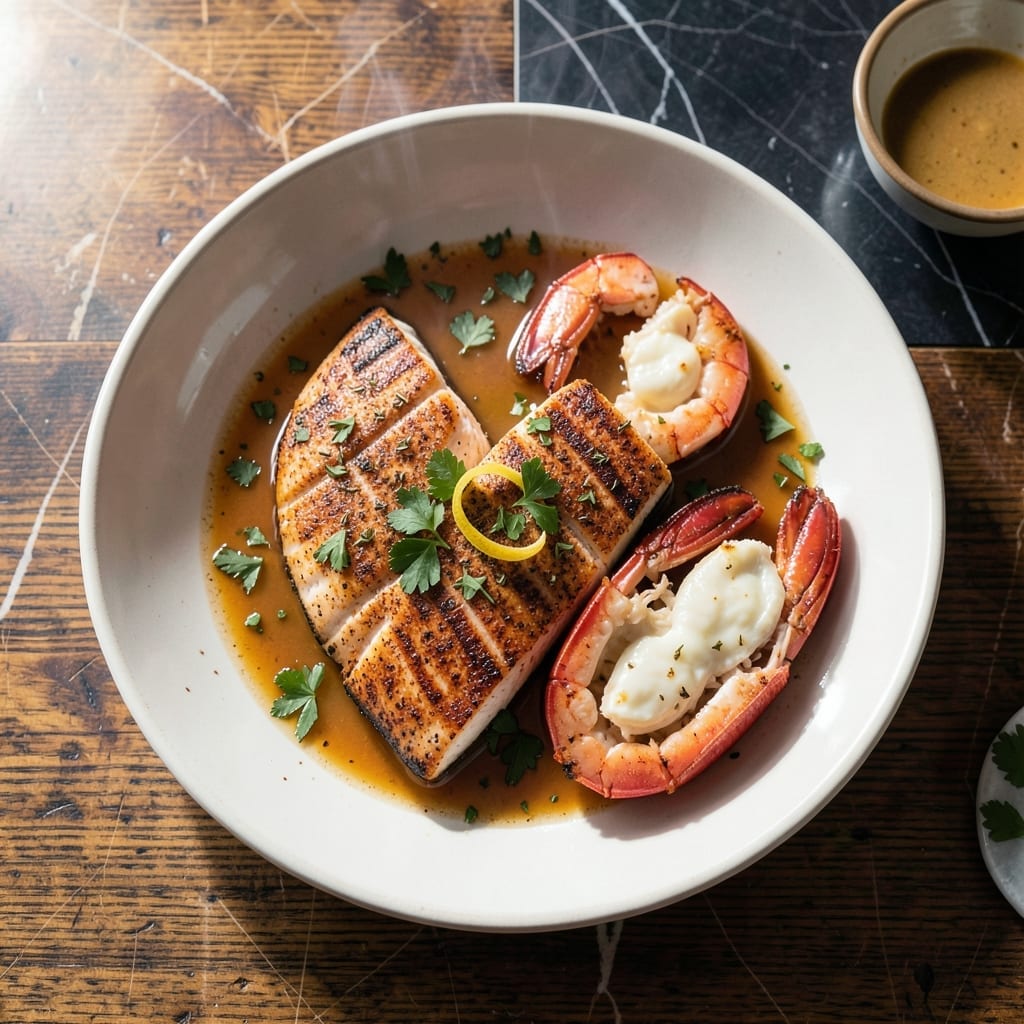
This dish brings the bold flavors of New Orleans straight to your kitchen table. I’ve perfected a method that replicates the restaurant-style experience with a Cajun-spiced crust that seals in the natural richness of the salmon.
The secret lies in a well-balanced blend of spices that delivers heat and depth without overpowering the fish. A quick sear locks in moisture, while a finish in the oven ensures even cooking and a tender, flaky texture.
Serve it alongside buttery lobster tail for a seafood feast that feels indulgent yet approachable. The contrast between the spicy salmon and sweet lobster creates a dish that’s both sophisticated and satisfying.
Ready to bring a taste of the Big Easy home? This recipe makes it simple.
Ingredients for Salmon New Orleans Red Lobster
Restaurant quality starts with fresh seafood and a bold Cajun spice blend. Simple yet stunning.
| Ingredient | Amount | Notes |
|---|---|---|
| Salmon Fillets 🐟 | 1 ½ lb | Skin-on, center-cut preferred |
| Lobster Tails 🦞 | 4 whole | Cold water, 6-8 oz each |
| Paprika 🌶️ | 1 tbsp | Sweet or smoked variety |
| Garlic Powder 🧄 | 1 tsp | Freshly ground preferred |
| Onion Powder 🧅 | 1 tsp | Dried, not fresh |
| Dried Thyme 🌿 | 1 tsp | Crushed between fingers |
| Dried Oregano 🍃 | 1 tsp | Mediterranean variety |
| Cayenne Pepper 🔥 | ½ tsp | Adjust for heat preference |
| Black Pepper 🌶️ | ½ tsp | Freshly ground |
| Salt 🧂 | 1 tsp | Kosher or sea salt |
| Olive Oil 🫒 | ¼ cup | For searing and brushing |
| Unsalted Butter 🧈 | 4 tbsp | Melted for lobster |
| Lemon 🍋 | 1 whole | Zested and juiced |
| Fresh Parsley 🌿 | ¼ cup | Chopped, for garnish |
[recipe_ingredient_scaler]
The salmon should be the freshest you can find—Whole Foods or a dedicated seafood market is ideal. Look for fillets with vibrant color and no fishy odor (the good stuff, not the pre-packaged kind). For the lobster tails, Maine or spiny lobsters both work, but cold-water tails have sweeter meat. If buying frozen, thaw overnight in the fridge. The Cajun seasoning is where the magic happens, so don’t skimp on quality spices.
No lobster tails? Shrimp or scallops make great substitutes with similar cook times. Short on time? Use pre-mixed Cajun seasoning (about 2 tbsp) instead of blending your own. Missing a spice? Creole seasoning at half the amount gets you close. The butter for the lobster can be swapped with olive oil, but the richness won’t be the same. Fresh parsley can be dried at one-third the amount.
Salmon stays fresh in the fridge for 1-2 days max—cook it the day you buy if possible. Lobster tails? Use within 24 hours or freeze for up to 3 months. The spice blend keeps in an airtight container for 6 months (worth the extra minute).
Why You’ll Love This Recipe
- One Pan Wonder: I just toss the salmon and lobster tails with paprika, garlic, and onion powder, then roast—easy cleanup, maximum flavor.
- Smoky & Rich: That paprika crust on the salmon paired with buttery lobster? Ridiculously good.
- Date Night Ready: This feels fancy enough for a special occasion but honestly takes less effort than ordering takeout.
- Leftovers Luxury: The flavors deepen overnight, so I get to enjoy it again for lunch the next day.
Step-by-Step Instructions for Salmon New Orleans Style
Master this restaurant-style technique for perfectly seasoned seafood with bold Cajun flavors.
Step 1: Create the Cajun Spice Blend
In a small bowl, combine the 1 tbsp Paprika, 1 tsp Garlic Powder, 1 tsp Onion Powder, 1 tsp Dried Thyme, 1 tsp Dried Oregano, 0.5 tsp Cayenne Pepper, 0.5 tsp Black Pepper, and 1 tsp Salt. I crush the dried herbs between my fingers as I add them to release their aroma.
Stir until fully combined and the mixture appears uniform in color. This blend delivers the signature New Orleans flavor profile. Set it aside while you prepare the seafood.
Step 2: Prepare and Season the Salmon
Pat the 1.5 lb Salmon Fillets completely dry with paper towels to ensure a good sear. This step prevents steaming and promotes that desirable crispy exterior. Place the fillets skin-side down on a clean work surface.
Brush the flesh side lightly with some of the 0.25 cup Olive Oil, then coat evenly with about half of your spice blend. Press the seasoning gently into the surface so it adheres well. Let the seasoned salmon sit at room temperature for 10 minutes while you prepare the lobster.
Step 3: Prepare and Season the Lobster Tails
Using kitchen shears, carefully cut the top shell of each Lobster Tail lengthwise, stopping at the base of the tail fin. Gently pull the shell apart to expose the meat, keeping the fin intact. This butterfly preparation allows for even cooking and beautiful presentation.
Brush the exposed lobster meat with some of the remaining Olive Oil and sprinkle with the rest of the spice blend. Drizzle the 4 tbsp Unsalted Butter over the lobster tails, reserving a small amount for finishing. Zest the Lemon over the tails for an extra layer of brightness.
Step 4: Cook the Salmon and Lobster
Heat a large oven-safe skillet over medium-high heat. Add the salmon fillets skin-side up and sear for 4-5 minutes until the seasoned side develops a deep golden crust. Carefully flip and cook for 2-3 minutes more for medium doneness. The salmon should flake easily when tested with a fork.
While the salmon cooks, place the lobster tails on a baking sheet. Broil in a preheated oven for 8-10 minutes until the meat is opaque and the shells are bright red. Baste with the melted butter halfway through cooking.
Step 5: Plate and Garnish
Arrange the cooked salmon and lobster tails on a serving platter. Drizzle any remaining butter from the baking sheet over the seafood. Squeeze the juiced Lemon over everything for a final burst of acidity.
Sprinkle with the 0.25 cup Fresh Parsley for a pop of color and freshness. Serve immediately while hot, with additional lemon wedges on the side if desired. The combination of spicy, buttery, and citrus notes creates an authentic New Orleans dining experience.
Pro Tips For Making Salmon New Orleans Red Lobster
- Preheat the Pan: Get your skillet screaming hot before adding the salmon and lobster—I learned this the hard way after my first few batches stuck terribly. A properly heated pan guarantees that perfect sear without tearing the flesh.
- Butter the Lobster: Brush the lobster tails with melted butter before seasoning with paprika, garlic, and onion powder. Sounds simple, but it actually changes the outcome by helping the spices cling and adding richness.
- Don’t Overcrowd: Cook the salmon and lobster in batches if needed. After burning three batches, I finally figured out that crowding the pan steams the seafood instead of searing it.
- Use Fresh Spices: Swap out old paprika, garlic powder, and onion powder for fresh bottles—my grandmother swore by this, and she was right. Stale spices taste dull, and this dish deserves bold flavor.
Common Mistakes When Making This Dish
Over-Seasoning the Salmon
I’ve learned the hard way that more spice doesn’t mean better flavor. The Cajun blend is potent, so stick to the measured amounts—about half the mix for the salmon. Overdoing it can mask the fish’s natural richness and create an unpleasantly bitter crust. 🌶️
Skipping the Dry Pat
Never skip drying the salmon thoroughly with paper towels before seasoning. Moisture on the surface causes steaming instead of searing, leaving you with a pale, soggy exterior rather than that coveted crispy crust. This takes 30 seconds and makes all the difference.
Overcooking the Salmon
Salmon continues cooking after you remove it from heat. Pull it off when it’s just opaque and still slightly translucent in the center—this happens at about 135°F internal temperature. It will reach perfect doneness while resting. Overcooked salmon becomes dry and tough.
Improper Lobster Prep
Cutting through the lobster shell incorrectly can ruin the presentation. Use sharp kitchen shears to cut the top shell lengthwise, stopping at the fin. Pull the shell apart gently to expose the meat without tearing it. This butterfly style ensures even cooking and an elegant look.
Neglecting to Baste
Basting the lobster tails with melted butter halfway through broiling adds layers of flavor and keeps the meat incredibly moist. I use a silicone brush for even coverage. Skipping this step can leave the lobster dry, especially since it cooks quickly under high heat. 🔥
Skipping the Rest
Letting the salmon rest for 5 minutes after cooking allows the juices to redistribute throughout the fillet. Cutting into it immediately causes those precious juices to spill onto the cutting board, leaving your fish dry. This small wait is worth the patience.
Nutrition Facts
Frequently Asked Questions
What’s the best way to store leftover cooked salmon and lobster?
Store in an airtight container in the fridge for up to 2 days. Reheat gently in a low oven to preserve moisture.
Can I use frozen lobster tails for this recipe?
Yes! Thaw them overnight in the fridge first. Pat dry before seasoning to ensure proper searing and even cooking.
How do I adjust the heat level in the Cajun seasoning?
Reduce or omit the cayenne pepper for milder flavor, or add more for extra heat. Start with 0.25 tsp if you’re sensitive to spice.
What sides pair well with this dish?
Try creamy mashed potatoes, buttery corn, or a crisp garden salad. These complement the bold Cajun flavors beautifully.

Trained in classic French technique but raised on slow-cooked ribs and spicy rubs, she blends culinary skill with smoke and soul.
- Recipe for Boneless Pork Chops in Cast Iron Skillet: Sear and Baste to Juicy Perfection - October 3, 2026
- Recipe for Boneless Cross Rib Roast: Slow-Roasted Beef with Herb Crust - October 3, 2026
- Hamburgers in Sauce Recipe Crock Pot: Slow-Cooked Savory Delight - October 3, 2026