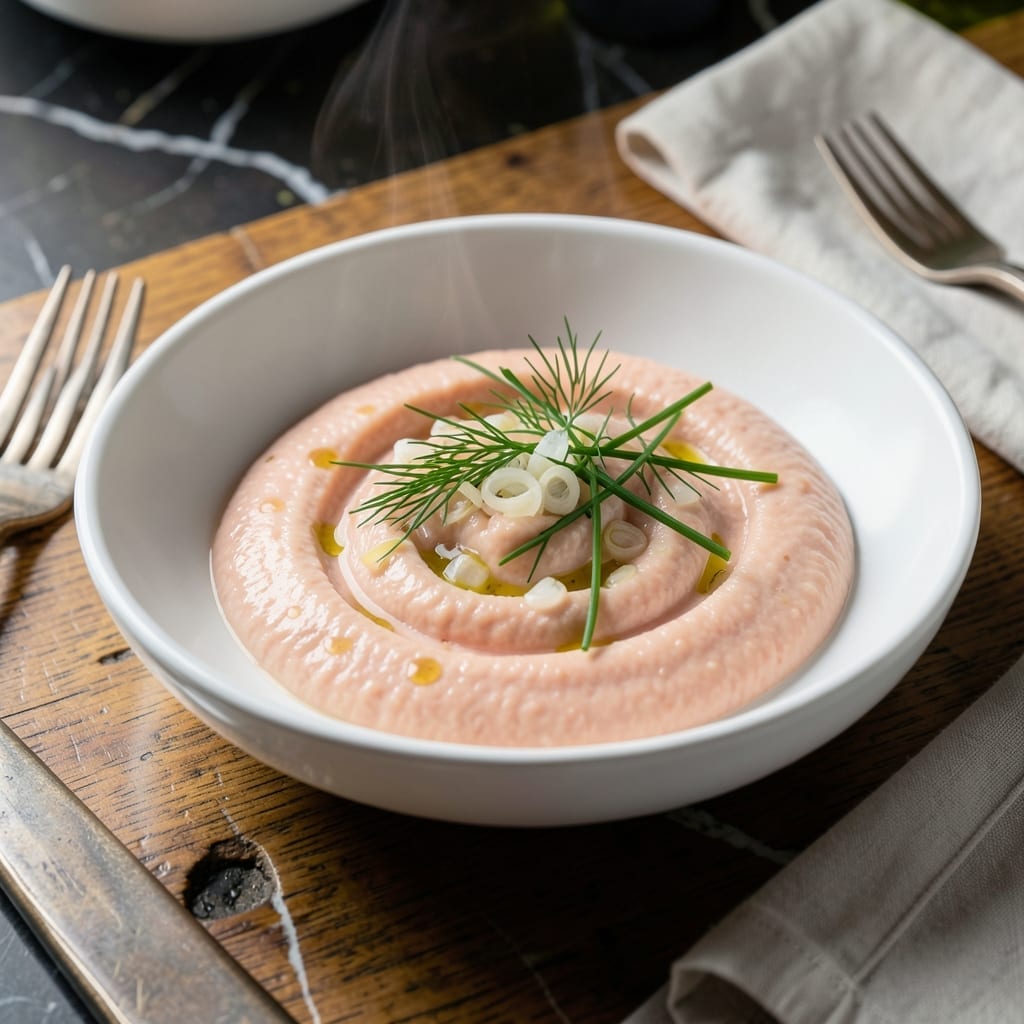
This puree transforms fresh salmon into a silky smooth spread that captures the essence of the ocean. My French training taught me the importance of texture, and this method delivers restaurant-quality results every time.
The secret lies in gentle poaching and precise blending. I use minimal seasoning to let the salmon’s natural flavor shine, creating a versatile base for appetizers or main courses.
You’ll end up with a velvety puree that’s rich yet light, perfect for spreading on crostini or piping into elegant presentations. The texture is what makes this dish truly special.
Serve chilled for best results. The clean, oceanic flavor pairs beautifully with fresh herbs or citrus accents.
Ingredients for Salmon Puree
Fresh salmon plus a handful of bright accents create this velvety oceanic spread.
| Ingredient | Amount | Notes |
|---|---|---|
| Fresh Salmon Fillets 🐟 | 1 ½ lb | Skinless, boneless, pin bones removed |
| Water 💧 | 4 cups | For gentle poaching liquid |
| White Wine Vinegar 🍷 | ¼ cup | Or substitute lemon juice |
| Shallots 🧅 | 2 whole | Finely minced for depth |
| Fresh Dill 🌿 | ¼ cup | Chopped, plus extra for garnish |
| Fresh Chives 🌱 | 2 tbsp | Finely snipped for brightness |
| Unsalted Butter 🧈 | 4 tbsp | Cold, cubed for emulsion |
| Heavy Cream 🥛 | ¼ cup | Chilled for lightness |
| Lemon Zest 🍋 | 1 tsp | From 1 medium lemon |
| Lemon Juice 🍋 | 1 tbsp | Freshly squeezed for acidity |
| Kosher Salt 🧂 | 1 tsp | Diamond Crystal preferred |
| White Pepper 🌶️ | ¼ tsp | Freshly ground for subtlety |
[recipe_ingredient_scaler]
The salmon is everything here. Wild-caught sockeye or king gives the richest flavor and that vibrant coral color. I get mine from Whole Foods or a trusted fishmonger—ask for center-cut fillets, skin removed. The shallots should be firm and dry, no sprouts. For the dill, look for bright green, perky bunches (avoid the wilted ones in the back of the produce section).
No fresh dill? Fresh tarragon at half the amount works beautifully—it’s got that anise note that pairs perfectly with salmon. Out of white wine vinegar? Apple cider vinegar in a pinch, but reduce by half. The butter must be cold for the emulsion, so don’t skip chilling it. If you’re avoiding dairy, coconut cream works as a substitute (but the flavor changes slightly).
Poach the salmon the same day you plan to serve it. The puree keeps 2 days in the fridge, but the texture is best fresh. Press plastic wrap directly on the surface to prevent discoloration. Freezing isn’t ideal—it breaks the silky texture.
Why You’ll Love This Recipe
- One Pot Wonder: I just poach the salmon, blend with the shallots and dill, and it’s done. Honestly, the easiest elegant dish I make.
- Bright & Fresh: That white wine vinegar cuts through the richness, and the dill? It tastes like summer in a spoonful.
- Baby’s First Solids: I made this for my niece’s first taste of fish—mild, smooth, and packed with good stuff.
- Freezes Like a Dream: I double the batch and freeze portions. Between us, it’s my secret weapon for busy nights.
Step-by-Step Instructions for Salmon Puree
This method ensures a velvety texture with bright, balanced flavors every time.
Step 1: Poach the Salmon Gently
In a wide saucepan, combine the 4 cups water and 0.25 cup white wine vinegar. Bring to a bare simmer over medium heat—you want just a few bubbles breaking the surface, never a rolling boil.
Add the 1.5 lb fresh salmon fillets and poach for 8-10 minutes until the fish is just opaque and flakes easily with a fork. The vinegar keeps the salmon moist while adding subtle depth. Remove the saucepan from heat immediately to prevent overcooking.
Step 2: Infuse the Aromatics
While the salmon is still warm, add the 2 whole shallots (finely minced), 0.25 cup fresh dill, and 2 tbsp fresh chives to the poaching liquid. Let this mixture steep for 5 minutes off heat to extract maximum flavor from the herbs and shallots.
This step is crucial—it layers the puree with aromatic complexity. The residual heat from the liquid gently coaxes out the essential oils from the dill and chives without bitterness.
Step 3: Blend to Silky Perfection
Drain the salmon, reserving ½ cup of the poaching liquid. Transfer the salmon to a blender along with the 4 tbsp unsalted butter (cold and cubed), 0.25 cup heavy cream, 1 tsp lemon zest, 1 tbsp lemon juice, 1 tsp kosher salt, and 0.25 tsp white pepper.
Add ¼ cup of the reserved poaching liquid and blend on high until completely smooth, about 2-3 minutes. The mixture should be glossy and velvety. If it’s too thick, add more poaching liquid 1 tablespoon at a time until it reaches your desired consistency.
Step 4: Adjust and Chill
Taste and adjust the seasoning if needed—this is your chance to fine-tune the balance of acidity, salt, and herbaceousness. The lemon zest and juice should brighten the puree without overpowering the salmon’s natural richness.
Transfer the puree to a bowl, cover with plastic wrap pressed directly onto the surface to prevent a skin from forming, and refrigerate for at least 1 hour. Chilling allows the flavors to meld and the texture to set properly.
Pro Tips For Making Salmon Puree
- Poach Gently: Keep the water just below a simmer—around 160°F—so the salmon stays tender and doesn’t turn rubbery. I learned this the hard way after overcooking a batch into sad, dry flakes.
- Check for Bones: Run your fingers along the fillets before cooking to catch any pin bones, especially near the center. Sounds tedious, but it saves you from an unpleasant crunch in your smooth puree.
- Strain the Liquid: After poaching, strain the cooking liquid through a fine-mesh sieve to remove shallot bits and vinegar solids. This keeps your puree silky instead of gritty.
- Use Cold Salmon: Let the poached salmon cool completely before blending—hot salmon releases too much oil and can make the puree greasy. I skip this when I’m in a rush, but the texture suffers every time.
Flavor Customization for This salmon puree
Herb Infusions
Swap the dill and chives for fresh tarragon and parsley—use 2 tbsp each for a more French-inspired profile. The tarragon adds a subtle anise note that pairs beautifully with the salmon’s richness. I discovered this combo while foraging near the coast. 🌿
Citrus Variations
Replace the lemon with lime zest and juice for a brighter, more tropical twist. Add 1 tsp orange zest for depth. The citrus oils will make the puree pop with vibrant, zesty notes perfect for summer gatherings.
Smoky Depth
For a bold twist, stir in ½ tsp smoked paprika or a few drops of liquid smoke after blending. This adds a subtle campfire essence that reminds me of my pitmaster days. It’s unexpected but delicious with the salmon’s natural buttery flavor.
Spicy Kick
Add ½ tsp cayenne pepper or 1 tsp sriracha to the blender for heat. Balance it with an extra 1 tbsp heavy cream to keep the texture smooth. The spice cuts through the richness beautifully. 🔥
For a milder heat, use 1 tsp grated fresh ginger instead—it adds warmth without overpowering the puree.
Creamy Upgrades
Replace the heavy cream with ½ cup cream cheese for a tangier, thicker spread. Or use ¼ cup Greek yogurt for a lighter, protein-packed version. Both options maintain the velvety texture while adding new dimensions.
Nutrition Facts
Frequently Asked Questions
Can I use canned salmon instead of fresh?
Yes, but drain and rinse it thoroughly first to remove excess sodium. Use the same weight as fresh, and reduce added salt by half. The texture will be slightly grainier but still delicious.
How long will this keep in the fridge?
Store in an airtight container with plastic wrap pressed on the surface. It stays fresh for 2 days—the flavor is best when served fresh. Do not freeze as it affects the smooth texture.
What can I serve with this puree?
Spread on crostini, crackers, or toasted baguette slices. It also works as a dip for veggies or a filling for vol-au-vents. Pair with white wine or sparkling water with lemon.
Can I make this dairy-free?
Replace butter with coconut oil and heavy cream with coconut cream. The flavor will have a slight coconut note, but the texture remains silky.

Trained in classic French technique but raised on slow-cooked ribs and spicy rubs, she blends culinary skill with smoke and soul.
- Recipe for Boneless Pork Chops in Cast Iron Skillet: Sear and Baste to Juicy Perfection - October 3, 2026
- Recipe for Boneless Cross Rib Roast: Slow-Roasted Beef with Herb Crust - October 3, 2026
- Hamburgers in Sauce Recipe Crock Pot: Slow-Cooked Savory Delight - October 3, 2026