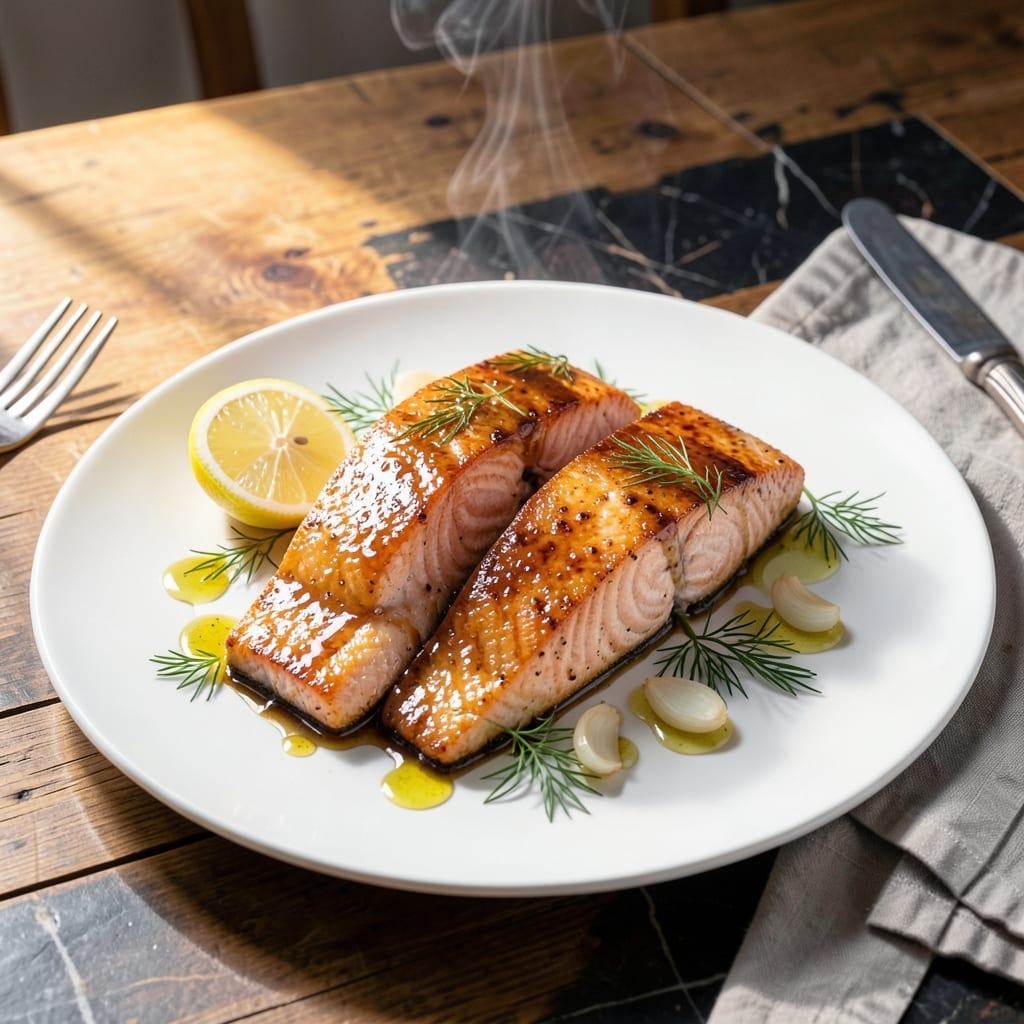
Your toaster oven is the secret to achieving perfectly flaky salmon without heating up the whole kitchen. This method delivers restaurant-quality results with minimal effort and maximum flavor.
The key is precise temperature control and timing. Cooking at 400°F ensures the salmon develops a lightly crisped exterior while staying tender and moist inside. No special equipment needed—just your toaster oven and 20 minutes.
What you get is salmon that flakes apart with the slightest touch of your fork, with a delicate texture that melts in your mouth. The high, dry heat concentrates the natural flavors, creating a dish that tastes far more impressive than the effort required.
Serve with your favorite sides for a quick, elegant meal that feels like a treat. This technique works every time.
Ingredients for Salmon Recipe Toaster Oven
Fresh salmon plus a few pantry staples make this foolproof toaster oven dish.
| Ingredient | Amount | Notes |
|---|---|---|
| Salmon Fillets 🐟 | 1 ½ lb | Skin-on or skinless, fresh or thawed |
| Olive Oil 🫒 | 2 tbsp | Extra-virgin for best flavor |
| Lemon 🍋 | 1 whole | Zested and juiced |
| Garlic 🧄 | 3 cloves | Minced for maximum flavor |
| Dijon Mustard 🟡 | 1 tbsp | Smooth or whole grain |
| Honey 🍯 | 1 tbsp | Or maple syrup for vegan option |
| Fresh Dill 🌿 | 2 tbsp | Chopped, stems removed |
| Salt 🧂 | 1 tsp | Kosher or sea salt preferred |
| Black Pepper 🌶️ | ½ tsp | Freshly ground for best flavor |
| Paprika 🌶️ | ½ tsp | Sweet or smoked variety |
| Red Pepper Flakes 🌶️ | ¼ tsp | Optional for heat |
| Soy Sauce 🥢 | 1 tbsp | Low-sodium preferred |
[recipe_ingredient_scaler]
The salmon is the star here. Wild-caught sockeye or coho have the best flavor and texture for this method. I grab mine from Whole Foods or Trader Joe’s—both have great frozen options (thaw overnight in the fridge). Look for fillets that are uniform in thickness (about 1-inch works perfectly) so they cook evenly. The skin-on version holds together better, but skinless is fine too.
No fresh dill? Dried dill at one-third the amount works, or sub in fresh parsley. Out of Dijon? Regular mustard plus a pinch of sugar gets you close. The honey can be swapped for maple syrup if you’re avoiding sugar. If your fillets are thicker than 1.5 inches, they might need a few extra minutes—just keep an eye on them.
This keeps well in the fridge for 2-3 days (store in an airtight container). Reheat gently in the toaster oven at 300°F to avoid drying it out. Leftovers are great cold in salads too.
Why You’ll Love This Recipe
- Ready in 15: I toss the fillets with olive oil and lemon, pop them in the toaster oven, and dinner’s done before the kids finish their homework.
- Zesty Bite: That Dijon mustard and garlic combo cuts through the rich salmon—bright, punchy, and honestly addictive.
- Meal Prep Hero: Cooks a batch on Sunday, and I’ve got lunches sorted for three days straight.
- No Waste: One fillet per person means zero leftovers languishing in the fridge, and my grocery bill stays happy.
Step-by-Step Instructions for Salmon in Toaster Oven
Here’s the method that delivers perfectly flaky results with minimal effort.
Step 1: Prepare the Salmon and Make the Marinade
Pat the 1.5 lb salmon fillets dry with paper towels—this ensures the seasoning sticks and promotes even cooking. Place them on a plate and set aside while you prepare the marinade.
In a small bowl, whisk together the 2 tbsp olive oil, zest and juice from the 1 whole lemon, 1 tbsp Dijon mustard, 1 tbsp honey, 1 tbsp soy sauce, 3 cloves minced garlic, 1 tsp salt, 0.5 tsp black pepper, 0.5 tsp paprika, and 0.25 tsp red pepper flakes. Stir until the honey dissolves completely into the mixture.
The marinade should be smooth and slightly thick from the mustard and honey. Taste it and adjust the seasoning if needed—it should be tangy, slightly sweet, and just a little spicy.
Step 2: Coat the Salmon and Let It Marinate
Pour the marinade over the salmon fillets, making sure to coat them evenly on all sides. Use your hands or a spoon to gently press the marinade into the flesh, especially if the fillets have skin.
Let the salmon marinate for 10-15 minutes at room temperature. This short marinating time is enough to infuse the fish with flavor without the acid from the lemon and soy sauce starting to “cook” the salmon prematurely. While it marinates, preheat your toaster oven to 400°F.
Step 3: Arrange Salmon on the Tray and Add Dill
Line your toaster oven tray with parchment paper or lightly grease it to prevent sticking. Place the marinated salmon fillets on the tray, skin-side down if they have skin. Sprinkle the 2 tbsp chopped fresh dill evenly over the top of the fillets, pressing it lightly so it adheres.
If your fillets are thick, you can make a few shallow slits on the top to help the heat penetrate evenly. This also allows the marinade to seep deeper into the fish as it cooks.
Step 4: Bake Until Flaky and Perfectly Cooked
Place the tray in the preheated toaster oven and bake for 12-15 minutes, depending on the thickness of your fillets. You’ll know it’s done when the salmon flakes easily with a fork and the internal temperature reaches 145°F.
Watch for the edges to turn opaque and the center to still have a slight translucency—this is the perfect moment to remove it, as the salmon will continue cooking slightly as it rests. Avoid overbaking, or the fish will become dry.
Step 5: Rest and Serve
Carefully transfer the salmon to a serving platter and let it rest for 3-5 minutes. This short rest allows the juices to redistribute, ensuring every bite is moist and tender.
Serve the salmon hot, garnished with extra fresh dill and a squeeze of lemon if desired. The toaster oven method gives you perfectly cooked fish with crispy edges and a flaky interior every time.
Pro Tips For Making Salmon Recipe Toaster Oven
- Preheat the Oven: Set your toaster oven to 400°F and give it a full 10 minutes to heat—salmon cooks fast, and starting hot guarantees that perfect flaky texture.
- Pat Salmon Dry: I learned this the hard way—blot the fillets with a paper towel before seasoning, or the olive oil and mustard glaze won’t stick properly.
- Skip Overcrowding: Leave at least an inch between fillets so the heat circulates; otherwise, you’ll end up steaming the salmon instead of roasting it.
- Use Fresh Lemon: Bottled juice works in a pinch, but fresh lemon zest and slices add a brightness that actually changes the outcome.
Troubleshooting Perfect Results
Uneven Cooking
If one end of your fillet is thicker, it may cook unevenly. I always check the thickest part with a meat thermometer to confirm it reaches 145°F. For consistent results, trim or fold thinner sections under to create uniform thickness.
Sticking to Tray
Even with parchment, salmon can stick if the marinade has excess sugar. I prevent this by lightly brushing the parchment with olive oil before placing the fillets. Avoid foil—it can react with acidic marinade ingredients.
Dry or Overcooked
Overbaking is the most common mistake. Remove the salmon when the center is still slightly translucent—it will finish cooking while resting. I set a timer for 12 minutes and check early. Thicker fillets may need up to 15 minutes. 🌡️
Marinade Burning
Honey in the marinade can caramelize too quickly at 400°F. To prevent burning, tent the fillets with a small piece of foil after 10 minutes. This shields them while allowing the fish to cook through.
Lack of Flavor
If your salmon tastes bland, the marinade may not have penetrated enough. I always score the flesh lightly with a knife before marinating. Also, don’t skip the 10-15 minute marinating time—it’s essential for flavor infusion.
Toaster Oven Hot Spots
All toaster ovens have hot spots. I rotate my tray halfway through cooking for even browning. If your oven runs hot, reduce the temperature to 375°F and extend the time by 2-3 minutes.
Nutrition Facts
Frequently Asked Questions
What temperature should I use?
Preheat your toaster oven to 400°F for the best results. This high heat ensures a crisp exterior while keeping the inside tender and flaky.
How long does it take to cook?
Most fillets need 12-15 minutes at 400°F. Thinner pieces may finish in 12 minutes, while thicker ones can take up to 15 minutes. Check for doneness at the 12-minute mark.
Can I use frozen salmon?
Yes, but thaw it completely first. Place frozen fillets in the fridge overnight or submerge in cold water for 30-45 minutes. Pat dry before marinating to ensure even cooking.
How do I prevent sticking?
Line your tray with parchment paper and lightly brush it with olive oil. Avoid foil, as it can react with the marinade’s acidity.

Trained in classic French technique but raised on slow-cooked ribs and spicy rubs, she blends culinary skill with smoke and soul.
- Smoked Whitefish Recipe: Wood-Fired Flakes with Herbed Butter Drizzle - October 15, 2026
- Smoked Teriyaki Beef Jerky Recipe: Umami-Deep Flavor in Every Chewy Bite - October 15, 2026
- Stewed Beef Brisket Recipe: Deep-Rich Flavor After 8 Hours of Slow Simmering - October 15, 2026