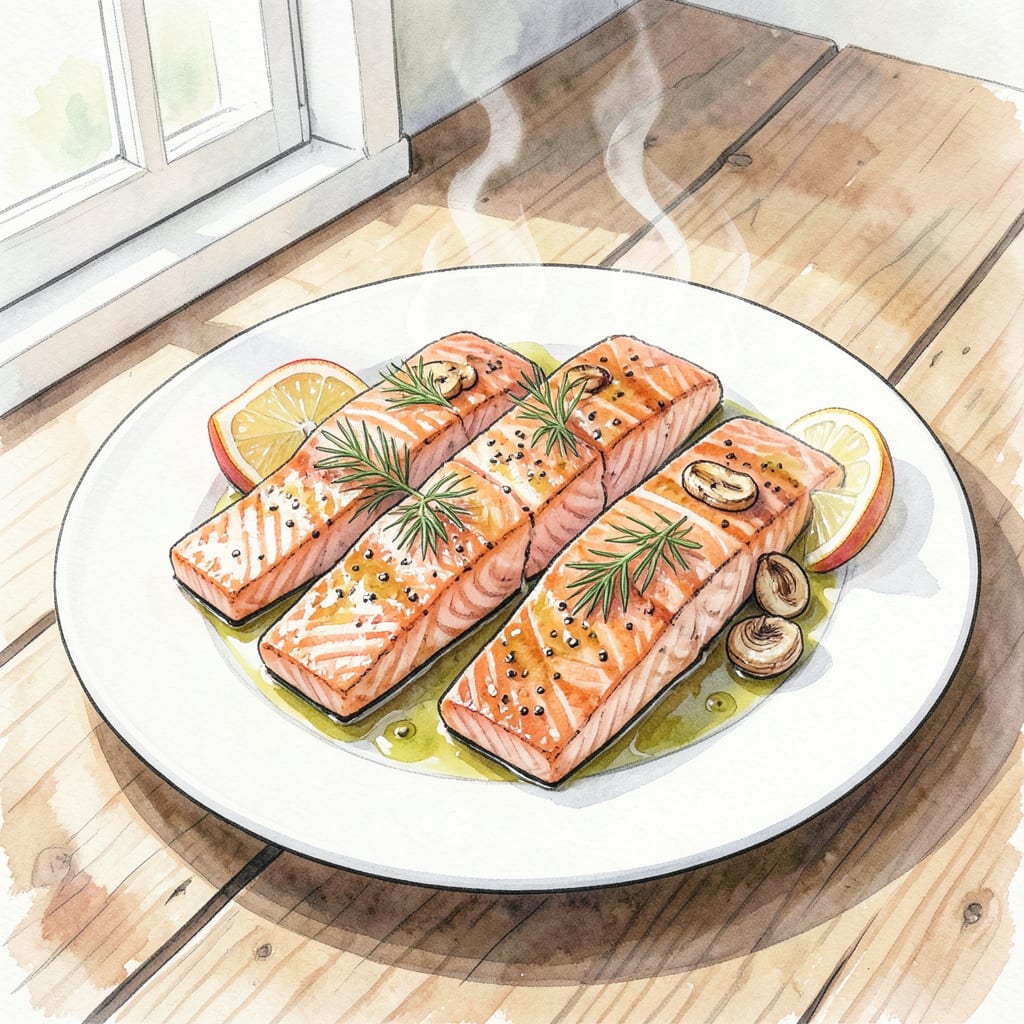
Cooking salmon in a toaster oven yields perfectly flaky results every time. I’ve found this method produces consistently tender fish with minimal effort. The key is precise temperature control and careful seasoning.
By cooking at 400°F for just 12 minutes, you’ll achieve moist, flavorful salmon with a delicious crust. This technique eliminates the guesswork, ensuring restaurant-quality results at home. Let’s get started with this simple yet impressive recipe.
Ingredients for Salmon Toaster Oven
Gather these premium ingredients for restaurant-quality salmon, cooked to perfection in your toaster oven.
| Ingredient | Amount | Notes |
|---|---|---|
| Salmon Fillets 🐟 | 4 pieces | Fresh, skin removed, wild-caught preferred |
| Olive Oil 🫒 | 2 tbsp | Extra-virgin for richness |
| Lemon Juice 🍋 | 2 tbsp | Freshly squeezed, not bottled |
| Garlic Cloves 🧄 | 4 cloves | Minced, fresh, not jarred |
| Dill 🌿 | ¼ cup | Fresh, chopped, not dried |
| Salt 🧂 | 1 tsp | Kosher or sea salt, freshly ground |
| Black Pepper 🌶️ | ½ tsp | Freshly ground, not pre-ground |
| Paprika 🌶️ | ¼ tsp | Smoked or sweet, your choice |
| Lemon Slices 🍋 | 4 slices | For garnish, thinly sliced |
| Fresh Parsley 🌿 | ¼ cup | Chopped, for garnish |
[recipe_ingredient_scaler]
For the best results, choose wild-caught Alaskan or Pacific salmon from sustainable sources. Freshness matters—look for firm, vibrant fillets. Costco and Whole Foods often have high-quality options. Pat dry before seasoning for better crust formation.
No fresh dill? Frozen works in a pinch, but fresh is worth the trip to the store. For garlic, mince it fresh—jarred lacks that punch. Lemon juice should be freshly squeezed—bottled won’t give that brightness. Want extra flavor? Add some capers on top before baking.
Leftover salmon keeps for 3-4 days in the fridge. Store in an airtight container, flake when ready to use in salads or sandwiches. To reheat, use a low-temperature oven to maintain moisture. Freeze for up to 3 months for longer storage.
Step-by-Step Instructions for Salmon Toaster Oven Recipe
Follow these precise steps to achieve perfectly cooked salmon with a delicate flaky texture every time.
Step 1: Prepare the Salmon Fillets
Begin by patting the 4 pieces Salmon Fillets dry with paper towels to remove excess moisture. This step is crucial as it helps the seasonings adhere and promotes even cooking. Next, place the fillets on a plate or tray.
Drizzle the 2 tbsp Olive Oil evenly over the salmon, ensuring each fillet is coated. Then sprinkle the 1 tsp Salt, 0.5 tsp Black Pepper, and 0.25 tsp Paprika over the fillets, making sure they’re evenly seasoned. The combination of these spices enhances the natural flavor of the salmon without overpowering it.
Step 2: Marinate with Lemon Juice and Garlic
Squeeze 2 tbsp Lemon Juice over the salmon fillets, distributing it evenly. The acidity of the lemon juice not only adds flavor but also helps to tenderize the fish. Then, sprinkle the 4 cloves Garlic Cloves that have been minced over the fillets. The garlic infuses a subtle aroma and taste that complements the salmon beautifully.
Allow the salmon to marinate for 10-15 minutes. This brief marinating period is sufficient to impart the flavors without making the fish too acidic. During this time, preheat your toaster oven to 400°F, ensuring it’s ready for the next step.
Step 3: Bake the Salmon
Line a baking sheet that fits your toaster oven with parchment paper or aluminum foil for easy cleanup. Place the marinated salmon fillets on the prepared baking sheet. Sprinkle the 0.25 cup Dill evenly over the top of each fillet. The fresh dill adds a bright, fresh flavor that pairs well with the richness of the salmon.
Bake the salmon in the preheated toaster oven for 12-15 minutes or until it reaches an internal temperature of 145°F. The cooking time may vary slightly depending on the thickness of your salmon fillets. Check for doneness by inserting a fork into the thickest part of the fillet; it should flake easily.
Step 4: Garnish and Serve
Once the salmon is cooked, remove it from the toaster oven and let it rest for a couple of minutes. Place a slice Lemon Slice on top of each fillet. The lemon slice not only adds a pop of color but also a fresh citrus aroma.
Sprinkle the 0.25 cup Fresh Parsley over the salmon fillets. The fresh parsley adds a vibrant color and a fresh, herbaceous flavor that complements the dish. Serve the salmon hot, straight from the toaster oven, to enjoy its perfectly flaky texture and delicious flavor.
Storing and Reheating This Recipe
Refrigerator Storage Tips
Cool cooked salmon to room temperature within 2 hours to prevent bacterial growth. Store in an airtight container or wrap tightly with plastic wrap or aluminum foil. Keep in the refrigerator at 40°F or below for up to 3 days. I like to use glass containers with snap-on lids for easy storage.
Freezer Storage Guidelines
For longer storage, freeze cooked salmon for up to 3 months. Portion into individual servings before freezing for easy reheating. Use freezer-safe containers or heavy-duty freezer bags, removing as much air as possible to prevent freezer burn. Label with date and contents. When you’re ready to eat it, thaw overnight in the refrigerator.
Reheating Techniques
Gentle reheating is key to maintaining the salmon’s delicate texture. I recommend using a low-temperature oven (275-300°F) for 10-15 minutes until heated through. You can also reheat in a skillet with a little olive oil or butter over low heat, turning frequently to prevent drying out. Avoid microwaving whenever possible, as it can make the salmon rubbery.
Microwave Reheating (When Necessary)
If you must use the microwave, cover the salmon with a damp paper towel to help retain moisture. Heat on 50-60% power in 30-second increments, checking temperature between each interval. Be careful not to overheat, as this can cause dryness. The goal is to warm the salmon to 145°F without overcooking it.
Safety First
Always check for signs of spoilage before consuming leftover salmon. Look for firm, opaque flesh and a mild ocean-like smell. If it smells sour, fishy, or has visible mold, discard it immediately. When reheating, make sure the salmon reaches an internal temperature of 145°F to ensure food safety.
Creative Leftover Ideas
Don’t just reheat and serve – get creative with your leftover salmon! Flake it into salads, mix with cream cheese for a bagel topping, or add to pasta dishes. You can even make salmon cakes by mixing with panko breadcrumbs and egg, then pan-frying until crispy. The possibilities are endless!
Nutrition Facts

Trained in classic French technique but raised on slow-cooked ribs and spicy rubs, she blends culinary skill with smoke and soul.
- Recipe for Boneless Pork Chops in Cast Iron Skillet: Sear and Baste to Juicy Perfection - October 3, 2026
- Recipe for Boneless Cross Rib Roast: Slow-Roasted Beef with Herb Crust - October 3, 2026
- Hamburgers in Sauce Recipe Crock Pot: Slow-Cooked Savory Delight - October 3, 2026