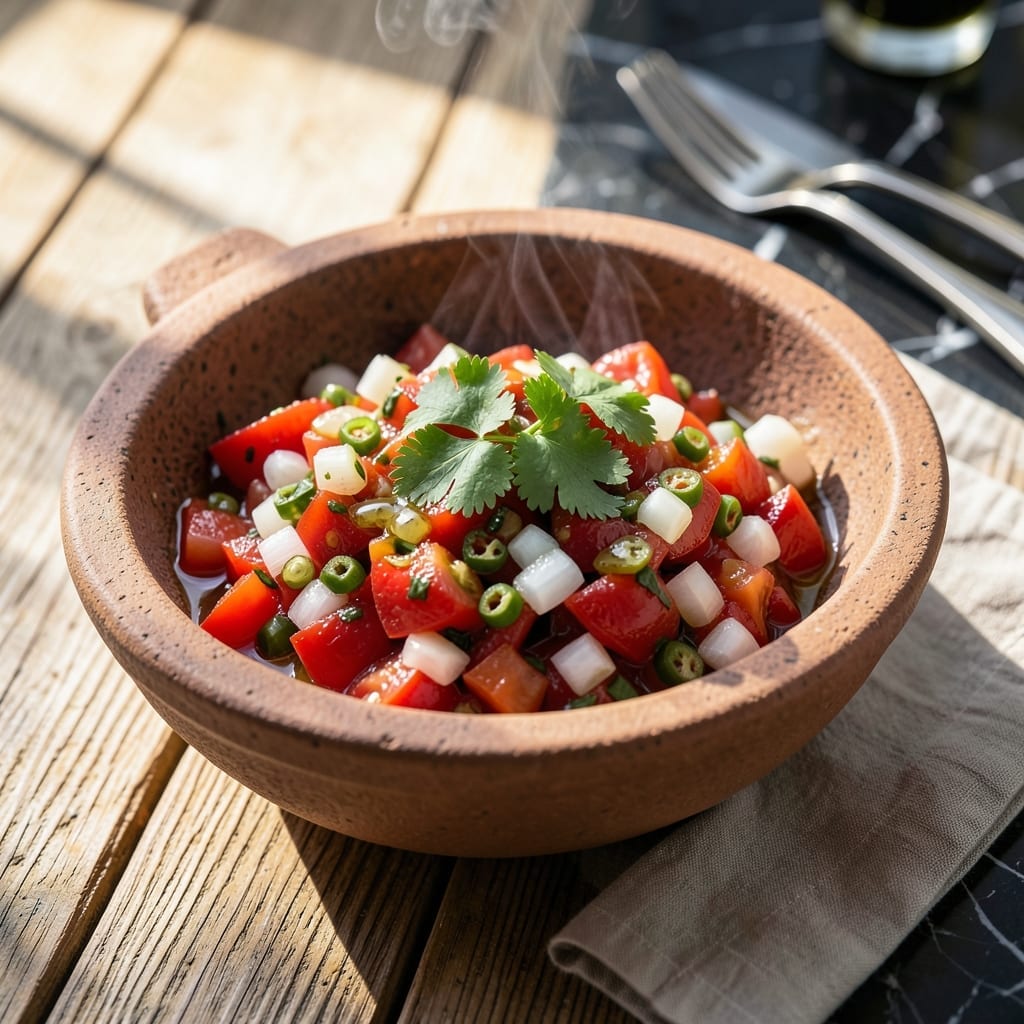
This food processor salsa delivers restaurant-quality flavor with minimal effort. Fresh tomatoes, crisp onions, and zesty lime come together in minutes for a vibrant, chunky texture.
No cooking required—just pulse until you reach your ideal consistency. Store in an airtight container for up to 5 days in the fridge, though it’s best enjoyed fresh.
Ingredients for Salsa Recipe Food Processor
Restaurant-quality salsa starts with fresh tomatoes, crisp onions, and bold lime. Simple ingredients, vibrant flavor.
| Ingredient | Amount | Notes |
|---|---|---|
| Roma Tomatoes 🍅 | 2 lb | Cored and quartered |
| White Onion 🧅 | 1 whole | Peeled and roughly chopped |
| Jalapeño Pepper 🌶️ | 1 whole | Seeded and chopped |
| Fresh Cilantro 🌿 | ½ cup | Stems removed, roughly chopped |
| Lime Juice 🍋 | 3 tbsp | Freshly squeezed |
| Garlic Cloves 🧄 | 2 cloves | Peeled and minced |
| Sea Salt 🧂 | 1 tsp | Fine grain preferred |
| Ground Cumin 🌿 | ½ tsp | Toasted for deeper flavor |
[recipe_ingredient_scaler]
The tomatoes are everything here. Roma or vine-ripened give the best texture—avoid those mealy winter ones (the grocery store should have decent options year-round). I grab mine from Trader Joe’s when they’re in season, but any firm, ripe tomato works. The onion should be white or red for that sharp bite. Organic if you can swing it, since you’re eating it raw.
No jalapeños? Serrano peppers add more heat, or skip the spice entirely for a mild version. Fresh cilantro is ideal, but flat-leaf parsley at one-third the amount works if you’re a cilantro-hater. The lime juice can be bottled in a pinch, but fresh tastes brighter. Want more depth? Add half a teaspoon of smoked paprika (this is a vegan recipe, so no worries about substitutions).
This keeps 5 days in the fridge, but the flavors meld best after a few hours. Store in a glass jar with a tight lid. Freezing works too—portion into ice cube trays for easy use later. Always bring to room temperature before serving.
Why You’ll Love This Recipe
- No Chopping Needed: The food processor does all the work with those Roma tomatoes and jalapeños—no knife skills required.
- Fresh Zing: That lime juice and cilantro combo gives it a bright, restaurant-worthy kick every single time.
- Taco Night MVP: I toss this on tacos, nachos, even scrambled eggs. Between us, it’s my weekly shortcut.
- Budget Stretch: A handful of cheap ingredients makes a big batch. Honestly, it lasts us a week without breaking the bank.
Step-by-Step Instructions for Salsa
This method delivers vibrant, fresh flavor with minimal hands-on time.
Step 1: Prep the Vegetables and Aromatics
Core and quarter the 2 lb Roma Tomatoes, removing any tough stem ends. Peel the 1 whole White Onion and roughly chop it into large chunks—uniform size isn’t critical here since the food processor will handle the rest.
Seed and chop the 1 whole Jalapeño Pepper to control the heat level. Remove stems from the 0.5 cup Fresh Cilantro and give it a rough chop as well. Peel and mince the 2 cloves Garlic Cloves—fine mincing ensures even distribution in the final salsa.
Step 2: Pulse the Base Ingredients
Add the quartered Roma Tomatoes, chopped White Onion, and chopped Jalapeño Pepper to the food processor bowl. Pulse in 1-second bursts until the mixture reaches your desired consistency—6-8 pulses usually gives you a chunky texture with some liquid.
Watch the texture carefully. You want visible tomato chunks, not a puree. Scrape down the sides of the processor bowl as needed to ensure even processing. The mixture should look vibrant and slightly chunky, with distinct pieces of tomato and onion still visible.
Step 3: Add Remaining Ingredients and Finish
Add the chopped Fresh Cilantro, minced Garlic Cloves, 3 tbsp Lime Juice, 1 tsp Sea Salt, and 0.5 tsp Ground Cumin to the processor. Pulse 2-3 times just until everything is incorporated—you want to maintain that fresh, chunky texture.
Taste and adjust the seasoning. The Lime Juice should brighten the flavors without making it sour. If it needs more salt, add it gradually. Remember, the flavors will meld and intensify as the salsa sits, so it should taste slightly under-seasoned at this point.
Step 4: Rest and Serve
Transfer the salsa to a bowl and let it sit at room temperature for 10-15 minutes before serving. This resting period allows the flavors to meld together beautifully. You’ll notice the texture changes slightly as the tomatoes release more of their juices.
Give it a final stir before serving. The salsa should have a balanced, bright flavor with a slight kick from the Jalapeño. Serve with tortilla chips, over tacos, or as a topping for grilled meats. For the best flavor, use it within 2-3 days and store it in an airtight container in the refrigerator.
Pro Tips For Making Salsa Recipe Food Processor
- Pulse, Don’t Purée: Hit the pulse button in 2-3 second bursts—about 5-6 times total—so you get chunky salsa, not soup. I learned this the hard way after ending up with a watery mess my first three tries.
- Seed the Jalapeño: Remove the seeds and white pith from the jalapeño before chopping unless you want salsa that burns for hours. Sounds obvious, but I skipped this once and regretted it with every bite.
- Drain the Tomatoes: After dicing Roma tomatoes, let them sit in a colander for 5 minutes to shed excess juice—otherwise your salsa will be watery. It’s the thing that matters most for getting that thick, restaurant-style texture.
- Salt the Onion: Toss the diced white onion with a pinch of salt and let it sit while you prep the rest—about 5 minutes. This takes the harsh edge off and makes a real difference in the final flavor.
Common Mistakes When Making Great salsa recipe food processor
🔪 Overprocessing the Ingredients
Using a food processor can turn your salsa into a mushy mess if you overdo it. The blades can pulverize tomatoes, onions, and peppers into a watery paste, losing the fresh, chunky texture that makes salsa so delicious.
Fix: Pulse the processor in short bursts—2-3 seconds at a time—until you reach the desired consistency. For chunkier salsa, hand-chop half the ingredients before adding them to the processor.
⏰ Skipping the Resting Time
Salsa tastes best when flavors meld together, but many skip letting it sit after blending. Freshly made salsa can taste sharp or overly acidic because the ingredients haven’t had time to marry.
Fix: Let your salsa rest in the fridge for at least 30 minutes before serving. This allows the flavors to deepen and the acidity to mellow out.
🌡️ Ignoring Ingredient Temperatures
Cold ingredients straight from the fridge can make your salsa taste bland. Tomatoes and peppers release more flavor when slightly warmed, and cold onions can have a harsh bite.
Fix: Take ingredients out of the fridge 15-20 minutes before processing. For extra flavor, lightly roast tomatoes and peppers before blending.
💡 Using the Wrong Blade or Setting
Not all food processors are created equal. Using the wrong blade or speed can lead to uneven texture—some chunks too big, others too fine. This ruins the balance of a great salsa.
Fix: Use the standard S-blade for most salsa recipes. Start on low speed and gradually increase, checking texture frequently to avoid overmixing.
Nutrition Facts

Trained in classic French technique but raised on slow-cooked ribs and spicy rubs, she blends culinary skill with smoke and soul.
- Recipe for Boneless Pork Chops in Cast Iron Skillet: Sear and Baste to Juicy Perfection - October 3, 2026
- Recipe for Boneless Cross Rib Roast: Slow-Roasted Beef with Herb Crust - October 3, 2026
- Hamburgers in Sauce Recipe Crock Pot: Slow-Cooked Savory Delight - October 3, 2026