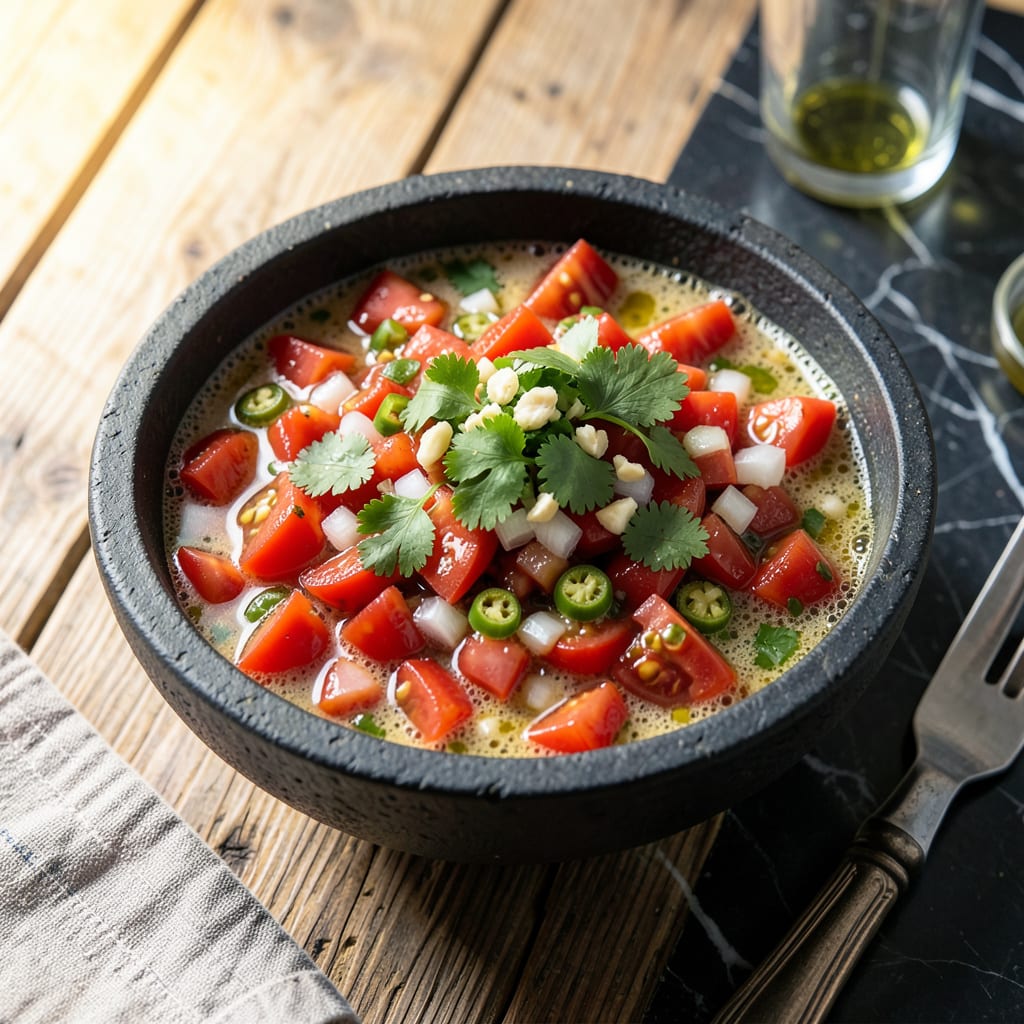
This food processor method delivers restaurant-quality salsa with minimal effort and maximum freshness. The rapid blade creates the perfect texture—chunky enough to feel homemade, smooth enough to spread easily.
With just a few pulses, you’ll have a bright, zesty condiment ready for tacos, chips, or grilled meats. It keeps well in the fridge for up to a week.
Ingredients for Salsa Recipe Using Food Processor
Bright, fresh ingredients pulse into restaurant-quality salsa in minutes with your food processor.
| Ingredient | Amount | Notes |
|---|---|---|
| Roma Tomatoes 🍅 | 2 lb | Cored and quartered |
| White Onion 🧅 | ½ whole | Peeled and quartered |
| Jalapeño Peppers 🌶️ | 2 whole | Seeds removed for mild heat |
| Fresh Cilantro 🌿 | 1 cup | Stems removed, roughly chopped |
| Garlic Cloves 🧄 | 4 cloves | Peeled |
| Lime Juice 🍋 | ¼ cup | Freshly squeezed |
| Sea Salt 🧂 | 1 ½ tsp | Fine grain preferred |
| Ground Cumin 🌿 | 1 tsp | Toasted for deeper flavor |
| Black Pepper 🌶️ | ½ tsp | Freshly ground |
[recipeingredientscaler]
The tomatoes are key—Roma or vine-ripened have the right meatiness and low moisture. Farmers market or homegrown give the best flavor, but grocery store works fine. Look for firm, deep red tomatoes (no soft spots). The jalapeños can be adjusted: keep seeds for heat, remove them for mild. Trader Joe’s often has good organic peppers at reasonable prices.
No fresh cilantro? Flat-leaf parsley at one-third the amount works in a pinch. Out of limes? Lemon juice is fine, though lime’s brightness is ideal. For extra depth, add half a teaspoon of smoked paprika. If you prefer a smoother salsa, pulse longer—chunky lovers should stop earlier. Canned tomatoes aren’t ideal here (too watery).
This salsa tastes best fresh but keeps well. Store in an airtight container in the fridge for up to 1 week. For longer storage, freeze in ice cube trays, then transfer to a bag—good for 3 months. The flavors meld and deepen overnight, so make it a day ahead if possible.
Why You’ll Love This Recipe
- No Chopping Needed: The food processor does all the work with the tomatoes, onion, and jalapeños—no knife skills required.
- Fresh Flavor Explosion: That first bite with the cilantro and garlic hitting just right? I make a double batch every time.
- Taco Night Hero: Honestly, it’s my secret for instant flavor on tacos, nachos, or even scrambled eggs.
- Pennywise Party Starter: Five affordable ingredients turn into a crowd-pleasing dip that keeps for days in the fridge.
Step-by-Step Instructions for Salsa Using Food Processor
This method delivers vibrant, restaurant-quality salsa with minimal effort and maximum flavor.
Step 1: Prepare and Quarter the Vegetables
Core and quarter the 2 lb Roma Tomatoes, ensuring to remove any tough white core pieces that can make the salsa bitter. Peel and quarter the 0.5 whole White Onion—this size allows the food processor to chop it evenly without over-processing.
For the 2 whole Jalapeño Peppers, cut off the stems, slice in half lengthwise, and remove the seeds and membranes for mild heat. If you prefer more spice, leave some seeds intact. This preparation ensures consistent texture in the final blend.
Step 2: Pulse the Base Ingredients
Add the quartered Roma Tomatoes, White Onion, and Jalapeño Peppers to the food processor bowl. Pulse in 1-second bursts about 8-10 times until the mixture reaches your desired chunkiness. I recommend stopping when the pieces are roughly ¼-inch for ideal salsa texture.
Avoid over-processing into a puree. The key is maintaining some texture while breaking down the vegetables enough to release their juices. Scrape down the sides of the bowl with a rubber spatula between pulses to ensure even chopping.
Step 3: Incorporate Aromatics and Seasonings
Add the peeled 4 cloves Garlic Cloves, roughly chopped 1 cup Fresh Cilantro, 1.5 tsp Sea Salt, 1 tsp Ground Cumin, and 0.5 tsp Black Pepper to the processor. Pulse 3-4 times just until the garlic and cilantro are finely minced and distributed throughout the mixture.
This step infuses the salsa with aromatic depth. The cumin adds earthy warmth, while the cilantro provides fresh brightness. Be careful not to over-process at this stage—the garlic can become bitter if pulverized too finely.
Step 4: Finish with Lime Juice and Final Adjustment
Pour in the 0.25 cup Lime Juice and pulse 2-3 times to combine. The acidity from the lime not only brightens the flavors but also helps preserve the salsa’s vibrant color. Taste and adjust seasoning if needed—though the measurements provided should yield perfect balance.
Transfer the salsa to a bowl and let it rest for 10-15 minutes before serving. This allows the flavors to meld together. For best texture, serve slightly chilled but not ice-cold, as extreme cold can mute the flavors.
Pro Tips For Making Salsa Recipe Using Food Processor
- Pulse, Don’t Purée: Hit the pulse button in 1-2 second bursts instead of running the processor continuously—this keeps your salsa chunky, not soupy. I learned this the hard way after turning a whole batch into liquid.
- Seed the Jalapeños: Always remove the seeds and ribs from jalapeños before processing unless you want a salsa that’s painfully spicy. Sounds obvious, but I’ve had friends regret skipping this step.
- Drain the Tomatoes: After dicing Roma tomatoes, let them sit in a colander for 5-10 minutes to shed excess water, or your salsa will be watery. It’s a small wait that makes a real difference.
- Add Garlic Last: Toss in the garlic cloves during the final pulse to avoid over-processing into a bitter paste. My grandmother swore by this, and she was right.
Pro Cooking Tips for Great salsa recipe using food processor
💡 Texture Tips
For a chunky salsa, pulse ingredients in short bursts (1-2 seconds each) instead of continuous blending. This keeps the veggies intact while still combining flavors beautifully.
If you prefer a smoother salsa, blend half the ingredients first, then add the rest and pulse lightly. This creates a balanced texture without over-processing.
✨ Flavor Boosters
Always use fresh lime juice—bottled just won’t cut it. Squeeze it in at the end for a bright, zesty kick that ties everything together.
For depth, let your salsa sit for 10-15 minutes after processing. This allows the flavors to meld, making it taste even more vibrant.
🌡️ Heat Control
Remove seeds and membranes from jalapeños for mild heat. Keep them in for extra spice, but start with half to avoid overwhelming the dish.
If your salsa turns out too spicy, balance it with a pinch of sugar or honey—this softens the heat without dulling the flavor.
Nutrition Facts

Trained in classic French technique but raised on slow-cooked ribs and spicy rubs, she blends culinary skill with smoke and soul.
- Recipe for Boneless Pork Chops in Cast Iron Skillet: Sear and Baste to Juicy Perfection - October 3, 2026
- Recipe for Boneless Cross Rib Roast: Slow-Roasted Beef with Herb Crust - October 3, 2026
- Hamburgers in Sauce Recipe Crock Pot: Slow-Cooked Savory Delight - October 3, 2026