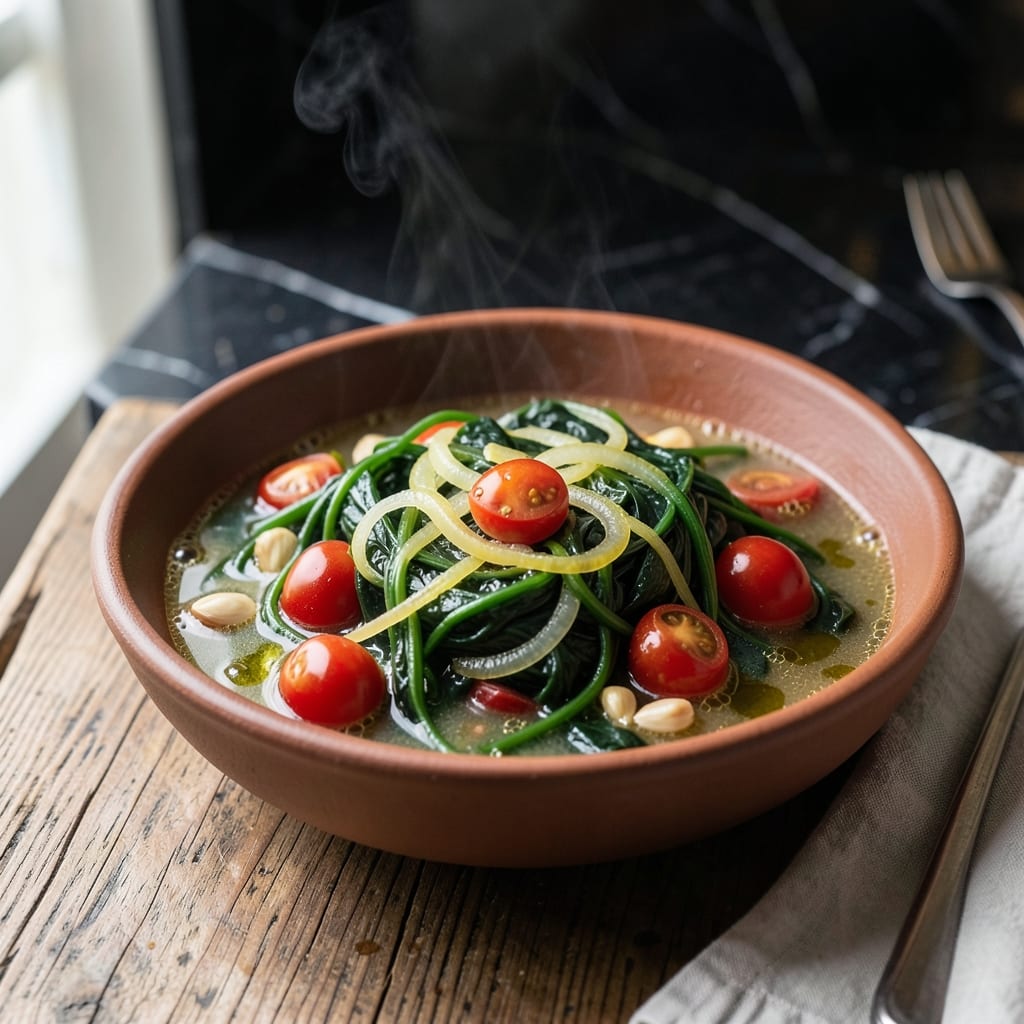
This simple saluyot dish brings traditional Filipino flavors to your weeknight table with minimal effort. I developed this method to highlight the leafy green’s natural earthiness while keeping preparation quick and straightforward.
The key is brief cooking to maintain texture and nutrients. A light sauté with garlic and onions builds flavor without overpowering the main ingredient. The entire process takes less than 20 minutes, making it ideal for busy evenings.
You’ll end up with tender greens in a light, savory broth that pairs perfectly with steamed rice. This is home cooking at its most practical—nutritious, flavorful, and ready in the time it takes to set the table.
Serve as a side or light main course for a satisfying meal.
Ingredients for Saluyot Recipe Simple
Fresh saluyot and pantry staples make this dish come alive quickly.
| Ingredient | Amount | Notes |
|---|---|---|
| Saluyot Leaves 🌿 | 4 cups | Fresh, stems removed, packed |
| Garlic Cloves 🧄 | 4 cloves | Minced for maximum flavor |
| Yellow Onion 🧅 | 1 whole | Medium, thinly sliced |
| Tomatoes 🍅 | 2 whole | Medium, diced |
| Vegetable Broth 🥣 | 1 ½ cups | Low-sodium preferred |
| Extra-Virgin Olive Oil 🫒 | 2 tbsp | For sautéing aromatics |
| Sea Salt 🧂 | ½ tsp | Adjust to taste |
| Black Pepper 🌶️ | ¼ tsp | Freshly ground preferred |
| Red Chili Pepper 🌶️ | 1 whole | Small, sliced, optional for heat |
| Lemon Juice 🍋 | 1 tbsp | Freshly squeezed for brightness |
| Coconut Milk 🥥 | ½ cup | Full-fat for creaminess |
[recipe_ingredient_scaler]
Saluyot is everything here. Fresh bundles from Asian markets work best—avoid wilted or yellowing leaves. I grab mine from Seafood City or Filipino grocers when available, but any well-stocked produce section should carry it. The garlic and onion form the flavor base, so use fresh, firm cloves and a sweet onion if you can find one. The broth ties it all together—vegetable-based keeps it vegan and light.
No saluyot? Spinach or water spinach (kangkong) are the closest substitutes, though the texture will differ slightly. Tomato haters can swap in bell peppers for sweetness. For broth, mushroom or miso-based adds depth. If you’re skipping the coconut milk, a splash of cashew cream (blend soaked cashews with water) adds richness. The chili is optional, but a pinch of red pepper flakes works in a bind.
Saluyot wilts fast, so cook it the same day you buy it. Leftovers keep 2-3 days in the fridge—reheat gently to avoid overcooking. The broth thickens as it cools, so add a splash of water when reheating. Not freezer-friendly, but the flavors stay bright for a week in the fridge.
Why You’ll Love This Recipe
- 5-Minute Prep: I just rinse the saluyot, chop the onion and tomatoes, and let the garlic sizzle—dinner’s halfway done before the broth even hits the pot.
- Garlic & Tomato Magic: The garlic turns golden, the tomatoes break down, and the saluyot soaks it all up like a flavor sponge.
- Weeknight Hero: Between us, this is my Tuesday lifesaver—light enough for lunch but hearty enough to pair with rice for dinner.
- Pennywise Comfort: A bunch of saluyot and a few pantry staples stretch into a meal that feeds four without touching my wallet.
Step-by-Step Instructions for Simple Saluyot
This comes together fast with pantry staples—no fancy techniques required.
Step 1: Prepare the Aromatics and Vegetables
Heat the 2 tbsp extra-virgin olive oil in a large pot over medium heat. Add the minced 4 cloves garlic cloves and thinly sliced 1 whole yellow onion, sautéing for 2-3 minutes until they turn translucent and fragrant.
Stir in the diced 2 whole tomatoes and sliced 1 whole red chili pepper. Cook for another 3 minutes until the tomatoes soften and release their juices. Here’s the thing—this base builds all the flavor, so don’t rush it.
Step 2: Add Liquids and Saluyot Leaves
Pour in the 1.5 cups vegetable broth and bring to a gentle simmer. Add the 4 cups saluyot leaves, pressing them down lightly to submerge in the liquid. The leaves will wilt quickly—this is normal.
Season with the 0.5 tsp sea salt and 0.25 tsp black pepper. Reduce heat to medium-low and let it cook for 5-7 minutes until the saluyot is tender but still retains a slight bite. This ensures the greens stay vibrant and flavorful.
Step 3: Incorporate Coconut Milk and Finish
Stir in the 0.5 cup coconut milk and let it warm through for 2-3 minutes. This adds a creamy richness that balances the earthy saluyot beautifully. Taste and adjust seasoning if needed—some broths are saltier than others.
Just before serving, drizzle in the 1 tbsp lemon juice. This brightens all the flavors and ties the dish together. The coconut milk should create a light, silky broth that coats the greens.
Step 4: Serve Immediately
Ladle into bowls while hot. The saluyot leaves should be tender but not mushy, and the broth should have a creamy, slightly tangy finish from the coconut milk and lemon. This dish doesn’t wait well, so serve it fresh.
I know it seems weird, but the real magic happens when you let the flavors meld for just a minute after adding the lemon juice. The contrast of the peppery heat from the chili, the creaminess, and the bright citrus makes every bite satisfying.
Pro Tips For Making Saluyot Recipe Simple
- Blanch the Saluyot: Drop the leaves in boiling water for exactly 30 seconds, then shock in ice water—this keeps them tender and removes any slight bitterness. I learned this the hard way after serving chewy greens to guests.
- Sauté Aromatics First: Cook the garlic and onion in oil until fragrant but not browned, about 2 minutes, then add tomatoes to soften. After burning three batches, I finally figured out this order matters most.
- Skip Overcooking: Add the saluyot leaves last and simmer for no more than 3-4 minutes—any longer and they turn to mush. My grandmother swore by this, and she was right.
- Use Fresh Broth: If your vegetable broth tastes flat, the whole dish will too. Sounds weird, but it works: simmer the broth with a bay leaf for 10 minutes before adding it to the pot.
Troubleshooting Great saluyot recipe simple
Slimy Texture Issue
If your saluyot turns slimy, you’ve likely overcooked it. The leaves release natural mucilage when heated too long. Stick to the 5-7 minute cook time and remove from heat immediately once tender. I learned this the hard way with my first batch—it looked perfect until it didn’t. 💡
Bitter Flavor Fix
Older saluyot leaves can develop bitterness. Soak the leaves in cold water with 1 tbsp salt for 10 minutes before cooking to draw out bitterness. Also, ensure you’re using the tender leaves and not the tough stems, which are naturally more bitter.
Thin Broth Solution
If your broth seems watery, simmer uncovered for an extra 2-3 minutes after adding the coconut milk. The liquid should reduce slightly and coat the back of a spoon. Remember, the saluyot will release some water as it cooks, so don’t add extra broth beyond the recipe’s 1.5 cups.
Over-Salted Dish
Since broths vary in saltiness, taste before adding the full 0.5 tsp sea salt. If you’ve oversalted, add a splash of water and an extra ¼ cup coconut milk to balance the flavors. The lemon juice at the end also helps mellow excessive saltiness.
Wilted Leaves Problem
Saluyot wilts fast, but wilted leaves aren’t ruined. Revive them by soaking in ice water for 5 minutes before cooking. They’ll crisp back up and cook more evenly. This trick works for most leafy greens in a pinch.
Coconut Milk Separation
If your coconut milk separates in the broth, simply stir vigorously over low heat for 1 minute to reincorporate. To prevent this, shake the can well before measuring and add it slowly while stirring. Full-fat coconut milk blends more smoothly than light versions. 🥥
Nutrition Facts
Frequently Asked Questions
Can I use frozen saluyot leaves?
Yes, but thaw and drain them first to remove excess water. Frozen leaves work in a pinch but may lack the bright texture of fresh.
What if I don’t have coconut milk?
Substitute with cashew cream or a splash of heavy cream. You’ll miss some richness, but the dish will still taste great.
How do I store leftovers?
Keep in an airtight container for 2-3 days. Reheat gently with a splash of water to prevent drying out.
Why did my saluyot turn slimy?
Overcooking causes the natural mucilage to release. Stick to the 5-7 minute cook time for best results.

Trained in classic French technique but raised on slow-cooked ribs and spicy rubs, she blends culinary skill with smoke and soul.
- Hamburgers in Sauce Recipe Crock Pot: Slow-Cooked Savory Delight - October 3, 2026
- Sanjeev Kapoor Egg Biryani Recipe: Fragrant Spiced Rice With Boiled Eggs - October 3, 2026
- Recipe for French Pork Spread Gorton: Savory Gallic Flavors in a Spreadable Delight - October 3, 2026