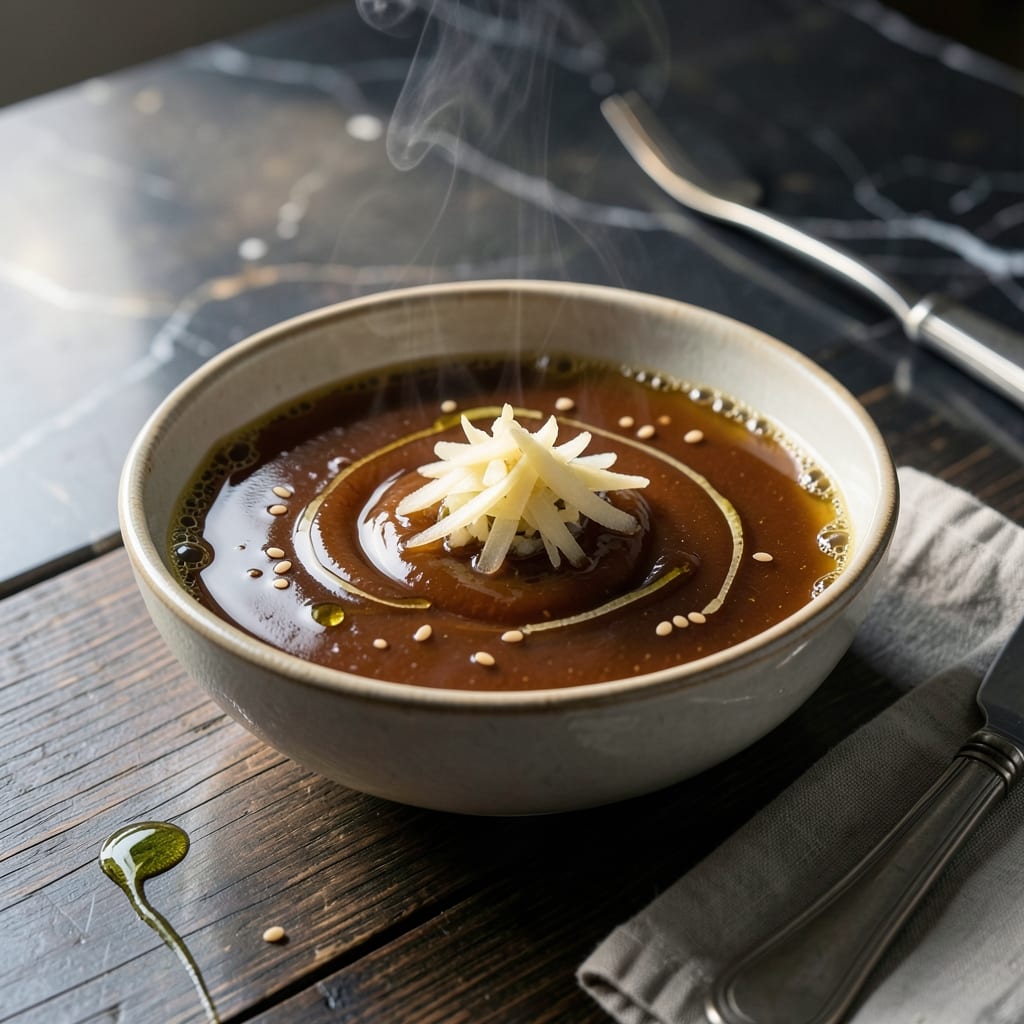
This bold umami sauce transforms any Japanese dish with its complex, savory depth. I developed this recipe after years of experimenting with traditional flavors to create a versatile condiment that works with everything from grilled meats to stir-fried vegetables.
The secret lies in balancing sweet, salty, and umami elements through a precise blend of soy sauce, mirin, and dashi. Each ingredient plays a crucial role, and the result is a sauce that’s both rich and perfectly balanced.
You’ll find this creation adds authentic Japanese character to your cooking without overwhelming the main ingredients. Its smooth texture and deep flavor make it ideal for dipping, marinating, or drizzling.
Store in an airtight container in the refrigerator for up to 2 weeks. This recipe makes about 1 cup of sauce.
Ingredients for Samurai of Tokyo Sauce
Nine ingredients create this complex umami sauce with authentic Japanese character.
| Ingredient | Amount | Notes |
|---|---|---|
| Soy Sauce 🫒 | ½ cup | Low-sodium or regular variety |
| Mirin 🍶 | ⅓ cup | Sweet rice cooking wine |
| Dashi Stock 🍲 | ⅓ cup | Traditional bonito-based preferred |
| Rice Vinegar 🫒 | 2 tbsp | Unseasoned for balance |
| Brown Sugar 🧈 | 1 tbsp | Light or dark variety |
| Fresh Ginger 🌿 | 1 tbsp | Peeled and finely grated |
| Garlic Cloves 🧄 | 2 cloves | Minced for depth |
| Sesame Oil 🫒 | 1 tsp | Toasted for aroma |
| Red Pepper Flakes 🌶️ | ¼ tsp | Adjust for heat preference |
[recipe_ingredient_scaler]
The soy sauce is the foundation here. Kikkoman or Yamasa are reliable brands for consistent quality. For dashi, instant granules work well (look for Hondashi at Asian markets), or use homemade for deeper flavor. Mirin can be found at Whole Foods or specialty stores—avoid the cheaper versions labeled ‘mirin-fu’ as they contain added salt and less sugar.
No mirin? Substitute with 1 tbsp sugar plus 1 tbsp rice vinegar per 2 tbsp mirin. Out of dashi? Low-sodium chicken or vegetable broth with a pinch of MSG works in a pinch. For a gluten-free version, use tamari instead of soy sauce. The ginger and garlic can be swapped for 1 tsp each of ground ginger and garlic powder if fresh isn’t available.
This sauce keeps beautifully in the fridge for 2 weeks in an airtight container. For longer storage, freeze in ice cube trays and transfer to a bag—thaw only what you need. Always give it a quick stir before using as ingredients may settle.
Why You’ll Love This Recipe
- Five Minute Mix: I just dump the soy sauce, mirin, dashi, rice vinegar, and brown sugar in a pot and it’s done before the rice finishes cooking.
- Umami Bomb: That first hit of soy and dashi with the sweet tang of mirin and vinegar is the flavor I crave on everything from grilled chicken to cold noodles.
- Endless Uses: I batch it Sunday and by Thursday it’s dressed salads, glazed tofu, and saved my takeout cravings twice.
- Pantry Hero: All five ingredients live in my cupboard for months, so I can make this sauce anytime without a special store run.
Step-by-Step Instructions for Samurai of Tokyo Sauce
This refined process ensures balanced umami depth and complexity in every batch.
Step 1: Bloom Aromatics in Sesame Oil
Heat a small saucepan over medium-low heat and add the 1 tsp Sesame Oil. Once it shimmers, add the 1 tbsp Fresh Ginger and 2 cloves Garlic Cloves, stirring constantly for 30-45 seconds until fragrant.
You’ll notice the ginger and garlic transform from raw to golden at the edges—this is the bloom. Be vigilant; garlic burns easily and bitterness will ruin the balance. The sesame oil’s toasted aroma should become pronounced but not acrid.
Step 2: Create the Liquid Foundation
Pour in the 0.5 cup Soy Sauce, 0.33 cup Mirin, and 0.33 cup Dashi Stock. Increase heat to medium-high and bring to a gentle simmer. The mirin’s natural sugars will begin to mellow the soy sauce’s saltiness immediately.
As the mixture heats, you’ll see small bubbles forming at the edges—this indicates the alcohol in the mirin is cooking off. Allow it to simmer undisturbed for 2-3 minutes to let the dashi stock infuse its umami richness throughout.
Step 3: Balance with Acid and Sweetness
Reduce heat to medium-low and stir in the 2 tbsp Rice Vinegar and 1 tbsp Brown Sugar. The vinegar will cut through the richness, while the brown sugar adds caramelized depth to counter the salt.
Simmer for an additional 3-4 minutes, stirring occasionally, until the sugar fully dissolves and the sauce takes on a glossy sheen. The aroma should be complex—savory from the dashi, sweet from the mirin, with a bright finish from the vinegar.
Step 4: Finish with Heat and Rest
Remove the saucepan from heat and stir in the 0.25 tsp Red Pepper Flakes. The residual heat will activate the flakes’ oils, infusing a subtle warmth that builds gradually rather than overwhelming the palate.
Let the sauce rest at room temperature for 10 minutes to allow the flavors to meld completely. The sauce should thicken slightly as it cools, coating the back of a spoon with a velvety consistency. Taste and adjust seasoning if needed, though the balance should be perfect as written.
Pro Tips For Making Samurai Of Tokyo Sauce
- Simmer Gently: Keep the heat low once all ingredients are combined—I learned this the hard way after reducing my first batch to a salty, burnt mess.
- Use Real Dashi: Skip the powdered shortcuts; a quick homemade dashi with bonito flakes and kombu makes a real difference in depth of flavor.
- Balance the Sweet: Brown sugar can overpower, so add it gradually, tasting as you go—my first attempt was basically dessert sauce.
- Strain the Solids: After simmering, strain out any bonito flakes or kombu bits for a smooth, professional finish—it’s a small step that changes the texture completely.
Serving Suggestions for This samurai of tokyo sauce
Dipping Sauce Style
Serve this creation in small ramekins for dipping. It pairs wonderfully with gyoza, tempura, or grilled yakitori skewers. I love the way it clings to crispy foods without overpowering them. 🥢
Drizzling Perfection
Drizzle over steamed rice bowls or soba noodles for an instant flavor boost. The sauce’s consistency is ideal for cascading beautifully over hot dishes. A little goes a long way—start with 1 tbsp per serving.
Marinade Magic
Use as a marinade for chicken thighs or tofu before grilling. Marinate for at least 30 minutes (or overnight for deeper flavor). The acidity in the vinegar helps tenderize while the umami richly seasons.
Salad Dressing Twist
Whisk 2 tbsp of this sauce with 1 tbsp neutral oil and 1 tsp honey for a quick Asian-inspired salad dressing. It works beautifully with cucumber, cabbage, or spinach greens.
Stir-Fry Finisher
Toss 1-2 tbsp into stir-fries at the very end to preserve its bright, complex flavors. It adds depth to vegetables like bell peppers and snap peas without making them soggy. I always keep a jar handy for this exact purpose. 🔥
Garnishing Touch
Drizzle over finished dishes like miso soup or udon just before serving. The visual contrast is stunning, and it adds a professional restaurant touch to your home cooking.
Nutrition Facts
Frequently Asked Questions
Can I make this without dashi?
Yes! Substitute with low-sodium chicken broth plus a pinch of MSG. The flavor won’t be as complex, but it’ll still work well.
How long does this sauce last?
Store in an airtight container in the fridge for up to 2 weeks. For longer storage, freeze in ice cube trays.
What if I don’t have mirin?
Replace each tbsp with 1 tsp sugar + 1 tsp rice vinegar. It won’t be identical, but it’ll provide similar sweetness and acidity.
Can I adjust the spice level?
Start with 1/8 tsp of red pepper flakes for mild heat, or add more to taste. The amount is flexible.

Trained in classic French technique but raised on slow-cooked ribs and spicy rubs, she blends culinary skill with smoke and soul.
- Recipe for Boneless Pork Chops in Cast Iron Skillet: Sear and Baste to Juicy Perfection - October 3, 2026
- Recipe for Boneless Cross Rib Roast: Slow-Roasted Beef with Herb Crust - October 3, 2026
- Hamburgers in Sauce Recipe Crock Pot: Slow-Cooked Savory Delight - October 3, 2026