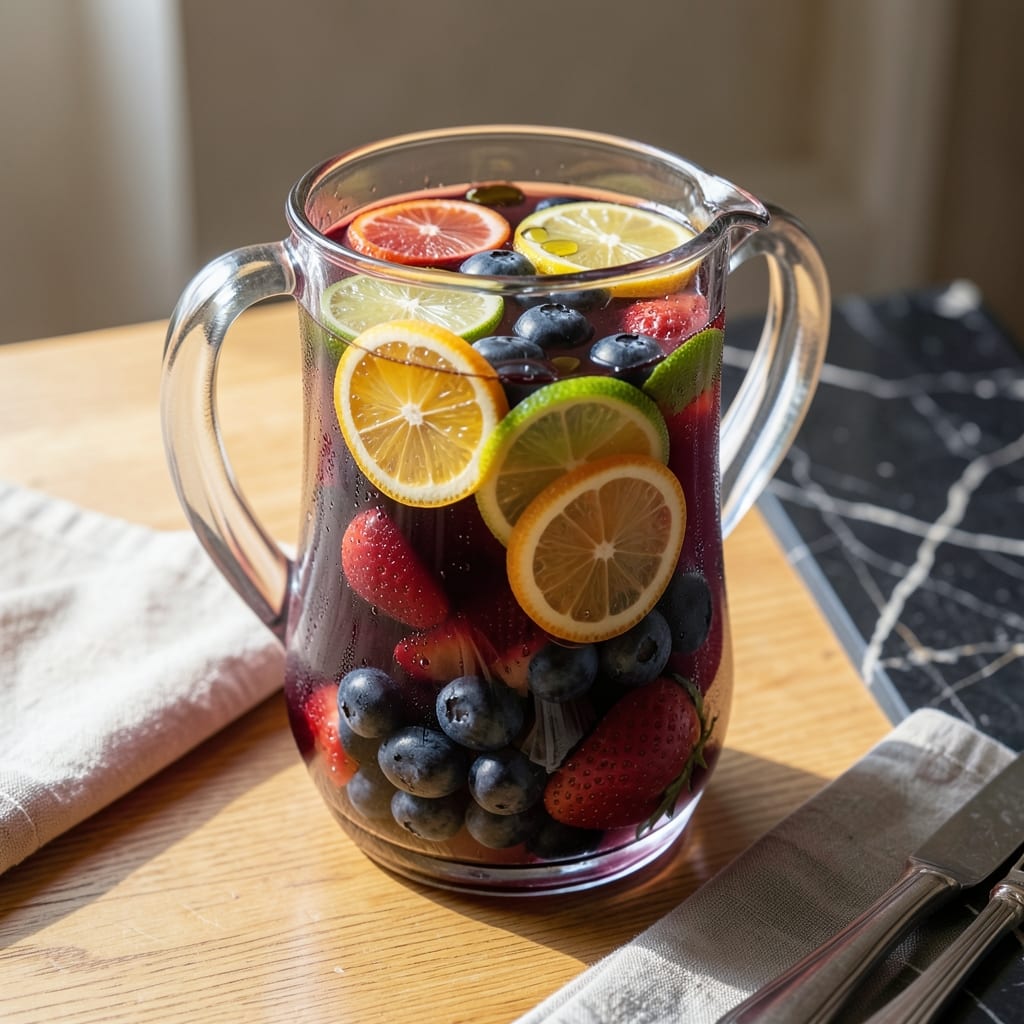
This fruit-forward sangria proves you don’t need brandy to create a vibrant, refreshing pitcher. I’ve perfected this version to highlight the natural sweetness of seasonal fruit and crisp wine.
The secret lies in the maceration time, allowing the fruit to infuse the wine with bold, authentic Spanish flavors. Serve it chilled for a drink that’s as beautiful as it is refreshing.
A blend of red wine, citrus, and fresh berries delivers a balanced sip every time. This approach keeps the recipe simple yet sophisticated, ideal for gatherings or quiet evenings.
Perfect for warm days or festive occasions, this sangria lets the fruit shine without overpowering the wine’s natural character.
Ingredients for Sangria Recipe Without Brandy
Fresh fruit, crisp wine, and a touch of citrus make this pitcher sing.
| Ingredient | Amount | Notes |
|---|---|---|
| Dry Red Wine 🍷 | 4 cups | Medium-bodied, like Tempranillo or Garnacha |
| Fresh Orange 🍊 | 1 whole | Sliced, plus juiced for freshness |
| Fresh Lemon 🍋 | 1 whole | Sliced, plus juiced for brightness |
| Fresh Lime 🍈 | 1 whole | Sliced for tangy depth |
| Fresh Strawberries 🍓 | 1 cup | Hulled and quartered |
| Fresh Blueberries 🫐 | ½ cup | Rinsed, whole berries |
| Fresh Peach 🍑 | 1 whole | Pitted and sliced |
| Granulated Sugar 🍚 | 2 tbsp | Adjust to taste preference |
| Orange Liqueur 🍹 | 2 tbsp | Optional, Cointreau or Triple Sec |
| Sparkling Water 💧 | 1 cup | Chilled, club soda works too |
| Fresh Mint Leaves 🌿 | ¼ cup | Lightly bruised for aroma |
| Cinnamon Stick 🌰 | 1 whole | For subtle spiced depth |
[recipe_ingredient_scaler]
The wine choice is everything here. Tempranillo or Garnacha from Trader Joe’s or Total Wine are budget-friendly and perfect. Look for bottles labeled ‘Joven’ or ‘Crianza’—they’re young, fruity, and won’t break the bank. Seasonal fruit is key: in summer, peaches and berries shine; in fall, swap in apples or pears (peeled and diced). Always use organic citrus when possible—the zest adds so much.
No Tempranillo? Any dry red wine works—just avoid anything too oaky or tannic. Out of fresh fruit? Frozen berries (thawed first) are a decent backup, but fresh is ideal. Skip the orange liqueur if you’re keeping it alcohol-free; a splash of orange juice adds similar brightness. For extra flair, add a vanilla bean or a few star anise pods while macerating.
This tastes best after 4-6 hours of maceration but can sit overnight. Store in the fridge for up to 2 days—the fruit gets softer but the flavors deepen. Strain out solids after 24 hours to prevent bitterness. Always add the sparkling water just before serving to keep it fizzy.
Why You’ll Love This Recipe
- No Fuss Mixing: I just dump everything in a pitcher and let the wine, citrus, and strawberries do their magic overnight.
- Bright and Juicy: The combo of fresh orange, lemon, lime, and strawberries makes every sip taste like a sunny afternoon.
- Crowd Pleaser: Honestly, it’s my go-to for book club, picnics, or even a solo evening on the porch.
- Stretches the Budget: One affordable bottle of dry red wine turns into a showstopper that serves six or more.
Step-by-Step Instructions for Sangria Without Brandy
Here’s the method. Straightforward, tested, works every time.
Step 1: Prepare and Muddle the Fruit Base
Slice the fresh orange, fresh lemon, and fresh lime into thin rounds, then quarter the 1 cup fresh strawberries and slice the fresh peach. I like to leave the citrus slices intact for presentation, but you can halve them if you prefer smaller pieces.
In a large pitcher, combine the sliced fruit with the 0.5 cup fresh blueberries and the 2 tbsp granulated sugar. Gently muddle the fruit with a wooden spoon just enough to release some juices—you want to bruise the fruit, not pulverize it. This creates a flavor foundation that infuses into the wine.
Step 2: Infuse with Wine and Aromatics
Pour the 4 cups dry red wine over the muddled fruit. Add the 2 tbsp orange liqueur, 1 whole cinnamon stick, and 0.25 cup fresh mint leaves. I lightly bruise the mint leaves between my fingers before adding them to release their oils.
Stir everything together, then let it sit at room temperature for 15-20 minutes to allow the flavors to meld. You’ll notice the wine begins to take on a deeper color as it absorbs the fruit juices. This short infusion period is crucial—it softens the tannins in the wine and lets the sugar dissolve completely.
Step 3: Chill and Add Sparkling Water
After the initial infusion, cover the pitcher and refrigerate for at least 2 hours (overnight is even better). The longer it chills, the more the flavors develop and mingle. I always taste it after chilling—if you prefer it sweeter, this is the moment to add a touch more sugar.
Just before serving, stir in the 1 cup sparkling water. The bubbles add a refreshing lift to the sangria and balance the richness of the fruit. If you’re making this ahead, wait to add the sparkling water until right before serving to preserve the fizz.
Step 4: Serve and Enjoy
Fill glasses with ice and pour the sangria over, making sure each serving gets a generous amount of the fruit. The ice will dilute it slightly as it melts, so start with a heavier pour of fruit and wine.
Garnish each glass with a few extra mint leaves for aroma and a cinnamon stick for stirring. The first sip should deliver a burst of fruit followed by the wine’s depth, with a hint of spice from the cinnamon. This batch serves 4 generously, so it’s perfect for sharing with friends.
Pro Tips For Making Sangria Recipe Without Brandy
- Chill Overnight: Let the sangria sit in the fridge for at least 8 hours—preferably overnight. I learned this the hard way after serving a batch too early and getting a room full of puckered faces.
- Slice Citrus Thin: Cut the orange, lemon, and lime into thin rounds or wedges so they release more juice and flavor into the wine. Sounds obvious, but thick slices just look pretty and don’t do much.
- Skip the Bitterness: Peel the rinds off the citrus after a few hours if you’re not serving it right away, or they’ll turn the sangria unpleasantly bitter. My first few batches tasted like regret until I figured this out.
- Muddle Strawberries: Lightly muddle the strawberries before adding the wine to help their juices infuse faster. It’s messy, but it actually changes the outcome—no one wants to fish for flavor in their glass.
Pro Cooking Tips for sangria recipe without brandy
Fruit Maceration Technique
Gently muddle the fruit with sugar just enough to release juices—think bruising, not crushing. I use the wooden spoon Nonna gave me, pressing each citrus slice and berry lightly. This extracts flavor without turning your sangria into a purée. 🍊
Wine Infusion Timing
Let the fruit and wine sit at room temperature for 15-20 minutes before chilling. This short infusion softens the wine’s tannins and helps the sugar dissolve completely. I notice the color deepens visibly during this step.
Chilling for Depth
Refrigerate for at least 2 hours, but overnight is ideal. The longer it sits, the more the flavors meld. I always taste after chilling—if it needs more sweetness, add sugar then, not later.
Sparkling Water Addition
Add the 1 cup sparkling water just before serving to preserve the fizz. Club soda works too, but I prefer the minerality of San Pellegrino. Stir gently to avoid losing those precious bubbles. 💧
Serving with Ice
Fill glasses with ice first, then pour the sangria over. The ice dilutes slightly as it melts, so I start with a heavier pour of fruit and wine. This keeps the first sip bold and flavorful.
Garnish Like a Pro
A cinnamon stick in each glass adds aroma and a subtle spiced note. Fresh mint leaves on top release their scent as you sip. It’s the little touches that make this feel special. 🌿
Nutrition Facts
Frequently Asked Questions
Can I use white wine instead of red?
A crisp dry white wine like Sauvignon Blanc works beautifully. The result will be lighter and more refreshing, perfect for summer. Just keep the fruit and sweetness balanced.
How long can I store leftover sangria?
It stays fresh in the fridge for up to 2 days. The fruit will soften over time but the flavors deepen. Remove the fruit after 24 hours to prevent bitterness.
What if my sangria isn’t sweet enough?
Add more sugar gradually and stir until dissolved. For a natural option, muddle extra strawberries or peaches into the mix. Always taste after chilling.

Trained in classic French technique but raised on slow-cooked ribs and spicy rubs, she blends culinary skill with smoke and soul.
- Recipe for Boneless Pork Chops in Cast Iron Skillet: Sear and Baste to Juicy Perfection - October 3, 2026
- Recipe for Boneless Cross Rib Roast: Slow-Roasted Beef with Herb Crust - October 3, 2026
- Hamburgers in Sauce Recipe Crock Pot: Slow-Cooked Savory Delight - October 3, 2026