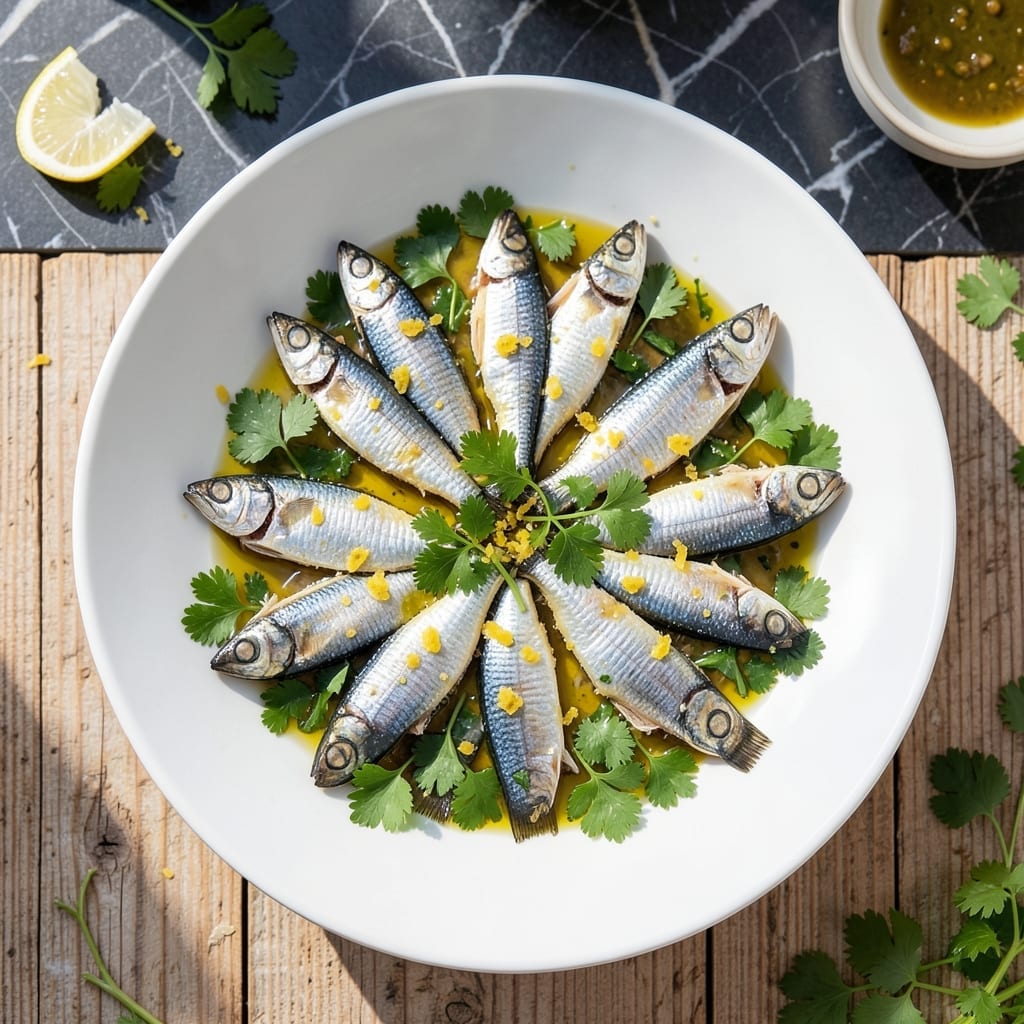
This recipe transforms humble canned sardines into a gourmet delight with minimal effort. The key lies in selecting high-quality fish packed in olive oil, then elevating them with fresh herbs and citrus.
As a pitmaster, I appreciate how simple ingredients can create extraordinary flavors. Here, a touch of lemon zest and cracked black pepper brings out the sardines’ natural richness without overpowering their delicate taste.
You’ll end up with a dish that’s both elegant and approachable, perfect for spreading on crusty bread or enjoying straight from the can. The oil becomes infused with flavor, making every bite memorable.
Serve as an appetizer or light meal. This technique works with any variety of sardines you prefer.
Ingredients for Sardines in Oil
Mediterranean flavors shine through with these canned sardines elevated by fresh herbs and citrus.
| Ingredient | Amount | Notes |
|---|---|---|
| Canned Sardines in Olive Oil 🐟 | 2 cans | High-quality, skin-on, bone-in preferred |
| Extra-Virgin Olive Oil 🫒 | ¼ cup | From the can plus additional for serving |
| Lemon Zest 🍋 | 1 tbsp | Finely grated from fresh lemon |
| Fresh Lemon Juice 🍋 | 1 tbsp | Newly squeezed for brightness |
| Fresh Parsley 🌿 | 2 tbsp | Finely chopped flat-leaf variety |
| Fresh Cilantro 🌿 | 1 tbsp | Finely chopped optional addition |
| Garlic Cloves 🧄 | 2 cloves | Minced or thinly sliced |
| Cracked Black Pepper 🌶️ | 1 tsp | Freshly cracked for best flavor |
| Red Pepper Flakes 🌶️ | ¼ tsp | Optional for subtle heat |
| Kosher Salt 🧂 | ½ tsp | Diamond Crystal preferred for texture |
| Crusty Bread 🍞 | 4 slices | For serving warm or toasted |
[recipe_ingredient_scaler]
The sardines are everything here. Wild Planet or Ortiz brands pack sustainably sourced fish in high-quality olive oil—avoid those in water or vegetable oil. Look for skin-on, bone-in for maximum flavor and texture. I source mine from Whole Foods or well-stocked supermarkets. The oil in the can becomes part of the dish, so quality matters as much as the fish itself.
No fresh herbs? Dried oregano or thyme at one-third the amount works in a pinch. Out of lemons? Lime zest and juice offers a bright alternative. The garlic can be substituted with 1/2 tsp garlic powder, but fresh delivers superior aroma. For heat, a pinch of cayenne replaces the red pepper flakes if that’s what’s in your pantry.
The sardines keep in the pantry for years (check the can’s date), but once opened, transfer to the fridge in a sealed container with their oil for up to 3 days. The infused oil is delicious drizzled on bread or salads—use within 1 week if stored separately.
Why You’ll Love This Recipe
- Five-Minute Meal: I just crack open the can, mix in the lemon and parsley, and it’s ready—no cooking required.
- Zesty Brightness: The lemon zest and juice cut through the rich olive oil for a fresh, briny pop.
- Pantry Superstar: I keep cans in my cupboard for last-minute lunches or a quick protein boost on toast.
- Budget Winner: A single can feeds two for pennies, and honestly, it’s the most flavor per dollar I’ve found.
Step-by-Step Instructions for Sardines in Oil
This refined preparation transforms humble canned fish into an elegant starter with minimal effort.
Step 1: Drain and Arrange the Sardines
Carefully open the 2 cans Canned Sardines in Olive Oil and drain them, reserving the oil. Arrange the fish on a serving platter or individual plates, maintaining their natural shape. I prefer to keep the skin and bones intact for both texture and nutritional value.
The reserved oil will be used later, so set it aside. This initial step ensures the sardines present beautifully while allowing you to control the oil content in the final dish.
Step 2: Prepare the Aromatic Base
In a small bowl, combine the 0.25 cup Extra-Virgin Olive Oil (including the reserved oil from the cans) with the 2 cloves Garlic Cloves, minced. Add the 1 tbsp Lemon Zest, 1 tbsp Fresh Lemon Juice, 0.5 tsp Kosher Salt, 1 tsp Cracked Black Pepper, and 0.25 tsp Red Pepper Flakes.
Whisk the mixture until fully emulsified. The garlic should be evenly distributed, and the oil will take on a faint golden hue with visible bits of zest and spices. This infusion forms the flavor foundation for the dish.
Step 3: Dress and Garnish the Sardines
Drizzle the oil mixture generously over the arranged sardines, ensuring each piece is well coated. Use a spoon to distribute the garlic and spices evenly. Then, sprinkle the 2 tbsp Fresh Parsley and 1 tbsp Fresh Cilantro over the top for a vibrant, fresh finish.
The herbs should create a colorful contrast against the rich, oily sardines. Let the dish sit for 5-10 minutes at room temperature to allow the flavors to meld. The sardines will absorb some of the oil, enhancing their taste without becoming soggy.
Step 4: Toast and Serve with Bread
While the sardines marinate briefly, toast the 4 slices Crusty Bread until golden brown and crisp. The bread should have a slight crunch when tapped and a deep, warm color. Rub each slice lightly with a raw garlic clove for added flavor, if desired.
Serve the sardines immediately with the toasted bread on the side. The bread is perfect for soaking up the flavorful oil and juices. Each bite should deliver a balance of briny sardines, bright citrus, aromatic garlic, and a touch of heat from the red pepper flakes.
Pro Tips For Making Sardines In Oil
- Drain the Sardines: Open the can and drain most of the oil—about 30 seconds over a sieve does it. I learned this the hard way after my first batch turned out greasy instead of bright and fresh.
- Zest Before Juicing: Always zest the lemon before cutting it in half for juice. Sounds obvious, but I’ve ruined more than one microplane trying to zest a halved lemon.
- Skip the Overmixing: Gently fold the parsley and lemon into the sardines—three or four turns with a fork is plenty. Overmixing breaks the fish into mush, and nobody wants that.
- Use Good Olive Oil: Swap the can’s oil for 2 tablespoons of your best extra-virgin. It’s the upgrade that actually changes the outcome, turning a simple dish into something restaurant-worthy.
Common Mistakes When Making sardines in oil
Skipping the Quality Check
I always recommend starting with high-quality sardines like Wild Planet or Ortiz. Avoid brands packed in water or vegetable oil—they lack the rich flavor and texture. The oil in the can is part of the dish, so poor quality here ruins the whole experience. 💡
Overcrowding the Sardines
Arrange the fish in a single layer on your serving platter. Piling them up traps oil underneath, preventing even coating and flavor distribution. Give each sardine space to shine.
Rushing the Flavors
Let the dressed sardines sit for 5-10 minutes at room temperature. This short rest allows the garlic, citrus, and herbs to infuse the oil and fish properly. Skipping this step leaves the flavors disjointed.
Using Dull Herbs
Fresh flat-leaf parsley and cilantro make all the difference. Dried herbs won’t provide the bright, vibrant contrast this dish needs. If you must substitute, use one-third the amount of dried.
Over-Toasting the Bread
Toast your crusty bread until just golden brown—not dark brown. Burnt bread overpowers the delicate sardine flavors. A light toast keeps it crisp enough to soak up the oil without falling apart. 🔥
Ignoring the Oil
The reserved oil from the cans is liquid gold. Don’t discard it—use it in your dressing. It carries the sardines’ essence and enhances the final dish’s depth. Waste not, want not!
Nutrition Facts
Frequently Asked Questions
What’s the best type of bread to serve with this?
Use a rustic sourdough or ciabatta for maximum oil absorption. Toast it until just golden brown so it stays crisp enough to scoop up every last drop.
Can I use water-packed sardines instead?
Not recommended. Water-packed lack the rich flavor and texture of oil-packed. If you must, drain thoroughly and add 2 tbsp extra-virgin olive oil to compensate.
How long can I store the leftovers?
Refrigerate in an airtight container with their oil for up to 3 days. The infused oil stays fresh for 1 week if stored separately.
Why keep the skin and bones?
They add texture and boost calcium content. The skin crisps slightly when dressed, while bones soften and become edible during the 5-10 minute resting time.

Trained in classic French technique but raised on slow-cooked ribs and spicy rubs, she blends culinary skill with smoke and soul.
- Recipe for Boneless Pork Chops in Cast Iron Skillet: Sear and Baste to Juicy Perfection - October 3, 2026
- Recipe for Boneless Cross Rib Roast: Slow-Roasted Beef with Herb Crust - October 3, 2026
- Hamburgers in Sauce Recipe Crock Pot: Slow-Cooked Savory Delight - October 3, 2026