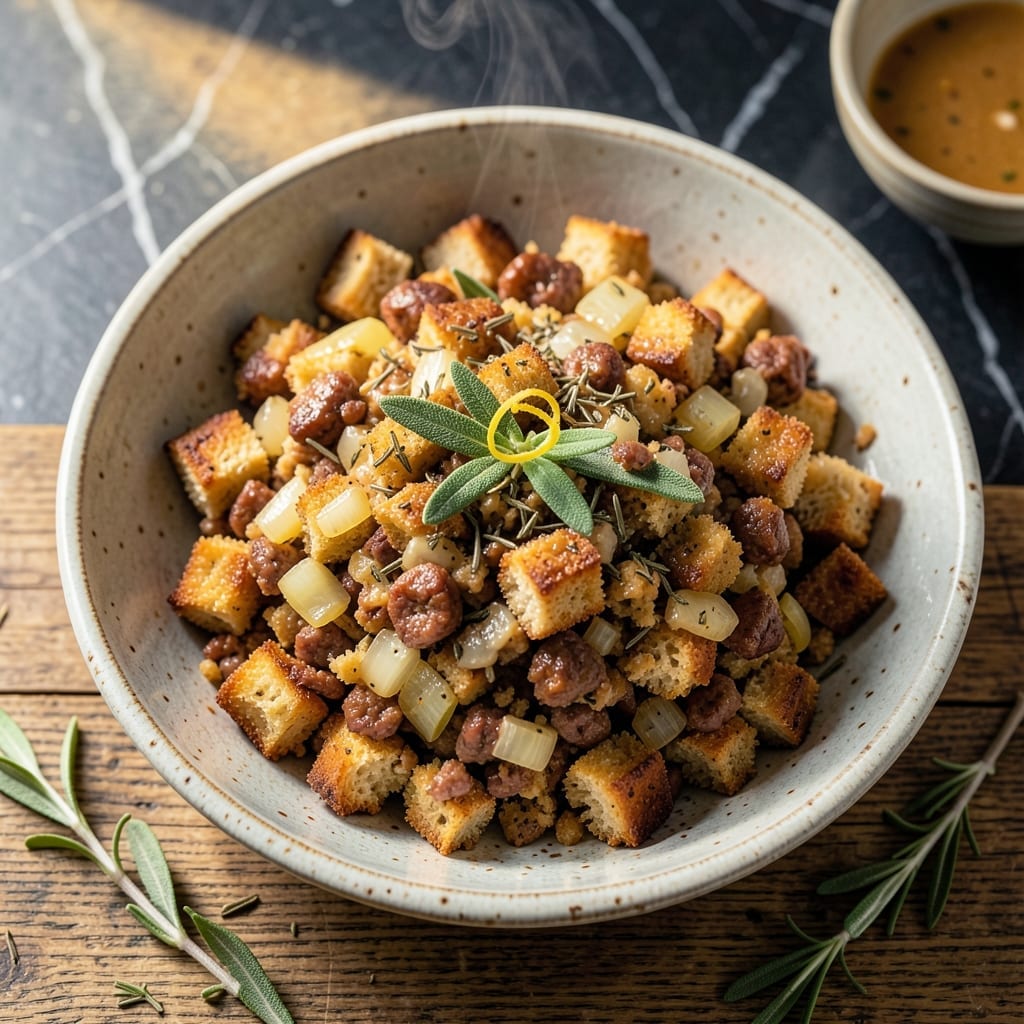
This sausage stuffing brings the herb-infused warmth of sage to your holiday table with every bite. The combination of savory sausage, fragrant herbs, and soft bread creates an unforgettable side dish.
Perfect for special occasions, this recipe transforms simple ingredients into a holiday classic that complements any main course beautifully.
Ingredients for Sausage Stuffing Recipe Sage
Sage takes center stage in this holiday classic with savory sausage and soft bread.
| Ingredient | Amount | Notes |
|---|---|---|
| Pork Sausage 🥓 | 1 lb | Mild or sage-flavored preferred |
| Dried Sage 🌿 | 2 tbsp | Rubbed between palms to release oils |
| Fresh Sage Leaves 🌿 | ¼ cup | Finely chopped for garnish |
| Day-Old Bread 🍞 | 12 cups | Cubed, preferably sourdough or French |
| Yellow Onion 🧅 | 1 whole | Finely diced for even distribution |
| Celery Stalks 🥬 | 3 pieces | Finely diced for texture |
| Garlic Cloves 🧄 | 4 cloves | Minced for maximum flavor |
| Unsalted Butter 🧈 | ½ cup | Melted for sautéing |
| Dried Thyme 🍃 | 1 tsp | Crushed to enhance aroma |
| Dried Rosemary 🌿 | 1 tsp | Finely chopped for even flavor |
| Chicken Broth 🥣 | 2 cups | Low-sodium preferred for control |
| Large Egg 🥚 | 1 whole | Beaten for binding |
| Kosher Salt 🧂 | 1 tsp | Adjust to taste |
| Freshly Ground Black Pepper 🌶️ | ½ tsp | For depth of flavor |
[recipe_ingredient_scaler]
The sausage is non-negotiable—Jimmy Dean or Johnsonville sage varieties are ideal for that herb-forward punch. For bread, day-old sourdough or French loaves from a local bakery absorb the broth best. Fresh sage can be found at Whole Foods or specialty grocers, but dried works in a pinch. Look for vibrant green leaves with no wilting for the freshest flavor.
No pork sausage? Chicken or turkey sausage keeps it light. Out of fresh sage? Double the dried (it’s more concentrated). Bread too fresh? Toast the cubes at 300°F for 10 minutes to dry them out. For broth, homemade or low-sodium store-bought prevents oversalting. The celery and onion can be swapped for fennel or leeks if you’re feeling fancy.
Assemble the day before for deeper flavor—cover and refrigerate up to 24 hours. Leftovers reheat beautifully and keep for 4-5 days in the fridge. Freeze portions for up to 3 months if prepping ahead. Always bring to room temperature before reheating for even cooking.
Why You’ll Love This Recipe
- One Bowl Wonder: I toss everything in my biggest bowl—no fancy prep, just crumbled sausage, torn bread, and sage—then straight into the pan.
- Sage Perfection: The combo of dried and fresh sage with pork sausage hits that cozy, herby note that makes everyone ask for the recipe.
- Holiday or Tuesday: Works just as well for Thanksgiving as it does for a random weeknight when I’m craving comfort food.
- Feeds and Keeps: Makes enough to stuff a turkey and have leftovers—honestly, it tastes even better the next day.
Step-by-Step Instructions for Sausage Stuffing
Here’s the method. Straightforward, tested, works every time.
Step 1: Sauté Aromatics and Sausage
Melt the 0.5 cup Unsalted Butter in a large skillet over medium heat. Add the finely diced Yellow Onion and finely diced Celery Stalks, cooking for 5-7 minutes until softened and translucent.
Push the vegetables to one side, add the 1 lb Pork Sausage, and cook until browned, breaking it into small pieces. Stir in the minced Garlic Cloves and cook for 30 seconds until fragrant. This builds a flavorful foundation for your stuffing.
Step 2: Toast the Bread with Herbs
In a large bowl, combine the 12 cups Day-Old Bread cubes with the 2 tbsp Dried Sage, 1 tsp Dried Thyme, and 1 tsp Dried Rosemary. Pour the sausage mixture over the bread and toss to coat evenly.
Spread the mixture on a baking sheet and bake at 350°F for 10-12 minutes until the bread is lightly toasted. This step ensures your stuffing has a perfect texture without becoming soggy.
Step 3: Moisten and Bind
Transfer the toasted bread mixture back to the large bowl. Gradually pour in the 2 cups Chicken Broth, stirring gently to moisten the bread evenly without making it sodden.
In a small bowl, beat the 1 whole Large Egg with the 1 tsp Kosher Salt and 0.5 tsp Freshly Ground Black Pepper. Pour this over the bread mixture and stir well to combine. The egg acts as a binder, holding everything together as it bakes.
Step 4: Bake to Golden Perfection
Transfer the mixture to a greased baking dish and spread it out evenly. Bake at 350°F for 25-30 minutes until the top is golden brown and the center is set.
Garnish with the 0.25 cup Fresh Sage Leaves just before serving. The fresh sage adds a bright, aromatic finish that complements the rich, savory flavors of the stuffing.
Pro Tips For Making Sausage Stuffing Recipe Sage
- Toast the Bread: Dry your day-old bread in a 300°F oven for 10-15 minutes first—I learned this the hard way after my stuffing turned mushy more than once.
- Brown the Sausage: Cook the pork sausage until deeply browned, not just gray, to build flavor that dried sage alone can’t carry.
- Skip Wet Bread: Resist the urge to use fresh bread; it’ll turn to paste when baked with the sausage fat and onion moisture.
- Double the Sage: Use both fresh and dried sage—about 1 tablespoon dried and 10 fresh leaves chopped—to get that layered herb flavor without overpowering the dish.
Dietary Considerations for This sausage stuffing recipe sage
Gluten-Free Option
Swap the day-old bread for gluten-free bread cubes—I recommend Canyon Bakehouse or Schar brands. Ensure your sausage is certified gluten-free, as some brands add fillers. Use gluten-free chicken broth to avoid hidden gluten.
Dairy-Free Adaptation
Replace the 0.5 cup Unsalted Butter with olive oil or vegan butter like Miyoko’s. For extra richness, add 2 tbsp nutritional yeast to the bread mixture. This maintains the savory depth without dairy.
Vegetarian Version
Use plant-based sausage—Beyond Meat or Impossible work well. Swap the chicken broth for vegetable broth. I add 1 cup sautéed mushrooms for extra umami depth. 🌱
Low-Sodium Adjustments
Use low-sodium chicken broth and unsalted butter. Skip the added kosher salt and rely on the natural saltiness of the sausage. Taste before serving and adjust with freshly ground black pepper if needed.
Nut-Free Consideration
This recipe is naturally nut-free, but always check your bread and sausage labels for cross-contamination warnings. If serving to those with severe allergies, use dedicated nut-free facilities for all ingredients.
Egg-Free Binding
Omit the large egg and use ¼ cup unsweetened applesauce or 1 tbsp cornstarch mixed with 2 tbsp water as a binder. The stuffing will hold together beautifully with either option.
Nutrition Facts
Frequently Asked Questions
Can I use fresh sage instead of dried?
Yes! Use 1 tablespoon fresh sage for every 1 teaspoon dried. Fresh sage has a brighter, more delicate flavor. Finely chop it before adding to ensure even distribution.
Why does my stuffing come out soggy?
Soggy stuffing usually means too much liquid. Use day-old bread and toast it first to create a barrier. Add broth gradually, letting the bread absorb it before adding more.
Can I make this ahead of time?
Prepare it up to 24 hours in advance and refrigerate. Bake just before serving, adding 5-10 minutes to the cooking time if it’s cold.
What’s the best sausage for this recipe?
Mild or sage-flavored pork sausage works best. For a lighter option, try chicken or turkey sausage. Avoid highly seasoned varieties that might overpower the sage.

Trained in classic French technique but raised on slow-cooked ribs and spicy rubs, she blends culinary skill with smoke and soul.
- Recipe for Boneless Pork Chops in Cast Iron Skillet: Sear and Baste to Juicy Perfection - October 3, 2026
- Recipe for Boneless Cross Rib Roast: Slow-Roasted Beef with Herb Crust - October 3, 2026
- Hamburgers in Sauce Recipe Crock Pot: Slow-Cooked Savory Delight - October 3, 2026