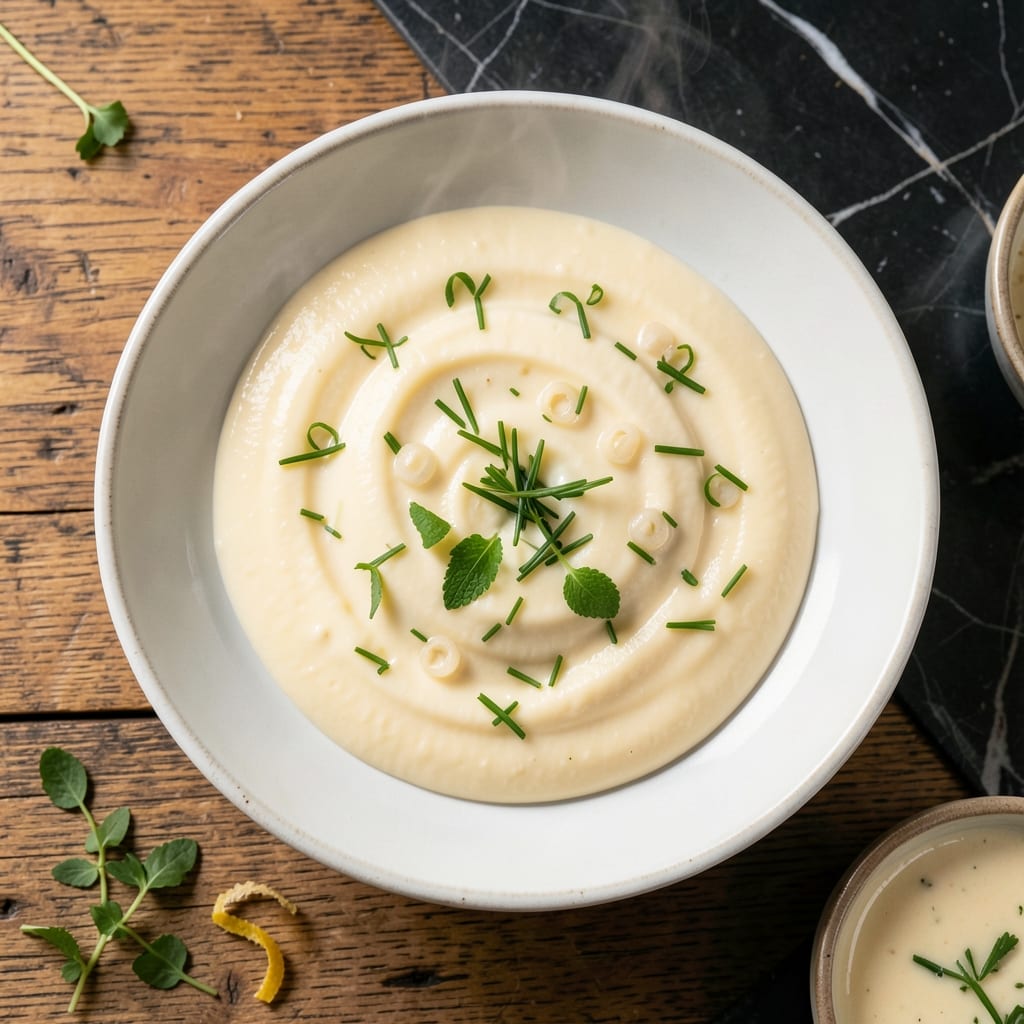
Crafting a perfectly silky savory sabayon requires precision and patience, but the results are worth every moment of attention. This French technique transforms simple ingredients into a luxurious custard with bold flavor.
I developed this method over years of practice, refining the balance between heat and constant whisking. The key lies in maintaining a gentle, steady temperature while incorporating air for that signature light texture.
What emerges is a velvety sauce that elevates any dish it graces—whether drizzled over asparagus, pooled beneath seared scallops, or served as a dip for crusty bread.
Master this foundation, and you’ll unlock a world of culinary possibilities with restaurant-quality finesse.
Ingredients for Savory Sabayon
Transform simple ingredients into restaurant-quality French custard with these essentials.
| Ingredient | Amount | Notes |
|---|---|---|
| Large Egg Yolks 🥚 | 6 whole | Room temperature, separated carefully |
| Unsalted Butter 🧈 | ½ cup | Cut into small cubes, high-quality |
| Dry White Wine 🍷 | ¼ cup | Sauvignon Blanc or Pinot Grigio |
| Shallot 🧅 | 1 whole | Finely minced for subtle flavor |
| Fresh Tarragon Leaves 🌿 | 1 tbsp | Chopped finely, stems discarded |
| Fresh Chives 🌿 | 1 tbsp | Chopped, for garnish |
| Dijon Mustard 🟡 | 1 tsp | High-quality, smooth variety |
| Lemon Juice 🍋 | 1 tsp | Freshly squeezed, for brightness |
| Kosher Salt 🧂 | ½ tsp | Diamond Crystal preferred for precision |
| White Pepper 🌶️ | ¼ tsp | Freshly ground for subtle heat |
| Heavy Cream 🥛 | 2 tbsp | Optional, for richer texture |
| Champagne Vinegar 🍾 | ½ tsp | For acidity balance |
[recipe_ingredient_scaler]
Precision begins with the egg yolks—fresh, high-quality eggs from a trusted source like Whole Foods or a local farm ensure vibrant color and rich flavor. The butter must be European-style unsalted (I prefer Plugrá or Kerrygold), as its higher fat content stabilizes the emulsion. For the wine, avoid cooking wines; a dry Sauvignon Blanc from Trader Joe’s or a reputable wine shop provides the necessary acidity without overpowering the dish.
No white wine? Substitute dry vermouth or a splash of white wine vinegar diluted with water. Shallots can be replaced with half the amount of garlic for a sharper profile. Tarragon is non-negotiable for authenticity, but fresh dill at one-third the quantity works in a pinch. If avoiding dairy, swap the butter for high-quality vegan butter, though the texture may differ slightly.
Sabayon is best served immediately but can be held in a thermos for up to 2 hours at room temperature. Do not refrigerate, as it will separate. Leftover components (uncooked) keep in the fridge for 24 hours—whisk vigorously before using. The finished sauce cannot be stored.
Why You’ll Love This Recipe
- One-Pot Wonder: Honestly, it’s just yolks, butter, wine, and a quick whisk—no fancy tools, no mess.
- Bright & Herby: The shallots and tarragon bloom in the wine, giving this rich, creamy sauce a fresh, almost floral finish.
- Dinner Party Hero: I drizzle it over asparagus or fish, and suddenly a simple meal feels restaurant-worthy.
- Budget Stretch: Egg yolks and a splash of wine turn humble ingredients into something luxurious without breaking the bank.
Step-by-Step Instructions for Savory Sabayon
Master this technique for a luxurious custard with depth and finesse.
Step 1: Create the Aromatic Base
In a small saucepan, combine the dry white wine and finely minced shallot. Bring to a gentle simmer over medium-low heat and cook for 3-4 minutes until the shallot softens and the liquid reduces by about half.
This step infuses the wine with subtle allium flavor without overpowering the delicate custard. Watch for the liquid to become slightly syrupy and the raw edge of the shallot to mellow. Remove from heat and let cool for 2 minutes before proceeding.
Step 2: Whisk Yolks to Ribbon Stage
In a heatproof bowl, whisk the 6 whole large egg yolks with the kosher salt and white pepper until the mixture thickens and lightens to a pale yellow color, about 2-3 minutes. The yolks should form ribbons that hold their shape for a few seconds when the whisk is lifted.
This vigorous whisking incorporates air, which gives the sabayon its signature light yet rich texture. Ensure the bowl is completely dry before adding the yolks—any water will prevent proper emulsification.
Step 3: Temper and Cook the Custard
Place the bowl over a pot of barely simmering water (ensure the bottom doesn’t touch the water) and slowly drizzle in the warm dry white wine and shallot mixture while whisking constantly. Continue whisking for 8-10 minutes until the mixture thickens and turns a pale, creamy lemon yellow color.
The sabayon is ready when it coats the back of a spoon and leaves a clear trail when a finger is drawn through it. If it begins to look grainy or curdled, immediately remove from heat and whisk vigorously to re-emulsify.
Step 4: Finish with Butter and Seasonings
Remove the bowl from the heat and gradually whisk in the unsalted butter, one cube at a time, ensuring each piece is fully incorporated before adding the next. Once all the butter is added, whisk in the Dijon mustard, lemon juice, and champagne vinegar.
The mixture should now be glossy and thick enough to hold soft peaks. If using, whisk in the heavy cream for additional richness. Taste and adjust seasoning if needed.
Step 5: Incorporate Herbs and Serve
Gently fold in the fresh tarragon leaves and half of the fresh chives, reserving the rest for garnish. The sabayon should be silky and lightly aerated, with visible flecks of herbs.
Serve immediately while warm, spooned over vegetables, fish, or toasted bread. Garnish with the remaining fresh chives for a pop of color and freshness. Sabayon waits for no one—it’s best enjoyed fresh.
Pro Tips For Making Savory Sabayon
- Whisk Constantly: I learned this the hard way—walking away even for 10 seconds turns your sabayon into scrambled eggs. Keep that whisk moving over the double boiler until it thickens to ribbon-like consistency.
- Use Room-Temp Yolks: Cold yolks take forever to emulsify and can make the sabayon grainy. Pull your eggs out 30 minutes before starting—sounds simple, but it actually changes the texture.
- Reduce the Wine First: Skip dumping raw wine in with the yolks. Simmer the shallot-wine mixture until it’s halved first—about 5 minutes—to cook off the harsh alcohol and concentrate the flavor.
- Butter Last, Slowly: After the sabayon thickens, take it off heat and whisk in butter a teaspoon at a time. Adding it too fast or while still over heat breaks the emulsion every time.
Troubleshooting This Dish
Grainy Texture Fix
If your sabayon looks grainy, the eggs may be starting to curdle. Immediately remove the bowl from heat and whisk vigorously for 30 seconds. Adding 1 tsp ice-cold water while whisking can help re-emulsify the mixture. 💡
Thin Sabayon
When your custard is too thin, it needs more cooking time. Return the bowl to the double boiler and whisk constantly for another 2-3 minutes. If it still won’t thicken, check your heat—it may be too low.
Overcooked Sabayon
If you see scrambled egg bits, you’ve pushed it too far. Strain through a fine-mesh sieve immediately to remove the curds, then whisk in 1 tbsp cold butter to cool and smooth the mixture. Prevent this by keeping heat at a gentle simmer.
Butter Separation
When adding butter causes separation, the mixture may be too hot. Remove from heat and whisk in 1 tsp cold cream to bring it back together. Always add butter slowly, one cube at a time, waiting for full incorporation.
Weak Flavor
If your sabayon tastes flat, it likely needs more seasoning. Adjust with ¼ tsp kosher salt and ½ tsp lemon juice, then taste again. The wine reduction step is crucial for depth—don’t rush it.
Lumpy Herbs
Prevent herb clumps by finely chopping the tarragon and chives before adding. Fold them in gently at the end rather than whisking vigorously, which can cause discoloration. 🌿
Nutrition Facts
Frequently Asked Questions
Can I make this ahead of time?
No, sabayon is best served immediately after making. It can be held in a thermos for up to 2 hours at room temperature, but it will begin to separate if refrigerated.
What can I use instead of white wine?
Dry vermouth works well as a substitute, or use a splash of white wine vinegar diluted with water. Avoid cooking wines, as they lack the necessary acidity and depth.
Why did my sabayon turn grainy?
This usually happens if the eggs begin to curdle. Remove from heat and whisk in 1 tsp ice-cold water to re-emulsify. Always cook over gentle heat to prevent this.
Can I use a different herb?
Tarragon is traditional, but fresh dill at one-third the quantity works in a pinch. Avoid dried herbs, as they won’t provide the same fresh flavor.

Trained in classic French technique but raised on slow-cooked ribs and spicy rubs, she blends culinary skill with smoke and soul.
- Recipe for Boneless Pork Chops in Cast Iron Skillet: Sear and Baste to Juicy Perfection - October 3, 2026
- Recipe for Boneless Cross Rib Roast: Slow-Roasted Beef with Herb Crust - October 3, 2026
- Hamburgers in Sauce Recipe Crock Pot: Slow-Cooked Savory Delight - October 3, 2026