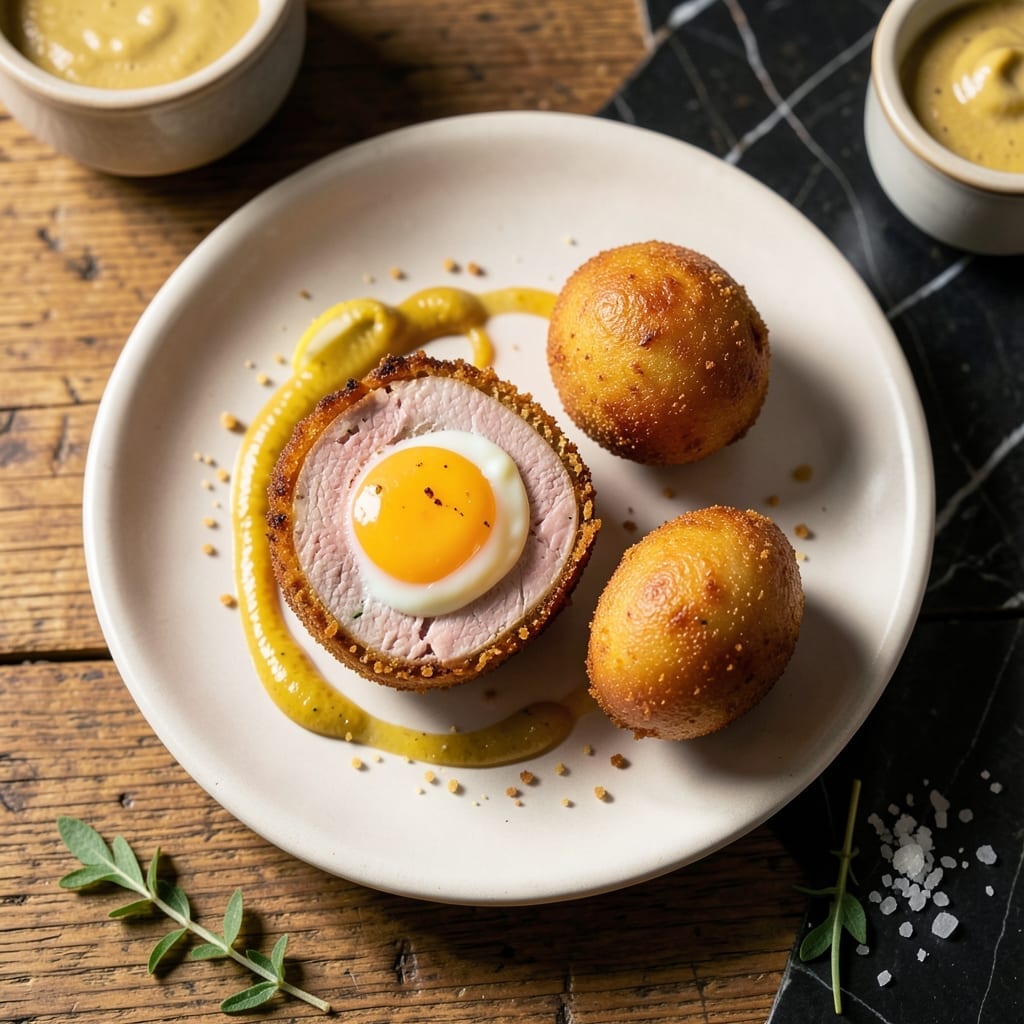
This dish transforms a simple hard-boiled egg into a showstopper with its crispy golden crust and perfectly seasoned sausage. I’ve refined this method to ensure every bite delivers that signature contrast of textures.
The key is using quality sausage meat and a precise breading technique to achieve a perfect coating that stays intact. Gordon Ramsay’s approach inspired my version, focusing on clean execution and balanced flavors.
You’ll end up with a dish that’s rich, satisfying, and visually impressive—ideal for elevating a meal or serving as a hearty snack. The sausage wrapping seals in moisture while creating a delightful crunch.
Pair it with a tangy mustard or spicy chutney to cut through the richness. Here’s how to master this classic.
Ingredients for Scotch Egg Recipe Gordon Ramsay
Quality sausage and precise breading create this crispy, golden-wrapped classic with perfect texture contrast.
| Ingredient | Amount | Notes |
|---|---|---|
| Large Eggs 🥚 | 8 whole | 4 for boiling, 4 for breading |
| Pork Sausage Meat 🥓 | 1 lb | High-quality, seasoned well |
| All-Purpose Flour 🌾 | ½ cup | For initial dredging |
| Large Eggs 🥚 | 2 whole | Beaten for egg wash |
| Panko Breadcrumbs 🍞 | 2 cups | Japanese-style for crispiness |
| Dijon Mustard 🟡 | 2 tbsp | For tangy dipping sauce |
| Vegetable Oil 🫒 | 4 cups | For deep frying |
| Salt 🧂 | 1 tsp | Kosher or sea salt |
| Black Pepper 🌶️ | ½ tsp | Freshly ground preferred |
| Fresh Thyme 🌿 | 1 tsp | Chopped, for sausage mix |
| White Vinegar 💧 | 1 tbsp | For boiling water |
| Ice Cubes ❄️ | 4 pieces | For shocking boiled eggs |
[recipe_ingredient_scaler]
The sausage is critical. Seek high-fat pork sausage meat (at least 20% fat) from a trusted butcher or Whole Foods—leaner blends dry out. Gordon Ramsay insists on Cumberland sausage for authenticity, but any well-seasoned pork sausage works. For the breading, panko breadcrumbs are non-negotiable for that restaurant-quality crunch. Most supermarkets carry them in the Asian aisle.
No panko? Crush stale sourdough bread into coarse crumbs as a backup. Fresh thyme can be swapped for dried at one-third the amount. If avoiding pork, chicken or turkey sausage works, but the texture differs slightly. For frying, peanut oil offers a higher smoke point than vegetable oil, though both perform well.
Store raw sausage in the fridge for up to 2 days or freeze for 3 months. Boiled eggs peel best when shocked in ice water immediately. The finished Scotch eggs keep 3-4 days refrigerated or freeze beautifully for 1 month.
Why You’ll Love This Recipe
- No-Fuss Assembly: I can roll these together in one bowl—just pork sausage, flour, and panko, no fancy prep.
- Crispy Outside, Creamy In: That panko crust gives a satisfying crunch, and the runny yolk? Pure indulgence.
- Picnic or Lunchbox: These travel like a dream, and my kids actually eat them cold from their lunchboxes.
- Budget Stretcher: Pork sausage meat goes a long way, and I always have eggs on hand. Honestly, it’s my cheat for feeding four without breaking the bank.
Step-by-Step Instructions for Scotch Eggs
Achieve restaurant-quality results with this method for perfectly crispy, golden Scotch eggs.
Step 1: Prepare and Boil the Eggs
Place 4 whole Large Eggs in a saucepan and cover with cold water by about 1 inch. Add 1 tbsp White Vinegar and bring to a boil over medium-high heat. The vinegar helps prevent cracking and makes peeling easier.
Once boiling, reduce heat to medium and cook for 6 minutes for soft-boiled eggs or 9 minutes for hard-boiled. Immediately transfer the eggs to a bowl of ice water with 4 pieces Ice Cubes to stop the cooking process. Let them cool for 10 minutes before peeling under cold running water.
Step 2: Season and Shape the Sausage Mixture
In a bowl, combine 1 lb Pork Sausage Meat, 1 tsp Salt, 0.5 tsp Black Pepper, and 1 tsp Fresh Thyme. Mix gently but thoroughly to distribute the seasonings without overworking the meat, which can make it tough.
Divide the sausage mixture into 4 equal portions. On a lightly floured surface, flatten each portion into an oval shape about ¼-inch thick. This creates a bed for the peeled eggs. The sausage should be evenly distributed to ensure consistent cooking and a perfect seal around each egg.
Step 3: Coat the Eggs with Sausage and Bread
Pat the peeled eggs dry with paper towels to help the sausage adhere. Place each egg in the center of a sausage oval, then carefully wrap the sausage around the egg, pressing gently to seal completely. Ensure there are no gaps or thin spots to prevent the egg from leaking during frying.
Set up a breading station with three shallow dishes. Place 0.5 cup All-Purpose Flour in the first dish. In the second dish, beat the 2 whole Large Eggs with a fork until well combined. Place 2 cups Panko Breadcrumbs in the third dish. Dredge each sausage-wrapped egg in flour, shaking off excess, then dip in the beaten egg, and finally coat thoroughly in panko, pressing gently to adhere.
Step 4: Fry to Golden Perfection
In a deep, heavy-bottomed pot, heat 4 cups Vegetable Oil to 350°F over medium-high heat. Use a deep-fry thermometer to maintain precise temperature—this is critical for even cooking and a crispy exterior. Carefully lower the breaded eggs into the oil using a slotted spoon, working in batches to avoid crowding.
Fry for 5-6 minutes, turning occasionally, until the coating is deep golden brown and crispy. The internal temperature of the sausage should reach 160°F. Remove the eggs with a slotted spoon and drain on a wire rack or paper towels to maintain crispness.
Step 5: Rest and Serve with Dipping Sauce
Let the Scotch eggs rest for 5 minutes before serving. This allows the sausage to set slightly and the flavors to meld. The exterior should remain audibly crisp when tapped, and the egg yolk should be perfectly set or runny, depending on your preference.
Mix 2 tbsp Dijon Mustard with a small amount of warm water to create a smooth, tangy dipping sauce. Serve the Scotch eggs warm with the mustard sauce on the side. Each bite should deliver a contrast of crispy panko, savory sausage, and creamy egg yolk.
Pro Tips For Making Scotch Egg Recipe Gordon Ramsay
- Chill the Sausage: Shape your pork sausage meat around the soft-boiled eggs, then refrigerate for 15-20 minutes—this keeps the coating firm while breading and prevents it from sliding off during frying.
- Use Cold Eggs: After boiling, plunge the eggs into ice water immediately to stop the cooking, then peel them while still slightly warm—this makes them easier to handle and wrap evenly with sausage.
- Double Crumb Coating: Dip the sausage-wrapped eggs in flour, then beaten egg, then panko, and repeat the egg and panko step for an extra-crispy crust that won’t fall apart in the oil.
- Maintain Oil Temp: Keep your oil at a steady 170-180°C (340-350°F) and fry in small batches—too low and the coating absorbs oil, too high and the outside burns before the sausage cooks through.
Essential Equipment for Great scotch egg recipe gordon ramsay
Deep Fryer Essentials
I swear by my Cuisinart Deep Fryer for perfect temperature control—it maintains 350°F like a dream. A heavy-bottomed Dutch oven works too, but you’ll need a candy thermometer to monitor oil temp precisely. Never guess with hot oil. 🔥
Thermometer Matters
Invest in a ThermoWorks Instant Read for checking sausage doneness at 160°F. The thin probe gives accurate readings without piercing the sausage too much. I keep mine clipped to my apron during frying sessions.
Breading Station Setup
Use three shallow dishes for flour, egg wash, and panko breadcrumbs. I prefer stainless steel because they’re easy to clean and won’t absorb odors. A wire rack over a baking sheet catches drips during breading.
Sausage Handling Tools
A digital kitchen scale ensures equal 4 oz portions of sausage. I use my OXO Good Grips scale—it’s accurate to 1 gram. Plastic wrap helps roll the sausage around eggs without sticking to your hands.
Draining Solutions
Place finished eggs on a wire cooling rack set over paper towels. This keeps the bottom crispy while draining excess oil. My rack from Wilton has lasted years and fits perfectly over a half-sheet pan.
Safety Gear
Always keep tongs and a splatter screen nearby. I learned the hard way that hot oil doesn’t play nice. A fire extinguisher rated for grease fires is non-negotiable in my kitchen. 💡
Nutrition Facts
Frequently Asked Questions
What kind of sausage works best for this?
High-fat pork sausage meat (at least 20% fat) gives the juiciest results. Cumberland sausage is traditional, but any well-seasoned pork sausage works. Avoid lean varieties as they dry out.
How do I keep the breading from falling off?
Pat eggs completely dry before wrapping and chill breaded eggs for 15 minutes before frying. This helps the coating adhere. Press panko firmly into the egg wash layer.
Can I bake these instead of frying?
Yes! Bake at 400°F for 20-25 minutes on a wire rack. The texture won’t be as crispy, but it’s a lighter option. Brush with oil first for better browning.
Why did my eggs crack while boiling?
Start with room-temperature eggs and add 1 tbsp vinegar to the water. Don’t overcrowd the pan, and lower eggs gently with a spoon to prevent impact cracks.

Trained in classic French technique but raised on slow-cooked ribs and spicy rubs, she blends culinary skill with smoke and soul.
- Recipe for Boneless Pork Chops in Cast Iron Skillet: Sear and Baste to Juicy Perfection - October 3, 2026
- Recipe for Boneless Cross Rib Roast: Slow-Roasted Beef with Herb Crust - October 3, 2026
- Hamburgers in Sauce Recipe Crock Pot: Slow-Cooked Savory Delight - October 3, 2026