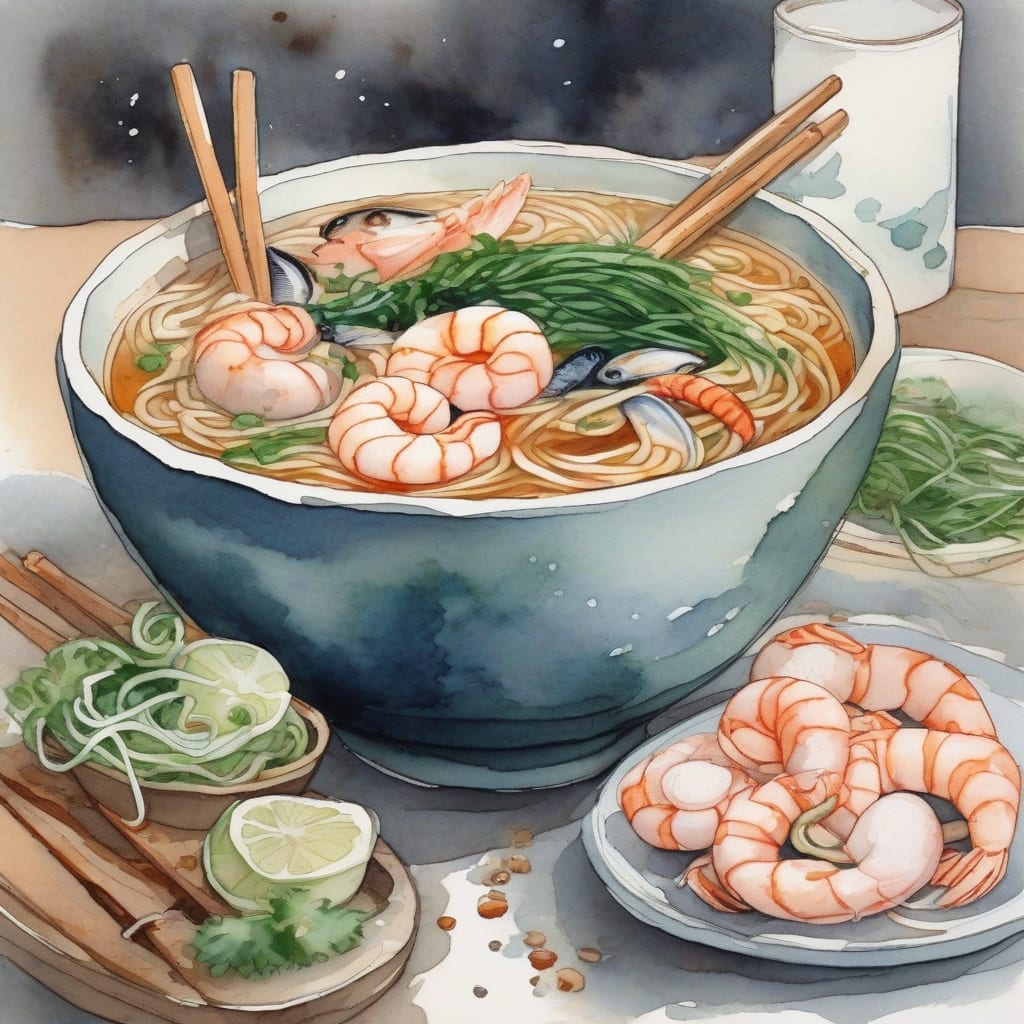
There’s something special about a steaming bowl of seafood udon soup on a chilly day—it warms you from the inside out. 🌟 I’ve perfected this recipe to deliver a rich, savory broth loaded with tender seafood and satisfying udon noodles.
The secret to this comforting soup lies in building layers of flavor. We start with a dashi broth base, then add tender chunks of seafood and perfectly cooked udon noodles. The combination creates a harmonious balance of textures and tastes.
By the time you’re ready to serve, you’ll have a steaming bowl of umami-rich goodness. The seafood will be tender, the noodles perfectly cooked, and the broth deeply satisfying. Let’s get started on this nourishing bowl of goodness!
Serve hot, garnished with green onions and a sprinkle of sesame seeds for added depth. Enjoy the comforting warmth and rich flavors of this seafood udon soup.
Ingredients for seafood udon soup
Here’s everything you need to create this comforting seafood udon soup recipe at home.
| Ingredient | Amount | Notes |
|---|---|---|
| Udon Noodles 🍜 | 12 oz | Thick, chewy variety |
| Dashi Broth 🍲 | 4 cups | Homemade or high-quality store-bought |
| Shrimp 🦐 | 1 lb | Peeled and deveined |
| Scallops 🦐 | ½ lb | Fresh, patted dry |
| Mushrooms 🍄 | 2 cups | Sliced, mixed varieties |
| Soy Sauce 🧂 | ¼ cup | Low-sodium preferred |
| Mirin 🍶 | 2 tbsp | Sweet Japanese cooking wine |
| Sesame Oil 🫒 | 1 tbsp | For finishing |
| Green Onions 🌿 | 4 whole | Thinly sliced for garnish |
| Sesame Seeds 🌰 | 2 tbsp | Toasted for best flavor |
| Kombu 🌿 | 1 piece | Dried kelp for dashi |
| Katsuobushi 🐟 | 1 cup | Dried bonito flakes |
[recipe_ingredient_scaler]
You can find udon noodles and dashi ingredients at Asian markets or well-stocked supermarkets. For the best dashi, look for high-quality kombu and katsuobushi from Japanese brands. Choose fresh, sustainably sourced seafood for the best flavor. If using frozen seafood, thaw completely before using.
If you can't find mirin, substitute with a mixture of equal parts sake and sugar. For a vegetarian version, omit seafood and add extra mushrooms or tofu. You can replace dashi with a high-quality vegetable broth for a different flavor profile. Use pre-made dashi granules if you're short on time.
Store leftover soup in an airtight container in the refrigerator for up to 2 days. Reheat gently to prevent noodles from becoming mushy. Keep dashi broth base refrigerated for up to 3 days or freeze for longer storage. Toast sesame seeds just before using for maximum flavor.
Step-by-Step Instructions for Seafood Udon Soup
Follow my simple steps to create a rich, savory seafood udon soup that’ll warm you from the inside out.
👨🍳 Step 1: Prepare the Dashi Broth
Start by making the dashi broth, the foundation of our soup. If using homemade dashi, combine 1 piece kombu and 4 cups water in a pot. Heat over medium heat until the water reaches a gentle simmer. Remove the kombu just before boiling, then add 1 cup katsuobushi. Remove from heat and let steep for 5 minutes until the flakes sink. Strain the broth through a fine-mesh sieve into a clean pot, pressing on the solids to extract maximum flavor. Discard the solids.
If using store-bought dashi, simply heat 4 cups dashi broth in a pot over medium heat until warm. I prefer high-quality store-bought for convenience while maintaining authentic flavor.
🍳 Step 2: Cook the Udon Noodles
Bring a large pot of water to a rolling boil and cook 12 oz udon noodles according to package instructions, typically 8-10 minutes or until they reach your desired tenderness. Drain and rinse under cold water to stop the cooking process. The noodles should retain a slight firmness in the center.
Drain well and set aside. I like to portion them into individual serving bowls ahead of time to make assembly easier later.
🍳 Step 3: Prepare and Cook the Seafood
While the noodles cook, prepare the seafood. Pat 1 lb shrimp and 0.5 lb scallops dry with paper towels. Season lightly with salt. In a separate pan, heat 1 tablespoon sesame oil over medium-high heat. Add the seafood and cook for 2-3 minutes per side until just cooked through and lightly browned. Transfer to a plate and cover to keep warm.
In the same pan, add 2 cups mushrooms and cook for 4-5 minutes until they release their moisture and start to brown. The combination of seafood and mushrooms creates a rich, savory flavor profile.
🥘 Step 4: Assemble and Season the Soup
Add 0.25 cup soy sauce and 2 tablespoons mirin to the dashi broth. Stir well to combine and bring to a gentle simmer. Taste and adjust seasoning as needed. For a deeper flavor, let it simmer for 5 minutes to allow the flavors to meld.
To assemble, place cooked udon noodles into bowls, add the cooked seafood and mushrooms, then ladle the hot dashi broth over everything. Garnish with thinly sliced green onions and toasted sesame seeds. Serve immediately while hot, enjoying the complex layers of flavor.
👌 Step 5: The Finishing Touches
Just before serving, give the soup a final check. If it needs more seasoning, add a splash of soy sauce or a pinch of salt. The broth should be rich and savory, coating the noodles and seafood beautifully. Ladle the hot soup into bowls and enjoy immediately, savoring the complex umami flavors and hearty ingredients.
Let’s dive into the delightful world of seafood udon soup recipe! 🍜 This Japanese-inspired dish is a perfect blend of hearty udon noodles, savory broth, and an array of fresh seafood. To make this mouth-watering soup, you’ll need the following ingredients:
- 1 package of udon noodles
- 2 cups of dashi broth (or vegetable broth as an alternative)
- 1/2 cup of sliced shiitake mushrooms
- 1/2 cup of sliced scallions
- 1/4 cup of grated ginger
- 1/2 pound of mixed seafood (shrimp, mussels, clams)
- Soy sauce and mirin to taste
Preparing the Broth 🔥
Start by heating the dashi broth in a large pot over medium heat. Add the sliced shiitake mushrooms and let them simmer until they’re tender. Then, add the grated ginger and sliced scallions, and continue to simmer for another minute.
Cooking the Udon Noodles 🍝
Cook the udon noodles according to the package instructions. Typically, it involves boiling them in water for 8-10 minutes, or until they’re slightly undercooked. Drain and set aside.
Adding the Seafood 👥
Add the mixed seafood to the pot and cook until they’re fully cooked and the soup is hot and steaming. Season with soy sauce and mirin to taste.
Assembling the Soup 🍲
To serve, place the cooked udon noodles in a bowl, then ladle the hot seafood broth and seafood mixture over the noodles. Garnish with additional scallions and a sprinkle of grated ginger, if desired. 💡 Pro tip: For an extra rich broth, you can add a tablespoon or two of sesame oil to the pot before serving. Enjoy your delicious and satisfying seafood udon soup!
Tips & Tricks for Perfect Seafood Udon Soup
These expert tips will help you create a rich, savory seafood udon soup that’s sure to impress.
Dashi Broth Quality: The key to an authentic udon soup is high-quality dashi broth. In Step 1, when making the dashi, be sure not to boil the kombu as it can make the broth bitter. Removing it just before boiling ensures a clean flavor. For an even deeper flavor, you can let the katsuobushi steep for 10 minutes instead of the recommended 5 minutes. 💡
Cooking Udon Noodles: When cooking the udon noodles in Step 2, make sure to rinse them under cold water after draining to stop the cooking process. This helps maintain their perfect texture. For an extra springy texture, you can soak the noodles in cold water for 30 minutes before cooking.
Seafood Preparation: In Step 3, pat the seafood dry with paper towels before cooking to ensure a good sear. Cooking the seafood just until it’s done prevents it from becoming tough. For an added layer of flavor, you can marinate the seafood in a mixture of soy sauce, mirin, and a bit of sesame oil for 15 minutes before cooking.
Flavor Enhancement: To enhance the umami flavor of your soup, you can add a dash of soy sauce or a pinch of dashi powder to the broth in Step 4. Taste and adjust seasoning as needed to achieve a rich, savory flavor. For a more intense flavor, let the broth simmer for 10 minutes to allow the flavors to meld together. 🔥
Nutrition Facts
320kcal
[recipe_ingredient_scaler]

Trained in classic French technique but raised on slow-cooked ribs and spicy rubs, she blends culinary skill with smoke and soul.
- Recipe for Boneless Pork Chops in Cast Iron Skillet: Sear and Baste to Juicy Perfection - October 3, 2026
- Recipe for Boneless Cross Rib Roast: Slow-Roasted Beef with Herb Crust - October 3, 2026
- Hamburgers in Sauce Recipe Crock Pot: Slow-Cooked Savory Delight - October 3, 2026