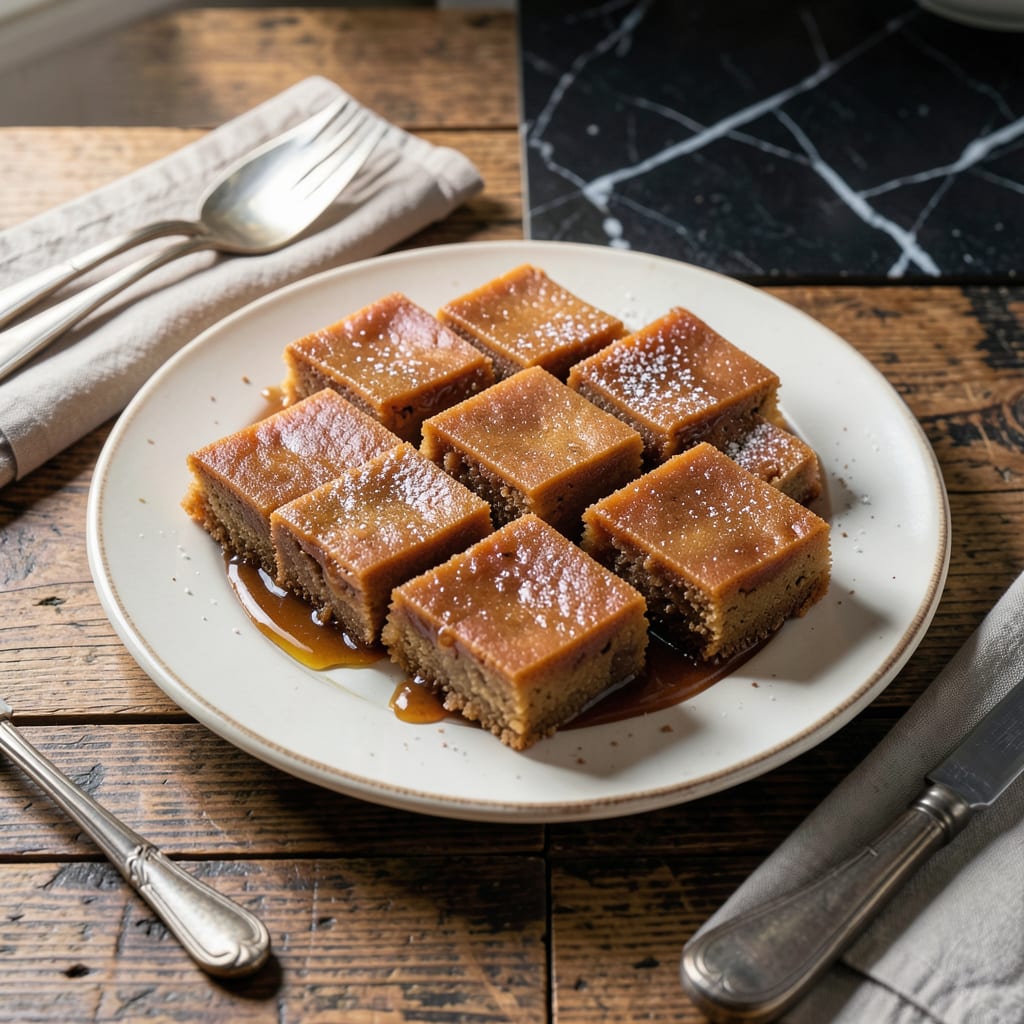
These classic butterscotch squares bring the nostalgic charm of old-fashioned candy shops to your kitchen. The recipe captures that signature rich, buttery flavor with a smooth texture that melts in your mouth.
With simple ingredients and precise baking, you can recreate this beloved treat. The result is a confection that balances sweetness with a hint of salt, just like the original.
Ingredients for See’s Butterscotch Squares
Rich buttery base plus pantry staples create that old-fashioned candy shop magic at home.
| Ingredient | Amount | Notes |
|---|---|---|
| Unsalted Butter 🧈 | 1 cup | Room temperature, high-quality |
| Light Brown Sugar 🍚 | 2 cups | Packed firmly for texture |
| Granulated Sugar 🍚 | ½ cup | For balanced sweetness |
| Light Corn Syrup 🧴 | ¾ cup | Karo brand preferred |
| Sweetened Condensed Milk 🥛 | 1 can | 14 oz size, full-fat |
| Vanilla Extract 🌿 | 1 tsp | Pure extract, not imitation |
| Salt 🧂 | ½ tsp | Fine sea salt preferred |
| All-Purpose Flour 🌾 | 2 cups | Sifted for smooth texture |
| Pecans 🌰 | 1 cup | Chopped, optional for crunch |
| Baking Powder 🧂 | ¼ tsp | Fresh for best rise |
[recipe_ingredient_scaler]
The butter is everything here. Use European-style unsalted if you can find it—higher fat content means better flavor and texture. Land O’Lakes or Kerrygold are my go-tos. Brown sugar should be soft and moist; if yours is rock-hard, revive it with a slice of bread in the bag overnight (trust me, it works). Light corn syrup might seem old-school, but it gives that signature chewy texture you remember from the candy counter.
Out of light corn syrup? Dark corn syrup works but adds molasses notes—still tasty. No condensed milk? Dulce de leche (at half the quantity) is a good swap, though it’ll be richer. Want it nut-free? Skip the pecans or swap in toasted almonds. The vanilla should be pure—Nielsen-Massey if you’re feeling fancy, but store brand is fine too.
These keep 2 weeks at room temp in an airtight container. Freeze for up to 3 months if you need to stash some away (though they rarely last that long). Cut into squares once completely cool—warm bars will crumble.
Why You’ll Love This Recipe
- One Bowl Wonder: I just melt the butter, sugars, and corn syrup together, then stir in the condensed milk—no fancy steps, no mess.
- Caramel-Like Magic: The brown sugar and condensed milk create this rich, buttery depth that tastes like the best butterscotch candy you’ve ever had.
- Holiday Gift Savior: I package these in little boxes for teachers, neighbors, and coworkers—they look fancy but cost pennies to make.
- Stays Fresh for Days: Honestly, they taste even better after sitting for a day or two, and they keep for over a week in an airtight container.
Step-by-Step Instructions for Butterscotch Squares
Here’s how to make these candies with that classic See’s texture everyone loves.
Step 1: Melt Butter and Sweeteners Together
In a heavy saucepan, melt the 1 cup Unsalted Butter over medium heat. Once melted, add the 2 cups Light Brown Sugar, 0.5 cup Granulated Sugar, and 0.75 cup Light Corn Syrup. Stir constantly with a wooden spoon until the sugars fully dissolve.
This step is critical—you want a smooth, bubbling mixture without any graininess. Keep the heat steady; if it’s too high, the sugars might scorch. You’re building the foundation of that rich butterscotch flavor here.
Step 2: Incorporate Condensed Milk and Flavorings
Gradually stir in the 1 can Sweetened Condensed Milk, maintaining that constant stirring to prevent hot spots. The mixture will thicken noticeably as the milk cooks down. After about 5 minutes, remove from heat and stir in the 1 tsp Vanilla Extract and 0.5 tsp Salt.
The vanilla deepens the butterscotch profile, while the salt balances the sweetness. You’ll start to see the mixture pull away from the pan slightly—that’s your cue it’s ready for the next step.
Step 3: Combine Dry Ingredients and Nuts
In a separate bowl, whisk together the 2 cups All-Purpose Flour and 0.25 tsp Baking Powder until evenly blended. Fold in the 1 cup Pecans if using. This dry mixture will transform your liquid butterscotch base into a spreadable dough.
I always use fresh baking powder to ensure the squares have that slight lift. The pecans add a satisfying crunch, but you can omit them if you prefer a smoother texture.
Step 4: Bake to Golden Perfection
Press the dough evenly into a greased 9×13-inch pan. Bake at 350°F for 20-25 minutes or until the edges are golden brown and the center looks set but still slightly soft. The top should have a subtle sheen when done.
Don’t overbake—these continue setting as they cool. A toothpick inserted should come out with a few moist crumbs, not wet batter. The aroma filling your kitchen will be irresistible at this point.
Step 5: Cool and Cut into Squares
Let the pan cool completely on a wire rack—this takes about 1 hour. Resist the urge to cut while warm; they’ll be too soft to hold their shape. Once cool, use a sharp knife to cut into 16 equal squares.
Store in an airtight container at room temperature. These taste even better the next day as the flavors meld. Each square should have that signature butterscotch richness with a tender, slightly chewy texture that melts in your mouth.
Pro Tips For Making See’S Butterscotch Squares
- Use Medium Heat: I learned this the hard way—cooking the butter-sugar mixture too hot can scorch the sugars and give your butterscotch a bitter edge. Keep it at a steady medium and stir constantly.
- Pack the Brown Sugar: Light brown sugar can be sneaky—pack it firmly into the measuring cup for accurate amounts, or your squares might turn out too soft and under-set.
- Skip the Substitutes: Resist the urge to swap light corn syrup for honey or maple syrup. It changes the texture and can make the filling too runny.
- Line the Pan Well: After burning three batches, I finally figured out that parchment paper overhang is non-negotiable for clean removal. Grease it lightly too—these squares stick like crazy.
Common Mistakes When Making This Dish
Overheating the Mixture
One of the biggest mistakes is letting your butterscotch base get too hot. If you see dark brown spots forming, you’ve gone past the ideal 240-245°F range. I use a candy thermometer clipped to the pan for precision. 🌡️
Skipping the Constant Stirring
Butterscotch is unforgiving—stop stirring and you’ll end up with a pan of scorched sugar. Use a wooden spoon and keep that mixture moving until it’s smooth and bubbling. This prevents hot spots that can ruin the entire batch.
Underbaking the Squares
Don’t pull these out too early! The edges should be golden brown and the center just set. If your toothpick comes out wet, give it another 3-5 minutes at 350°F. Underbaked squares will be gummy.
Cutting Too Soon
I know the smell is irresistible, but cutting while warm will make a crumbly mess. Let them cool completely—about 1 hour—before slicing into squares. This gives the texture time to set properly.
Using Cold Ingredients
Your 1 cup Unsalted Butter should be room temperature, and the 2 cups Light Brown Sugar should be soft. Cold ingredients can cause separation in the mixture. I take my butter out 2 hours before starting. 💡
Overmixing the Dough
Once you add the dry ingredients, mix just until combined. Overworking the dough can make your squares tough. Use a spatula and fold gently—think of it like making pancake batter, not bread dough.
Nutrition Facts

Trained in classic French technique but raised on slow-cooked ribs and spicy rubs, she blends culinary skill with smoke and soul.
- Recipe for Boneless Pork Chops in Cast Iron Skillet: Sear and Baste to Juicy Perfection - October 3, 2026
- Recipe for Boneless Cross Rib Roast: Slow-Roasted Beef with Herb Crust - October 3, 2026
- Hamburgers in Sauce Recipe Crock Pot: Slow-Cooked Savory Delight - October 3, 2026