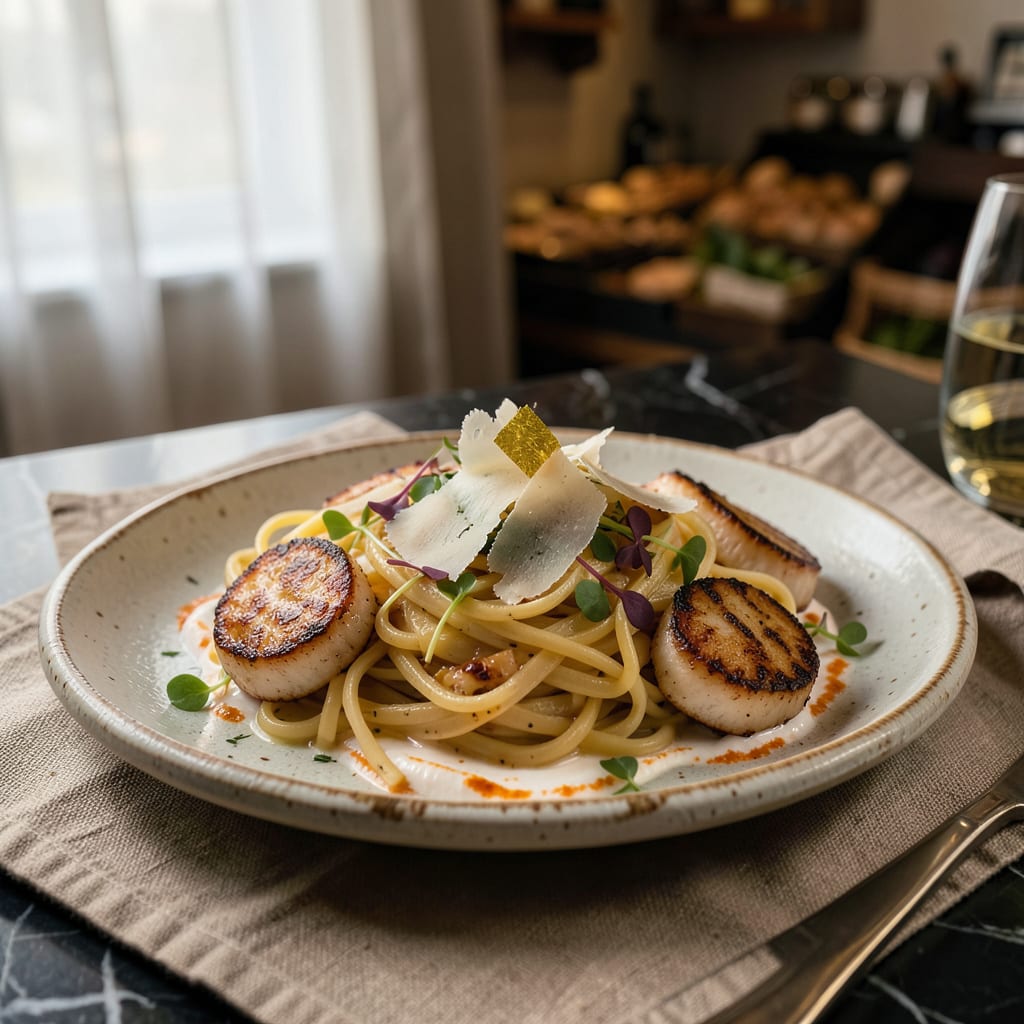
Shaved white truffle is a rare, aromatic fungus prized for its intense, garlicky, earthy flavor with subtle nutty undertones. It’s thinly sliced over dishes to enhance them with luxurious depth, typically used fresh rather than cooked.
This isn’t just any garnish—it’s a culinary powerhouse that transforms simple dishes into restaurant-worthy creations. 🔥 I’ve seen it elevate scrambled eggs into a five-star breakfast or turn plain risotto into a masterpiece. The key is its volatile aroma compounds that release their magic when exposed to air, creating that signature intoxicating scent. Unlike black truffles, white varieties are never cooked, as heat destroys their delicate flavors. That’s why you’ll always find them shaved tableside in fine dining establishments.
What fascinates me most is how just a few paper-thin slices can dominate a dish’s flavor profile. The earthy intensity comes from organic sulfur compounds, while the subtle sweetness develops from the truffle’s unique growing conditions in limestone-rich soils. It’s nature’s perfect umami bomb—no wonder chefs treat it like liquid gold.
💡 In This Article
- Why White Truffles Command Such High Prices
- How to Use Shaved White Truffle Like a Pro
Why White Truffles Command Such High Prices
White truffles grow only in specific microclimates where limestone-rich soil, proper moisture, and symbiotic oak/hazelnut trees converge. The most prized specimens come from Alba, Italy, where just 1-2 ounces can cost $200-$400 at auction.
These fungi can’t be cultivated—they must be foraged by trained dogs (or traditionally, pigs) during a brief 3-month season from September to December. The limited window and unpredictable yields make each harvest a high-stakes treasure hunt. ✨
The foraging process itself is labor-intensive and dangerous. Truffle hunters, called trifulau, work before dawn to beat competitors, using their animals to sniff out truffles buried 4-12 inches underground. The dogs require years of training to distinguish truffle scent from other underground distractions.
Once unearthed, the truffles must be handled immediately—they begin losing moisture and aroma within hours. This perishability adds another layer to their exclusivity, as they can’t be stored long-term like black truffles.
What truly sets white truffles apart is their volatile aroma profile. Scientists have identified over 200 distinct compounds in their scent, including dimethyl sulfide (garlic notes) and 2,4-dithiapentane (earthy depth). These compounds develop uniquely in Alba’s terroir due to the region’s specific soil pH (7.9-8.2) and mineral composition.
The flavor intensity correlates directly with the truffle’s maturity—younger specimens taste milder, while fully ripe ones deliver that punchy, intoxicating aroma that chefs crave. 🔥
The market dynamics amplify their value. At the annual Alba White Truffle Auction, single specimens have sold for over $160,000, with most commercial sales ranging $3,000-$6,000 per pound. This pricing reflects not just scarcity but the truffle’s ability to transform dishes.
A restaurant can charge $80-$150 extra for a truffle-shaved pasta dish, making the investment worthwhile. The economic ripple effect supports entire communities in truffle-producing regions, where families have perfected these harvesting techniques across generations.
Here’s what most people don’t realize: the truffle’s value isn’t just in its flavor, but in its ephemeral nature. Unlike wine that improves with age, white truffles degrade quickly—losing 30% of their aroma within 48 hours of harvest.
This forces chefs to use them immediately or preserve them in butter/oil, which still can’t capture the full fresh experience. The combination of fleeting perfection, impossible cultivation, and transformative culinary power creates what economists call “Veblen goods”—items that become more desirable precisely because of their extravagant cost. 💫
Compare this to black truffles, which can be harvested year-round in some regions and maintain flavor when cooked. White truffles offer a completely different experience—one that’s raw, volatile, and impossible to replicate. That’s why you’ll see Michelin-starred chefs shaving them tableside with dramatic flair.
It’s not just about taste; it’s about witnessing culinary alchemy happen in real time, where a simple dish becomes extraordinary through the addition of something that can’t be mass-produced or preserved.
The next time you see that $50 truffle supplement on a menu, remember you’re paying for centuries of tradition, a fragile ecosystem, and a flavor experience that disappears as quickly as it’s served. That’s the true luxury—something so perfect it can’t be bottled, frozen, or replicated.
It exists only in that fleeting moment between shaving and consumption, making every bite a tiny celebration of nature’s most stubborn delicacy. 🌟

Trained in classic French technique but raised on slow-cooked ribs and spicy rubs, she blends culinary skill with smoke and soul.
- Recipe for Boneless Pork Chops in Cast Iron Skillet: Sear and Baste to Juicy Perfection - October 3, 2026
- Recipe for Boneless Cross Rib Roast: Slow-Roasted Beef with Herb Crust - October 3, 2026
- Hamburgers in Sauce Recipe Crock Pot: Slow-Cooked Savory Delight - October 3, 2026