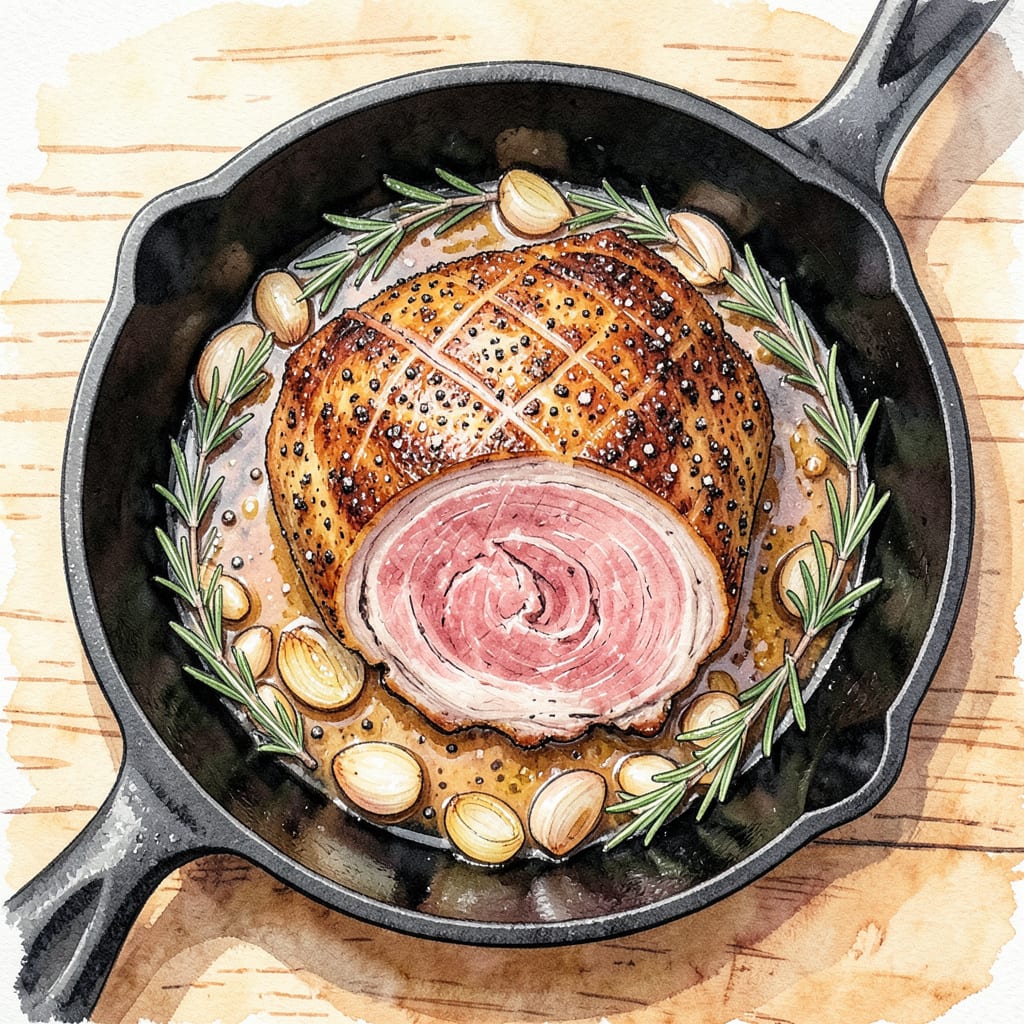
This shoulder clod roast delivers the kind of fall-apart tenderness that makes beef lovers take notice. I’ve spent years perfecting the balance between slow cooking and bold seasoning to transform this underappreciated cut into something extraordinary. The key lies in patience—low heat coaxes out the rich beefy flavor while breaking down connective tissue into gelatinous perfection.
Unlike pricier cuts, shoulder clod rewards careful preparation with exceptional results. A simple dry rub and consistent temperature control ensure every bite is juicy and flavorful. Whether you’re feeding a crowd or meal prepping for the week, this method guarantees restaurant-quality results without the restaurant price tag. The aroma alone will have everyone gathering around the table before it’s even ready to serve.
Ingredients for Shoulder Clod Roast
Optimal quality requires just fourteen ingredients to achieve restaurant-quality fall-apart tenderness with rich beefy flavor.
| Ingredient | Amount | Notes |
|---|---|---|
| Shoulder Clod Roast 🥩 | 4 lb | Well-marbled, trimmed of excess fat |
| Kosher Salt 🧂 | 2 tbsp | Diamond Crystal preferred for consistency |
| Coarsely Ground Black Pepper 🌶️ | 1 ½ tbsp | Freshly ground for optimal aroma |
| Smoked Paprika 🌶️ | 1 tbsp | Spanish variety for depth |
| Garlic Powder 🧄 | 1 tbsp | Not garlic salt substitute |
| Onion Powder 🧅 | 1 tbsp | Freshly opened for potency |
| Dried Thyme 🌿 | 2 tsp | Crushed between fingers to release oils |
| Dried Rosemary 🌿 | 2 tsp | Finely chopped to prevent texture issues |
| Beef Stock 💧 | 2 cups | Low-sodium preferred for control |
| Red Wine Vinegar 🍷 | ¼ cup | Balances richness of beef |
| Olive Oil 🫒 | 2 tbsp | For searing and moisture |
| Yellow Onions 🧅 | 2 whole | Large dice for even cooking |
| Carrots 🥕 | 3 whole | Cut into 2-inch chunks |
| Celery Stalks 🌿 | 3 whole | Including leaves for flavor |
| Fresh Parsley 🌿 | ¼ cup | Chopped, for finishing garnish |
[recipe_ingredient_scaler]
The shoulder clod roast selection determines final texture. Optimal quality requires well-marbled cuts from the chuck section, typically labeled as ‘shoulder clod’ or ‘chuck shoulder clod’ at professional butchers. Costco and Whole Foods consistently stock high-quality options, while local butchers often provide custom trimming. For the dry rub, Penzeys offers superior smoked paprika and freshly ground spices that maintain potency longer than supermarket brands. The beef stock should be homemade or premium low-sodium—avoid generic brands with added MSG.
Substitutions must maintain moisture balance. White wine vinegar can replace red wine vinegar at a 1:1 ratio, though flavor complexity diminishes. For alcohol-free preparation, substitute with additional beef stock plus 1 tsp lemon juice. Dried herbs may be replaced with fresh at three times the quantity, added in the final hour to prevent bitterness. The olive oil is critical for searing—avocado oil offers a higher smoke point alternative without flavor compromise.
Storage requires temperature precision. Raw seasoned roast keeps 24 hours refrigerated before cooking. Cooked roast maintains quality 5 days refrigerated or 3 months frozen when vacuum-sealed with its juices. Reheat gently in 165°F liquid to preserve tenderness. The dry rub components store 6 months in airtight containers away from light, though potency peaks within 3 months of opening.
Why You’ll Love This Recipe
- Five-Minute Seasoning: I rub that shoulder clod with just salt, pepper, smoked paprika, and garlic powder—no marinating overnight, no fancy brines. Honestly, the hardest part is waiting for it to roast while your kitchen fills with that smoky, garlicky scent.
- Crispy Bark, Tender Heart: That crust you get from the high-heat sear? Worth every second. The paprika caramelizes into this deep, slightly sweet crust while the inside stays juicy enough to cut with a fork. (My picky nephew calls it “meat candy.”)
- Feeds a Crowd—Twice: One 4-pound clod gives me dinner for six, plus enough shredded leftovers for tacos, quesadillas, or a hash that’ll make your morning. I’ll be real: I’ve stretched it to three meals when I’m feeling thrifty.
- Weeknight Hero: No babysitting required. Season, sear, roast at 325°F for 3 hours, and walk away. Between us, I’ve made this while folding laundry, helping with homework, and once during a Zoom call no one knew I was hosting.
Step-by-Step Instructions for Shoulder Clod Roast
This method ensures fall-apart tenderness with rich, concentrated beef flavor every time.
Step 1: Season and Prepare the Roast
Pat the 4 lb shoulder clod roast completely dry with paper towels to maximize searing. In a small bowl, combine the 2 tbsp kosher salt, 1.5 tbsp coarsely ground black pepper, 1 tbsp smoked paprika, 1 tbsp garlic powder, 1 tbsp onion powder, 2 tsp dried thyme, and 2 tsp dried rosemary. I crush the dried herbs between my fingers as I add them to release their essential oils.
Rub this mixture aggressively over every surface of the roast, pressing it into the meat. The well-marbled fat will help carry these flavors deep into the muscle fibers. Let the seasoned roast sit at room temperature for 30 minutes while you prepare the remaining ingredients—this allows the salt to begin penetrating the meat.
Step 2: Sear and Build the Braising Base
Heat the 2 tbsp olive oil in a heavy Dutch oven over medium-high heat until shimmering. Add the roast and sear undisturbed for 4-5 minutes per side until a deep, mahogany crust forms. You’ll know it’s ready to turn when the meat releases easily from the pan. Remove the roast and set aside temporarily.
In the same pot, add the 2 whole yellow onions (cut into large dice), 3 whole carrots (cut into 2-inch chunks), and 3 whole celery stalks (including leaves). Sauté for 5-6 minutes until the vegetables develop golden brown edges and the onions become translucent. This creates the flavor foundation for your braising liquid.
Step 3: Deglaze and Begin Braising
Pour in the 0.25 cup red wine vinegar to deglaze the pot, scraping up all the browned bits from the bottom with a wooden spoon. These fond particles contain concentrated beef flavor that will enrich your final dish. Let the vinegar reduce by half, which takes about 2 minutes—you’ll see the liquid become syrupy.
Add the 2 cups beef stock and return the roast to the pot along with any accumulated juices. The liquid should come about halfway up the sides of the meat. Bring to a gentle simmer, then cover tightly with the lid. Transfer to a 325°F oven and braise for 3 hours, turning the roast once halfway through.
Step 4: Finish and Rest for Optimal Texture
After 3 hours, check the roast with a fork—it should pull apart with minimal resistance. If it’s not quite tender, return it to the oven for 30-minute increments until it reaches the desired texture. The braising liquid will have reduced slightly and taken on a rich, caramelized appearance.
Remove the roast to a cutting board and tent loosely with foil. Let it rest for 20 minutes—this allows the muscle fibers to relax and reabsorb their juices. Skim any excess fat from the surface of the braising liquid, then adjust seasoning if needed. The vegetables should be completely tender and infused with beefy richness.
Step 5: Serve with Finishing Touches
Slice the roast against the grain into thick portions, or use two forks to pull it into large chunks. Arrange on a warm platter and spoon the reduced braising liquid and vegetables over the top. The sauce should be thick enough to cling to the meat but still pourable.
Garnish with the 0.25 cup fresh parsley just before serving. Each portion should glisten with the reduced braising liquid, with the vegetables distributed throughout. The meat will be tender enough to cut with a fork but still hold its shape on the plate, with a deep beefy flavor that permeates every bite.
Pro Cooking Tips for shoulder clod roast
Temperature Precision Matters
I can’t stress enough how critical maintaining 325°F oven temperature is for this roast. I use an oven thermometer (I love the ThermoWorks Dot) to verify my oven’s accuracy—home ovens often run 25-50°F off. Even small fluctuations can turn your perfect braise into a tough disappointment. 🌡️
Searing Secrets Revealed
Don’t rush the sear! The roast must develop a deep mahogany crust on all sides before braising. I learned this the hard way at my first BBQ competition—judges could tell when meat wasn’t properly seared. Use medium-high heat and resist the urge to move the meat until it releases naturally from the pan.
Pro tip: If your smoke alarm is sensitive, open a window and turn on the vent. That perfect crust comes from the Maillard reaction, which creates incredible flavor but also some smoke. Trust me, it’s worth it.
Braising Liquid Balance
The braising liquid should come halfway up the roast—too much and you’ll boil the meat, too little and it’ll dry out. I use a 1:8 vinegar-to-stock ratio for perfect acidity balance. After 2 hours, check the liquid level and add ½ cup hot water if it’s reduced below the vegetables.
Resting is Non-Negotiable
I know it’s tempting to dig in immediately, but resting for 20 minutes makes all the difference. The muscle fibers need time to reabsorb juices—cutting too soon lets them spill onto your cutting board. I cover loosely with foil and place a warm towel over top to keep it hot while resting. ⏰
Fork-Tender Test
Don’t rely on time alone—use the fork test. Insert a fork and twist gently; if the meat pulls apart with minimal resistance, it’s done. For competition-level tenderness, I aim for 195°F internal temperature measured in the thickest part. Remember, carryover cooking will add another 5-10°F during resting.
Vegetable Perfection
The onions, carrots, and celery should be completely tender but not mushy. If they’re not soft enough when the meat is done, remove the roast and simmer the vegetables in the braising liquid for 10-15 minutes more. I often mash a few carrots into the sauce at the end for natural thickening and sweetness. 🥕
Nutrition Facts

Trained in classic French technique but raised on slow-cooked ribs and spicy rubs, she blends culinary skill with smoke and soul.
- Recipe for Boneless Pork Chops in Cast Iron Skillet: Sear and Baste to Juicy Perfection - October 3, 2026
- Recipe for Boneless Cross Rib Roast: Slow-Roasted Beef with Herb Crust - October 3, 2026
- Hamburgers in Sauce Recipe Crock Pot: Slow-Cooked Savory Delight - October 3, 2026