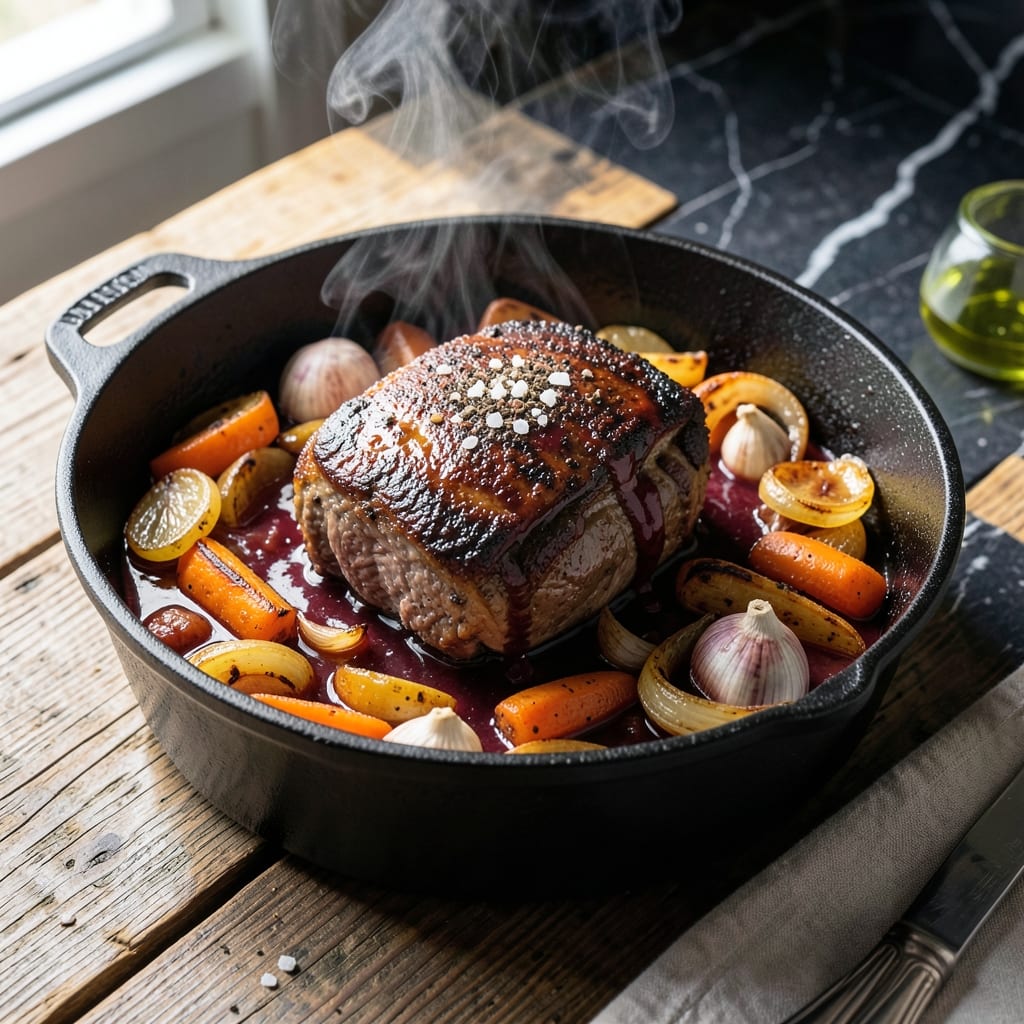
My grandmother’s Dutch oven shoulder roast was legendary—tender enough to cut with a fork, with flavors that developed slowly over hours. I’ve spent years perfecting her intuitive method into precise steps anyone can follow.
This approach transforms a tough cut into meltingly tender meat with rich, caramelized edges. The Dutch oven traps heat and moisture, ensuring even cooking without drying out the roast.
The secret lies in low, steady heat and proper browning before the slow cook. Each element builds layers of flavor that make this dish unforgettable.
Serve with roasted vegetables or mashed potatoes to soak up the incredible juices. Here’s how to achieve restaurant-quality results at home.
Ingredients for Shoulder Roast Recipe Dutch Oven
A few quality ingredients and a Dutch oven create that legendary melting tenderness.
| Ingredient | Amount | Notes |
|---|---|---|
| Beef Shoulder Roast 🥩 | 3 lb | Bone-in or boneless, well-marbled |
| Kosher Salt 🧂 | 1 ½ tbsp | Diamond Crystal preferred |
| Coarsely Ground Black Pepper 🌶️ | 1 tbsp | Freshly cracked for best flavor |
| Garlic Cloves 🧄 | 6 cloves | Smashed, peeled |
| Yellow Onion 🧅 | 1 whole | Large, roughly chopped |
| Carrots 🥕 | 3 whole | Peeled, cut into chunks |
| Celery Stalks 🌿 | 3 whole | Cut into large pieces |
| Red Wine 🍷 | 1 cup | Dry variety like Cabernet Sauvignon |
| Beef Stock 💧 | 2 cups | Low-sodium preferred |
| Tomato Paste 🍅 | 2 tbsp | For depth of flavor |
| Fresh Thyme Sprigs 🌿 | 4 whole | Plus extra for garnish |
| Fresh Rosemary Sprigs 🌿 | 2 whole | Woody stems removed |
| Bay Leaves 🍃 | 2 whole | Dried or fresh |
| Olive Oil 🫒 | 2 tbsp | For searing roast |
[recipe_ingredient_scaler]
The beef shoulder is non-negotiable here. Look for chuck roast—bone-in gives more flavor but boneless works fine. Costco or Whole Foods have great options, or ask your butcher for a well-marbled piece. Don’t trim the fat (it renders into the meat, trust me). The veggies are simple—onion, carrots, celery—but they soak up all that rich juice (use them as a side or blend into gravy).
No red wine? Substitute extra beef stock plus a splash of balsamic vinegar. Fresh herbs can be swapped for dried at one-third the amount. If you’re missing thyme or rosemary, poultry seasoning works in a pinch. The tomato paste can be skipped, but it adds a depth that’s worth the extra minute. Olive oil can be any neutral oil if that’s what you’ve got.
The roast tastes even better the next day—store in the fridge for up to 4 days or freeze for 3 months. Leftovers make killer sandwiches (shred the meat, pile it high). The juices freeze well too—save them for soups or stews later.
Why You’ll Love This Recipe
- Set It and Forget: I toss everything in the Dutch oven and let the oven do the work while I do literally anything else.
- Feeds a Crowd: This one pot wonder fills the table for Sunday dinner and still leaves plenty for sandwiches the next day.
- Budget Hero: A shoulder roast costs half what a rib roast does but delivers just as much deep, beefy satisfaction.
Step-by-Step Instructions for Shoulder Roast Dutch Oven
Here’s how I achieve fall-off-the-bone tenderness every single time.
Step 1: Season and Sear the Beef Shoulder Roast
Pat the 3 lb Beef Shoulder Roast dry with paper towels—moisture prevents proper browning. Season aggressively all over with the 1.5 tbsp Kosher Salt and 1 tbsp Coarsely Ground Black Pepper, pressing the seasoning into the meat so it adheres well.
Heat the 2 tbsp Olive Oil in a Dutch oven over medium-high heat until shimmering. Sear the roast on all sides for about 3-4 minutes per side until deeply browned. You want a rich, dark crust—this builds the foundation of flavor for the entire dish. Don’t rush; let each side develop that perfect sear before turning.
Step 2: Build the Aromatic Base
Once the roast is seared, transfer it to a plate. Reduce heat to medium and add the 1 whole Yellow Onion, 3 whole Carrots, and 3 whole Celery Stalks to the Dutch oven. Cook for 4-5 minutes, stirring occasionally, until the onions soften and begin to caramelize.
Add the 6 cloves Garlic Cloves, 2 tbsp Tomato Paste, 4 whole Fresh Thyme Sprigs, 2 whole Fresh Rosemary Sprigs, and 2 whole Bay Leaves. Stir for 1-2 minutes until the tomato paste darkens slightly and the garlic becomes fragrant. This step deepens the flavor and ensures every bite is packed with aroma.
Step 3: Deglaze and Braise to Perfection
Pour in the 1 cup Red Wine and scrape the bottom of the Dutch oven with a wooden spoon to release all those flavorful browned bits. Let the wine simmer for 2-3 minutes until reduced by half. This deglazing step captures all the concentrated flavors from searing.
Return the seared roast to the Dutch oven and add the 2 cups Beef Stock. The liquid should come about halfway up the sides of the roast. Bring to a simmer, then cover with a tight-fitting lid and transfer to a preheated 325°F oven.
Step 4: Slow-Cook Until Fork-Tender
Braise the roast for 3 to 3.5 hours, turning it every 45 minutes to ensure even cooking and prevent sticking. You’ll know it’s done when the meat pulls apart easily with a fork and reaches an internal temperature of 195-200°F.
This low-and-slow method breaks down the connective tissue, transforming tough cuts into melt-in-your-mouth tenderness. The aromatics and liquid infuse the meat with rich, complex flavors that define a perfect braise.
Step 5: Rest and Serve
Carefully transfer the roast to a cutting board and tent loosely with foil. Let it rest for 15-20 minutes before slicing—this allows the juices to redistribute, ensuring every bite is moist and flavorful.
Strain the braising liquid if desired, or serve the roast with the vegetables and sauce spooned over the top. The meat should be so tender it nearly falls apart at the touch of your fork, delivering that promised melting tenderness in every bite.
Pro Tips For Making Shoulder Roast Recipe Dutch Oven
- Sear It Hard: Get your Dutch oven screaming hot before adding the roast—this builds a deep crust that locks in flavor. I learned this the hard way after ending up with gray, steamed meat instead of a caramelized exterior.
- Score the Fat: Cut shallow slits into the fat cap of the shoulder roast and tuck garlic cloves inside. Sounds weird, but it works: the garlic infuses directly into the meat as it slow-cooks.
- Don’t Rush the Braise: Once the liquid goes in, keep the heat low and steady—around 300°F in the oven. After burning three batches, I finally figured out that a slow simmer prevents tough, chewy meat.
- Rest Before Slicing: Give the roast a solid 15-20 minutes under foil after cooking. My grandmother swore by this, and she was right: it lets the juices redistribute so every bite is juicy, not dry.
Perfect Pairings for This Dish
Starchy Sides
I always pair this with creamy mashed potatoes that soak up the rich braising liquid like a sponge. Use Yukon Golds and add ½ cup sour cream for extra tang. For something lighter, buttered egg noodles work beautifully and take just 8-10 minutes to cook. 💛
Fresh Veggies
A simple green salad with a Dijon vinaigrette cuts through the richness. I toss 5 oz baby spinach with 1 tbsp apple cider vinegar and 3 tbsp olive oil. Roasted Brussels sprouts with bacon add a smoky crunch.
Bread Options
Crusty sourdough bread is perfect for mopping up every last drop of sauce. Warm dinner rolls from the bakery section at my local grocery store are my go-to for a homier feel. Toast slices with garlic butter for extra flavor.
Wine Pairings
The same dry red wine you braised with makes an excellent pairing—Cabernet Sauvignon or Malbec both work. For white wine lovers, a full-bodied Chardonnay stands up to the rich flavors. Serve at room temperature for best results. 🍷
Comfort Additions
My grandmother always served this with buttered corn in summer or roasted squash in fall. A side of sautéed green beans with slivered almonds adds a nice textural contrast. Keep it simple—this dish is the star.
Nutrition Facts
Frequently Asked Questions
Can I use a different cut of meat?
Chuck roast works best, but brisket or short ribs can substitute. Avoid lean cuts like sirloin as they dry out during long cooking. The marbling in shoulder/brisket keeps it moist.
What if I don’t have a Dutch oven?
Use a heavy oven-safe pot with a tight lid, like enameled cast iron or stainless steel. Avoid thin pots—they won’t retain heat evenly for proper braising.
How do I know when it’s done?
The meat should reach 195-200°F internally and pull apart easily with a fork. Check at 3 hours and add time if needed.
Can I make this on the stovetop?
Yes! Maintain a gentle simmer over low heat and check liquid level occasionally. It may take 30-45 minutes longer than oven braising.

Trained in classic French technique but raised on slow-cooked ribs and spicy rubs, she blends culinary skill with smoke and soul.
- Recipe for Fried Pork Chops With Flour: Crispy Crust and Juicy Centers - October 3, 2026
- Octopus Recipe Pan Fried: Crispy Edges With Tender Bites - October 3, 2026
- Recipe For Fried Pork Chops In An Iron Skillet: Crispy Crust With Juicy Centers - October 3, 2026