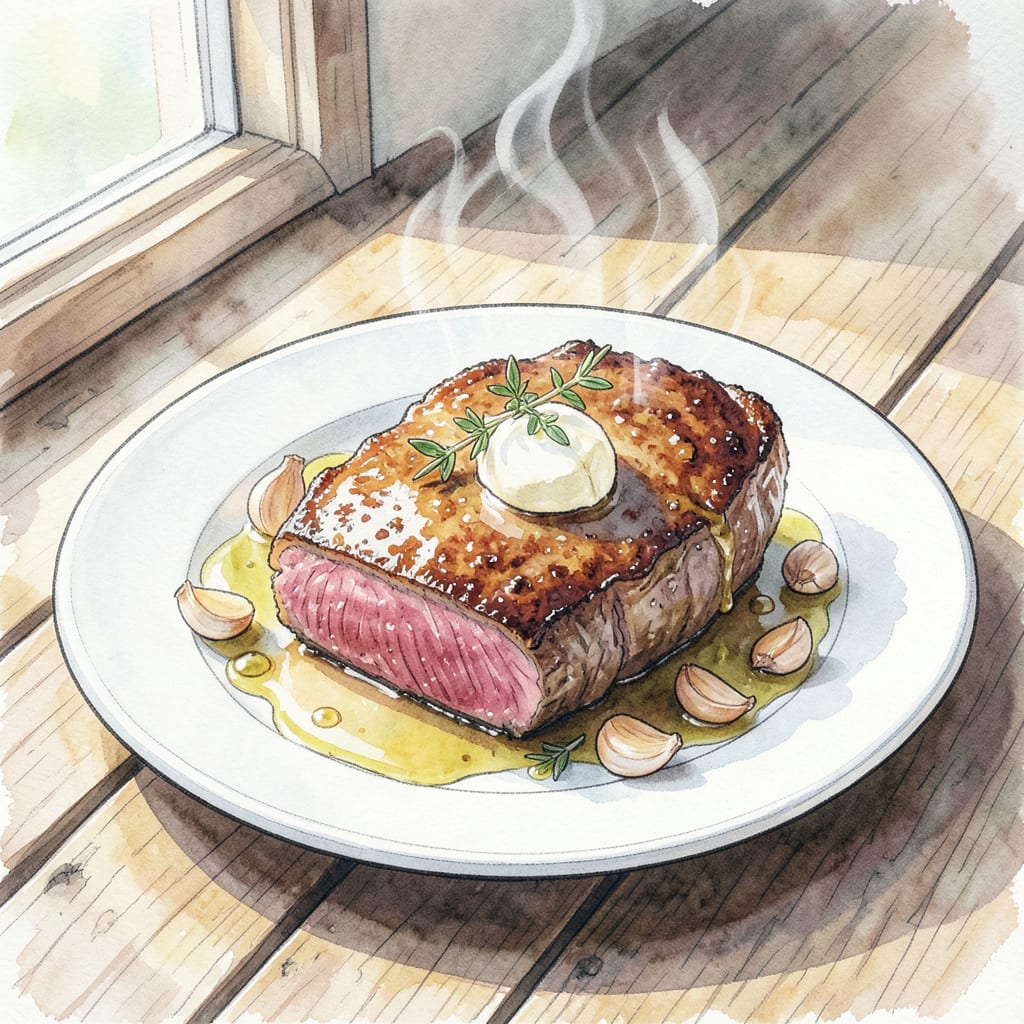
As a pitmaster with a passion for blending smoke-cooking tradition with classic French technique, I’m excited to share my simple pan-seared shoulder steak recipe that’s guaranteed to deliver tender results every time. This technique brings out the best in this often-underrated cut.
By searing the steak in a hot pan, we create a crust that locks in juices, while finishing it to the right temperature ensures tender perfection. Pair this with your favorite sides – roasted vegetables or mashed potatoes work beautifully – for a well-rounded meal that’s sure to impress.
Ingredients for Shoulder Steak
Gather these quality ingredients for a tender shoulder steak that’s full of flavor.
| Ingredient | Amount | Notes |
|---|---|---|
| Shoulder Steak 🥩 | 1 ½ lb | Preferably top blade or flat iron |
| Olive Oil 🫒 | 2 tbsp | For pan-searing |
| Unsalted Butter 🧈 | 2 tbsp | Adds richness to crust |
| Garlic Cloves 🧄 | 4 cloves | Minced for flavor |
| Fresh Thyme 🌿 | 2 tsp | Chopped, fresh preferred |
| Kosher Salt 🧂 | 1 tsp | Coarse, for seasoning |
| Black Pepper 🌶️ | ½ tsp | Freshly ground |
| Paprika 🌶️ | ½ tsp | Smoked or sweet |
| Worcestershire Sauce 💧 | 1 tbsp | Adds depth of flavor |
| Beef Broth 🍜 | ½ cup | For deglazing pan |
| Fresh Parsley 🌿 | ¼ cup | Chopped, for garnish |
[recipe_ingredient_scaler]
The steak matters here. Look for top blade or flat iron cuts at your local butcher or Whole Foods. Quality beef makes all the difference. If you can’t find shoulder steak, ribeye or strip loin are decent substitutes, though the cooking time may vary.
No fresh thyme? Use dried thyme at one-third the amount. Want more umami? Add 1 teaspoon of dried porcini powder to the seasoning mix. If you’re out of Worcestershire sauce, a mix of soy sauce and a splash of vinegar gets you close. For a richer flavor, try using red wine instead of beef broth for deglazing.
This steak keeps beautifully—store leftovers in an airtight container for up to 3 days in the fridge. Reheat gently in a pan with a bit of beef broth to keep it moist. You can also freeze cooked steak for up to 3 months—just slice it first for easier thawing.
Step-by-Step Instructions for Shoulder Steak
Let’s get started with this simple pan-seared technique that delivers tender results every time.
Step 1: Prepare the Shoulder Steak
Start by patting the 1.5 lb Shoulder Steak dry with paper towels on both sides. This step is crucial as it helps create a better crust on the steak. Season both sides generously with 1 tsp Kosher Salt and 0.5 tsp Black Pepper, making sure to coat evenly. Let the steak sit at room temperature for 30 minutes before cooking to ensure even cooking.
While the steak is resting, mix together 2 tsp Fresh Thyme, 0.5 tsp Paprika, and a pinch of the Kosher Salt in a small bowl. This herb mixture will add depth to your steak. I like to use fresh thyme for its bright, slightly minty flavor that complements the richness of the beef.
Step 2: Sear the Steak
Heat 2 tbsp Olive Oil in a large cast-iron or stainless steel skillet over high heat until it just starts to smoke. I prefer using a cast-iron skillet for its heat retention properties. Carefully place the seasoned shoulder steak in the hot skillet, away from you to avoid splashing oil. Sear for 3-4 minutes on the first side until you get a nice crust. You know it’s ready to flip when it releases easily from the pan.
Flip the steak and add 2 tbsp Unsalted Butter to the pan. Once the butter melts, tilt the pan and spoon it over the steak repeatedly for 1-2 minutes. This technique, called basting, helps keep the steak moist and adds flavor. Cook to your desired level of doneness – for medium-rare, it should take about 8-10 minutes total cooking time.
Step 3: Finish with Garlic and Worcestershire Sauce
During the last minute of cooking, add 4 cloves Garlic Cloves (minced) to the pan and sauté for 30 seconds until fragrant. Be careful not to burn the garlic as it can quickly turn bitter. Then, pour in 1 tbsp Worcestershire Sauce and 0.5 cup Beef Broth. The liquid will deglaze the pan, picking up all the flavorful browned bits from the bottom.
Let the sauce simmer for 1-2 minutes until it reduces slightly and intensifies in flavor. You’ll know it’s ready when the sauce coats the back of a spoon and has a rich, beefy aroma. Remove the steak from the pan and let it rest on a cutting board for 5 minutes before slicing against the grain.
Step 4: Serve with Fresh Parsley
Slice the rested steak against the grain into 1/2-inch thick slices. I like to use a sharp chef’s knife for clean cuts. Arrange the slices on a serving platter or individual plates. Spoon some of the pan sauce over the top of the steak. Garnish with 0.25 cup Fresh Parsley (chopped) for a fresh, herbaceous note that cuts through the richness of the dish.
Serve immediately while the steak is still warm and the parsley is vibrant. The combination of the tender shoulder steak, savory pan sauce, and fresh parsley creates a well-balanced and satisfying meal.
Troubleshooting This Dish
Common Cooking Mistakes
One of the most common issues with cooking shoulder steak is overcooking, which results in tough meat. To avoid this, use a meat thermometer to check for doneness. For medium-rare, aim for an internal temperature of 130-135°F. Let the steak rest for 5-10 minutes before slicing to allow juices to redistribute. 🔥
Pan Temperature Issues
If your pan isn’t hot enough, you’ll end up with a steak that’s steamed rather than seared. Heat your skillet until it just starts to smoke before adding oil. Use a cast-iron or stainless steel pan as they retain heat better than non-stick pans. When adding butter, make sure it’s melted and foamy before basting the steak.
Slicing Against the Grain
Slicing with the grain instead of against it can make your steak seem tougher than it should be. To identify the grain direction, look for the parallel lines on the surface of the meat. Slice perpendicular to these lines using a sharp chef’s knife. This simple technique makes a significant difference in tenderness.
Resting Importance
Skipping the resting period can cause juices to run out when you cut into the steak. After cooking, transfer the steak to a cutting board and tent it loosely with foil. Let it rest for 5-7 minutes before slicing. This allows the juices to redistribute throughout the meat, resulting in a more tender and flavorful steak.
Deglazing Techniques
When deglazing the pan, use a combination of Worcestershire sauce and beef broth to capture all the flavorful browned bits. Pour the liquid into the hot pan and scrape up any stuck bits with a wooden spoon. Let the sauce simmer for 1-2 minutes to reduce slightly and intensify the flavor. This creates a rich, savory sauce that complements the steak perfectly.
Additional Tips
For better crust formation, make sure the steak is completely dry before seasoning. Pat it dry with paper towels on both sides. If you notice the garlic burning during cooking, remove it from the pan immediately or add it later in the cooking process. These small adjustments can significantly improve your final result. 💡

Trained in classic French technique but raised on slow-cooked ribs and spicy rubs, she blends culinary skill with smoke and soul.
- Recipe for Boneless Pork Chops in Cast Iron Skillet: Sear and Baste to Juicy Perfection - October 3, 2026
- Recipe for Boneless Cross Rib Roast: Slow-Roasted Beef with Herb Crust - October 3, 2026
- Hamburgers in Sauce Recipe Crock Pot: Slow-Cooked Savory Delight - October 3, 2026