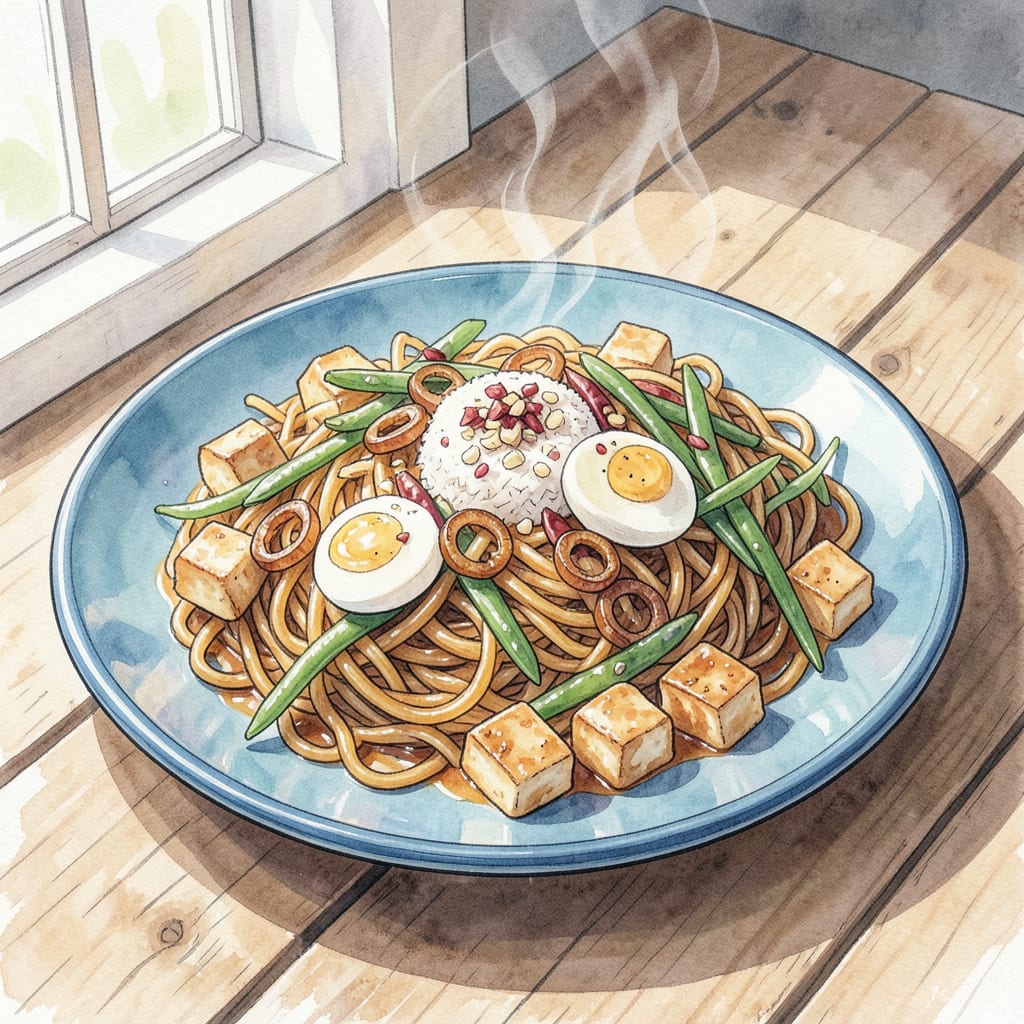
I’m excited to share my simple Pad Thai recipe that’s both quick and authentic. This stir-fry dish is a staple in Thai cuisine, and I’ve perfected it using fresh ingredients and a few secret techniques.
With this recipe, you’ll be able to create a delicious and authentic Pad Thai dish in no time. The combination of stir-fried noodles, vegetables, and peanuts will transport you to the streets of Bangkok. Let’s get cooking!
Ingredients for Simple Pad Thai
Simple ingredients come together for an authentic Pad Thai experience in just minutes.
| Ingredient | Amount | Notes |
|---|---|---|
| Rice Noodles 🍜 | 8 oz | Dried, rice stick noodles |
| Vegetable Oil 🫒 | 2 tbsp | For stir-frying |
| Eggs 🥚 | 2 whole | Beaten, for egg strips |
| Firm Tofu 🧋 | 1 cup | Drained, cubed |
| Garlic Cloves 🧄 | 3 cloves | Minced, for flavor |
| Shallots 🧅 | 1 cup | Thinly sliced, for crunch |
| Bean Sprouts 🌱 | 2 cups | Fresh, for texture |
| Peanuts 🥜 | ½ cup | Chopped, for garnish |
| Tamarind Paste 🍊 | 2 tbsp | For authentic flavor |
| Fish Sauce 🐟 | 2 tbsp | For umami flavor |
| Palm Sugar 🍮 | 2 tbsp | Or brown sugar, for sweetness |
| Lime Juice 🍋 | 2 tbsp | Freshly squeezed, for brightness |
| Red Pepper Flakes 🔥 | ¼ tsp | For heat, adjust to taste |
| Green Onions 🌿 | ¼ cup | Chopped, for garnish |
[recipe_ingredient_scaler]
For the best flavor, look for tamarind paste at Asian markets or online. Fresh bean sprouts make a big difference—you can find them in most supermarkets. Peanuts can be substituted with cashews if you prefer. The fish sauce is crucial for that authentic umami flavor, so don’t skip it.
No shallots? Use thinly sliced red onions instead. Want more heat? Increase the red pepper flakes to taste. For a vegan version, swap fish sauce for vegan fish sauce or nama shoyu. If you can’t find palm sugar, brown sugar is a fine substitute.
Leftover Pad Thai keeps well in the fridge for up to 3 days. Reheat in a wok or large skillet with a splash of water to loosen the noodles. You can also freeze individual portions for up to 3 months—just thaw overnight in the fridge.
Step-by-Step Instructions for Simple Pad Thai
Let’s create this authentic stir-fry together – quick, easy, and packed with flavor.
Step 1: Prepare the Rice Noodles and Ingredients
Start by soaking the 8 oz Rice Noodles in hot water for 5-7 minutes until they’re just tender. Drain and set aside. While the noodles soak, prepare your ingredients: dice the 1 cup Firm Tofu into small cubes, thinly slice the 1 cup Shallots, and mince the 3 cloves Garlic Cloves. Having everything ready before you start cooking makes this stir-fry seamless.
I like to keep all my ingredients within arm’s reach – it makes the cooking process smoother and helps prevent overcooking any component. Make sure your 2 whole Eggs are beaten and ready to go, and that you’ve chopped the 0.25 cup Green Onions and 0.5 cup Peanuts for garnish.
Step 2: Cook the Tofu and Aromatics
Heat 1 tablespoon of the 2 tbsp Vegetable Oil in a large wok or skillet over medium-high heat. Add the diced 1 cup Firm Tofu and cook for 3-4 minutes until it’s golden brown on all sides. Remove the tofu from the pan and set it aside.
In the same pan, add the remaining 1 tablespoon of Vegetable Oil. Add the minced 3 cloves Garlic Cloves and thinly sliced 1 cup Shallots, stir-frying for 1-2 minutes until they’re fragrant and the shallots are slightly softened. The aroma will fill your kitchen – that’s when you know you’re on the right track.
Step 3: Combine Everything and Create the Sauce
Push the garlic and shallot mixture to one side of the pan. Pour the beaten 2 whole Eggs into the other side and scramble them until they’re just set. Then, mix the eggs with the garlic and shallot mixture.
Add the cooked 8 oz Rice Noodles, 2 cups Bean Sprouts, and cooked tofu back into the pan. Pour in the sauce mixture (made by combining 2 tbsp Tamarind Paste, 2 tbsp Fish Sauce, 2 tbsp Palm Sugar, and 2 tbsp Lime Juice in a bowl) and stir everything together. Cook for 2-3 minutes until the noodles are well coated and the ingredients are heated through.
Step 4: Finish with Final Touches
Taste and adjust the seasoning as needed – if it needs more sweetness, add a bit more Palm Sugar. If it needs more tang, add a squeeze of fresh Lime Juice. For some heat, sprinkle in the 0.25 tsp Red Pepper Flakes. The beauty of Pad Thai is that you can customize it to your taste.
Transfer the Pad Thai to a serving platter or individual plates. Garnish with chopped 0.5 cup Peanuts and 0.25 cup Green Onions. Serve immediately while everything is fresh and vibrant. The combination of textures and flavors will transport you straight to the streets of Bangkok.
Common Mistakes When Making Great simple pad thai
Overcooking the Noodles
The key to perfect Pad Thai is maintaining a slightly tender texture in the noodles. I soak my 8 oz rice noodles in hot water for 5-7 minutes until they’re just tender, then immediately drain and set aside. Overcooking makes them mushy and unappetizing.
Insufficient Wok Heat
Pad Thai requires high heat to achieve that characteristic wok-seared flavor. I use a cast-iron wok over high heat and make sure it’s smoking hot before adding ingredients. This creates a beautiful Maillard reaction that enhances the overall flavor. 🔥
Skipping the Tamarind Paste
Tamarind paste provides the essential tangy flavor that makes Pad Thai authentic. I use 2 tbsp of high-quality tamarind paste to get that perfect balance. Don’t skip it or substitute with something else – it makes all the difference.
Not Preparing Ingredients in Advance
Stir-frying happens fast, so having all ingredients ready is crucial. I chop my 1 cup shallots, 3 cloves garlic, and 0.25 cup green onions before starting to cook. This helps maintain the cooking flow and prevents overcooking any component.
Using Pre-Mixed Sauce
While convenient, pre-mixed Pad Thai sauce often contains preservatives and lacks the depth of homemade sauce. I make my sauce from scratch using 2 tbsp fish sauce, 2 tbsp palm sugar, and 2 tbsp lime juice. It’s worth the extra few minutes.
Adding Too Much Sauce at Once
Too much sauce makes the dish soggy. I add sauce gradually and taste as I go, adjusting the seasoning to achieve the perfect balance. Start with less sauce and add more if needed – it’s easier to add than to remove excess.
Nutrition Facts

Trained in classic French technique but raised on slow-cooked ribs and spicy rubs, she blends culinary skill with smoke and soul.
- Recipe for Boneless Pork Chops in Cast Iron Skillet: Sear and Baste to Juicy Perfection - October 3, 2026
- Recipe for Boneless Cross Rib Roast: Slow-Roasted Beef with Herb Crust - October 3, 2026
- Hamburgers in Sauce Recipe Crock Pot: Slow-Cooked Savory Delight - October 3, 2026