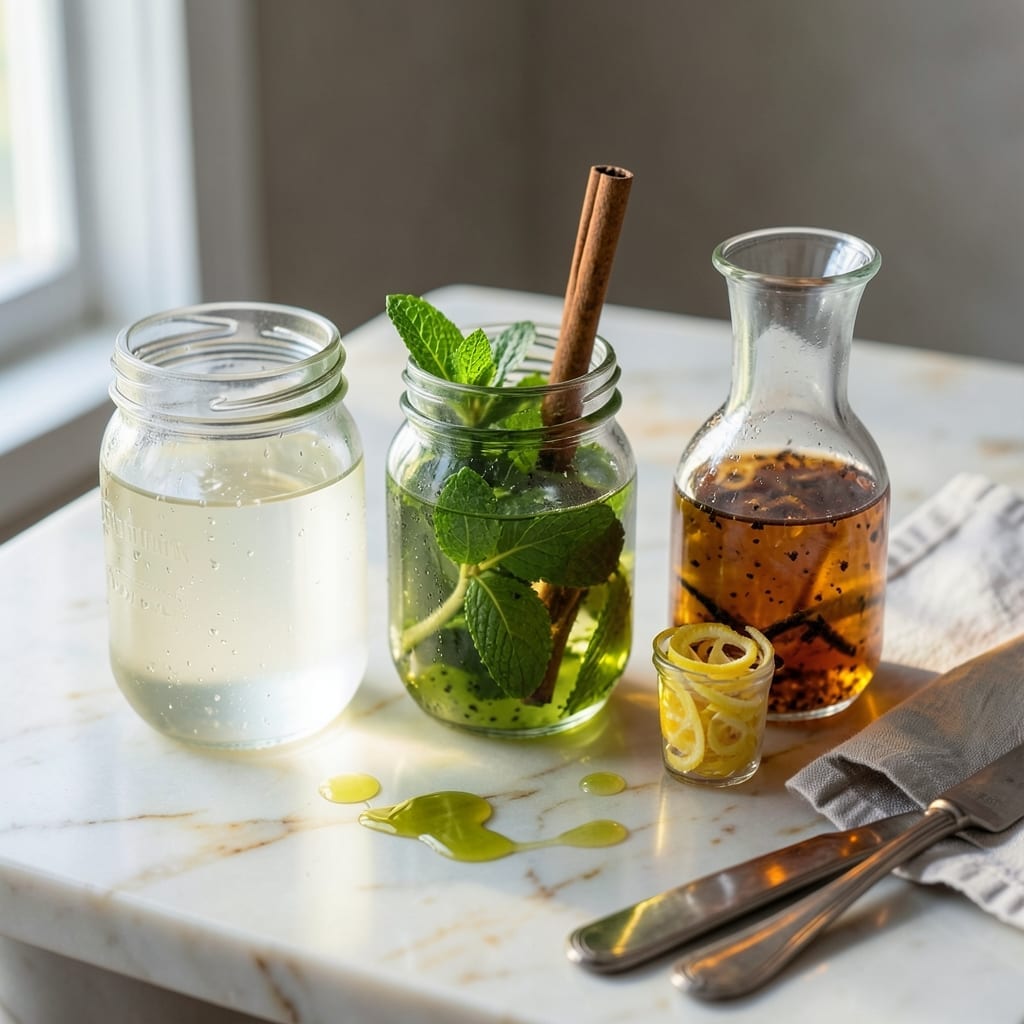
This versatile liquid sweetener is a game-changer for both cocktails and desserts. A basic sugar-and-water mixture forms the foundation for endless flavor possibilities.
With a 1:1 ratio and 5-minute prep time, you can create custom syrups that elevate drinks and sweets with minimal effort.
Ingredients for Simple Syrup Recipe Variations
Eight ingredients open the door to dozens of custom flavor-infused syrups for drinks and desserts.
| Ingredient | Amount | Notes |
|---|---|---|
| Granulated Sugar 🍚 | 1 cup | White or raw cane works |
| Water 💧 | 1 cup | Filtered for clarity |
| Fresh Mint Leaves 🌿 | ½ cup | Lightly crushed for infusion |
| Lemon Zest 🍋 | 1 tbsp | From organic lemons preferred |
| Vanilla Bean 🌱 | 1 whole | Split and scraped |
| Cinnamon Sticks 🌿 | 2 pieces | Ceylon for delicate flavor |
| Fresh Ginger 🌱 | ½ cup | Peeled and sliced thin |
| Lavender Buds 🌸 | 1 tbsp | Culinary grade only |
[recipe_ingredient_scaler]
The sugar and water ratio is sacred—1:1 every time. Use organic cane sugar if you want a deeper flavor, but regular white sugar works perfectly fine. For the infusions, Whole Foods has great bulk spices (cinnamon sticks, vanilla beans) and Trader Joe’s is my go-to for affordable organic lemons and fresh ginger. Always use filtered water—tap water can leave a funky aftertaste in the syrup.
No fresh mint? Dried mint at one-third the amount works, but fresh is way better. Out of vanilla beans? Pure vanilla extract (1 tsp per cup of syrup) gets you close. For ginger, ground ginger at a pinch works but lacks the fresh bite. The lavender can be swapped for rose petals or chamomile flowers—just make sure they’re food-grade and pesticide-free.
Basic syrup keeps 1 month in the fridge in a sealed jar. Flavored versions? Use within 2 weeks for maximum potency. Freeze extras in ice cube trays for up to 6 months—perfect for last-minute cocktails.
Why You’ll Love This Recipe
- 5-Minute Magic: I can make this between commercial breaks—just sugar, water, and a quick simmer.
- Bright & Zesty: That lemon zest cuts through the sweetness with a pop that makes me reach for seconds.
- Mix & Match: I use mint syrup in cocktails, vanilla in my coffee, and lemon for summer iced tea.
- Pennywise Perfection: A pound of sugar costs less than a fancy bottle, and I get weeks of flavor variations.
Step-by-Step Instructions for Flavor-Infused Simple Syrup
Here’s the straightforward process that turns basic syrup into something extraordinary.
Step 1: Create the Base Syrup
Combine 1 cup Granulated Sugar and 1 cup Water in a medium saucepan. I use filtered water here—it makes a noticeable difference in the clarity of the final syrup. The ratio is always equal parts by volume, which gives you that perfect 1:1 consistency that bartenders and pastry chefs rely on.
Place the saucepan over medium heat and stir just until the sugar dissolves completely. You’ll see the mixture go from cloudy to crystal clear—that’s your visual cue. Don’t let it boil yet; we’re just dissolving at this stage. This gentle approach prevents any caramelization or off-flavors.
Step 2: Add Your Primary Flavor Infusion
Once the sugar is fully dissolved, add your chosen primary infusion. For the 0.5 cup Fresh Mint Leaves, I add them whole but lightly crushed to release the oils. For 0.5 cup Fresh Ginger, use thin slices to maximize surface area. If using 2 pieces Cinnamon Sticks, add them whole—they’ll infuse beautifully without making the syrup gritty.
Bring the mixture to a gentle simmer—look for tiny bubbles at the edges, not a rolling boil. Simmer for 5-7 minutes to allow the flavors to meld. You’ll start to smell the aroma change as the syrup absorbs the essence of your chosen ingredient. This is where the magic happens.
Step 3: Incorporate Secondary Aromatics
After the primary infusion, it’s time for the more delicate flavors. For 1 tbsp Lemon Zest, add it during the last 2 minutes of simmering—citrus zest can turn bitter if cooked too long. The 1 whole Vanilla Bean should be split and scraped, with both seeds and pod added to the syrup for maximum flavor extraction.
For floral notes like 1 tbsp Lavender Buds, add them off-heat after removing from the stove. Lavender can become soapy if boiled, so we treat it more delicately. Let it steep in the hot syrup for 10-15 minutes to develop its perfume without over-extraction.
Step 4: Strain and Store Properly
Remove the saucepan from heat and let the syrup cool for 10 minutes. This allows the flavors to continue infusing while being cool enough to handle. Strain through a fine-mesh sieve into a clean glass jar or bottle, pressing gently on the solids to extract all the liquid.
Let the syrup cool completely to room temperature before sealing. I like to use swing-top bottles for easy pouring. The syrup will keep in the refrigerator for up to 2 weeks. For longer storage, you can process it in a water bath for 10 minutes to extend the shelf life to 3-6 months.
Pro Tips For Making Simple Syrup Recipe Variations
- Heat Gently: Keep the flame at medium-low—boiling too hard will caramelize the sugar before the flavors infuse, and I learned this the hard way after ruining a batch with burnt vanilla bean.
- Bruise the Mint: Lightly crush the mint leaves with your fingers before adding them to the syrup; it releases the oils and actually changes the outcome, giving you a brighter, more aromatic infusion.
- Skip the Overcrowding: If making multiple variations, steep flavors separately—mixing mint, lemon zest, and vanilla together in one batch just muddles the taste.
- Use a 1:1 Ratio: Stick to equal parts sugar and water by volume (1 cup each is my go-to), and resist the urge to eyeball it—sounds weird, but it works every time for consistent thickness.
Dietary Considerations for This Dish
Keto-Friendly Options
For a keto-compatible simple syrup, swap sugar with erythritol or allulose in a 1:1 ratio. These sweeteners won’t spike blood sugar, making them ideal for low-carb diets. 💪
Boil with water as usual, but avoid honey or agave, as they contain carbs. Add a splash of vanilla extract or citrus zest for extra flavor without added sugar.
Gluten-Free
Most simple syrups are naturally gluten-free, as they’re made from sugar and water. However, if using flavored syrups, check labels for hidden gluten in additives. 📊
For infused syrups, stick to fresh fruits, herbs, or spices, which are safe. Avoid malt-based sweeteners like barley malt syrup.
Allergen Considerations
Traditional simple syrup is allergen-free, but flavored versions may introduce risks. For example, nut-based syrups (like almond) can trigger nut allergies. Always verify ingredients.
If using store-bought syrups, look for certified allergen-free labels to avoid cross-contamination with common allergens like dairy or soy.
Vegetarian Modifications
Simple syrup is inherently vegetarian, but some variations use honey (not vegan) or gelatin (in pre-made mixes). For a vegan twist, use agave or maple syrup instead of honey. 🌱
Low-Sodium
Simple syrup is naturally low-sodium, but flavored versions (like salted caramel) may add sodium. Opt for homemade syrups to control salt content or use a pinch of potassium chloride as a substitute.
Nutrition Facts

Trained in classic French technique but raised on slow-cooked ribs and spicy rubs, she blends culinary skill with smoke and soul.
- Recipe for Boneless Pork Chops in Cast Iron Skillet: Sear and Baste to Juicy Perfection - October 3, 2026
- Recipe for Boneless Cross Rib Roast: Slow-Roasted Beef with Herb Crust - October 3, 2026
- Hamburgers in Sauce Recipe Crock Pot: Slow-Cooked Savory Delight - October 3, 2026