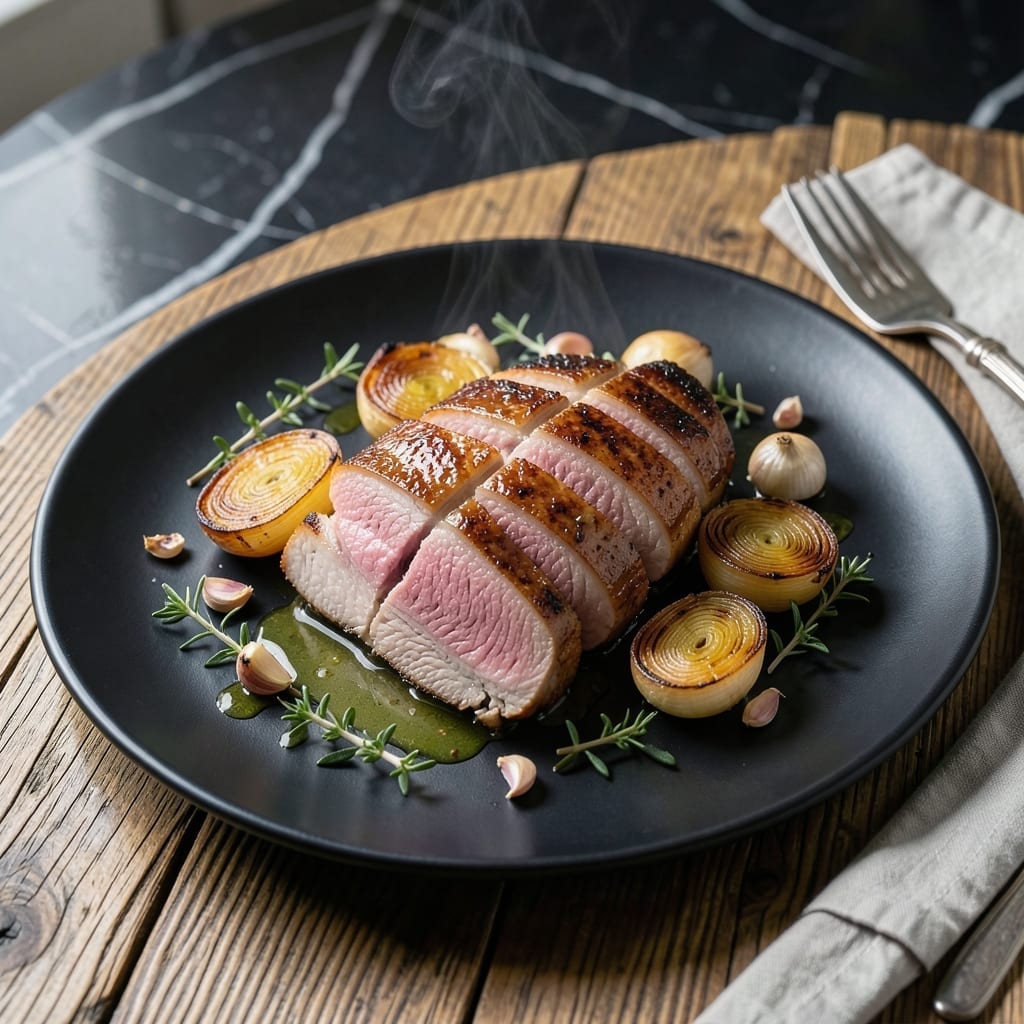
Achieving medium-rare elegance with skinless duck breast requires precision and respect for the meat’s natural richness. My French training taught me the importance of proper searing and resting techniques to preserve tenderness.
This method delivers a perfectly cooked center with a lightly caramelized exterior, no skin required. The result is a dish that feels restaurant-worthy yet remains approachable for home cooks.
Ingredients for Skinless Duck Breast
Elegant duck breast starts with simple, high-quality ingredients and French technique.
| Ingredient | Amount | Notes |
|---|---|---|
| Duck Breast 🦆 | 2 lb | Skinless, boneless, about 2 breasts |
| Kosher Salt 🧂 | 1 ½ tsp | Diamond Crystal preferred for texture |
| Freshly Ground Black Pepper 🌶️ | 1 tsp | Coarse grind for better adhesion |
| Garlic Cloves 🧄 | 4 cloves | Smashed, not minced |
| Fresh Thyme Sprigs 🌿 | 4 whole | Stems on, for infusion |
| Shallot 🧅 | 1 whole | Finely minced for pan sauce |
| Dry Red Wine 🍷 | ½ cup | Cabernet or Pinot Noir recommended |
| Duck Fat or Unsalted Butter 🧈 | 2 tbsp | For basting during searing |
| Chicken Stock 🍲 | ½ cup | Low-sodium preferred |
| Dijon Mustard 🟡 | 1 tbsp | For finishing touch |
| Extra-Virgin Olive Oil 🫒 | 1 tbsp | For initial searing |
| Honey 🍯 | 1 tbsp | Optional for glaze |
[recipe_ingredient_scaler]
The duck breast is everything here. Look for fresh, not previously frozen, from a reputable butcher like Whole Foods or a specialty grocer. The fat cap should be thick and creamy white—this is your searing gold. I prefer Magret duck breast (from Moulard ducks) for its consistent marbling and size. Avoid anything with a grayish tint or off smell.
No red wine? Substitute beef broth with a splash of balsamic vinegar. Out of thyme? Fresh rosemary works in a pinch—just use half the amount. Chicken stock can be swapped for vegetable stock if needed. The Dijon is non-negotiable in my book—it cuts through the richness. If you’ve got whole-grain mustard, that adds a nice texture contrast.
Duck breast keeps 2-3 days in the fridge, but cook it fresh for best results. Leftovers? Slice thin and reheat gently in a pan—don’t microwave. The pan sauce can be made ahead and reheated with a pat of butter swirled in at the end.
Why You’ll Love This Recipe
- One Pan Wonder: I sear the duck breast in a hot pan, then let the garlic and thyme work their magic—minimal cleanup, maximum flavor.
- That Crispy Edge: Honestly, the way the salt and pepper crust forms on the outside while staying juicy inside? Worth every second.
- Date Night Ready: I’ve served this for anniversaries and random Tuesdays—feels fancy but takes less effort than takeout.
- Leftovers Gold: Between us, cold slices on salad the next day taste even better. One duck breast stretches into two meals.
Step-by-Step Instructions for Skinless Duck Breast
Here’s my tested method for achieving restaurant-quality results every time.
Step 1: Score and Season the Duck Breast
Pat the 2 lb duck breast completely dry with paper towels. This is crucial—any moisture will prevent proper browning. Using a sharp knife, score the surface in a crosshatch pattern, cutting about ¼ inch deep. This helps render fat and allows seasonings to penetrate.
Season both sides aggressively with the 1.5 tsp kosher salt and 1 tsp freshly ground black pepper. I press the seasoning into the meat to ensure it adheres well. Let it sit at room temperature for 30 minutes to take the chill off before cooking.
Step 2: Sear to Develop a Crust
Heat a heavy skillet over medium-high heat until very hot. Add the 1 tbsp extra-virgin olive oil and swirl to coat. Place the duck breast in the pan skin-side down. You’ll hear an immediate sizzle—that’s what you want.
Cook undisturbed for 6-8 minutes until the surface develops a deep, rich brown crust. The duck will release naturally from the pan when it’s ready to flip. Add the 4 cloves garlic cloves, 4 whole fresh thyme sprigs, and 2 tbsp duck fat or unsalted butter to the pan during this time and baste the duck occasionally.
Step 3: Finish Cooking and Rest
Flip the duck and cook for another 4-5 minutes on the other side. For medium-rare perfection, you’re aiming for an internal temperature of 130-135°F. Use an instant-read thermometer inserted into the thickest part to check.
Transfer the duck to a cutting board, tent loosely with foil, and let it rest for 10 minutes before slicing. This allows the juices to redistribute throughout the meat, ensuring every slice is moist and flavorful.
Step 4: Create the Pan Sauce
Pour off all but about 1 tbsp of fat from the skillet. Add the 1 whole shallot and cook over medium heat for 1-2 minutes until softened. Pour in the 0.5 cup dry red wine and scrape up all the browned bits from the bottom of the pan with a wooden spoon.
Let the wine reduce by half, then add the 0.5 cup chicken stock and 1 tbsp honey. Simmer for 3-4 minutes until slightly thickened. Remove from heat, stir in the 1 tbsp Dijon mustard, and pour through a fine-mesh strainer to remove solids.
Step 5: Slice and Serve
Slice the duck breast against the grain into ½-inch thick pieces. Arrange on a platter and drizzle with the warm pan sauce. The sauce should have a glossy, lightly syrupy consistency that coats the back of a spoon.
Serve immediately while the duck is still warm. Each slice should have a perfect pink center with a caramelized crust. The sauce adds a tangy, slightly sweet contrast that complements the rich duck beautifully.
Pro Tips For Making Skinless Duck Breast
- Score the Fat: Even without skin, light scoring on the fat cap helps render it down and prevents curling—I learned this the hard way after my first few breasts turned into tight, chewy hockey pucks.
- Room Temp First: Pull the duck breast out 30-40 minutes before cooking; cold meat seizes up and cooks unevenly, and I’ve ruined more than one dinner by rushing this step.
- Don’t Overcrowd: If searing more than one breast, use a larger pan or cook in batches—steam from crowding boils the meat instead of browning it, and your crust will suffer.
- Rest Under Foil: Tent with foil and let it rest 8-10 minutes before slicing; skipping this sends all the juices onto the cutting board instead of your plate—sounds obvious, but I still see people carve straight out of the pan.
Flavor Customization for skinless duck breast
Sweet and Tangy Glaze
For a sweet contrast to the rich duck, I whisk 2 tbsp honey with 1 tbsp balsamic vinegar and 1 tsp soy sauce. Brush this glaze on during the last 2 minutes of cooking for a sticky, caramelized finish that reminds me of coastal rides with the wind carrying sweet and salty aromas. 💛
Herb Crust Variation
Create a fragrant crust by pressing a mix of 1 tbsp chopped fresh rosemary, 1 tbsp chopped fresh sage, and 1 minced garlic clove onto the duck before searing. The herbs from my foraging spots add an earthy depth that pairs beautifully with the duck’s natural richness.
Spicy Kick
Add heat with a dry rub of 1 tsp smoked paprika, ½ tsp cayenne pepper, and ½ tsp ground cumin. This blend complements the duck’s bold flavor without overpowering it. I discovered this combo at a local BBQ competition, and it’s been a game-changer. 🔥
Asian-Inspired Twist
Marinate the duck for 2 hours in a mixture of ¼ cup soy sauce, 2 tbsp rice vinegar, 1 tbsp grated ginger, and 1 minced garlic clove. The umami notes from the soy and the brightness from the vinegar create a perfect balance.
Citrus Brightness
Zest 1 orange and 1 lemon, then mix with 1 tbsp olive oil and 1 tsp salt for a citrusy rub. The acidity cuts through the fat, adding a refreshing lift that’s perfect for warmer days.
Mustard and Herb Sauce
Enhance your pan sauce by stirring in 1 tbsp whole-grain mustard and 1 tsp chopped fresh tarragon at the end. This French-inspired touch adds a tangy, herbaceous note that elevates the dish to something truly special.
Nutrition Facts
Frequently Asked Questions
What’s the best way to prevent dry duck breast?
Don’t overcook it! Use a meat thermometer and pull it at 130-135°F for medium-rare. Letting it rest for 10 minutes after cooking is equally important to retain juices.
Can I use a nonstick pan for searing?
A heavy stainless steel or cast iron skillet is ideal for achieving a proper crust. Nonstick pans won’t get hot enough for a deep sear.
Why is my pan sauce breaking?
If the sauce looks greasy, you may have too much fat. Skim most of it off before adding wine, and finish by swirling in 1 tbsp cold butter off the heat to emulsify it.
How do I know when to flip the duck?
It will release naturally when ready, after about 6-8 minutes. If it sticks, it’s not ready—wait for that deep brown crust to form.

Trained in classic French technique but raised on slow-cooked ribs and spicy rubs, she blends culinary skill with smoke and soul.
- Recipe for Boneless Pork Chops in Cast Iron Skillet: Sear and Baste to Juicy Perfection - October 3, 2026
- Recipe for Boneless Cross Rib Roast: Slow-Roasted Beef with Herb Crust - October 3, 2026
- Hamburgers in Sauce Recipe Crock Pot: Slow-Cooked Savory Delight - October 3, 2026