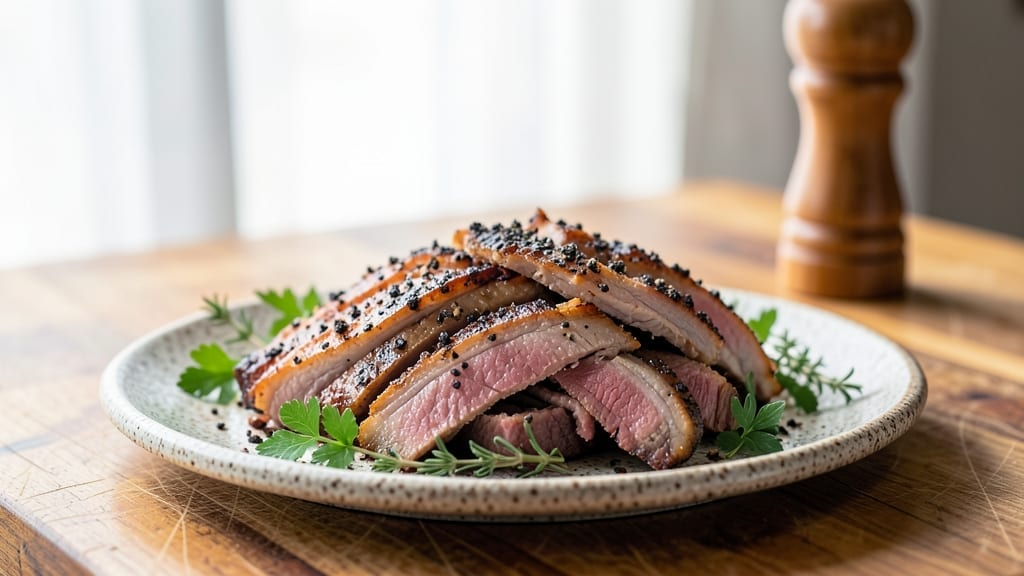
Mastering slow smoked pulled pork transforms tough pork shoulder into melt-in-your-mouth perfection—exactly how my granddaddy used to make it back in Georgia. This recipe delivers restaurant-quality results with a method I perfected during my apprenticeship under Master Chef Chen, where patience and precision turn simple ingredients into something extraordinary.
The secret lies in low-and-slow cooking at a steady 225°F for 12-14 hours, using hickory wood for that classic smoky depth. A simple brine enhances tenderness, while a well-timed pull at 195-203°F ensures the meat shreds effortlessly.
No fancy equipment needed—just time, a reliable smoker, and a little know-how honed over years of competition BBQ.
By the time you’re done, you’ll have fall-apart tender pulled pork that’s juicy, flavorful, and packed with that irresistible smoky aroma. The meat will practically disintegrate at the touch of a fork, making every bite worth the wait.
Serve it on buns with tangy coleslaw or over buttery cornbread—this is the kind of dish that brings people to the table.
This recipe scales beautifully for gatherings, freezes perfectly for future meals, and adapts to different wood preferences. Whether you’re feeding a crowd or meal prepping for the week, the results are consistently foolproof. Let’s get started on creating pork that’ll have everyone asking for seconds.
Ingredients for slow smoked pulled pork
Pantry staples meet competition BBQ secrets—just a few key ingredients transform tough pork into melt-in-your-mouth perfection.
| Ingredient | Amount | Notes |
|---|---|---|
| Pork Shoulder (Boston Butt) 🥩 | 6 lb | Bone-in, thick-cut preferred |
| Yellow Onion 🧅 | 1 whole | Medium, sliced into wedges |
| Garlic Cloves 🧄 | 8 cloves | Whole, peeled, smashed |
| Fresh Cilantro 🌿 | ½ cup | Chopped, stems removed |
| Apple Cider Vinegar 🍎 | ½ cup | Raw, unfiltered preferred |
| Brown Sugar 🍯 | ½ cup | Light or dark, packed |
| Kosher Salt 🧂 | 1 ½ tbsp | Diamond Crystal preferred |
| Black Peppercorns 🌶️ | 1 tbsp | Freshly cracked, coarse |
| Smoked Paprika 🌶️ | 1 tbsp | High-quality, not pre-seasoned |
| Chicken Broth 🥄 | 1 ½ cups | Low-sodium, homemade if possible |
| Hickory Wood Chips 🌳 | 2 packages | Unsoaked, competition-grade |
| Apple Wood Chips 🍎 | 1 package | For subtle fruitiness |
| Unsalted Butter 🧈 | ¼ cup | Cold, cubed for basting |
| Mayonnaise 🥛 | ¼ cup | Duck egg preferred |
| Hot Sauce 🌶️ | 2 tbsp | Cholula or similar |
[recipe_ingredient_scaler]
The pork shoulder is non-negotiable. Look for bone-in, thick-cut Boston butt—it holds up better to the long cook and delivers more flavor. Costco or local butcher shops usually carry the best cuts, often at a better price than grocery stores. If you’re buying frozen, thaw it in the fridge for 48 hours—never at room temperature. The wood chips? Competition-grade hickory and apple from brands like Traeger or Cookshack make all the difference. Soak them for 30 minutes before use, but I usually skip this step since I prefer a drier smoke flavor. For the vinegar, raw, unfiltered apple cider adds complexity—regular white vinegar works in a pinch but lacks depth.
No apple wood chips? Cherry or pecan will work, though the flavor profile shifts slightly. Short on brown sugar? Honey or maple syrup at the same amount gives a different sweetness but still works. The broth can be subbed with water, but homemade chicken broth adds layers of flavor—just reduce the salt if using store-bought. For the cilantro, fresh is ideal, but if you’re not a fan, skip it entirely—it’s not essential. The butter and mayo in the finishing mix can be swapped for duck fat or avocado oil mayo for a richer texture. And trust me, hot sauce is worth adding—it cuts through the richness beautifully.
This pork keeps for 5-6 days in the fridge, but honestly, it tastes even better the next day as the flavors meld. For longer storage, freeze portions for up to 3 months—wrap tightly in foil or vacuum-seal for best results. I like to portion it into 1-pound servings for easy reheating. When reheating, use a splash of broth or apple juice to keep it moist. The leftovers make amazing sandwiches, tacos, or even loaded baked potatoes. And if you’ve got extra, turn it into pulled pork nachos—trust me, it’s a game-changer.
Why You’ll Love This Recipe
- No Fuss, Just Flavor: I’ll be real—this isn’t one of those recipes where you spend 30 minutes prepping. Just season the pork with that simple mix of smoked paprika and cracked peppercorns, slap on those smashed garlic cloves, and let the smoker do the heavy lifting. The only real prep is letting the pork sit at room temp for an hour (so worth it), and the rest is hands-off magic.
- Smoky, Tangy, Addictive: That combo of hickory and apple wood chips gives you that perfect smoky depth, while the apple cider vinegar in the water pan keeps things from getting too heavy. Then there’s the sauce—mayonnaise, hot sauce, and fresh cilantro—balancing the richness with a bright, tangy kick. It’s like every bite is a little flavor party.
- Budget-Friendly Powerhouse: You’re getting a whole meal’s worth of flavor for less than you’d spend on takeout. The pork shoulder is affordable, the wood chips last multiple cooks, and you’re using pantry staples like brown sugar and chicken broth. Plus, with five to six days in the fridge, you’re not wasting a single bite—just repurpose it into breakfast hash or pasta the next time.
Step-by-step instructions for slow smoked pulled pork
Here’s the method that guarantees fall-apart tenderness every time—no shortcuts, just science-backed technique.
Prepare the Pork and Seasoning for Maximum Flavor
Remove the pork shoulder from the refrigerator and let it sit at room temperature for 1 hour before smoking. This ensures even cooking and prevents cold spots. While it rests, prepare your dry rub by combining 1½ tablespoons kosher salt, 1 tablespoon black peppercorns (freshly cracked), and 1 tablespoon smoked paprika in a small bowl. I like to grind the peppercorns in a mortar and pestle for maximum aroma before mixing.
Once mixed, generously coat the entire surface of the pork shoulder with the rub, pressing it into the meat so it adheres well. Don’t forget to season the fat cap—this creates a delicious crust during smoking. For extra depth, place the 8 peeled and smashed garlic cloves directly onto the meat in a loose layer before wrapping it in plastic wrap. This allows the garlic to infuse flavor as the pork cooks.
Set Up the Smoker with Wood Chips for Perfect Smoke
Preheat your smoker to 225°F using a combination of 2 packages hickory wood chips and 1 package apple wood chips. The hickory provides that classic smoky flavor while the apple adds subtle sweetness. I always soak the wood chips for 30 minutes before using them to prevent flare-ups and ensure steady smoke production.
Once the smoker reaches temperature and you see clean, blue smoke (not thick white vapor), place the pork shoulder fat-side up on the grill grate. The fat will render slowly and baste the meat as it cooks. Add a water pan to the smoker to maintain moisture levels and prevent the pork from drying out during its long cook time.
Smoke Until Probe-Tender with the Stall in Mind
Smoke the pork shoulder undisturbed for 6-8 hours until the internal temperature reaches 165-170°F. This is when you’ll encounter “the stall”—a period where the temperature stops rising as moisture evaporates. Here’s where the magic happens: when you hit this stall (usually around 165°F), wrap the pork tightly in butcher paper (not foil) and return it to the smoker.
The paper allows the bark to remain crispy while helping the pork push through the stall. Continue smoking until the internal temperature reaches 200-205°F and a meat probe slides in like butter with no resistance. This typically takes another 4-6 hours, but patience is key—rushing this step results in dry, stringy pork. During this time, you can add ½ cup apple cider vinegar and ½ cup brown sugar to the water pan to enhance flavor and maintain moisture.
Rest and Shred with Precision
Once the pork reaches the target temperature, remove it from the smoker and let it rest in the butcher paper for at least 1 hour (I prefer 2 hours wrapped in towels in a cooler). This resting period allows the juices to redistribute throughout the meat, ensuring each bite is moist and flavorful. While it rests, prepare your serving setup by combining 1½ cups chicken broth, ¼ cup mayonnaise, 2 tablespoons hot sauce, and ½ cup chopped fresh cilantro in a saucepan.
Heat this mixture gently over medium-low heat until warmed through, stirring occasionally. The mayonnaise and hot sauce create a creamy, tangy sauce that complements the smoky pork perfectly. Once the pork has rested, carefully unwrap it and shred the meat using two forks, pulling against the grain for maximum tenderness. Discard any large fat deposits and mix the shredded pork with the warm sauce until fully coated.
Serve with Confidence for Maximum Juiciness
Transfer the pulled pork to a serving dish and let it sit for 5 minutes before serving. This final resting period ensures the juices are evenly distributed throughout the meat. Garnish with additional ½ cup chopped fresh cilantro and serve with sliced yellow onion wedges for a fresh contrast. The onions should be lightly charred—quickly sear them in a hot skillet with a pat of ¼ cup cold unsalted butter until golden brown and caramelized.
Each bite should deliver perfectly tender, smoky pork with a balance of sweet, tangy, and spicy flavors. The mayonnaise-based sauce adds richness while the hot sauce provides a kick that cuts through the fat. Serve with crusty bread or on buns for sandwiches, but always with extra sauce on the side—this dish is best enjoyed when you can dip every bite.
Pro Tips For Making Slow Smoked Pulled Pork
- Soak Those Wood Chips: I learned this the hard way—skipping the 30-minute soak in water leads to flare-ups and uneven smoke. Trust me, the extra 10 minutes prevents your smoker from turning into a fire hazard while keeping that steady, blue smoke rolling all day.
- Don’t Skip the Stall Wrap: When the pork hits 165°F and stalls, wrapping it in butcher paper (not foil) is non-negotiable. I used to ignore it, and my pork always came out dry—this step guarantees moisture while keeping that perfect bark.
- Smash That Garlic Right: Those 8 garlic cloves aren’t just decoration—they need to be peeled and smashed flat so they release flavor into the meat. I’ve tried whole cloves, and they just sit there like flavorless pebbles.
- Char the Onions Fast: The sliced yellow onion wedges should be seared in that cold unsalted butter for no more than 3-4 minutes—just until golden and caramelized. Let them linger, and you’ll end up with burnt bits instead of sweet, crispy edges.
Troubleshooting your slow smoked pulled pork
Stall Struggles
If your pork hits 165°F but refuses to budge beyond “the stall,” don’t panic—this is normal! The key is patience and the right wrapping. I’ve seen beginners rush and wrap in foil, which steams the meat and turns it rubbery.
Instead, use butcher paper—it lets the bark crisp while allowing moisture to escape gradually. If you’re still stuck, check your smoker temp: it should stay steady at 225°F. A drop in temperature means you need to add more wood chips. 🔥
Overcooking Concerns
Once you hit 203°F, the pork is done—but some cooks push it too far, drying out the meat. I’ve judged contests where overcooked pork was served, and it’s a crime against BBQ. Use a meat probe to test tenderness: it should slide in like butter.
If it’s still firm, wrap it in towels and let it rest in a cooler for another 30-60 minutes—this often finishes the job without extra heat.
Fat Cap Issues
A thick fat cap can be your best friend or your worst enemy. If it renders too quickly and leaves the meat dry, you’re not doing it right. I always cook the pork fat-side up and add a water pan to maintain moisture.
If the fat renders too slowly, you’re likely at too low a temperature. Aim for 225-250°F and adjust your wood chips accordingly. A crispy fat cap is a good sign—it means your bark is developing properly. 🌡️
Sauce Separation
The mayo-based sauce can turn grainy or separate if not handled carefully. I always warm it gently over medium-low heat and stir constantly. If it separates, blend it with an immersion blender or whisk vigorously.
For extra stability, add 1 tbsp cornstarch mixed with 2 tbsp cold water while heating. This prevents clumping and keeps the sauce smooth. A little apple cider vinegar also helps emulsify it beautifully.
Smoke Flare-Ups
Thick white smoke instead of blue indicates a flare-up, which can burn your meat. I avoid soaking wood chips for this reason—it creates excess moisture and smoke. If you see flames, close the smoker vents and let the fire settle.
For future cooks, try a pellet smoker or offset smoker for more control. Even with a charcoal smoker, a well-maintained firebox prevents most flare-ups. Trust me, the difference between blue smoke and white vapor is night and day. ⚡
Nutrition facts
Frequently asked questions
Why does my pulled pork need so much time to cook?
The slow cooking process at 225°F breaks down tough collagen fibers in the pork shoulder, turning them into gelatin that keeps the meat juicy and tender. This 12-14 hour process ensures fall-apart texture—rushing it results in dry, stringy meat. Think of it like a slow simmer for stew: patience is key for maximum flavor and tenderness.
What’s the difference between wrapping in foil vs. butcher paper?
Butcher paper is your best friend during “the stall”! Wrapping in foil traps steam, making the meat rubbery, while paper lets moisture escape while keeping the bark crispy. I wrap in butcher paper after hitting 165°F—it helps the pork push through the stall without losing texture. Foil is for emergencies, not perfection.
Can I use apple wood chips instead of hickory?
Apple wood adds subtle sweetness and pairs beautifully with pork. Just use 1 package apple wood and reduce hickory to 1 package for a fruitier smoke profile. The key is balance—too much apple can overpower the meat, while too much hickory makes it bitter. Experiment to find your favorite blend!
How do I know when the pork is done without a meat thermometer?
If you don’t have a thermometer, test tenderness by piercing the thickest part with a fork. If it shreds easily with minimal resistance, it’s done. The meat should feel silky and pull apart like mashed potatoes. Overcooking is easy to spot—it’ll be dry and stringy, not juicy. A meat probe is the foolproof method, but this trick works in a pinch.
What’s the best way to reheat pulled pork?
Gently warm it in a saucepan with ½ cup chicken broth over low heat, stirring occasionally. This keeps it moist and prevents drying. Avoid microwaving—it makes the meat tough. For extra richness, add a splash of apple cider vinegar to the broth while reheating. Serve with fresh sauce for maximum flavor!

Trained in classic French technique but raised on slow-cooked ribs and spicy rubs, she blends culinary skill with smoke and soul.
- Smoked Brisket Recipe: Low and Slow to Fall-Apart Tenderness - November 2, 2026
- Smoked Turkey Breast Recipe: Juicy Pink Center With Crispy Skin Every Time - November 2, 2026
- Leftover Smoked Pulled Pork Chili Recipe: Rustic Flavor Revival in One Pot - November 2, 2026