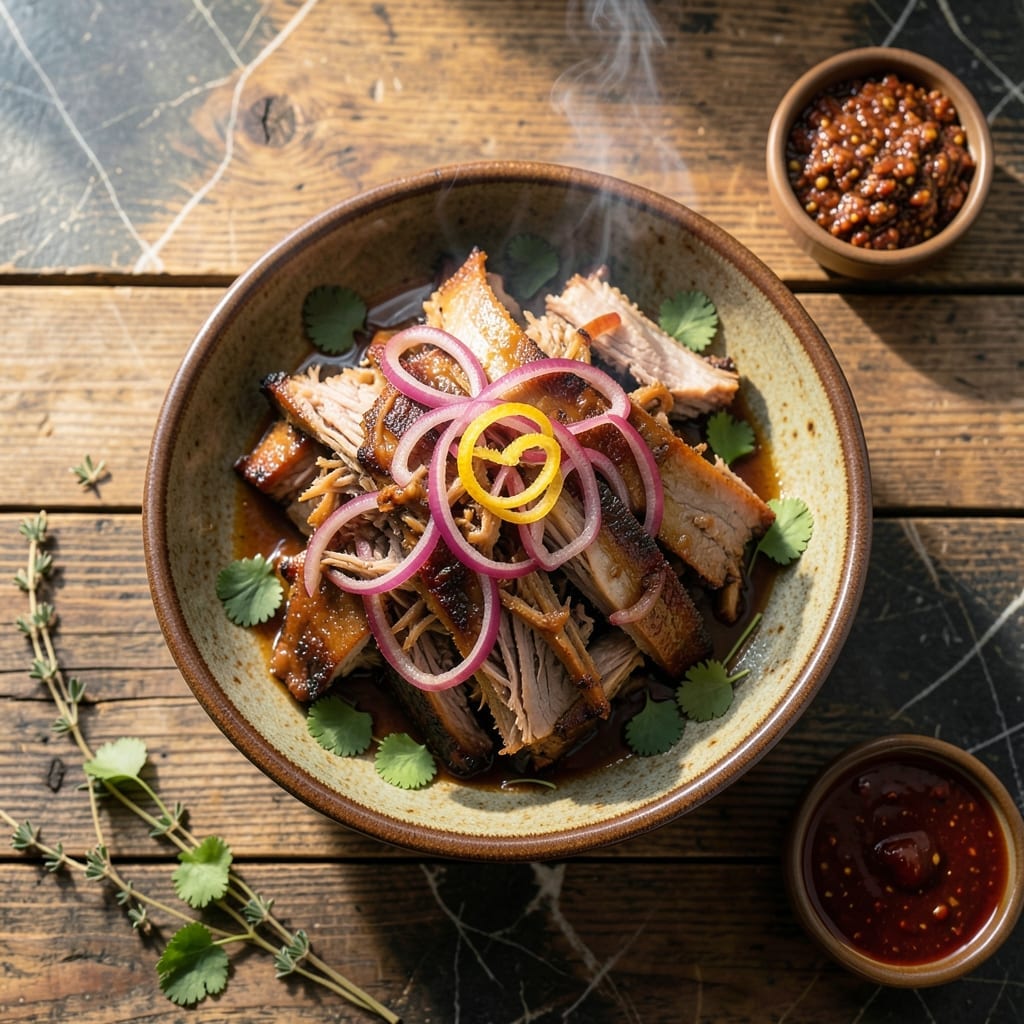
There’s a particular satisfaction in slow-cooked pulled pork that falls apart at the touch of a fork. This method delivers tender results with a smoky depth that defines great BBQ.
Using simple techniques and quality pork shoulder, you’ll achieve that perfect balance of juicy meat and caramelized bark. The process respects tradition while ensuring consistent, professional results every time.
Ingredients for Smithfield Bbq Pulled Pork
Quality pork shoulder and a handful of bold spices deliver that signature smoky tenderness everyone craves.
| Ingredient | Amount | Notes |
|---|---|---|
| Pork Shoulder 🐖 | 4 lb | Bone-in, well-marbled preferred |
| Smithfield BBQ Dry Rub 🌶️ | ½ cup | Or homemade BBQ seasoning blend |
| Apple Cider Vinegar 🍏 | ½ cup | For tangy bark development |
| Brown Sugar 🍚 | ¼ cup | Light or dark variety |
| Kosher Salt 🧂 | 1 tbsp | Diamond Crystal preferred |
| Black Pepper 🌶️ | 1 tbsp | Freshly ground coarse |
| Smoked Paprika 🌶️ | 1 tbsp | For authentic smoky depth |
| Garlic Powder 🧄 | 1 tbsp | Granulated works too |
| Onion Powder 🧅 | 1 tbsp | Fine powder preferred |
| Cayenne Pepper 🔥 | ½ tsp | Adjust for heat preference |
| BBQ Sauce 🍯 | 2 cups | Your favorite store-bought or homemade |
| Hickory Wood Chips 🪵 | 2 cups | Soaked in water 30 minutes |
| Yellow Mustard 🟡 | 2 tbsp | For binder in dry rub |
| Hamburger Buns 🍞 | 8 whole | Soft, slightly sweet preferred |
[recipe_ingredient_scaler]
The pork shoulder is non-negotiable here. Bone-in, well-marbled cuts from Costco or Sam’s Club yield the juiciest results. Avoid pre-ground or lean cuts—they’ll dry out. Smithfield’s pre-mixed dry rub works, but Penzeys carries excellent individual spices if you’re building your own. Look for vibrant color in your smoked paprika—dull red means it’s lost its potency.
No pork shoulder? Pork butt (despite the name, it’s shoulder) is essentially the same cut. Short on time? Country-style ribs work in a pinch, though the texture differs. Swap apple cider vinegar for white vinegar if needed, but the fruitiness adds depth. For wood chips, cherry or apple complement the pork nicely if hickory isn’t available.
Store uncooked pork in the fridge for up to 3 days or freeze for 6 months. Cooked pulled pork keeps in the fridge for 5 days or freezes beautifully for 3 months. The sauce soaks in better after resting overnight, making leftovers even more flavorful.
Why You’ll Love This Recipe
- I’ll be real: it tastes even better the next day, and freezes like a dream for quick meals later.
- Set It and Forget: I toss the pork shoulder with Smithfield’s dry rub, then let the slow cooker do all the work—no babysitting required.
- Smoky Sweet Balance: The apple cider vinegar cuts through the brown sugar and rub for that tangy-sweet BBQ flavor I crave.
- Feeds the Gang: One pork shoulder makes enough for tacos, sandwiches, or a crowd—honestly, it’s my go-to for parties.
Step-by-Step Instructions for Smoky Pulled Pork
Master the technique for fall-apart meat with a robust bark every time.
Step 1: Prepare and Season the Pork Shoulder
Pat the 4 lb Pork Shoulder dry with paper towels to ensure the rub adheres properly. In a small bowl, combine the 0.5 cup Smithfield BBQ Dry Rub, 0.25 cup Brown Sugar, 1 tbsp Kosher Salt, 1 tbsp Black Pepper, 1 tbsp Smoked Paprika, 1 tbsp Garlic Powder, 1 tbsp Onion Powder, and 0.5 tsp Cayenne Pepper.
Rub the 2 tbsp Yellow Mustard over the entire surface of the pork shoulder—this acts as a binder. Then apply the dry rub mixture generously, pressing it into the meat so it forms a thick, even crust. Let the seasoned pork shoulder sit at room temperature for 30 minutes while you prepare the smoker.
Step 2: Set Up the Smoker for Low and Slow Cooking
Soak the 2 cups Hickory Wood Chips in water for at least 30 minutes to prevent them from burning too quickly. Preheat your smoker to 225-250°F using the soaked wood chips for a steady, smoky heat.
Place a water pan in the smoker to maintain moisture levels during the long cook. Once the smoker reaches the desired temperature and produces thin, blue smoke, you’re ready to start cooking. Avoid thick white smoke, as it can impart a bitter flavor to the meat.
Step 3: Smoke the Pork Shoulder to Perfection
Place the pork shoulder in the smoker, fat-side up, so the rendering fat bastes the meat as it cooks. Smoke undisturbed for 6-8 hours, maintaining a consistent temperature between 225-250°F.
During the first 4 hours, spritz the pork shoulder with the 0.5 cup Apple Cider Vinegar every 45-60 minutes. This helps develop a tangy bark and keeps the surface moist. The pork is ready for the next step when the internal temperature reaches 165-170°F.
Step 4: Wrap and Continue Cooking
Once the pork reaches 165-170°F, remove it from the smoker and wrap it tightly in aluminum foil. This step, known as the “Texas crutch,” helps push through the stall—a phase where the meat’s internal temperature plateaus as moisture evaporates.
Return the wrapped pork to the smoker and continue cooking for another 2-3 hours, or until the internal temperature reaches 200-205°F and the meat is probe-tender. The pork should feel like butter when a meat thermometer is inserted.
Step 5: Rest, Shred, and Finish with BBQ Sauce
Remove the pork from the smoker and let it rest, still wrapped, in a cooler or warm oven for 1 hour. This resting period allows the juices to redistribute, ensuring moist, tender meat.
Unwrap the pork and shred it using two forks, discarding any large fat chunks. Toss the shredded pork with the 2 cups BBQ Sauce until evenly coated. Serve the pulled pork on the 8 whole Hamburger Buns for a perfectly tender, smoky sandwich.
Pro Tips For Making Smithfield Bbq Pulled Pork
- Low and Slow Cook: Keep your smoker or oven at 225°F—any hotter and the pork shoulder dries out before it gets that fall-apart tenderness. I learned this the hard way after pulling tough, chewy meat at 275°F.
- Rub It Right: Press the Smithfield BBQ Dry Rub hard into the pork so it sticks—don’t just sprinkle it on. The crust forms better when the spices cling to the meat’s surface.
- Skip the Rush: Resist the urge to pull the pork early, even if it looks done. It needs to hit 195-203°F internally to shred easily without a fight.
- Vinegar Boost: Mix ¼ cup apple cider vinegar with the brown sugar before adding it to the pork in the last hour—it balances the sweetness and cuts through the fat. Sounds weird, but it works.
Essential Equipment for This Recipe
Smoker Setup
Invest in a quality smoker—I use a Weber Smokey Mountain for its consistent heat control. For beginners, a Traeger pellet grill offers set-it-and-forget-it convenience. The key is maintaining steady 225-250°F for that perfect low-and-slow cook. 🔥
Temperature Control
A dual-probe thermometer like the ThermoWorks Smoke is non-negotiable. One probe monitors your smoker temp, the other tracks the pork’s internal temperature. This takes the guesswork out of achieving that 200-205°F finish.
Wood Chip Essentials
Use hickory wood chips for classic BBQ flavor, but cherry or apple work beautifully too. Soak them for 30 minutes before use. I recommend Western BBQ brand chips—they burn consistently without bitter smoke.
Water Pan
A simple stainless steel pan filled with water maintains moisture during the long cook. This prevents the pork from drying out and helps develop that perfect bark. Place it directly on the smoker grate or in the built-in water tray.
Resting Equipment
After smoking, rest your pork in a cooler or warm oven for 1 hour. I line my cooler with towels to retain heat. This step ensures juices redistribute for maximum tenderness.
Shredding Tools
Two bear claw meat shredders make quick work of the pork. Alternatively, use heat-resistant forks. I prefer OXO brand for their comfortable grip and durability. Discard any large fat chunks as you shred. ✨
Nutrition Facts

Trained in classic French technique but raised on slow-cooked ribs and spicy rubs, she blends culinary skill with smoke and soul.
- Recipe for Boneless Pork Chops in Cast Iron Skillet: Sear and Baste to Juicy Perfection - October 3, 2026
- Recipe for Boneless Cross Rib Roast: Slow-Roasted Beef with Herb Crust - October 3, 2026
- Hamburgers in Sauce Recipe Crock Pot: Slow-Cooked Savory Delight - October 3, 2026