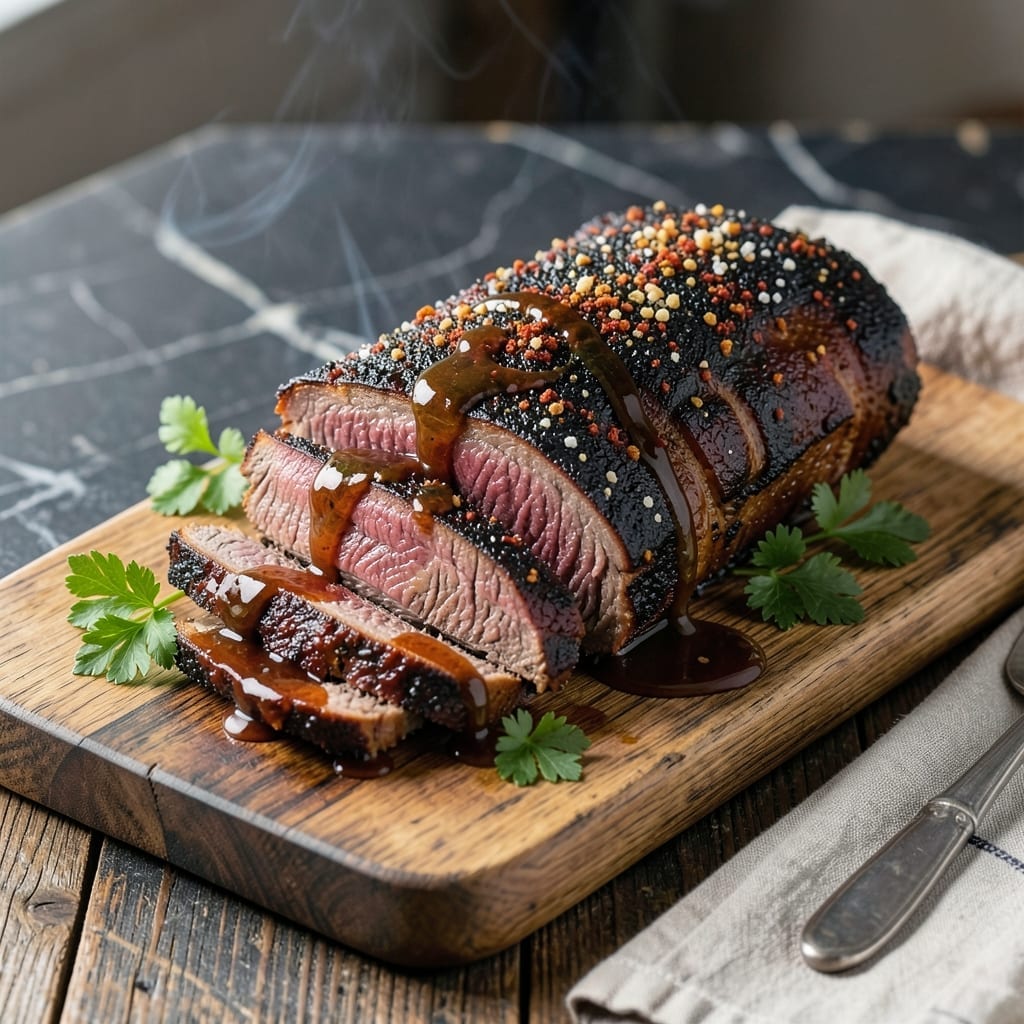
True Texas-style brisket demands patience and precision, with a perfect bark and tender interior that melts at first bite. My technique blends pitmaster tradition with culinary skill.
Low heat, quality wood, and a well-balanced rub transform tough meat into a fall-apart masterpiece that commands respect at any table.
Ingredients for Smoked Barbecue Beef Brisket
Whole packer brisket and a bold rub are the foundation of authentic Texas-style smoked barbecue.
| Ingredient | Amount | Notes |
|---|---|---|
| Beef Brisket 🥩 | 12 lb | Whole packer cut, untrimmed |
| Coarse Kosher Salt 🧂 | ½ cup | Diamond Crystal preferred |
| Coarse Black Pepper 🌶️ | ½ cup | Freshly ground for best texture |
| Paprika 🌶️ | ¼ cup | Sweet or smoked variety |
| Garlic Powder 🧄 | 2 tbsp | Fine grind for even distribution |
| Onion Powder 🧅 | 2 tbsp | Balances the rub profile |
| Cayenne Pepper 🔥 | 1 tbsp | Adjust for heat preference |
| Brown Sugar 🍚 | ¼ cup | Light or dark, packed |
| Yellow Mustard 🟡 | ½ cup | Binder for the rub |
| Hickory Wood Chunks 🪵 | 8 lb | Or oak, for smoking |
| Apple Cider Vinegar 🍎 | 1 cup | For spritzing during cook |
| Beef Tallow 🧈 | ½ cup | Optional for bark enhancement |
[recipe_ingredient_scaler]
The brisket must be whole packer cut—this is non-negotiable for authentic results. Source from a reputable butcher or specialty grocer like Whole Foods. Look for good marbling and a thick, uniform flat. USDA Prime grade is ideal, but Choice works if Prime isn’t available. The fat cap should be at least 1/4-inch thick to protect the meat during the long cook.
No hickory? Oak or pecan wood deliver excellent results too. For the rub, freshly ground black pepper is essential—pre-ground lacks the punch. If you can’t find coarse kosher salt, use half the volume of fine salt. The mustard binder can be swapped for olive oil or water, but mustard adds a subtle tang that complements the beef.
Store the brisket in the fridge until ready to trim—use within 3 days of purchase. The rub can be mixed ahead and kept in an airtight container for up to 6 months. Leftover smoked brisket (if there is any) freezes beautifully for 3-4 months.
Why You’ll Love This Recipe
- Set and Forget: The brisket just needs a dry rub of salt, pepper, paprika, and garlic powder before it goes on the smoker—no babysitting required.
- Smoky, Spiced Crust: That coarse black pepper and paprika form a crust so flavorful, I swear it could convert a vegetarian.
- Feeds a Crowd: One brisket feeds my entire family with leftovers for sandwiches the next day—honestly, it’s my secret to stress-free gatherings.
- Leftovers for Days: The flavor deepens overnight, so tomorrow’s tacos or chili taste even better. I’ll be real: I sometimes make extra just for this.
Step-by-Step Instructions for Texas-Style Smoked Beef Brisket
Master the art of low and slow smoking with this proven method for perfect brisket.
Step 1: Prepare and Season the Beef Brisket
Begin by trimming the beef brisket fat cap to about ¼ inch thickness using a sharp knife. This untrimmed whole packer cut needs even fat distribution for protection during the long smoke without preventing smoke penetration.
Create the rub by combining the 0.5 cup Coarse Kosher Salt, 0.5 cup Coarse Black Pepper, 0.25 cup Paprika, 2 tbsp Garlic Powder, 2 tbsp Onion Powder, 1 tbsp Cayenne Pepper, and 0.25 cup Brown Sugar. Apply the 0.5 cup Yellow Mustard as a binder to all surfaces of the brisket, then press the rub mixture firmly into the meat, ensuring complete coverage. Let it rest for 1 hour at room temperature to allow the seasoning to adhere.
Step 2: Set Up the Smoker for Optimal Conditions
Prepare your smoker with the 8 lb Hickory Wood Chunks, targeting a temperature of 225-250°F. I maintain this range throughout the cook for consistent results. Place a water pan in the smoker to help regulate temperature and maintain humidity.
Once the smoker reaches temperature and produces clean, thin blue smoke, place the brisket fat-side up on the cooking grate. The fat cap will render down during cooking, basting the meat naturally. Ensure adequate space around the brisket for proper air circulation.
Step 3: Smoke and Monitor the Brisket
Smoke the brisket undisturbed for the first 6-8 hours. Resist the urge to open the smoker, as this causes temperature fluctuations and extends cooking time. Maintain the smoker temperature between 225-250°F throughout.
After the initial smoke period, begin spritzing the brisket every 1-2 hours with the 1 cup Apple Cider Vinegar mixed with water (50/50 ratio). This helps keep the surface moist and enhances bark formation. If using, apply the 0.5 cup Beef Tallow at this stage to further develop the bark.
Step 4: Wrap and Continue Cooking to Perfection
When the internal temperature reaches 165-170°F (typically after 8-10 hours), you’ll hit “the stall.” Wrap the brisket tightly in pink butcher paper to power through this phase. This Texas crutch method preserves the bark while accelerating the cooking process.
Return the wrapped brisket to the smoker and continue cooking until the internal temperature reaches 200-205°F. More importantly, use the probe test: it should slide into the thickest part of the flat like butter with no resistance. This usually takes an additional 4-6 hours.
Step 5: Rest and Slice the Brisket
Remove the brisket from the smoker and let it rest, still wrapped, in a warm cooler or oven set to 170°F for at least 1 hour (I prefer 2 hours). This resting period allows the juices to redistribute throughout the meat, ensuring maximum tenderness and moisture.
Unwrap the brisket and separate the flat from the point if desired. Slice against the grain into ¼-inch thick pieces, adjusting your cutting angle as the grain direction changes. Serve immediately while still warm, with any accumulated juices spooned over the top for added moisture and flavor.
Pro Tips For Making Smoked Barbecue Beef Brisket
- Trim the Fat: Leave about 1/4 inch of fat on the brisket to keep it moist, but trim any thick chunks—too much fat won’t render properly and can make the rub slide off.
- Season Overnight: Coat the brisket with salt, pepper, paprika, and garlic powder at least 12 hours before smoking. I learned this the hard way—skipping the wait means the flavors won’t penetrate as deeply.
- Low and Slow: Keep your smoker at 225°F and resist the urge to rush it. After burning a few briskets by cranking the heat, I finally figured out that patience is what actually changes the outcome.
- Wrap at 165°F: When the internal temp hits 165°F, wrap the brisket in butcher paper or foil to power through the stall. Sounds weird, but it works—saves hours and keeps it from drying out.
Serving Suggestions for This Dish
Classic Plating
Slice the brisket against the grain into ¼-inch thick pieces and fan them across a wooden cutting board. Drizzle with reserved juices from the rest period. The dark bark against the pink smoke ring makes for stunning presentation that commands attention at any gathering. 🔥
Texas-Style Sandwich
Pile slices onto a toasted brioche bun and top with pickles and white onion slices. I love serving these with a side of spicy BBQ sauce for dipping. This is how they do it at the legendary Franklin Barbecue in Austin.
Family-Style Feast
Arrange the sliced brisket on a large platter with cornbread, baked beans, and coleslaw. Let guests build their own plates—this encourages the communal experience that makes brisket special. I always include extra pickled jalapeños for those who want heat.
Bourbon Pairing
A glass of Texas bourbon like Still Austin cuts through the richness beautifully. The caramel notes complement the smoky bark while the alcohol cleanses your palate. I also keep iced tea on hand for non-drinkers.
Leftovers Reinvented
Chop leftover brisket for loaded nachos or mix into mac and cheese. The smoked flavor elevates these dishes from ordinary to extraordinary. My favorite is brisket tacos with pickled red onions and cilantro. 💡
Nutrition Facts
Frequently Asked Questions
What’s the ideal smoker temperature?
Maintain a steady 225-250°F for the entire cook. This low-and-slow approach ensures tender meat without drying out. Fluctuations above 275°F risk toughening the brisket.
How can I tell when it’s done?
Use the probe test: it should slide into the thickest part like butter. Target 200-205°F internally, but don’t rely on temperature alone. The texture is the true indicator of perfection.
Why does my brisket stall around 165°F?
This is normal! The stall happens when moisture evaporates, cooling the meat. Wrap it in butcher paper to push through this phase faster while keeping the bark intact.
Can I use a different wood besides hickory?
Oak or pecan work beautifully, offering slightly different flavor profiles. Oak is stronger, while pecan adds a mild sweetness. Avoid softwoods like pine.

Trained in classic French technique but raised on slow-cooked ribs and spicy rubs, she blends culinary skill with smoke and soul.
- Recipe for Boneless Pork Chops in Cast Iron Skillet: Sear and Baste to Juicy Perfection - October 3, 2026
- Recipe for Boneless Cross Rib Roast: Slow-Roasted Beef with Herb Crust - October 3, 2026
- Hamburgers in Sauce Recipe Crock Pot: Slow-Cooked Savory Delight - October 3, 2026