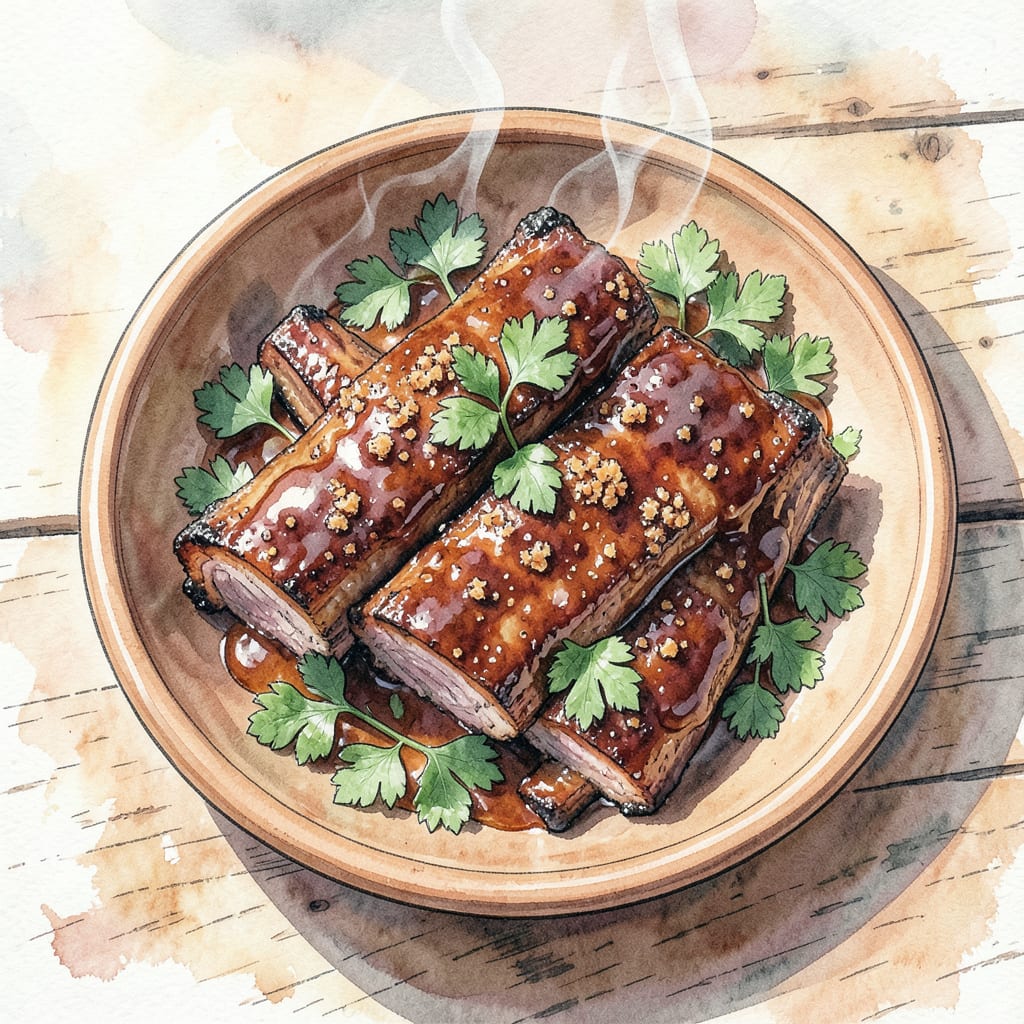
Achieving fall-off-the-bone tender beef ribs is a matter of technique and patience. As a pitmaster, I’ve perfected the art of slow-smoking ribs to perfection, combining classic French technique with the rich flavors of smoke.
This recipe delivers perfectly tender beef ribs with a deep, smoky flavor that’ll make your next BBQ unforgettable. With a simple spice rub and careful temperature control, you’ll achieve mouth-watering results that’ll impress any crowd.
Ingredients for Smoked Beef Ribs Bbq
Low-and-slow cooking creates tender, juicy beef ribs with rich, smoky flavor.
| Ingredient | Amount | Notes |
|---|---|---|
| Beef Back Ribs 🥩 | 2 lb | Membrane removed for better flavor penetration |
| Brown Sugar 🍮 | ¼ cup | Dark brown for richer flavor |
| Smoked Paprika 🌶️ | 2 tbsp | Smoked variety for authentic BBQ flavor |
| Kosher Salt 🧂 | 2 tbsp | Use kosher salt for proper texture |
| Black Pepper 🌶️ | 1 tbsp | Freshly ground black pepper preferred |
| Garlic Powder 🧄 | 1 tbsp | Granulated for even distribution |
| Onion Powder 🧅 | 1 tbsp | Dried onion for concentrated flavor |
| Chili Powder 🌶️ | 1 tbsp | Mild or hot variety based on preference |
| Cumin 🌿 | 1 tsp | Ground cumin for warm, earthy flavor |
| Cayenne Pepper 🔥 | ½ tsp | Adjust amount for desired heat level |
| Apple Cider Vinegar 🍎 | ¼ cup | For mop sauce during smoking |
| Beef Broth 🍜 | 1 cup | Low-sodium for better control |
| Wood Chips 🌲 | 2 cups | Hickory or apple wood for smoking |
[recipe_ingredient_scaler]
For authentic BBQ flavor, use hickory or apple wood chips for smoking. Soak them in water for at least 30 minutes before use to prevent flare-ups. The dry rub is crucial—make sure to coat the ribs evenly on all sides. Let the ribs sit at room temperature for 30 minutes before smoking to help them cook more evenly.
No apple cider vinegar? White wine vinegar or lemon juice can be substituted in the mop sauce. For a spicier dry rub, increase the cayenne pepper to 1 tsp. If you prefer a milder flavor, reduce it to 0.25 tsp. The beef broth helps keep the ribs moist during the long cooking process—use low-sodium to control the salt content.
These ribs reheat beautifully—store leftovers in an airtight container in the refrigerator for up to 4 days. To reheat, wrap them tightly in foil and warm in a low oven (250°F) until heated through. You can also freeze the cooked ribs for up to 3 months—thaw overnight in the refrigerator before reheating.
Step-by-Step Instructions for Smoked Beef Ribs
Follow these precise steps to achieve fall-off-the-bone tender smoked beef ribs every time.
Step 1: Prepare the Dry Rub and Season the Ribs
In a small bowl, combine 2 tbsp Kosher Salt, 1 tbsp Black Pepper, 1 tbsp Garlic Powder, 1 tbsp Onion Powder, 1 tbsp Chili Powder, 1 tsp Cumin, and 0.5 tsp Cayenne Pepper. Mix thoroughly to create the dry rub. Remove the membrane from the back of the 2 lb Beef Back Ribs to allow better flavor penetration. Generously apply the dry rub to both sides of the ribs, making sure to coat them evenly.
Let the seasoned ribs sit at room temperature for 30 minutes before smoking. This allows the meat to relax and absorb the flavors more effectively.
Step 2: Set Up Your Smoker and Add Wood Chips
Preheat your smoker to 225-250°F using your preferred type of wood, such as hickory or apple wood. Once the smoker is ready, add 2 cups Wood Chips to generate a rich, smoky flavor. Place the ribs in the smoker, bone-side down, to protect the meat from direct heat. Close the lid to trap the smoke and heat.
Smoke the ribs for 4-5 hours until they develop a nice bark on the outside and the meat starts to pull away from the bones. During the last 30 minutes of smoking, prepare the mop sauce by mixing 0.25 cup Apple Cider Vinegar and 1 cup Beef Broth in a bowl.
Step 3: Apply the Mop Sauce and Finish Smoking
After 4 hours of smoking, start applying the mop sauce to the ribs every 30 minutes until they are done. Use a brush to coat the ribs evenly, ensuring they stay moist and develop a rich, tangy flavor. Continue smoking until the ribs reach an internal temperature of 190-203°F and the meat is tender and easily pulls away from the bone.
Once the ribs are cooked, remove them from the smoker and let them rest for 10-15 minutes. This resting period allows the juices to redistribute, making the ribs even more tender and flavorful.
Step 4: Slice and Serve
After resting, slice the ribs between the bones using a sharp knife. Serve immediately, garnished with additional barbecue sauce if desired. The ribs should be so tender that they fall off the bone with a gentle tug.
Enjoy your perfectly smoked beef ribs with your favorite sides, such as coleslaw, baked beans, or cornbread.
Regional Styles of smoked beef ribs bbq
Texas-Style Beef Ribs
Texas-style beef ribs are known for their simplicity and focus on the quality of the meat. This style typically uses a dry rub with minimal ingredients, allowing the natural flavor of the beef to shine through. I love using beef back ribs for this style because they have a great balance of meat and bone. 🔥
Kansas City-Style Ribs
Kansas City-style ribs are famous for their thick tomato-based barbecue sauce and slow-smoking process. This style often includes a blend of spices in the dry rub, followed by a generous slathering of sauce during the last stages of cooking. I find that using hickory wood chips adds a perfect smoky flavor to complement the sweet sauce.
Memphis-Style Dry Ribs
Memphis-style dry ribs are all about the dry rub. These ribs are seasoned heavily with a spice blend and then slow-cooked without saucing. The result is a flavorful bark on the outside and tender meat inside. I like to use a mix of paprika, garlic powder, and brown sugar for a rich, complex flavor.
Carolina-Style Ribs with a Twist
While traditionally associated with pork, the vinegar-based sauce from the Carolinas can be adapted beautifully to beef ribs. This style involves a tangy, slightly sweet mop sauce applied during cooking. I enjoy adding a touch of apple cider vinegar to the mop sauce for an extra layer of flavor.
Regional Wood Choices
Different regions often prefer specific types of wood for smoking. For example, post oak is commonly used in Texas, while hickory is popular in Kansas City. Experimenting with various wood types can help you find your signature flavor. I personally love the strong flavor that mesquite wood adds to beef ribs.
Nutrition Facts

Trained in classic French technique but raised on slow-cooked ribs and spicy rubs, she blends culinary skill with smoke and soul.
- Recipe for Boneless Pork Chops in Cast Iron Skillet: Sear and Baste to Juicy Perfection - October 3, 2026
- Recipe for Boneless Cross Rib Roast: Slow-Roasted Beef with Herb Crust - October 3, 2026
- Hamburgers in Sauce Recipe Crock Pot: Slow-Cooked Savory Delight - October 3, 2026