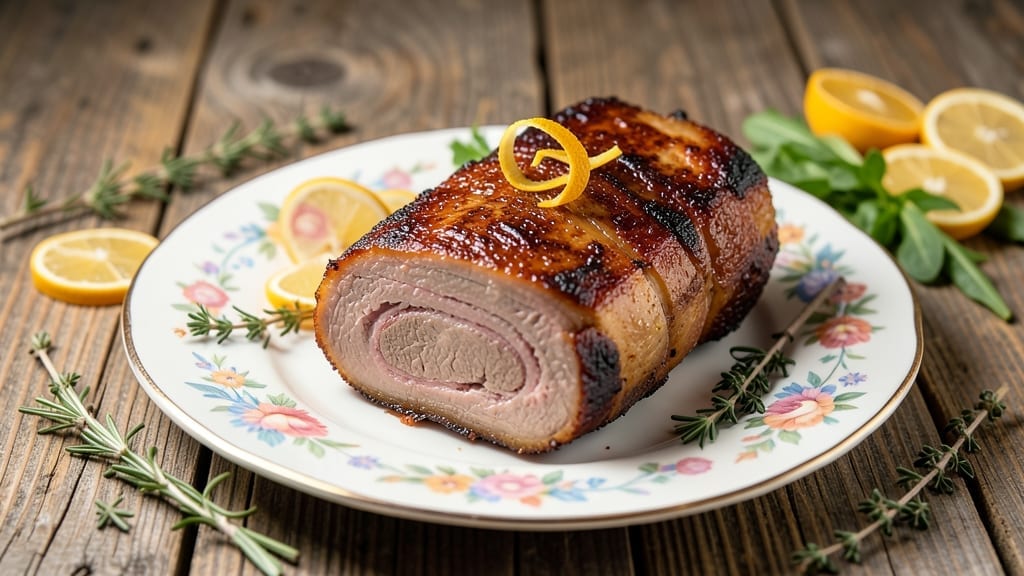
Smoking a bone-in pork loin roast delivers fall-apart tenderness with a crispy bark that seals in every ounce of flavor—this is the technique I perfected after years of competing on the Southeast BBQ circuit.
The bone acts as a natural heat sink, keeping the meat juicy while the surface develops that coveted crust. I still remember the first time I nailed this at a championship cook-off, where the judges couldn’t resist cutting into the roast before it even hit the table.
The secret lies in precise temperature control and proper prep—starting with a dry-brined loin that develops flavor without turning into a watery mess. We’ll use a two-stage smoke (indirect heat first, then direct) to ensure even cooking while building that bark.
My heritage pigs from the farm always yield the best results, but any quality bone-in loin will work with this method. The internal temperature probe test at 145°F is non-negotiable for perfect doneness.
By the time you carve into this roast, you’ll see why this method earns its reputation: juicy, pink centers that practically melt with each cut, surrounded by a deep mahogany bark that’s both tender and crispy.
The bone stays warm longest, ensuring every bite stays moist. This isn’t just dinner—it’s a centerpiece that makes guests ask for seconds before dessert even arrives. Let’s get smoking.
Serve with classic sides like garlic mashed potatoes or apple-cider glaze to complement the rich pork flavors. The leftovers reheat beautifully too, making this a meal that feeds a crowd without requiring last-minute scrambling. Here’s how to smoke it like a pro.
Ingredients for smoked bone in pork loin roast
Six pounds of pork, eight simple spices, and your smoker. This is how you get restaurant-quality bark and melt-in-your-mouth tenderness at home.
| Ingredient | Amount | Notes |
|---|---|---|
| Bone-In Pork Loin Roast 🐷 | 6 lb | With rib bones, ~1.5 inches thick |
| Kosher Salt 🧂 | 2 tbsp | Diamond Crystal preferred |
| Coarse Black Pepper 🌶️ | 1 tbsp | Freshly cracked |
| Brown Sugar 🍚 | 1 tbsp | Light or dark |
| Smoked Paprika 🌶️ | 1 tbsp | For bark color |
| Garlic Powder 🧄 | 1 tsp | Not garlic salt |
| Onion Powder 🧅 | 1 tsp | Fresh ground preferred |
| Applewood Pellets 🪵 | 2 lb | Or hickory for stronger flavor |
| Butcher Paper 📄 | 1 sheet | For wrapping during smoke |
| Meat Thermometer 🔥 | 1 whole | Digital instant-read preferred |
| Apple Cider Vinegar 🍎 | 2 tbsp | For basting glaze |
| Pure Maple Syrup 🍁 | 2 tbsp | For glaze sweetness |
[recipe_ingredient_scaler]
The pork loin matters most—heritage breeds like Duroc or Berkshire yield the best marbling, but any quality bone-in loin works. Look for 1.5-inch thickness to ensure even cooking and bark development. Costco often carries pre-boned loins that work great, but butcher your own for more control. The bones should be 1-2 inches long to act as natural heat sinks. I always buy mine from local farms when possible—those heritage pigs have more flavor depth. If you can’t find heritage, Yorkshire or Large White loins are solid alternatives.
No applewood pellets? Hickory or pecan work beautifully—just adjust smoke time slightly. Want more bark? Increase smoked paprika to 2 tbsp and add 1 tbsp brown sugar. Short on time? Dry brine overnight (6-12 hours) instead of the 4-hour minimum. The glaze ingredients are flexible—honey instead of maple syrup or bourbon for depth. Just keep the vinegar for that tangy balance. For the thermometer, instant-read is non-negotiable—probe-style just won’t give you the accuracy you need for that perfect 145°F internal temp.
Keep the roast wrapped in butcher paper during the first 2 hours of smoking to retain moisture—unwrap only during the last hour for bark development. The meat thermometer should read 145°F in the thickest part, avoiding the bone. Let it rest 15-20 minutes before slicing—this is critical for juiciness. Store leftovers in airtight containers for 4-5 days or freeze for up to 3 months. The glaze keeps 2 weeks in the fridge if you make extra. I always make double—it’s delicious on sandwiches or grilled vegetables later in the week.
Why You’ll Love This Recipe
- No-Fuss Smoking: I’ll be real—this isn’t one of those recipes where you’re chopping onions for hours. Just dry the pork, slather on that simple rub of kosher salt, smoked paprika, and brown sugar, and let the smoker do the heavy lifting. The applewood pellets handle the work while you sip a drink and relax.
- Crispy-Sweet Perfection: The magic? That maple syrup and apple cider vinegar glaze—sweet, tangy, and sticky—caramelizes over the smoky bark. One bite and you’ll taste why smoked paprika and garlic powder make this roast addictive. It’s the kind of dish that makes people ask, “What’s the secret?”
- Feeds a Crowd (or Lunch Meals): Six pounds of bone-in pork loin? That’s enough for a family feast or four lunches. Leftovers reheat beautifully (up to 4-5 days!) and freeze like a dream. My kids even request it for school lunches—no joke.
- Budget-Friendly Luxury: You’re not spending a fortune on fancy cuts or ingredients. A 6 lb bone-in pork loin is cheaper than you’d think, and the dry rub uses pantry staples. Plus, the butcher paper wrap keeps costs low while locking in juices. Smoked pork this good shouldn’t cost a week’s paycheck.
Step-by-step instructions for smoked bone-in pork loin roast
Here’s how to transform a simple pork loin into a showstopping centerpiece with perfect tenderness and a crackling crust.
Prepare the Dry Rub and Season the Roast
In a small bowl, combine the 2 tbsp kosher salt, 1 tbsp coarse black pepper, 1 tbsp brown sugar, 1 tbsp smoked paprika, 1 tsp garlic powder, and 1 tsp onion powder. Mix thoroughly until the spices are evenly distributed and cling together like a fine powder. This blend creates the perfect balance of sweet, smoky, and savory flavors that will penetrate the meat deeply.
Pat the 6 lb bone-in pork loin roast completely dry with paper towels—this is absolutely critical for developing that prized crispy bark. The drier the surface, the better the crust will form. Apply the dry rub generously to all sides of the roast, pressing it firmly into the meat so it adheres well. Pay special attention to the bone side, as this area often gets overlooked but contributes significantly to flavor. Let the seasoned roast sit at room temperature for 30 minutes before smoking to ensure even cooking.
Set Up the Smoker with Applewood Pellets
Fill your smoker with 2 lb applewood pellets and preheat to 225°F. Applewood imparts a delicate, slightly sweet smoke that complements pork beautifully without overpowering it. Allow the smoker to stabilize for 15-20 minutes until you see clean, blue smoke—this indicates the ideal temperature for low-and-slow cooking. Place a water pan in the smoker to maintain moisture levels and prevent the meat from drying out during the long cook.
Once the smoker reaches temperature, place the seasoned pork loin roast directly on the grill grates, fat side up. The fat will render slowly during cooking, basting the meat and contributing to that coveted bark. Close the lid and resist the urge to peek—every time you open it, you release heat and moisture, potentially adding 15-20 minutes to your cook time. This patience is what separates great smoked pork from good.
Smoke Until Probe-Tender and Monitor the Stall
Smoke the pork loin roast for 5-6 hours, maintaining a consistent 225°F temperature. Use the meat thermometer to check the internal temperature—it should reach 165°F before you hit “the stall,” a natural pause in temperature rise where moisture evaporates from the meat. This is normal and expected, but it’s where many home smokers rush the process. Don’t be tempted to increase heat; instead, let the roast work through this phase naturally.
When the internal temperature hits 165°F, wrap the roast tightly in the butcher paper (not aluminum foil—paper breathes better and preserves that precious bark). This technique, known as the “Texas crutch,” helps the roast push through the stall while maintaining a crispy exterior. Return it to the smoker and continue cooking until the internal temperature reaches 200-203°F, at which point a probe should slide in like butter with no resistance. This entire process typically takes 8-10 hours total, depending on your smoker’s consistency.
Prepare the Basting Glaze and Apply
While the roast finishes smoking, combine the 2 tbsp apple cider vinegar and 2 tbsp pure maple syrup in a small saucepan. Heat over medium-low heat until the mixture reaches a gentle simmer, then reduce heat to maintain a steady bubble. Let it cook for 3-4 minutes until slightly thickened—this creates a glossy, sticky glaze that will caramelize beautifully on the roast’s surface.
Once the pork loin reaches 200-203°F, remove it from the smoker and brush the glaze generously over all sides, including the bone side. The acidity in the vinegar cuts through the richness of the pork, while the maple syrup adds a subtle sweetness that enhances the smoky flavors. Return the roast to the smoker for 10-15 minutes to allow the glaze to set and caramelize, creating a glossy, sticky crust that adds depth of flavor.
Rest and Slice for Maximum Juiciness
Remove the roast from the smoker and transfer it to a cutting board. Let it rest, wrapped in the butcher paper, for 30-45 minutes before slicing. This resting period is absolutely essential—it allows the juices to redistribute throughout the meat, ensuring each slice is moist and tender. If you skip this step, you’ll end up with dry, stringy pork that falls apart at the touch.
Slice the pork loin against the grain into ½-inch thick portions, cutting through the bones if necessary. The result should be fall-apart tender meat with a dark, crackling bark that’s sweet, smoky, and irresistibly crispy. Serve immediately with your favorite sides—mashed potatoes, roasted vegetables, or a fresh green salad—and watch as everyone at the table savors every bite. This is the kind of dish that turns casual weeknight dinners into memorable feasts.
Pro Tips For Making Smoked Bone In Pork Loin Roast
- Crust Needs Dry Heat: That bone-in pork loin won’t develop its signature crackling bark if it’s damp—even a little. Pat it completely dry with paper towels before applying the rub, especially around the bones where moisture hides. I learned this the hard way after my first attempt ended with a sad, limp crust that looked like it had been steamed.
- Stall? Wrap It Tight: When the thermometer hits 165°F and the roast stalls (yes, it will), don’t panic—just wrap it in butcher paper snugly like a burrito. The paper lets moisture escape just enough to keep the bark crisp while helping the meat push through to 200-203°F. Foil traps steam and ruins the texture, so skip it unless you want soggy bark.
- Glaze Early, Save Time: While the roast finishes its final smoke, simmer that 2 tbsp apple cider vinegar + 2 tbsp pure maple syrup glaze for just 3-4 minutes—no need to babysit it. A quick simmer thickens it enough for caramelization without turning to syrup. Brush it on hot, and those 10-15 minutes back in the smoker will give you a glossy finish without extra effort.
- Bone Side Matters Too: The fat cap and bone side of the loin soak up flavor like a sponge, but they’re often neglected. Press the rub firmly into those crevices and flip the roast fat-side-up on the grill—let that rendered fat baste the meat. I used to skip this, and the bark on the bone side always tasted bland compared to the rest.
Serving suggestions for this dish
Classic Southern Comfort
Nothing pairs better with your smoked pork loin than creamy garlic mashed potatoes—the kind I make with 2 lbs Yukon Gold potatoes boiled in salted water until fork-tender.
Mash with ½ cup whole milk, ½ cup unsalted butter, and 3 cloves roasted garlic (roast whole at 400°F for 20 minutes first). The richness of the potatoes balances the smoky bark perfectly.
I always add a pinch of salted butter to each bowl at the table—it makes the first bite unforgettable. 🥔
Sweet-Tart Apple Compote
For a Southern twist, serve your pork with warm apple compote made from 3 peeled, diced Granny Smith apples, 2 tbsp maple syrup, 1 tsp cinnamon, and 1 tbsp apple cider vinegar.
Simmer for 15 minutes until thickened. The tangy-sweet sauce cuts through the pork’s richness while celebrating Georgia’s apple harvest. I drizzle it over sliced pork and mashed potatoes for that perfect balance. 🍏
Simple Green Salad
A light arugula salad with 2 tbsp extra-virgin olive oil, 1 tbsp balsamic vinegar, ¼ cup shaved Parmesan, and ½ tsp flaky sea salt provides a peppery contrast to the smoky pork.
Toss with 4 cups baby arugula and ¼ cup toasted pecans for crunch. This salad keeps the meal feeling fresh while letting the pork shine. The pecans add a Southern touch I can’t resist. 🌿
Cornbread with Honey Butter
For a crowd-pleasing side, bake one 8-inch cornbread (like my recipe with 1 cup cornmeal and ½ cup buttermilk) and serve with honey butter—mix ½ cup softened butter with ¼ cup honey and 1 tsp lemon zest.
The slightly sweet, buttery cornbread soaks up any leftover glaze from the pork, making every bite even more delicious. I always double the batch for leftovers. 🍯
Pickled Vegetables
Add brightness with quick-pickled red onions or pickled jalapeños—both take 15 minutes to make. Thinly slice 1 large red onion and soak in ½ cup apple cider vinegar, ½ cup water, 1 tbsp sugar, and 1 tsp salt for 10 minutes.
The acidity cuts through the pork’s richness while adding a refreshing crunch. I serve these on the side with a small spoon for easy scooping. 🍅
Nutrition facts
Frequently asked questions
Why does the bone-in pork loin need to rest after smoking?
The 30-45 minute rest is critical because it allows juices to redistribute evenly throughout the meat. Skipping this step means your slices will be dry and stringy—like pulling apart a rubber band instead of tender, melt-in-your-mouth pork. The bones stay warm longest, so resting ensures every bite stays juicy. Trust me, this is the secret to that perfect fall-apart texture!
Can I use aluminum foil instead of butcher paper during the stall?
No—butcher paper is essential for maintaining that prized crispy bark. Aluminum foil traps moisture and softens the crust, ruining the texture you worked so hard to develop. Paper breathes just enough to keep the exterior crisp while letting the meat finish cooking. If you’re worried about drying, use the water pan in your smoker instead.
What if my smoker runs hotter than 225°F? How does this affect cooking?
If your smoker exceeds 225°F, reduce the pellet flow or increase airflow to maintain control. Higher temps can cause the exterior to burn before the meat finishes cooking. The key is patience—consistent 225°F ensures even cooking and that perfect bark. If you can’t maintain this, consider adding a cooling rack or adjusting your smoker setup.
How do I know when the pork loin is done without a thermometer?
Look for a dark mahogany bark with a juicy pink center when you cut into the thickest part. The meat should pull away easily from the bone, and the juices should run clear—not pink. If you’re unsure, stick a knife in—it should slide in like butter. This method works but a thermometer gives you 200-203°F accuracy.

Trained in classic French technique but raised on slow-cooked ribs and spicy rubs, she blends culinary skill with smoke and soul.
- Smoked Brisket Recipe: Low and Slow to Fall-Apart Tenderness - November 2, 2026
- Smoked Turkey Breast Recipe: Juicy Pink Center With Crispy Skin Every Time - November 2, 2026
- Leftover Smoked Pulled Pork Chili Recipe: Rustic Flavor Revival in One Pot - November 2, 2026