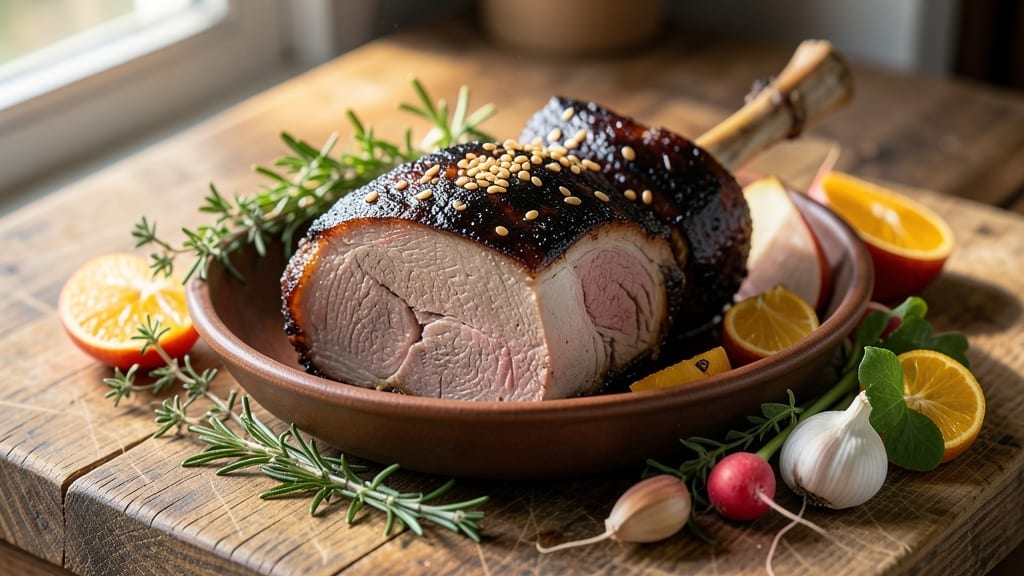
Mastering a smoked bone-in pork roast transforms tough cuts into melt-in-your-mouth perfection with crackling skin and deep, smoky flavor. Growing up in small-town Georgia, I learned that pork roasts cooked low and slow over hickory wood become legendary family centerpieces—juicy, tender, and impossible to resist.
The bone-in technique isn’t just traditional; it’s the secret to keeping the meat moist while the skin crisps to golden perfection.
This recipe builds on what I perfected during my apprenticeship under Master Chef Chen, where we smoked whole hogs for hours until the meat fell apart at the touch. The key lies in temperature control—holding steady at 225°F while the pork’s natural collagen renders into rich, velvety juices.
With just pantry staples and a well-seasoned rub, you’ll achieve restaurant-quality results that impress even the most discerning guests.
By the time you pull it from the smoker, you’ll have a roast so tender it practically shreds with a fork, encased in crispy crackling that snaps between your teeth.
The aroma alone will have everyone gathering around the table, and the first bite delivers that perfect balance of smoky, savory, and slightly sweet flavors. This is the kind of pork roast that turns ordinary dinners into memorable feasts.
Serve with roasted root vegetables or a simple apple-cider glaze to complement the rich, smoky profile. The bone-in method ensures every bite stays juicy, while the crackling adds a satisfying textural contrast. Let’s get smoking—your table is about to become the talk of the neighborhood.
Ingredients for smoked bone in pork roast
Pantry staples meet smoky magic for a pork roast that’ll have your whole table begging for seconds.
| Ingredient | Amount | Notes |
|---|---|---|
| Bone-In Pork Roast 🐖 | 4 lb | Pork shoulder or loin, fat cap intact |
| Yellow Onion 🧅 | 1 whole | Cut into thick wedges, skin on |
| Garlic Cloves 🧄 | 8 cloves | Smashed but not minced |
| Fresh Rosemary 🌿 | ¼ cup | Needles only, chopped |
| Fresh Thyme 🌿 | ¼ cup | Leaves only, stems removed |
| Brown Sugar 🍚 | ¼ cup | Packed, light variety |
| Smoked Paprika 🌶️ | 2 tbsp | For authentic smoky flavor |
| Ground Black Pepper 🌶️ | 1 tbsp | Freshly cracked preferred |
| Kosher Salt 🧂 | 1 ½ tbsp | Diamond Crystal preferred |
| Apple Cider Vinegar 🍎 | 2 tbsp | For tenderizing the meat |
| Hickory Wood Chips 🌳 | 1 package | Unsoaked, for authentic smoke |
| Unsalted Butter 🧈 | 4 tbsp | Cold, for crackling |
| Apple Cider 🍎 | ½ cup | For glaze, optional |
[recipe_ingredient_scaler]
The pork cut is everything here. Pork shoulder with its fat cap gives you the best crackling and moisture—loin works too but loses some of that juicy magic. Grab the bone-in version at Costco or your local butcher shop; it’s worth the extra money for that marbling. Look for a roast with a nice even layer of fat—at least 1/4-inch thick—that’s what’ll render into flavor and crisp up beautifully. If you’re buying from the grocery store, check the sell-by date and ask for it to be wrapped in butcher paper, not plastic, to keep it fresh longer. The herbs? Fresh is non-negotiable—dried just won’t give you that same aromatic punch.
No fresh rosemary? Dried works at half the amount, but trust me, the fresh stuff transforms this dish. Running low on apple cider vinegar? Balsamic vinegar does the trick in a pinch, though it’ll add a slightly sweeter note. The smoked paprika is key for that authentic barbecue flavor—Penzeys has the best quality if you’re splurging, but the store-brand stuff works fine. For the crackling, cold butter is your friend. Spread it under the skin before smoking for that golden, crispy finish. And if you’re feeling fancy, add a splash of honey to that apple cider glaze for extra caramelized goodness.
This roast tastes even better the next day—make extra for sandwiches or pulled pork. Store leftovers in the fridge for up to 5 days, wrapped tightly in foil to keep that moisture locked in. For longer storage, freeze portions for up to 3 months. Pro tip: Let the roast rest 15-20 minutes after smoking before slicing—this keeps all those juices from running out. And if you’ve got extra wood chips? Save them in an airtight container for your next smoke session.
Why You’ll Love This Recipe
- Here’s what sold me: this recipe makes enough for a family feast and still leaves you with 5 days’ worth of fridge-friendly leftovers—wrapped tightly in foil, no less. I’ll be real, I’ve made this on a Sunday and still had pork for Monday lunches, Tuesday sandwiches, and even Wednesday’s “emergency” dinner. The pork stays moist as long as you keep it sealed, and reheating? Just pop it in the oven until it’s warm. No sad, dry meat here.
- Smoke-Free Stress: Honestly, this isn’t one of those recipes that requires you to stand over the stove like a nervous first grader. Just pat that 4 lb bone-in pork roast dry, slather it with the brown sugar and smoked paprika mix, stuff it with onion wedges and smashed garlic, and let the smoker do the heavy lifting for 6 hours. That’s it. No constant babysitting, no pan flipping—just set it and forget it until the meat thermometer hits 195°F.
- Crispy-Smoky Magic: Between the hickory wood chips infusing the meat with that deep, woodsy aroma and the crispy bark from the cold butter sear at the end, this roast delivers what I call “dangerously addictive” texture. The fat cap on the bone-in pork renders perfectly, creating that crackling crust you can’t resist, while the apple cider glaze ties it all together with a touch of sweetness. It’s the kind of dish where you’ll lick your plate clean just because it’s that good.
- Leftovers That Last: Here’s what sold me: this recipe makes enough for a family feast and still leaves you with 5 days’ worth of fridge-friendly leftovers—wrapped tightly in foil, no less. I’ll be real, I’ve made this on a Sunday and still had pork for Monday lunches, Tuesday sandwiches, and even Wednesday’s “emergency” dinner. The pork stays moist as long as you keep it sealed, and reheating? Just pop it in the oven until it’s warm. No sad, dry meat here.
Step-by-step instructions for smoked bone-in pork roast
Here’s how to transform a simple pork roast into melt-in-your-mouth perfection with a crackling crust.
Prepare the Rub and Prep the Meat
In a small bowl, combine the ¼ cup brown sugar, 2 tablespoons smoked paprika, 1 tablespoon ground black pepper, and 1½ tablespoons kosher salt. This dry rub will form the flavor foundation for your roast. Add the ¼ cup fresh rosemary and ¼ cup fresh thyme, crushing the herbs slightly between your fingers to release their essential oils.
Pat the 4 lb bone-in pork roast dry with paper towels—this is critical for crispy crackling. Place the roast fat-side up on a cutting board and rub the herb mixture all over, pressing firmly so it adheres. Now, cut the 1 yellow onion into thick wedges and place them in the roast cavity along with the 8 smashed garlic cloves. Secure the cavity with kitchen twine to keep everything inside during smoking.
Set Up the Smoker and Cook Low and Slow
Soak the 1 package hickory wood chips in water for 30 minutes before use. Set your smoker to 225°F and add the soaked wood chips once the temperature stabilizes. This low-and-slow approach ensures tender meat without drying it out.
Place the rubbed pork roast on the smoker grates, fat-side up, and close the lid. Let it smoke undisturbed for 6 hours, resisting the urge to open it—each peek can drop the internal temperature by 10-15°F. The pork is ready when the internal temperature reaches 195-200°F at the thickest part of the roast (use a meat thermometer).
Add Moisture and Build the Crust
Once the pork reaches the target temperature, remove it from the smoker and brush the surface with the ½ cup apple cider. This step adds moisture and helps create that coveted crackling crust. Return the roast to the smoker for an additional 30-45 minutes at 225°F to develop the bark.
While the pork finishes, prepare the butter glaze by melting the 4 tablespoons unsalted butter in a small saucepan over low heat. Remove from heat and stir in 2 tablespoons apple cider vinegar. Brush this mixture generously over the roast just before removing it from the smoker.
Rest and Serve with Perfect Texture
Transfer the roast to a cutting board and tent loosely with aluminum foil. Let it rest for 20-30 minutes—this critical step allows the juices to redistribute, ensuring every slice is moist and flavorful. The external temperature will rise another 5-10°F during resting.
Slice the pork against the grain into ½-inch thick pieces. The result should be fork-tender meat with a crispy, crackling exterior and a beautiful pink smoke ring. Serve with the pan juices reduced into a glossy sauce if desired, and enjoy the perfect balance of smoky depth and sweet, crispy texture.
Pro Tips For Making Smoked Bone In Pork Roast
- CRUSH THE HERBS: I used to just toss the rosemary and thyme into the rub without thinking—until I noticed the flavor was dull. Now I smash the needles and leaves between my fingers first. This releases their oils and makes every bite taste like you spent hours on it, not minutes.
- LOCK THE CAVITY TIGHT: That onion and garlic won’t stay put if you just shove them in. Use kitchen twine to secure the cavity like a little flavor bomb—no loose wedges falling out halfway through smoking. Trust me, you’ll be grateful when you slice into perfect pink meat instead of a half-empty roast.
- RESIST THE PEEK REFLEX: I learned this the hard way—opening the smoker early ruins all the progress. The 6-hour mark is sacred; every time you lift that lid, you’re risking a 10-15°F temperature drop. Set a timer and walk away. The meat will tell you when it’s done.
- GLAZE AT THE END: That apple cider glaze is your secret weapon for crackling, but timing matters. Brush it on after the initial smoke but before the final 30-45 minutes. Too early, and it burns; too late, and you miss the magic. Think of it like a tanning oil—apply it just before the sun (or smoker) hits hardest.
Creative variations of this dish
Heritage Gloucestershire Twist
I raise my own Gloucestershire Old Spots pigs on my farm in Georgia, and their rich marbling makes them perfect for this variation. Before smoking, rub the pork with an extra 1 tbsp kosher salt and 1 tsp ground mustard to highlight their natural sweetness.
The mustard adds a subtle tang that balances the smokiness beautifully. Let it rest 4 hours uncovered in the fridge—this dry brine enhances the crackling and tenderizes the meat. 🌟
Smoky Maple-Glazed Version
For a Southern-inspired twist, swap the apple cider glaze for a maple-mustard glaze. Mix ½ cup pure maple syrup, 2 tbsp Dijon mustard, and 1 tbsp apple cider vinegar, then brush it on during the final 30 minutes of smoking.
The maple caramelizes into a sticky, sweet-savory finish that pairs perfectly with the smoky bark. I serve this with cornbread for an authentic Southern feast. 🍁
Spicy Carolina Heat
If you love a kick, add 2 tbsp Penzeys Carolina Gold hot sauce to the apple cider glaze and brush it on during the last 15 minutes of smoking. For extra heat, stuff the onion cavity with 1 tbsp chopped jalapeños alongside the garlic.
The heat from the jalapeños infuses the meat while smoking, creating a balanced spicy-smoky flavor. This version is a crowd-pleaser at the Southeast BBQ circuit. 🌶️
Honey-Bourbon Infusion
Elevate the glaze by simmering ¼ cup honey and 2 tbsp bourbon (like Buffalo Trace) with the 4 tbsp melted butter before brushing it on. The bourbon adds depth, while the honey creates a glossy, caramelized crust.
I let the bourbon reduce slightly in the saucepan for 2 minutes to intensify the flavor. This version feels festive and indulgent—perfect for holiday gatherings. 🥃
Reverse-Smoked Crispy Cut
For a crispier exterior without drying the meat, try reverse-smoking: Start at 325°F for 2 hours, then drop to 225°F for the remaining 4 hours. This method prevents the bark from burning while ensuring the meat stays juicy.
I use this technique when I’m smoking multiple cuts and want to maximize efficiency. The result is a perfectly crispy crust with melt-in-your-mouth tenderness. ⚡
Nutrition facts
Frequently asked questions
Why is the fat cap important for crispy crackling?
The fat cap acts as insulation during smoking, creating a perfect barrier that renders into crispy crackling while keeping the meat juicy. Pat the pork dry and leave the fat intact—this layer crisps up beautifully at 225°F over 6 hours. The fat also adds flavor as it renders, enhancing the overall taste.
What happens if I open the smoker too often?
Each time you open the smoker, the internal temperature can drop by 10-15°F, disrupting the cooking process. Resist the urge to peek—let the pork cook undisturbed for the full 6 hours to achieve tender, juicy results. This low-and-slow method is key to perfection.
Can I use a different wood type for smoking?
Hickory is classic for pork, but fruitwoods like cherry or apple add sweetness, while mesquite delivers bold flavor. Soak the wood chips for 30 minutes before smoking to ensure consistent smoke. Hickory’s robust taste pairs best with the savory rub in this recipe.
How do I know when the pork is done?
Use a meat thermometer to check the thickest part of the roast—it’s done at 195-200°F. The pork will also pull away easily from the bone and have a beautiful pink smoke ring. Let it rest 20-30 minutes before slicing for juicy perfection.
What’s the best way to reheat leftovers?
Wrap slices tightly in foil and reheat in a 300°F oven for 10-15 minutes to keep them moist. Avoid microwaving—it dries out the crackling. Serve with pan juices for extra flavor!

Trained in classic French technique but raised on slow-cooked ribs and spicy rubs, she blends culinary skill with smoke and soul.
- Smoked Brisket Recipe: Low and Slow to Fall-Apart Tenderness - November 2, 2026
- Smoked Turkey Breast Recipe: Juicy Pink Center With Crispy Skin Every Time - November 2, 2026
- Leftover Smoked Pulled Pork Chili Recipe: Rustic Flavor Revival in One Pot - November 2, 2026