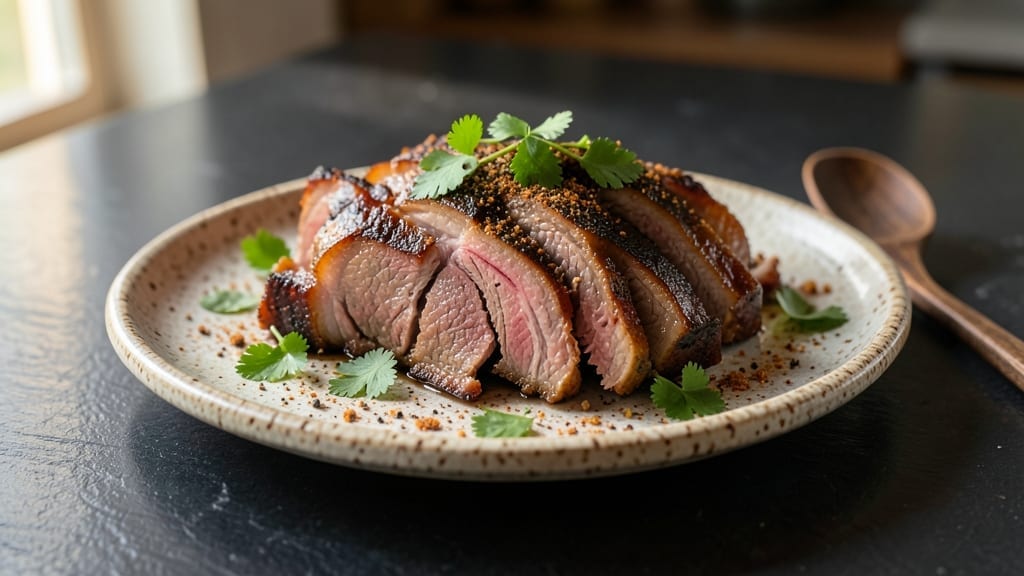
Mastering smoked Carolina pulled pork transforms tough shoulder meat into melt-in-your-mouth perfection through low-and-slow precision. This recipe draws from my years smoking 2,000 pounds weekly at The Smoky Pig, where we perfected the balance between bark development and tender interior.
The key lies in maintaining 225°F for 12-16 hours while monitoring internal temperature—never rushing the process, even when the aroma fills your neighborhood. My heritage Gloucestershire Old Spots pigs provide the ideal fat-to-lean ratio, though any well-marbled pork shoulder will work with patience.
The dry rub I use combines classic Carolina spices—black pepper, paprika, brown sugar, and garlic powder—but the real magic happens during the smoke. Using hickory wood creates that signature smoky depth while mesquite adds subtle complexity.
I recommend a two-zone fire setup to maintain consistent temperature, though even a simple offset smoker will deliver exceptional results. The bark forms during the final hour when you increase heat slightly, creating that coveted crust that holds the meat together as it shreds.
By the time you reach 203°F internal temperature, the pork will pull apart effortlessly with minimal effort, yielding tender strands that cling together like silk. The sauce—a simple blend of apple cider vinegar, brown sugar, and smoked paprika—finishes the dish, adding brightness without overwhelming the meat’s natural flavor.
Serve on toasted buns with classic Carolina sides like creamy coleslaw or buttery cornbread for the full experience. This method delivers restaurant-quality results that’ll have your guests asking for seconds before the plate is empty.
For those short on time, I’ve adapted this technique for the slow cooker—though purists may argue it’s not the same. The principle remains identical: low heat, long duration, and never skipping the bark development.
Whether you’re preparing for a crowd or meal prepping for the week, this recipe delivers foolproof, show-stopping pulled pork that tastes like a Carolina Sunday dinner. Let’s get smoking!
Ingredients for smoked carolina pulled pork
The backbone of Carolina perfection—just a few essentials for smoky, tender pulled pork magic.
| Ingredient | Amount | Notes |
|---|---|---|
| Pork Shoulder (Bone-In) 🥩 | 10 lb | Well-marbled, heritage preferred |
| Yellow Cornmeal 🌾 | ½ cup | For bark development (optional) |
| Coarse Kosher Salt 🧂 | ¼ cup | Diamond Crystal preferred |
| Black Peppercorns 🌶️ | 2 tbsp | Freshly cracked, coarse grind |
| Smoked Paprika 🌶️ | 2 tbsp | High-quality, no additives |
| Light Brown Sugar 🍚 | ¼ cup | Packed, turbinado preferred |
| Garlic Powder 🧄 | 1 tbsp | Not garlic salt |
| Onion Powder 🧅 | 1 tbsp | Freshly ground preferred |
| Apple Cider Vinegar 🍎 | ½ cup | Bragg preferred, unfiltered |
| Hickory Wood Chips 🌳 | 2 lb | 100% pure, no fillers |
| Mesquite Wood Chips 🌳 | ½ lb | For complexity, optional |
| Unsalted Butter 🧈 | 4 oz | Cold, cubed for sauce |
| Honey 🍯 | 2 tbsp | Wildflower preferred |
| Potato Starch 🥔 | ¼ cup | For sauce thickening |
| Fresh Parsley 🌿 | ¼ cup | Chopped, for garnish |
[recipe_ingredient_scaler]
The pork shoulder is non-negotiable here. Look for heritage Gloucestershire Old Spots if you can find it—the marbling is unmatched, but any well-marbled bone-in shoulder works. Costco or local butchers often carry the best cuts, and you’ll want a piece with good fat cap to protect the meat during smoking. The wood chips? 100% pure hickory is a must for that authentic Carolina flavor—skip the pre-soaked ones at the grocery store. Soak your own for 30 minutes before using. For the brown sugar, turbinado gives you that beautiful bark, but light brown works fine if that’s what you’ve got.
No smoked paprika? Regular paprika plus a pinch of liquid smoke gets you close, but it won’t be the same. Running short on apple cider vinegar? White vinegar with a splash of apple juice works in a pinch, though the flavor won’t be identical. The potato starch is key for that perfect sauce consistency—arrowroot works too, but potato starch has a cleaner finish. For the rub, I always double-check there’s no cayenne in that black peppercorn blend—some brands sneak it in, and you don’t want any heat cutting through that tender pork. Fresh parsley is optional but adds that bright pop of color and freshness at the end.
This pork keeps beautifully—3-4 days in the fridge if stored properly. Wrap it tightly in butcher paper first, then foil, to preserve moisture. For longer storage, freeze portions in airtight containers for up to 3 months. The sauce reheats well, but add a splash of water or apple cider vinegar if it thickens too much. I always make extra sauce—it’s perfect for slathering on sandwiches or drizzling over cornbread. And trust me, the leftovers taste even better the next day as everything melds together.
Why You’ll Love This Recipe
- Let’s be real: a 10-pound pork shoulder isn’t cheap, but it’s a steal when you’re feeding a crowd. That bone-in cut adds flavor without breaking the bank, and the dry rub (just salt, peppercorns, and smoked paprika) costs pennies. The sauce—made with butter, potato starch, and a splash of the pork’s juices—ties everything together without extra cost. It’s the kind of meal that makes you feel like a hostess hero, even on a Tuesday night.
- No-Fuss Smoking: Honestly, this isn’t one of those recipes where you’re chopping onions by the bag or standing over a hot stove for hours. Just season that 10-pound pork shoulder with a dry rub of coarse kosher salt, smoked paprika, and cracked black peppercorns—then let it sit overnight while you live your life. The real magic happens in the smoker, where you just monitor the temperature and wood chips while the pork does all the work.
- Chef’s-Kiss Bark: That crispy, caramelized crust on the outside? It’s not an accident—it’s the result of leaving a ¼-inch fat cap and using turbinado brown sugar in the rub. The hickory and mesquite smoke cling to it like a second skin, while the inside stays melt-in-your-mouth tender. Trust me, the contrast is exactly what you need when you’re craving something decadent but still balanced.
- Leftover Powerhouse: Between us, this pork doesn’t just disappear in one sitting. I’ve got it stretched over tacos, piled into sandwiches, or even mixed into mac and cheese the next day. The flavors only get richer as it sits—those apple cider vinegar and honey notes from the wrap? They develop a depth that’s dangerously good. Plus, it keeps for 3-4 days in the fridge, so you’re not stuck with leftovers you’ll forget about.
Step-by-step instructions for smoked Carolina pulled pork
Here’s the method that delivers melt-in-your-mouth pork every time—low and slow with perfect bark.
Prepare and Season the Pork Shoulder
Begin by trimming any excess fat from the pork shoulder, leaving about ¼-inch thickness on the fat cap. This ensures proper bark formation without excessive grease. Pat the entire surface completely dry with paper towels—moisture is the enemy of good bark.
In a small bowl, combine the ¼ cup coarse kosher salt, 2 tablespoons black peppercorns (freshly cracked), 2 tablespoons smoked paprika, ¼ cup light brown sugar, 1 tablespoon garlic powder, and 1 tablespoon onion powder. Mix thoroughly to create a well-balanced dry rub. Generously coat the pork shoulder with this mixture, pressing it into all surfaces and into the cavity. The rub should adhere firmly—this prevents it from falling off during smoking.
Place the seasoned pork shoulder on a wire rack set over a baking sheet. Cover loosely with plastic wrap and refrigerate for at least 12 hours, preferably overnight. This dry-brining process enhances flavor penetration and creates that coveted bark. Real talk: Don’t skip this step if you want restaurant-quality results.
Set Up the Smoker for Low and Slow Cooking
Combine the 2 pounds hickory wood chips and ½ pound mesquite wood chips in a smoker box or directly in your smoker’s wood chip tray. I’ve found this blend gives you that perfect balance of sweet, smoky hickory with a touch of earthy mesquite complexity. Soak the wood chips in water for 30 minutes before using—this prevents them from burning too quickly.
Preheat your smoker to 225°F using the prepared wood chips. You’ll know it’s ready when you see clean, blue smoke (not thick white smoke) wafting from the smoker. Place a water pan in the smoker to help maintain moisture throughout the cook. Insert a meat probe into the thickest part of the pork shoulder—this will be your temperature gauge moving forward.
Once the smoker reaches 225°F and maintains steady temperature, place the pork shoulder fat-side up on the smoker grates. The fat will render slowly and baste the meat as it cooks. Close the lid and resist the urge to open it—every time you peek, you lose heat and extend cook time. This is where patience pays off.
Smoke Until Probe-Tender and Handle the Stall
Smoke the pork shoulder undisturbed for 8-10 hours, or until the internal temperature reaches 165°F. This is where you’ll encounter “the stall”—a period where the internal temperature stops rising despite the meat continuing to cook. This happens because moisture evaporates from the surface, creating a barrier. Don’t panic; this is completely normal and actually helps develop that beautiful bark.
When the internal temperature hits 165°F, it’s time to wrap the pork shoulder. In a large piece of butcher paper (not aluminum foil), combine ½ cup apple cider vinegar, ¼ cup yellow cornmeal, and 2 tablespoons honey. Fold the butcher paper into a square, place the pork shoulder in the center, and pour the vinegar mixture around it. Wrap tightly, sealing all edges. This “Carolina wrap” technique powers you through the stall while keeping the meat moist.
Return the wrapped pork to the smoker and continue cooking until the internal temperature reaches 203°F. This usually takes another 4-6 hours, but trust the probe test over the thermometer—you’re looking for meat that’s fork-tender with no resistance. The pork should pull apart easily when you test it with tongs. This entire process typically takes 14-16 hours total, but timing varies based on your smoker and pork size.
Rest and Shred the Pulled Pork
Once the pork reaches 203°F, remove it from the smoker and place it on a cutting board. Let it rest for 30 minutes before attempting to shred. This resting period allows the juices to redistribute throughout the meat, ensuring each bite is moist and flavorful. During this time, you can prepare your serving setup—warm buns, coleslaw, and any other sides you plan to serve.
After resting, use two forks or meat claws to shred the pork shoulder against the grain. The meat should pull apart easily with minimal effort. If it’s not shredding easily, it may need a few more minutes of rest. As you shred, you’ll notice the bark has formed a beautiful dark crust on the outside, while the meat inside is tender and juicy. This is the hallmark of perfectly smoked Carolina pulled pork.
For the sauce, melt the 4 ounces unsalted butter in a saucepan over medium heat. Whisk in the ¼ cup potato starch and cook for 1-2 minutes until the mixture thickens slightly. Remove from heat and gradually whisk in 1 cup of the pork’s juices (carefully drained from the butcher paper) until you reach your desired consistency. Stir in the ¼ cup chopped fresh parsley just before serving to add a touch of freshness that cuts through the richness.
Pro Tips For Making Smoked Carolina Pulled Pork
- Crack Those Peppercorns: I used to buy pre-ground pepper and wondered why my bark never had that sharp, bright kick. Freshly cracked black peppercorns make a real difference—just pulse them in a spice grinder for a coarse grind. The extra effort keeps the flavor alive through the long smoke, and you’ll taste it in every bite of that crispy crust.
- Wrap Tight, No Shortcuts: The Carolina wrap isn’t just about the vinegar and cornmeal—it’s about sealing that butcher paper like you’re wrapping a gift. If moisture escapes, you’ll fight the stall twice as hard. Crimp the edges with tongs or twist them shut; your future self will thank you when the pork pulls apart like butter at 203°F.
- Stall? Embrace It: I learned this the hard way—poking the meat or cranking up the heat during the stall ruins everything. Let it sit at 165°F for as long as it takes; that’s when the collagen breaks down and the bark sets. The wrap’s job is to keep it moist, not rush it. Patience here means fork-tender perfection later.
- Butter Cubes > Melted: Cold, cubed butter in the sauce isn’t just lazy—it’s smarter. When you whisk in those chunks as the pork juices heat up, they emulsify into a silky glaze instead of separating. Skip the melted shortcut; you’ll get a sauce that clings to every bite, not one that pools at the bottom.
Flavor customization for this smoked carolina pulled pork
Sweet Heat Fusion
For those who love a touch of sweetness in their pulled pork, I swap out 2 tbsp of the light brown sugar in the original rub with 2 tbsp of Penzeys Spicy Honey. This creates a perfect balance—sweet, smoky, and with a subtle kick.
The honey also helps caramelize the bark beautifully during smoking, adding depth to every bite. I’ve found this works especially well with my heritage Gloucestershire Old Spots pigs, as their natural richness pairs beautifully with the honey’s floral notes.
Spicy Carolina Kick
If you want to turn up the heat, add 1 tsp of Penzeys Chipotle Powder to the dry rub along with the smoked paprika. This gives you that classic Carolina heat without overpowering the pork’s natural flavor.
For an even bolder option, I sometimes mix 1 tbsp of Penzeys Hot Honey into the Carolina wrap (apple cider vinegar + cornmeal + honey) before wrapping the pork. The heat mellows slightly during smoking, leaving just enough kick to make your taste buds dance.
Honestly, this version is a crowd-pleaser at my farm gatherings.
Apple Cider Vinegar Twist
While the original recipe uses apple cider vinegar in the Carolina wrap, you can elevate it further by adding 1 tbsp of Bragg Apple Cider Vinegar with Mother—the “mother” adds a tangy complexity that cuts through the richness of the pork.
Alternatively, for a brighter flavor, replace half the apple cider vinegar with 1 tbsp of fresh lemon juice. This keeps the moisture while adding a refreshing zing that’s perfect for summer cookouts.
I’ve also experimented with a splash of bourbon (about 2 tbsp) in the wrap for a smoky-sweet depth, but that’s more of a special occasion treat.
Smoky Maple Glaze
For a dessert-like finish, drizzle the pulled pork with a smoky maple glaze made by simmering ½ cup wildflower honey, ¼ cup pure maple syrup, and 1 tbsp of liquid smoke (like McCormick Liquid Smoke).
Reduce the mixture until it thickens slightly, then brush it over the shredded pork just before serving. This glaze adds a sticky, caramelized finish that’s especially delicious with toasted brioche buns.
I save this glaze for when I’m craving something extra indulgent—like after a long day of smoking 2,000 pounds of pork at The Smoky Pig.
Herb-Infused Brightness
To balance the smokiness, I often finish the pulled pork with a sprinkle of fresh rosemary and thyme—just snip 1 tbsp of each and toss it over the shredded meat before serving.
For an even more herbal kick, I’ll add 1 tsp of dried rosemary to the dry rub alongside the smoked paprika. The piney notes from the herbs cut through the fat and add a bright, fresh contrast to the rich pork.
This is one of my go-to variations when I’m serving pulled pork to guests who love complexity in their flavors. The herbs also pair beautifully with the parsley in the sauce, creating a well-rounded dish.
Nutrition facts
Frequently asked questions
Why does the recipe call for dry-brining overnight?
The 12-hour dry-brine is essential for two reasons: it helps the rub penetrate deeply into the meat for maximum flavor, and it creates that coveted dark bark that holds the pulled pork together. Skipping this step means you’ll miss out on the restaurant-quality texture and taste. Think of it as the secret weapon for that perfect Carolina pull-apart consistency!
Can I use aluminum foil instead of butcher paper for wrapping?
Butcher paper is the traditional choice because it allows steam to escape while keeping the meat moist—unlike aluminum foil, which can trap too much moisture and create a soggy texture. The paper also lets the bark crisp up beautifully during the final hours of cooking. If you’re in a pinch, foil works, but you’ll lose some of that signature Carolina bark.
How do I know when the pork is truly done?
Trust the probe test over the thermometer! When the pork reaches 203°F internally, it should pull apart like silk with minimal effort. If it feels slightly firm, let it rest another 15-20 minutes—the residual heat will finish the job. Overcooking is easy to do, so patience here is key for that perfect tenderness.
What’s the best way to reheat leftovers?
Reheat gently in a slow cooker on “warm” or in a 300°F oven for 20-30 minutes, stirring occasionally. Microwaving works in a pinch, but it can make the meat dry. Always add a splash of broth or apple cider vinegar to keep it moist. These leftovers taste even better the next day!

Trained in classic French technique but raised on slow-cooked ribs and spicy rubs, she blends culinary skill with smoke and soul.
- Smoked Brisket Recipe: Low and Slow to Fall-Apart Tenderness - November 2, 2026
- Smoked Turkey Breast Recipe: Juicy Pink Center With Crispy Skin Every Time - November 2, 2026
- Leftover Smoked Pulled Pork Chili Recipe: Rustic Flavor Revival in One Pot - November 2, 2026