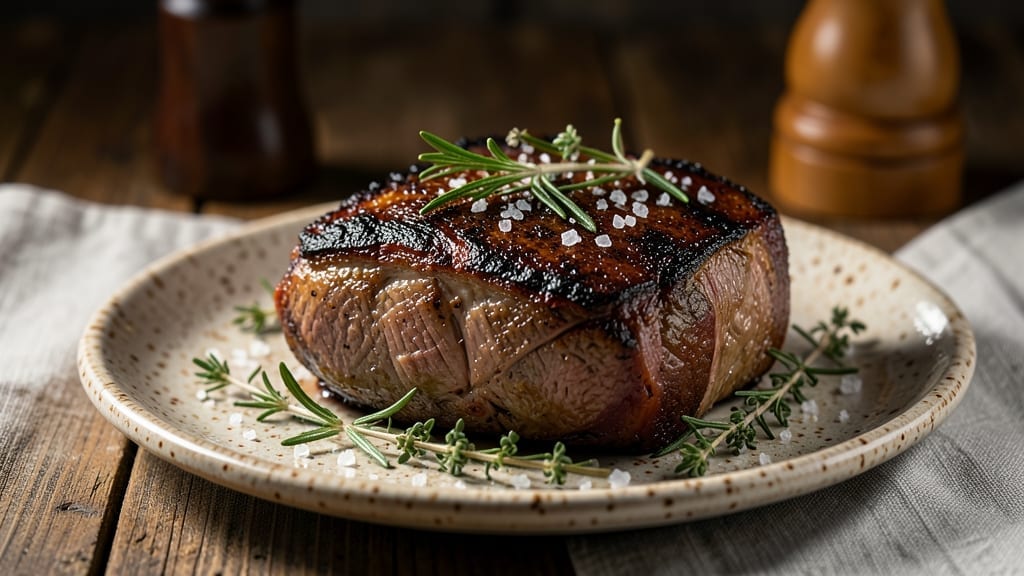
This smoked chuck roast recipe delivers melt-in-your-mouth tenderness with deep, wood-fired flavor—exactly what transforms a weeknight dinner into a showstopper. 🌟 I perfected it during my time working the line at that Asheville farm-to-table restaurant, where we learned that slow-smoking tough cuts unlocks restaurant-quality results at home.
The secret lies in the low-and-slow approach: cooking the roast at 225°F for 8-10 hours until it practically falls apart in your hands. A simple salt-and-pepper rub lets the meat’s natural flavors shine while the smoker’s aroma infuses every bite.
Biscuit always sits by the grill, tail wagging impatiently—he knows this is the meal that makes him a hero.
By the time you pull it from the smoker, you’ll have fall-apart tenderness with a smoky crust that begs to be sliced thick. The juices will flow like a river, and every bite will deliver that perfect balance of smoky depth and savory richness.
This is the kind of dish that makes guests ask for seconds before they even sit down.
Serve it with classic sides like creamy mashed potatoes or roasted root vegetables to soak up every last drop of that smoky goodness. The leftovers? Even better the next day—just reheat gently and enjoy the ultimate comfort food experience.
Ingredients for smoked chuck roast
Pantry staples meet smoker magic for the ultimate comfort food experience.
| Ingredient | Amount | Notes |
|---|---|---|
| Chuck Roast 🥩 | 4 lb | Bone-in preferred for flavor |
| Kosher Salt 🧂 | 2 tbsp | Diamond Crystal preferred |
| Freshly Ground Black Pepper 🌶️ | 1 tbsp | Coarse grind for texture |
| Yellow Onion 🧅 | 1 whole | Cut into chunks for smoker |
| Carrots 🥕 | 4 whole | Baby carrots work too |
| Celery Stalks 🌿 | 4 whole | Trimmed and chopped |
| Garlic Cloves 🧄 | 6 cloves | Smashed for aroma |
| Apple Cider Vinegar 🍎 | ¼ cup | For tenderizing |
| Wood Chips (Hickory or Oak) 🌳 | 2 cups | Soaked for 1 hour |
| Beef Broth 🥫 | 1 cup | Low-sodium preferred |
| Olive Oil 🫒 | 2 tbsp | For rub application |
| Fresh Rosemary 🌿 | ½ cup | Chopped, optional garnish |
| Fresh Thyme 🌿 | ¼ cup | Chopped, optional garnish |
[recipe_ingredient_scaler]
The chuck roast is the star—look for well-marbled cuts with visible fat for that melt-in-your-mouth texture. Costco and local butcher shops often have the best selections, but the grocery store meat counter works too. Bone-in is ideal since it adds extra flavor, but boneless works if you’re short on time. Soak the wood chips for at least 1 hour before smoking to prevent flare-ups. I always double-check the fat cap thickness—aim for at least 0.5 inches for maximum tenderness. The beef broth should be low-sodium to avoid overpowering the natural meat flavor.
No hickory or oak wood chips? Pecan or cherry work beautifully too—they add a sweeter, fruitier note. Short on fresh rosemary or thyme? Dried at one-third the amount gets you close, though fresh is always better. The apple cider vinegar might seem odd, but it tenderizes the meat beautifully—just don’t skip it. For the rub, I like to mix the salt and pepper with a splash of olive oil first to help it stick better. If you’re using a smoker with limited space, Trader Joe’s sells those handy little foil pans that make it easy to add liquids like broth during cooking.
This roast tastes even better the next day—just reheat gently in the oven with a splash of beef broth to keep it moist. Store leftovers in airtight containers for up to 5 days in the fridge or 3 months in the freezer. I always portion mine into individual servings before freezing so I can grab exactly what I need. The smoker’s aroma lingers in the meat, so if you’re not serving it right away, wrap it tightly in butcher paper to lock in those flavors. Trust me, the first bite out of the fridge is worth the wait.
Why You’ll Love This Recipe
- I’ll be real: this isn’t your typical slow-cooker project. You toss the chuck roast in a bag with vinegar and salt, let it sit while you prep the smoker, and boom—12 hours later, you’ve got dinner done with minimal hands-on time. The vinegar marinade does all the heavy lifting while you’re sleeping or watching TV.
- Weeknight Game-Changer: I’ll be real: this isn’t your typical slow-cooker project. You toss the chuck roast in a bag with vinegar and salt, let it sit while you prep the smoker, and boom—12 hours later, you’ve got dinner done with minimal hands-on time. The vinegar marinade does all the heavy lifting while you’re sleeping or watching TV.
- Smoky Depth Meets Herb Brightness: The hickory or oak smoke wraps around the meat like a cozy blanket, but it’s the fresh rosemary and thyme—rubbed in with olive oil—that really make it sing. That crispy bark hiding the creamy center? Chef’s kiss. The garlic and carrots in the smoker pan? They turn the gravy into something restaurant-worthy without extra effort.
- Leftovers That Last: Honestly, this roast is so good you’ll want seconds—but don’t stress. The leftovers keep perfectly for five days in the fridge or freeze like a dream for months. Slice it thin, toss it in a sandwich, or reheat with mashed potatoes for an easy lunch. My kids even ask for “smoke meat” on pizza.
Step-by-step instructions for smoked chuck roast
Here’s how to transform a tough cut into melt-in-your-mouth perfection using just your smoker.
🔥 Step 1: Prep the Chuck Roast for Maximum Tenderness
Start by placing the 4 lb chuck roast in a large resealable bag. Add the ¼ cup apple cider vinegar and 2 tbsp kosher salt, then seal the bag and massage it gently for 2 minutes to distribute the marinade evenly. This acid tenderizer works magic on tough beef fibers while the salt begins breaking down proteins.
Remove the roast from the bag and let it sit uncovered on a wire rack for 30 minutes at room temperature. This step ensures even cooking and prevents temperature shock when it hits the smoker. While it rests, prepare your smoker using the 2 cups wood chips (hickory or oak)—soak them in water for 1 hour first to prevent flare-ups.
Here’s the thing—this vinegar marinade isn’t just for flavor. The acidity actually pre-cooks the outer layer slightly, creating a more uniform texture that falls apart beautifully. Don’t skip this step if you want that signature fork-tender result.
👨🍳 Step 2: Build the Smoker’s Flavor Foundation
While the roast rests, chop the 1 yellow onion, 4 carrots, and 4 celery stalks into 1-inch chunks—this creates your aromatic mirepoix. Slice the 6 garlic cloves in half lengthwise and smash them lightly with the flat side of your knife to release their oils. These vegetables will form the flavor base that infuses the meat as it smokes.
In a small bowl, combine 2 tbsp olive oil with the chopped ½ cup fresh rosemary and ¼ cup fresh thyme. Rub this mixture all over the chuck roast, pressing firmly so the herbs adhere. The oil helps the rub stick and creates a beautiful bark, while the fresh herbs add bright, aromatic notes that complement the smoky depth.
Real talk: Your smoker temperature matters more than anything else. Preheat to 225°F using the soaked wood chips. When you see clean, blue smoke (not white steam), you’re ready. Place the seasoned roast fat-side up in the smoker—this protects the meat during the long cook.
⏰ Step 3: Smoke Low and Slow for Unmatched Texture
Smoke the chuck roast undisturbed for 12 hours, maintaining 225°F the entire time. This is where patience pays off—the low temperature breaks down collagen in the connective tissue, transforming it into gelatin that makes the meat melt in your mouth. Every 2 hours, sprinkle the roast with additional 1 tbsp freshly ground black pepper to enhance flavor development.
Around the 8-hour mark, check the internal temperature using a meat thermometer. When it hits 165°F, you’ll hit “the stall”—a period where the temperature plateaus as moisture evaporates. This is normal. At this point, wrap the roast tightly in butcher paper (not foil) and return it to the smoker. The paper allows some moisture to escape while preserving that beautiful bark.
Continue smoking until the internal temperature reaches 203°F and a probe slides in like butter. This usually takes another 4-6 hours total. The reason we aim for this high temperature is that it ensures maximum collagen breakdown—what makes chuck roast legendary for its tenderness.
🥘 Step 4: Rest and Serve with Smoky Pan Gravy
Remove the roast from the smoker and transfer it to a cutting board. Tent loosely with foil and let it rest for 30 minutes. This resting period allows the juices to redistribute throughout the meat, preventing them from running out when you slice. Don’t skip this—it’s the difference between juicy perfection and dry disappointment.
While the roast rests, pour the 1 cup beef broth into the smoker pan and scrape up all those delicious browned bits from the bottom. Simmer this on the stovetop over medium heat for 5-7 minutes until reduced by half. Strain the gravy through a fine-mesh sieve for a silky texture, then return it to the pan. Taste and adjust seasoning with additional kosher salt and 1 tbsp freshly ground black pepper if needed.
Slice the chuck roast against the grain into ¼-inch thick pieces. The meat should pull apart with minimal resistance, revealing that beautiful pink smoke ring just beneath the bark. Serve immediately with the smoky pan gravy spooned generously over each portion. The combination of tender meat, rich gravy, and aromatic herbs makes this one of those dishes everyone will beg you to recreate.
Pro Tips For Making Smoked Chuck Roast
- Massage That Roast: DESCRIPTION: The 2-minute rub with vinegar and salt isn’t just about flavor—it physically breaks down fibers. I used to slap it on and walk away, but pressing the bag with your knuckles (not just fingers) gets the salt into every crevice. The vinegar’s job is to pre-cook the surface, so don’t skip the 30-minute air-dry afterward—it’s what makes the bark crisp and the center melt.
- Smash, Don’t Slice, Garlic: DESCRIPTION: Those 6 garlic cloves need to weep for the mirepoix to shine. A quick chop leaves them intact, but smashing them with the flat of your knife releases oils that’ll infuse the smoke. I learned this after a batch tasted bland—turns out, whole cloves just sit there. Pro move: Toss the smashed cloves into the smoker pan with the veggies for extra depth.
- Wrap at 165°F—Not Earlier: DESCRIPTION: The stall is real, but wrapping too soon traps steam and turns your bark into sad, soggy paper. Wait until the probe hits 165°F, then butcher paper (not foil) is your secret weapon—it lets moisture escape while keeping the crust intact. I wrapped at 160°F once and spent 2 hours trying to revive the bark. Trust the thermometer.
- Save the Veggie Water: DESCRIPTION: After chopping the onion, carrots, and celery, don’t rinse the cutting board—just scrape the leftover bits into the smoker pan with the roast. Those scraps caramelize into flavor bombs. I started doing this after realizing my gravy tasted like it was missing something. Bonus: It cuts down on cleanup.
Best sauces and condiments for smoked chuck roast
Classic Smoky Gravy
The smoky pan gravy from the recipe is your first port of call—it’s already perfected with the 1 cup beef broth reduced and scraped from the smoker pan. But if you want to elevate it, try adding 1 tbsp Worcestershire sauce to the broth while simmering.
It adds a tangy depth that complements the smoky beef beautifully. I always keep a bottle of Lea & Perrins on hand for this exact purpose. 💛
Sweet & Tangy BBQ Glaze
For a Southern twist, mix ½ cup store-bought BBQ sauce (like Sweet Baby Ray’s) with 1 tbsp apple cider vinegar and 1 tsp brown sugar. Brush it over the sliced roast just before serving.
The vinegar cuts through the sweetness while enhancing the smoky flavor. David insists this is his favorite way to finish the dish—he says it’s like “smoky dessert on meat.”
Creamy Horseradish Cream
Whisk together ½ cup sour cream, 2 tbsp prepared horseradish, 1 tbsp fresh lemon juice, and a pinch of kosher salt. This tangy, creamy sauce balances the richness of the smoked beef perfectly.
I grab the Hellmann’s sour cream from Central Market for the best texture. Serve it spooned alongside the chuck roast for a Southern comfort food touch. ✨
Spicy Chipotle Aioli
Blend ½ cup mayonnaise with 1 minced chipotle pepper in adobo, 1 tsp lime juice, and ½ tsp garlic powder. This smoky-spicy aioli adds heat and depth that pairs wonderfully with the smoker’s aroma.
I like to serve it on the side for guests who want a kick. For extra richness, mix in 1 tbsp grated Parmesan before serving. 🌶️
Herbed Butter Slather
Mix softened ¼ cup unsalted butter with 2 tbsp chopped fresh parsley, 1 tsp minced garlic, and a pinch of flaky sea salt. Warm it gently and slather it over the sliced roast just before serving.
The herby butter adds a bright, fresh contrast to the deep smoky flavors. I always keep a small bowl of this on the table for guests to drizzle on their plates. 💫
Nutrition facts
Frequently asked questions
Why does the recipe call for apple cider vinegar in the marinade?
The ¼ cup apple cider vinegar does more than just add flavor—it tenderizes the tough chuck roast by breaking down proteins in the meat fibers. This step ensures even cooking and creates that signature fall-apart texture. The acidity also helps create a more uniform doneness throughout the roast, so you get perfect tenderness every time.
Can I use dried herbs instead of fresh rosemary and thyme?
You can, but use one-third the amount of dried herbs compared to fresh. For example, 1 tbsp dried rosemary equals about 1 tbsp fresh. While dried herbs work, fresh herbs add brighter, more vibrant flavor that really complements the smoky depth of the beef. Fresh is always better when you can get it!
What if my smoker runs out of wood chips halfway through cooking?
No problem! Just add a fresh batch of soaked hickory or oak wood chips to your smoker’s chip tray. The key is to maintain clean, blue smoke throughout the cooking process. If you’re using a pellet smoker, simply add more pellets to keep the fire going. Just avoid overloading the chip tray to prevent flare-ups.
How do I know when the chuck roast is done?
Use a meat thermometer to check the internal temperature. When it reaches 203°F, the roast will be fork-tender and ready to serve. You’ll also notice a beautiful pink smoke ring just beneath the bark when sliced. If you’re unsure, let it cook a bit longer—it’s better to be safe than sorry with beef!
Can I make this recipe in an electric smoker or grill?
The same principles apply—just adjust the time slightly based on your equipment. Electric smokers often cook faster, so keep an eye on the internal temperature. If using a grill, maintain a low, indirect heat and add wood chips to your smoker box. The key is to keep the temperature steady around 225°F for that slow-cooked perfection.

Trained in classic French technique but raised on slow-cooked ribs and spicy rubs, she blends culinary skill with smoke and soul.
- Smoked Beef Ribs Recipe: Fall-Apart Tenderness with Smoky Depth - November 4, 2026
- Dry Rub Wings Recipe: Smoky-Spiced Crunch Without the Mess - November 4, 2026
- Corned Brisket Slow Cooker Recipe: Fall-Apart Tender With Smoky Depth - November 4, 2026