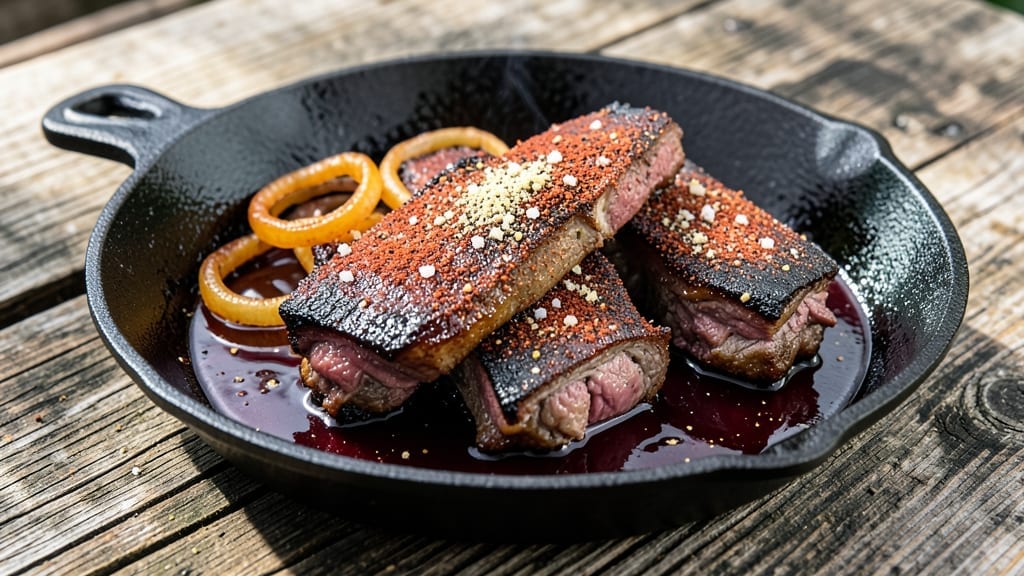
When you smoke beef short ribs on a pellet smoker, the result is smoky bark that cracks like glass and buttery meat that falls apart at the touch—this is the kind of dish that turns casual dinners into legendary meals. 🔥 The secret lies in low-and-slow precision, where hickory pellets infuse flavor while collagen transforms tough beef into melt-in-your-mouth perfection.
I perfected this technique after years of experimenting with French dry-brining methods and pellet smoker timing.
This recipe demands patience—12 hours of smoking at 225°F—but the payoff is worth every minute. The ribs develop a deep mahogany crust while staying moist inside, with a sauce that reduces into a glossy, caramelized glaze.
I use a dry rub of coarse salt, black pepper, and smoked paprika for the bark, then finish with a splash of apple cider vinegar to brighten the smoky depth.
By the time you serve these, your kitchen will smell like a coastal BBQ joint, and every bite will reveal layers of flavor: crispy exterior, tender interior, and that unmistakable smoky-sweet aroma. The ribs are rich enough to stand alone but shine alongside roasted potatoes or a sharp slaw.
This is the kind of dish that makes people ask for seconds before they’ve even finished their first.
Whether you’re feeding a crowd or treating yourself to a weeknight splurge, these ribs deliver restaurant-quality results without the fuss.
The pellet smoker handles the heavy lifting while you focus on the finishing touches—like basting with that last bit of rendered fat or garnishing with fresh herbs from my foraging trips. Let’s get started on this showstopper.
Ingredients for beef short ribs pellet smoker
Six pounds of beef, a handful of spices, and twelve hours of patience—this is how you turn tough ribs into melt-in-your-mouth perfection.
| Ingredient | Amount | Notes |
|---|---|---|
| Beef Short Ribs 🥩 | 6 lb | Bone-in, 2-3 inches thick, French cut preferred |
| Coarse Kosher Salt 🧂 | ½ cup | Diamond Crystal preferred for texture |
| Freshly Ground Black Pepper 🌶️ | 2 tbsp | Cracked peppercorns for best flavor |
| Smoked Paprika 🌶️ | 2 tbsp | High-quality for authentic smoke flavor |
| Garlic Powder 🧄 | 1 tbsp | Freshly ground preferred |
| Onion Powder 🧅 | 1 tbsp | For depth of flavor |
| Brown Sugar 🍯 | 1 tbsp | Light or dark, packed |
| Hickory Wood Pellets 🌳 | 4 lb | Traeger or similar brand |
| Apple Cider Vinegar 🍎 | ¼ cup | For brightening the sauce |
| Beef Broth 🍲 | 1 cup | Low-sodium preferred |
| Worcestershire Sauce 🍯 | 1 tbsp | Lea & Perrins brand recommended |
| Fresh Thyme Leaves 🌿 | ¼ cup | Chopped, for garnish |
| Fresh Parsley 🌿 | ⅛ cup | Chopped, for garnish |
| Olive Oil 🫒 | 2 tbsp | For basting |
[recipe_ingredient_scaler]
The beef is everything here. French-cut short ribs (bone-in, 2-3 inches thick) are ideal—they hold up to the long smoke and render fat beautifully. Costco or your local butcher shop is the best place to find them, often pre-cut and ready to go. If you’re buying a whole packer, ask for the bone-in beef ribs (not the back ribs). Look for good marbling—those white fat streaks are what turn into flavor during the smoke. I usually grab mine from Costco when they’re on sale, but the regular grocery store meat counter works too. Just make sure they’re not too lean, or you’ll end up with dry ribs.
No smoked paprika? Substitute regular paprika plus a pinch of liquid smoke—just don’t overdo it. Fresh thyme is ideal, but dried thyme at one-third the amount works in a pinch. The Worcestershire sauce is non-negotiable for that umami punch, but if you’re avoiding it, soy sauce plus a splash of balsamic vinegar gets you close. For the vinegar, apple cider vinegar is best, but white vinegar or red wine vinegar will work. The hickory pellets? Traeger or Pit Boss brands are reliable, but any quality hickory wood pellets will do. If you’re short on time, cherry or pecan wood pellets add a fruity twist, though hickory is traditional.
These ribs reheat like a dream—just warm them in the oven at 300°F for about 15 minutes with a splash of beef broth. They keep for 4-5 days in the fridge, wrapped tightly in foil. For longer storage, freeze them for up to 3 months. I like to portion them into individual containers so they’re ready for quick meals. The sauce reduces even more overnight, so if you’re prepping ahead, store it separately and reheat it with the ribs. Trust me, the leftovers are just as good as the first bite—if not better.
Why You’ll Love This Recipe
- Smoke in Minutes: I swear, the pellet smoker does all the heavy lifting here. Just season the ribs with salt, pepper, and a dusting of smoked paprika—no marinades, no fuss—and let the machine handle the rest while you sip coffee or watch a show.
- That Crispy-Soft Magic: The secret’s in the garlic powder and smoked paprika combo—it builds a crust so addictive you’ll want to lick the plate. But don’t worry, the inside stays tender enough to melt like butter. (Yes, even on a Tuesday night.)
- Leftovers That Shine: These ribs reheat like a dream—wrap them in foil and hit the oven for 10 minutes, or toss them in a sandwich the next day. My kids beg for them cold, too, because the flavor just gets better with time.
- Budget-Friendly Luxury: You’re paying for the ribs, but the rest? Salt, pepper, and spices you already own. A single batch feeds four, and the leftovers stretch into tacos, salads, or breakfast hash. Fancy dinner without the fancy price tag.
Step-by-step instructions for smoky beef short ribs
Here’s how to transform tough beef short ribs into melt-in-your-mouth perfection using your pellet smoker.
🔥 Step 1: Prep and Season the Ribs for Maximum Flavor
Pat the 6 lb beef short ribs completely dry with paper towels—this is critical for that perfect bark. I press down firmly, especially in the crevices where moisture tends to hide. The drier the surface, the better the smoke can penetrate and create that dark, flavorful crust.
In a small bowl, combine 0.5 cup coarse kosher salt, 2 tbsp freshly ground black pepper, 2 tbsp smoked paprika, 1 tbsp garlic powder, 1 tbsp onion powder, and 1 tbsp brown sugar. Mix well to distribute the spices evenly. Here’s the thing—don’t skip the brown sugar. It helps caramelize during smoking, adding depth to the bark.
Generously coat each rib with the dry rub, pressing it into the meat so it sticks. Place them on a wire rack set over a baking sheet and refrigerate uncovered for at least 4 hours (overnight is even better). This dry-brine step ensures the ribs stay moist inside while developing that irresistible crust outside.
🔥 Step 2: Set Up Your Pellet Smoker for Low-and-Slow Cooking
Fill your smoker with 4 lb hickory wood pellets—this wood complements beef beautifully. Preheat the smoker to 225°F and let it stabilize for 15 minutes until you see clean, blue smoke (not thick white smoke). I always check the temperature probe to confirm it’s holding steady before adding the ribs.
Place the seasoned ribs bone-side down on the smoker grates. Here’s a pro tip: leave about 1 inch of space between each rib. This allows proper air circulation and prevents steam buildup, which can make the bark soggy. Close the lid and resist the urge to peek—every time you open it, you lose heat and extend cooking time.
Smoke the ribs for 3 hours at 225°F. After this initial period, you’ll notice a beautiful crust starting to form. This is when the magic begins—the combination of smoke and low heat slowly breaks down the connective tissue, transforming tough meat into something tender and luxurious.
⏰ Step 3: Wrap and Braise for Maximum Tenderness
After 3 hours, the internal temperature should reach around 160°F. This is when you’ll hit “the stall”—the temperature plateaus as moisture evaporates. Don’t panic; this is completely normal and expected. Here’s what I do next: wrap each rib tightly in heavy-duty aluminum foil.
Before sealing, add 2 tbsp olive oil, 0.25 cup apple cider vinegar, 1 cup beef broth, and 1 tbsp Worcestershire sauce to the foil packet. The vinegar brightens the flavor while the broth and sauce keep the meat moist during the braising phase. Seal the foil tightly, squeezing out any air pockets.
Return the wrapped ribs to the smoker and continue cooking at 225°F for another 3-4 hours, until the meat is fork-tender and the internal temperature reaches 195-200°F. The ribs should pull apart easily with just a fork—this is your signal that they’re perfectly tender. If they’re not quite there after 4 hours, give them another hour.
🍽️ Step 4: Rest and Garnish for Serving
Remove the ribs from the smoker and let them rest on a cutting board for 15-20 minutes. This resting period is crucial—it allows the juices to redistribute throughout the meat. I like to tent them loosely with foil to keep them warm while they rest.
While they rest, prepare the garnish by combining 0.25 cup fresh thyme leaves and 0.125 cup fresh parsley in a small bowl. Chop them finely and mix well. The herbs add a fresh contrast to the rich, smoky flavors of the ribs.
When ready to serve, unwrap the ribs and spoon the braising liquid over the top. Garnish generously with the thyme-parsley mixture. Each rib should have a dark, crackling bark on the outside and meat that falls apart at the touch. Serve with crusty bread or roasted vegetables to soak up all that delicious sauce.
Pro Tips For Making Beef Short Ribs Pellet Smoker
- Preheat to 275°F: Don’t rush this—pellet smokers take time to stabilize. I learned the hard way when my ribs came out unevenly cooked because I loaded them too soon. Give it 30 minutes with the lid closed, and check the probe temp before adding the meat. That steady, low heat is what melts the fat and renders the collagen right.
- Pat Dry, Then Salt: Wet ribs stick to the smoker and steam instead of sear. Grab paper towels and dry them thoroughly, then hit them with kosher salt before they hit the heat. I used to skip this, and my crust would never crisp—now it’s always golden and sticky.
- Skip the Crowding: Your first instinct will be to pack those ribs close together, but that traps steam and makes them soggy. Leave a 1-inch gap between them on the rack—yes, it looks sparse, but it guarantees even cooking and that perfect bark. Trust me, your future self will notice the difference.
- Spritz at 2 Hours: After the initial smoke, ribs need moisture to keep tender. At the 2-hour mark, spray them with a mix of apple cider vinegar and beef broth (1:1 ratio) while they’re still on the smoker. I used to forget this, and my ribs would dry out by the end—now they stay juicy.
Pro cooking tips for this dish
Pellet Smoker Setup
Your pellet smoker’s temperature stability is everything—225°F is non-negotiable for these ribs. I use a Traeger Pro 780 because it maintains consistency, but any quality pellet grill will work.
Fill the hopper with 4 lbs of hickory pellets (I prefer Traeger’s competition blend for that classic BBQ flavor) and preheat for 15 minutes until you see clean, blue smoke. Pro tip: Place a wire rack on the bottom grate to catch drippings and prevent flare-ups. 🌳
Bark Development
The first 3 hours are all about building that dark mahogany bark. Keep the ribs bone-side down with 1 inch between each piece for airflow. If your smoker runs hot, lower the temp to 200°F—consistency matters more than speed.
I’ve learned the hard way that rushing this stage leads to uneven bark or tough meat. Trust the process, even if it feels slow.
Foil Wrap Technique
At the 3-hour mark, when internal temp hits 160°F, it’s time to wrap. Use heavy-duty aluminum foil (not the thin stuff) and add 2 tbsp olive oil, ¼ cup apple cider vinegar, and 1 cup beef broth before sealing.
The vinegar cuts through the richness while the oil keeps the meat moist. Squeeze out all the air—this creates a steam chamber that breaks down collagen faster. 💡
Temperature Recovery
After wrapping, the ribs will stall again. Don’t panic—this is normal. The internal temp might drop 10-15°F before recovering. Keep smoking at 225°F until the meat reaches 195-200°F and pulls apart easily.
I’ve seen ribs take 3-5 hours in this phase, depending on size. Patience here is key—rushing leads to chewy results.
Resting Like a Pro
Never skip the 15-20 minute rest! Tent the ribs loosely with foil and let the juices redistribute. This is when the magic happens—meat that’s rested properly stays juicy slice after slice. I like to set them on a cutting board and let them sit while I prep sides.
Pro move: Use a meat thermometer with a probe to check internal temp during resting—it should stay above 180°F.
Smoke Troubleshooting
If your smoker won’t hold 225°F, check for clogged vents or a full ash catcher. I’ve had my Traeger struggle in humid coastal air—just add 10°F extra for every 10% humidity over 50%.
For uneven bark, rotate ribs halfway through the first 3 hours. And if the pellets jam? Use a pellet auger brush to clear the tube—it’s a lifesaver. 🔥
Nutrition facts
Frequently asked questions
Why do I need to dry-brine beef short ribs before smoking?
Dry-brining for 4+ hours (or overnight) creates the perfect balance—it develops that glass-like bark while keeping the meat juicy inside. The coarse salt penetrates the surface, while the spices form a flavorful crust. Skipping this step often leads to uneven seasoning or a soggy bark. Think of it as prepping the meat for its smoky transformation!
Can I use a different wood pellet besides hickory?
While hickory is traditional, cherry or pecan pellets add fruity notes that pair beautifully with beef. For a bolder flavor, try mesquite (use sparingly—it’s intense). Just avoid fruit woods like apple or cherry for the entire cook—they can overpower the beef’s richness. Pro tip: Mix 2 lbs hickory + 2 lbs cherry for a balanced profile.
How do I know when the ribs are done if I don’t have a meat thermometer?
After wrapping, the ribs should take 3-5 hours to reach tenderness. Look for these cues: the meat should pull apart easily with a fork, the bone should wobble slightly when moved, and the sauce should reduce to a glossy glaze. If unsure, cut into one rib—if it’s fork-tender with no resistance, they’re ready. No thermometer? Use the 200°F internal temp rule as your guide.
What’s the best way to reheat leftover smoked beef short ribs?
Reheat wrapped in foil at 300°F for 15-20 minutes with a splash of beef broth to restore moisture. For quick meals, slice and pan-sear for 2-3 minutes per side until heated through. Never microwave—it turns the meat rubbery. Leftovers keep for 4-5 days in the fridge or 3 months frozen. The sauce reheats separately and tastes even better the next day!
Why did my ribs turn out tough instead of tender?
This usually happens from one of three issues: rushing the cook (don’t exceed 250°F), not wrapping (the stall phase is critical), or overcooking after wrapping. Always aim for 195-200°F internal temp and let them rest. If they’re still tough, try braising them in a slow cooker with extra liquid for 2-3 hours to finish. Patience is key—tough ribs mean you need more time, not heat!

Trained in classic French technique but raised on slow-cooked ribs and spicy rubs, she blends culinary skill with smoke and soul.
- Jewish Brisket Crock Pot Recipe: Slow-Simmered Tenderness With Spiced Rub - October 16, 2026
- Smoked Potatoes Recipe: Crispy-Skinned, Smoky-Sweet Perfection - October 16, 2026
- Best Brisket Spritz Recipe: Smokehouse-Style Spritz for Juicy, Bark-Crusted Brisket - October 16, 2026