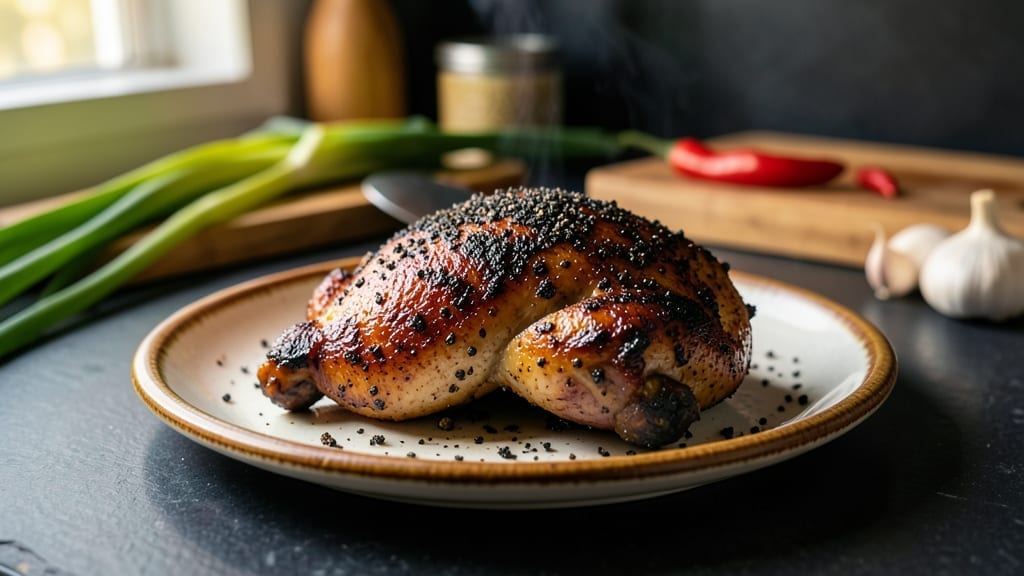
This smoked Jamaican jerk chicken recipe delivers the bold, fiery flavors of Jamaica’s legendary jerk seasoning with the deep, smoky richness of a well-built pit.
Growing up in small-town Georgia, I first tasted jerk chicken at a Charleston food festival and knew I had to master the technique—where spice meets smoke in perfect harmony.
The key lies in the marinade’s balance: allspice, Scotch bonnet peppers, and thyme create a complex flavor profile that transforms simple chicken into something unforgettable.
The process begins with a 24-hour marinade to tenderize the meat and infuse every bite with that signature Jamaican heat. Using pork shoulder (my preference) or chicken thighs ensures juicy, fall-apart tenderness when smoked at 250°F with fruitwood like pecan or hickory.
The slow cook transforms tough cuts into melt-in-your-mouth perfection, while the bark forms a deep, caramelized crust that locks in all those smoky, spicy flavors.
By the time you pull this from the smoker, you’ll have juicy, spice-kissed chicken that’s ready to be sliced against the grain and served with classic sides like coconut rice and peas or a crisp coleslaw.
The aroma alone will have everyone gathering around the table—this is the kind of dish that turns a simple meal into a celebration. Let’s get smoking.
Pair it with a rum punch or sorrel drink for the full Jamaican experience, or serve it over buttery white rice for a heartier meal. The versatility of this recipe makes it perfect for everything from casual weeknight dinners to festive gatherings.
Here’s how to bring the flavors of Jamaica to your smoker.
Ingredients for smoked jamaican jerk chicken
Pork shoulder, bold spices, and smoky wood chips—this trio delivers Jamaican jerk magic.
| Ingredient | Amount | Notes |
|---|---|---|
| Pork Shoulder 🥓 | 3 lb | Bone-in for best flavor |
| Scotch Bonnet Peppers 🌶️ | 3 whole | Fresh, seeds removed |
| Allspice Berries 🌿 | 2 tbsp | Whole berries, crushed |
| Fresh Thyme 🌿 | ¼ cup | Stems removed, chopped |
| Garlic Cloves 🧄 | 8 cloves | Peeled, crushed |
| Brown Sugar 🍯 | ½ cup | Light or dark |
| Soy Sauce 🍶 | ¼ cup | For depth of flavor |
| Apple Cider Vinegar 🍎 | ¼ cup | For tangy balance |
| Ground Ginger 🌿 | 1 tbsp | Freshly grated preferred |
| Ground Cinnamon 🌶️ | 1 tsp | For warmth |
| Salt 🧂 | 2 tbsp | Diamond Crystal preferred |
| Black Peppercorns 🌶️ | 1 tbsp | Freshly cracked |
| Olive Oil 🫒 | ¼ cup | For marinade base |
| Pecan Wood Chips 🌳 | 1 package | For authentic smoke flavor |
[recipe_ingredient_scaler]
The pork shoulder is non-negotiable here. Bone-in cuts from the grocery store butcher section deliver the best flavor, though pre-cut pork shoulder works fine. For that authentic Jamaican heat, Scotch bonnet peppers are essential—find them at Latin markets or well-stocked grocery stores like Whole Foods. If you can’t get fresh, dried Scotch bonnet flakes work in a pinch (use half the amount). The allspice berries? Penzeys sells them whole, but the bulk section at Trader Joe’s has them too. Look for vibrant, fragrant spices—dusty or stale ones will ruin the marinade.
No Scotch bonnet peppers? Habanero or cayenne at one-third the amount brings similar heat, though the flavor won’t be identical. Fresh thyme is ideal, but dried thyme at one-fourth the amount works if you’re in a bind. The brown sugar can be swapped for turbinado or muscovado for a deeper caramel note. Soy sauce is key for umami—Kikkoman or tamari both work. For the vinegar, white vinegar or lime juice can substitute, but apple cider adds a subtle sweetness that pairs perfectly. The pecan wood chips? Hickory or cherry are great alternatives if you can’t find pecan.
Marinate the pork for 24 hours—no skipping this step. The longer it sits, the deeper the flavor. Store the marinade in a sealed container in the fridge. The pork itself keeps 3-4 days in the fridge before smoking, though I recommend smoking it fresh for the best texture. If you need to prep ahead, the marinade can be made 2 days in advance and stored in the fridge. Smoked chicken reheats beautifully—wrap it in foil and bake at 300°F for 10-15 minutes to keep it juicy.
Why You’ll Love This Recipe
- No-Fuss Prep Night: Honestly, this is the kind of recipe where you can prep the marinade while watching TV—just pulse everything in the food processor, mix in the olive oil and brown sugar, and call it done. The real magic happens while you sleep, so you wake up to a pork shoulder that’s already soaked in that bold Scotch Bonnet and allspice goodness. No last-minute scrambling, just pure convenience.
- Smoky-Sweet Heat Bomb: That first bite? Crispy mahogany bark with the pecan wood smoke clinging to it like a warm hug, followed by the slow burn of Scotch Bonnet peppers and the deep warmth of cinnamon and ginger. The soy sauce and apple cider vinegar keep it from being overpowering, but the garlic and thyme? They make it sing. Trust me, your taste buds will thank you.
- Crowd-Pleaser Extraordinaire: This isn’t just for summer BBQs—it’s the star of game days, potlucks, or even a lazy Sunday dinner. Serve it over rice with fried plantains, or toss it into tacos for a Caribbean twist. My kids even sneak extra slices (yes, even my picky eater). The leftovers? Just as good the next day, reheated gently in the oven. Win-win.
- Budget’s Best Kept Secret: You’d think jerk seasoning costs an arm and a leg, but this recipe uses affordable pantry staples like brown sugar, soy sauce, and fresh thyme to pack in the flavor. A 3 lb pork shoulder feeds a small army, and the marinade can be doubled for future meals. Plus, pecan wood chips are cheaper than you think, and they turn that simple pork into something restaurant-worthy. Fancy flavors, no fancy wallet.
Step-by-step instructions for smoked Jamaican jerk chicken
Here’s how to transform simple ingredients into restaurant-quality jerk chicken with deep smoke flavor.
Prepare the Jerk Marinade
In a food processor, combine the 3 Scotch Bonnet Peppers, 2 tablespoons Allspice Berries, 8 Garlic cloves, ¼ cup Fresh Thyme, 1 tablespoon Ground Ginger, 1 teaspoon Ground Cinnamon, 2 tablespoons Salt, and 1 tablespoon Black Peppercorns. Pulse until you achieve a coarse powder—this preserves the peppers’ heat while keeping texture. Transfer to a mixing bowl.
Add ¼ cup Olive Oil, ½ cup Brown Sugar, ¼ cup Soy Sauce, and ¼ cup Apple Cider Vinegar. Mix vigorously until you get a thick, glossy paste that clings to the back of a spoon. The marinade should be vibrant red with visible flecks of spice. Taste and adjust seasoning—this is your flavor foundation. If it needs more heat, add a pinch of crushed allspice berries; for balance, a splash of vinegar works wonders.
Coat and Rest the Pork Shoulder
Pat the 3 lb Pork Shoulder completely dry with paper towels—moisture is the enemy of crispy bark. Spread the marinade evenly over all sides, pressing it into the meat so it penetrates. For best results, I like to use my hands here, working the marinade into crevices and seams. Place the pork in a resealable bag, seal tightly, and refrigerate for at least 12 hours (overnight is ideal). This resting period lets the flavors meld and the spices tenderize the meat.
Here’s the thing—don’t skip this step. The long marinade transforms tough pork into melt-in-your-mouth tenderness. If you’re short on time, marinate for at least 6 hours, but understand the trade-off: shorter marinating means slightly firmer meat. Remove the pork from the fridge 1 hour before smoking to bring it to room temperature for even cooking.
Set Up the Smoker for Perfect Smoke
Fill your smoker with 1 package Pecan Wood Chips and preheat to 225°F. Pecan wood provides that authentic Jamaican flavor profile with sweet, nutty undertones that complement the jerk spices beautifully. Let the smoker run for 15 minutes before adding the pork to establish a steady clean blue smoke—thick white smoke means the wood isn’t hot enough and will water down your flavors.
Position the pork shoulder fat-side up on the smoker grates. The fat will render slowly, basting the meat as it cooks. Place a water pan in the smoker to maintain moisture—this prevents the outer bark from drying out while the center catches up. Close the lid and resist the urge to peek. Every time you open it, you lose heat and extend cook time. Trust the process; patience is key here.
Smoke to Probe-Tender Perfection
Smoke the pork shoulder for 6-8 hours, maintaining 225°F. You’ll notice the bark developing a deep mahogany color—this is where the magic happens. The pork will hit “the stall” around 165°F internal temperature, where the moisture evaporates and the temperature plateaus. This is normal; don’t panic or adjust heat. Instead, wrap the pork tightly in butcher paper (not foil) when it reaches 165°F—this technique, called the “Texas crutch,” helps push through the stall while preserving that precious bark.
Continue smoking until the pork reaches 203°F internal temperature and a probe slides in like butter. This usually takes another 2-3 hours after wrapping. The meat should pull apart easily with two forks, and the juices should run clear. If you’re unsure, check the texture—probe-tender meat should have just a slight resistance before giving way completely. This ensures you get that perfect balance of tenderness and texture.
Rest and Serve with Confidence
Remove the pork from the smoker and transfer it to a cutting board. Tent loosely with foil and let it rest for at least 30 minutes (I prefer 1 hour). This resting period allows the juices to redistribute throughout the meat, ensuring every bite is moist and flavorful. The pork will continue to rise in temperature during this time—this is normal and desirable.
Slice the pork against the grain into ½-inch thick pieces. Each slice should be fork-tender with a deep mahogany bark that crackles when you bite into it. The flavors should be complex—smoky pecan notes, sweet brown sugar caramelization, and a slow-building heat from the Scotch Bonnet peppers. Serve immediately with your favorite sides like steamed rice, fried plantains, or coleslaw to let the jerk chicken shine.
Pro Tips For Making Smoked Jamaican Jerk Chicken
- Crush Those Allspice Berries: I used to just toss in whole allspice berries—big mistake. Crush them first with the side of a heavy knife or mortar and pestle. That way, the aromatic oils get released into the marinade, giving your jerk chicken that deep, earthy warmth that cuts through the heat. Trust me, your future bites will notice the difference.
- Wrap in Butcher Paper: When the pork hits 165°F and stalls, don’t panic and wrap in foil—use butcher paper instead. It lets the bark stay crisp while trapping moisture, so you get that perfect snap and juicy interior. I learned this the hard way after serving dry, foil-wrapped jerk that lost its texture.
- Test the Marinade Heat: Before slathering it on the pork, taste that marinade right after mixing. If the Scotch Bonnet heat feels too mild, add a tiny pinch of crushed allspice berries—it amplifies the fire without overpowering. I’ve ruined batches by skipping this step, only to realize the jerk was disappointingly tame.
- Preheat the Smoker Right: Let the smoker run with pecan wood chips for 15 minutes before adding the pork. That steady blue smoke is your goal—thick white smoke means the wood isn’t hot enough and will make your jerk taste watered down. I’ve wasted hours fixing smoky disasters from rushing this step.
Storing and reheating your leftovers
Refrigerator Storage
After smoking, let your jerk pork shoulder cool completely for 20 minutes before transferring it to an airtight container—I use Glasslock containers with snap-on lids. Store at 40°F or below for up to 3 days.
The flavors deepen overnight as the spices continue to meld. Wrap individual servings in parchment paper before refrigerating to prevent sticking. 🥓
Freezing for Later
For longer storage, freeze your smoked jerk pork in portions using freezer-safe bags (like ZipLoc) or glass containers with tight seals. Label with the date—it keeps 3 months at 0°F without losing quality.
I freeze it in ½ lb portions so I can pull out just what I need for a weeknight meal. Thaw overnight in the fridge for best results. ❄️
Reheating Like a Pro
For juicy, restaurant-quality reheating, wrap each portion in aluminum foil and bake at 300°F for 20-25 minutes. This gentle heat preserves the bark while warming the meat evenly. If using a slow cooker, add ¼ cup chicken broth to keep it moist on Low for 4 hours.
Avoid microwave reheating—it dries out the meat and ruins that perfect texture. 🔥
Reviving Leftover Sides
Pair your reheated jerk pork with steamed rice or fried plantains that you can reheat separately. For rice, warm it in a skillet with 1 tbsp butter and ½ tsp jerk seasoning to enhance the flavors.
Fried plantains crisp up beautifully in a 350°F oven for 5 minutes after reheating. The key is to keep everything warm together so the flavors stay cohesive. ✨
Making Ahead Tips
If you’re feeding a crowd, smoke an extra ½ lb pork shoulder and freeze it for busy weeknights. I like to prepare the marinade 2 days ahead and store it in the fridge—just add the pork the night before smoking.
For sides, cook 2 cups coconut rice and 1 lb plantains ahead, then reheat as needed. This way, your main event stays fresh and your guests enjoy the full Jamaican feast. 💛
Nutrition facts
Frequently asked questions
Why use bone-in pork shoulder for smoked jerk?
Bone-in pork shoulder delivers unmatched flavor depth! The bones add richness and collagen that melts into the meat during smoking, creating that signature melt-in-your-mouth texture. While pre-cut pork shoulder works in a pinch, the bones enhance the jerk spices’ complexity—especially the allspice and Scotch bonnet heat. The fat cap also renders beautifully, basting the meat naturally for perfect bark.
Can I substitute chicken thighs for pork shoulder?
Chicken thighs work beautifully—just marinate them for at least 12 hours and smoke at 275°F for 3-4 hours until they reach 175°F internal temperature. The skin crisps up deliciously with the jerk spices, and the meat stays juicy. For extra tenderness, add an extra ½ cup soy sauce to the marinade. The pecan wood smoke pairs perfectly with either protein!
What if my smoker doesn’t get clean blue smoke?
Thick white smoke means your pecan wood chips need more heat! Check your smoker’s temperature gauge—it should read 225°F before adding the pork. If the wood isn’t lighting properly, try soaking the chips in water for 30 minutes first, or use a pellet smoker for more consistent heat. A small fan can also help create that clean blue smoke by circulating air around the chips. Patience is key—wait until you see steady blue smoke before adding your meat.
How do I handle if my jerk chicken is too spicy?
No need to toss it! Balance the heat by serving with cooling sides like coconut rice, fried plantains, or a creamy mango salsa. For individual portions, offer plain yogurt or sour cream on the side. If you’re making it ahead, reduce the Scotch bonnet peppers to 1-2 whole peppers (seeds removed) in the marinade. The brown sugar and apple cider vinegar in the marinade naturally mellow the heat over time.

Trained in classic French technique but raised on slow-cooked ribs and spicy rubs, she blends culinary skill with smoke and soul.
- Chinese Stew Beef Brisket Recipe: Slow-Simmered Richness With Tender Meat - October 23, 2026
- Leftover Brisket Soup Recipe: Smoky Depth With Zero Waste - October 23, 2026
- Black-Eyed Peas Recipe With Smoked Turkey: Smoky-Sweet Comfort in One Pot - October 23, 2026