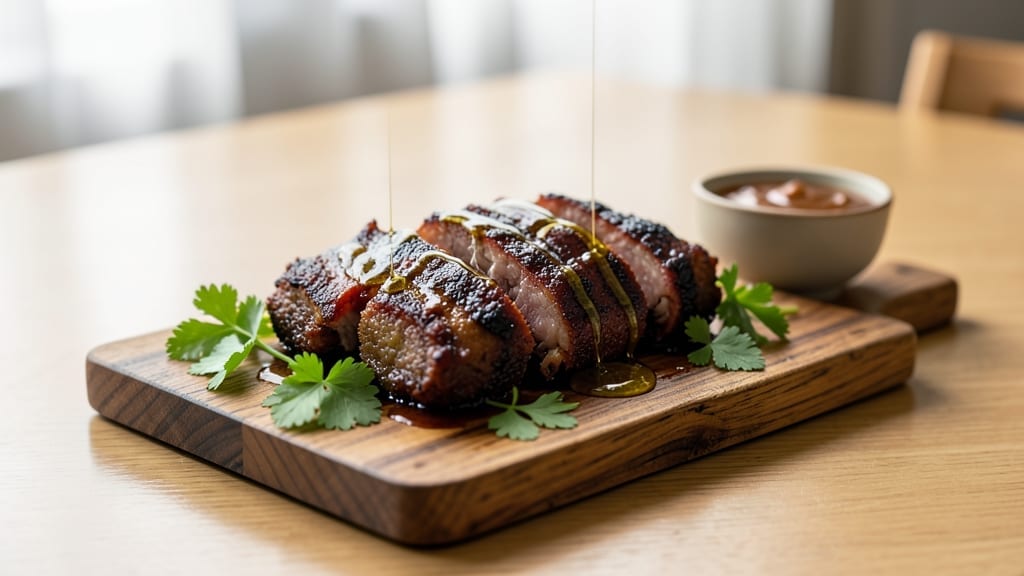
Mastering smoked pork carnitas transforms tough pork shoulder into tender, crispy-edged bites that pair perfectly with tacos or tostadas. Growing up in small-town Georgia, I learned how slow-smoking pork creates that signature texture—juicy inside, crispy outside—while infusing deep smoky flavor. This method delivers restaurant-quality results without requiring a commercial smoker.
The secret lies in precise temperature control and a simple seasoning blend that enhances the pork’s natural richness. Using a pellet grill or even a well-calibrated smoker, you’ll maintain a steady 225°F for hours, breaking down collagen into gelatin for that melt-in-your-mouth tenderness.
The final crisp comes from a quick sear in a hot skillet, ensuring every bite delivers the perfect contrast.
What you’ll end up with is a dish that’s as versatile as it is impressive—ideal for game day, family dinners, or a weekend project. The smoky aroma alone will have everyone gathering around, and the texture?
That’s the real magic: tender enough to shred but with edges that crackle with every bite. Ready to transform a simple cut of pork into a crowd-pleaser?
This recipe scales effortlessly, making it perfect for parties or meal prep. Serve with warm tortillas, pickled onions, and a cooling salsa verde for the full experience. Here’s how to achieve it step by step—no shortcuts, just proven technique.
Ingredients for smoked pork carnitas
Big cut of pork, bold flavors, and a smoker. Crispy edges, tender inside—here’s how.
| Ingredient | Amount | Notes |
|---|---|---|
| Pork Shoulder (Bone-In, Skin-On) 🐷 | 8 lb | Preferably with good marbling |
| Chipotle Peppers in Adobo 🌶️ | 4 whole | Mashed for smoky depth |
| Garlic Cloves 🧄 | 6 whole | Roughly chopped for smoker |
| Orange Peel 🍊 | 1 whole | Zest only, for brightness |
| Brown Sugar 🍚 | ½ cup | Packed, for caramelization |
| Kosher Salt 🧂 | 2 tbsp | Diamond Crystal preferred |
| Black Peppercorns 🌶️ | 1 tbsp | Whole, freshly ground |
| Lime Juice 🍋 | ¼ cup | Freshly squeezed, brightens |
| Smoked Paprika 🌶️ | 1 tbsp | For extra smokiness |
| Vegetable Oil 🫒 | ½ cup | For crisping final edges |
| Pellets (Hickory or Oak) 🔥 | 4 lb | For consistent smoke |
| Corn Tortillas 🌯 | 24 piece | For serving, warmed |
[recipe_ingredient_scaler]
The pork shoulder is your star here—bone-in, skin-on gives you that extra moisture and flavor depth. Look for cuts with good marbling; Costco or ButcherBox are great for bulk purchases. I always trim excess fat but leave a thin layer—it renders into flavor. The pellets matter: hickory for bold smoke, oak for subtlety. If you’re short on time, Traeger or Webers pellet grills are my go-tos—they maintain that 225°F like a dream. For the chipotle peppers, Penzeys has the best quality, but any jarred peppers in adobo work in a pinch.
No chipotle peppers? Smoked paprika plus cayenne gets you close, though the depth won’t be the same. Lime juice is non-negotiable for brightness—fresh is best, but bottled works if you’re desperate. Want to stretch this further? Add 2 cups of beef broth to the smoker box for extra moisture. The brown sugar is key for caramelization, but coconut sugar works too if you’re avoiding refined sugar. And if your tortillas are stale? Warm them in a dry skillet for 30 seconds to revive them.
This keeps beautifully for 5 days in the fridge, but honestly, it’s even better the next day as flavors meld. For longer storage, freeze in portions—3 months max. I portion mine into containers so lunches are sorted for the week. The smoker’s leftovers? Crisp them again in the oven at 400°F for 10 minutes—they’ll be golden and crackling. Just don’t skip the final sear in the skillet; that’s what gives you those crispy edges everyone raves about.
Why You’ll Love This Recipe
- No-Peek Needed: Honestly, I’ve burned myself trying to check on slow-cooked meat before—this recipe lets you just set it and forget it. Smoke that pork shoulder for 8 hours at 225°F while you handle life, and the only thing you’ll lose is the urge to peek. The butcher paper trick during the stall? Game-changer. No stress, just perfect bark every time.
- Smoky-Sweet Addiction: That combo of mashed chipotle peppers in adobo, orange zest, and brown sugar? It’s like a party in your mouth. The smoky heat from the hickory pellets, the bright citrus kick from the lime juice, and that crispy edge from the vegetable oil—it’s not just carnitas, it’s a flavor explosion that’ll have you licking the plate.
- Leftover Legend: I swear, this isn’t just dinner—it’s a meal for days. Those 8 pounds of pork shoulder turn into enough carnitas to feed a crowd, and honestly, it’s even better the next day. Freeze portions for up to 3 months, and you’ve got a backup plan for busy nights or last-minute gatherings. My kids ask for it every Tuesday, and I’m not complaining.
- Budget-Friendly Feast: Eight pounds of pork shoulder might sound intimidating, but trust me—it’s a steal. You’re getting tender, flavor-packed meat that stretches across tacos, burritos, or even breakfast hash. The chipotles and orange zest add depth without costing a fortune, and the rest of the ingredients? Basic pantry staples. For the amount of deliciousness you get, it’s a no-brainer.
Step-by-step instructions for smoked pork carnitas
Here’s how to transform that pork shoulder into tender, crispy-edged carnitas with smoky depth.
Prepare the Pork Shoulder and Dry Rub
Remove the pork shoulder from the refrigerator and pat it completely dry with paper towels—this is non-negotiable for crispy edges. Trim any large fat deposits but leave a thin layer for flavor and moisture. In a small bowl, combine the mashed chipotle peppers in adobo, the roughly chopped 6 garlic cloves, the zest from the orange peel, the packed ½ cup brown sugar, the 2 tablespoons kosher salt, the 1 tablespoon whole black peppercorns, and the 1 tablespoon smoked paprika. Mix thoroughly until evenly distributed.
Generously coat the pork shoulder with the rub, pressing it into all sides and the cavity. Place the shoulder fat-side up on a wire rack set over a rimmed baking sheet. Cover loosely with plastic wrap and refrigerate for at least 4 hours, or ideally overnight. This step ensures the rub penetrates deeply and develops flavor before hitting the smoker.
Smoke the Pork Shoulder Low and Slow
Preheat your smoker to 225°F using the 4 pounds of hickory or oak pellets. Once the temperature stabilizes and you see clean, blue smoke, place the pork shoulder directly on the smoker grates, fat-side up. Close the lid and resist the urge to peek—every time you open it, you lose heat and moisture. Smoke the pork for 8 hours, or until the internal temperature reaches 165°F and the bark is deep mahogany in color.
Here’s the thing—around the 6-hour mark, you’ll hit “the stall,” where the internal temperature plateaus. This is normal. If it happens, wrap the pork tightly in butcher paper (not foil) and return it to the smoker. The paper allows the bark to stay crispy while pushing through the stall. The pork is done when a probe slides in like butter with no resistance.
Rest and Shred the Pork
Transfer the pork shoulder to a cutting board and let it rest for 30 minutes before shredding. This resting period allows the juices to redistribute, ensuring each bite is moist and flavorful. Once rested, remove any large fat deposits and discard. Using two forks or your hands, shred the pork into ½-inch thick strands. Discard any connective tissue or large fat chunks—you want tender, meaty pieces.
Return the shredded pork to the smoker or a large skillet over medium heat. Add the ½ cup vegetable oil and the ¼ cup lime juice, tossing the pork until it’s evenly coated and the oil begins to crisp the edges. This step is what gives carnitas their signature texture—crispy on the outside, juicy on the inside. Cook for 5-7 minutes until the edges are golden brown and the pork is heated through.
Serve with Warm Corn Tortillas
While the pork finishes crisping, warm the 24 corn tortillas on a dry skillet over medium heat for 20-30 seconds per side, or wrap them in a damp towel and microwave for 30 seconds. Serve the carnitas immediately with the warm tortillas, allowing everyone to assemble their own tacos. The contrast of the crispy pork with the soft, warm tortillas is what makes this dish unforgettable.
For extra flavor, drizzle with any accumulated juices from the skillet or smoker. The combination of smoky, sweet, and tangy flavors—plus that perfect crispy edge—is why this method delivers restaurant-quality carnitas every time.
Pro Tips For Making Smoked Pork Carnitas
- Skip the Foil Trap: DESCRIPTION: I learned this the hard way—wrapping the pork in foil during the stall locks in moisture but kills that mahogany bark you worked so hard for. Butcher paper lets the smoke keep doing its magic while still helping push past the stall. Just don’t overwrap it; leave some airflow or you’ll end up with soggy edges.
- Mash Those Chipotles: DESCRIPTION: Roughly chopping the chipotles leaves you with uneven heat and missed flavor. Mash them into the adobo sauce first—this way, every bite gets that deep, smoky sweetness without any surprise heat spikes. (Yes, even if you’re impatient like me.)
- Oil the Pork Before Smoking: DESCRIPTION: The recipe calls for tossing shredded pork in oil at the end, but I’ve found adding a light coat of vegetable oil to the pork before it hits the smoker (just enough to glaze, not drown) helps the rub stick better and gives you a head start on that crispy bark. Trust me, it’s worth the extra 30 seconds.
- Shred While Warm, Not Hot: DESCRIPTION: I used to rush shredding right after pulling the pork, and the meat would turn rubbery. Wait those 30 minutes—it’s the only way to get tender strands that hold up to crisping later. (Your future self will thank you.)
Serving suggestions for this smoked pork carnitas
Taco Bar Setup
I set up a full taco bar with warm corn tortillas as the foundation—warmed in a dry skillet or microwave as mentioned.
Add a small bowl of pickled red onions (thinly sliced and soaked in ½ cup lime juice + 1 tsp salt for 30 minutes) for that sharp, tangy bite. 🌶️
Salsa Verde Essentials
My go-to salsa verde combines 1 cup tomatillos, 1 jalapeño, ½ white onion, 2 cloves garlic, and ¼ cup cilantro. Roast them together, blend with 2 tbsp lime juice, and finish with ½ tsp cumin.
This bright, herby salsa cuts through the richness perfectly.
Cilantro-Lime Rice
For the rice, cook 2 cups jasmine rice in 3 cups chicken broth with 1 tbsp butter and 1 tbsp lime zest. Once done, fluff with ¼ cup chopped cilantro and 2 tbsp lime juice. The citrus keeps the rice light and vibrant, balancing the smoky pork.
Toppings That Elevate
Don’t skip the toppings! I always include crumbled queso fresco, avocado slices (for creaminess), and diced white onion. For heat lovers, add chipotle mayo (mix ½ cup mayo with 1 mashed chipotle pepper and 1 tsp lime juice).
Dipping Sauces
Serve crema (sour cream thinned with lime juice) and mango-habanero salsa (blend 1 cup mango, 1 habanero, and 2 tbsp cilantro) for contrasting textures. The crema cools the heat, while the mango adds sweetness to cut through the smokiness.
Presentation Pro Tips
Arrange tortillas in a circle on a large platter, surround with toppings in small bowls, and place the carnitas in a central bowl. Garnish with fresh cilantro and lime wedges for that restaurant-quality touch.
I always tell guests to “build their own masterpiece”—it makes the meal feel interactive and fun. 💫
Nutrition facts
Frequently asked questions
Why does the pork need to rest before shredding?
The 30-minute rest lets juices redistribute evenly throughout the meat, ensuring every bite stays moist and flavorful. Skipping this step leaves you with dry, uneven texture—no one wants that!
Can I use foil instead of butcher paper during the stall?
Butcher paper is your best friend here—it keeps the bark crispy while allowing moisture to escape. Foil traps steam, turning your bark soggy. Trust me, the difference is night and day!
How do I know when the pork is fully cooked?
Check for 165°F internal temp and a deep mahogany bark. The real test? A probe should slide in like butter with no resistance. If you hit “the stall” around 6 hours, wrap it in butcher paper and keep smoking. Patience pays off!
What if I don’t have a smoker?
Use a pellet grill or even your oven! Set to 275°F with a foil pan of water for moisture. Just expect 10-12 hours instead of 8—slow and steady wins the carnitas race.

Trained in classic French technique but raised on slow-cooked ribs and spicy rubs, she blends culinary skill with smoke and soul.
- Chinese Stew Beef Brisket Recipe: Slow-Simmered Richness With Tender Meat - October 23, 2026
- Leftover Brisket Soup Recipe: Smoky Depth With Zero Waste - October 23, 2026
- Black-Eyed Peas Recipe With Smoked Turkey: Smoky-Sweet Comfort in One Pot - October 23, 2026