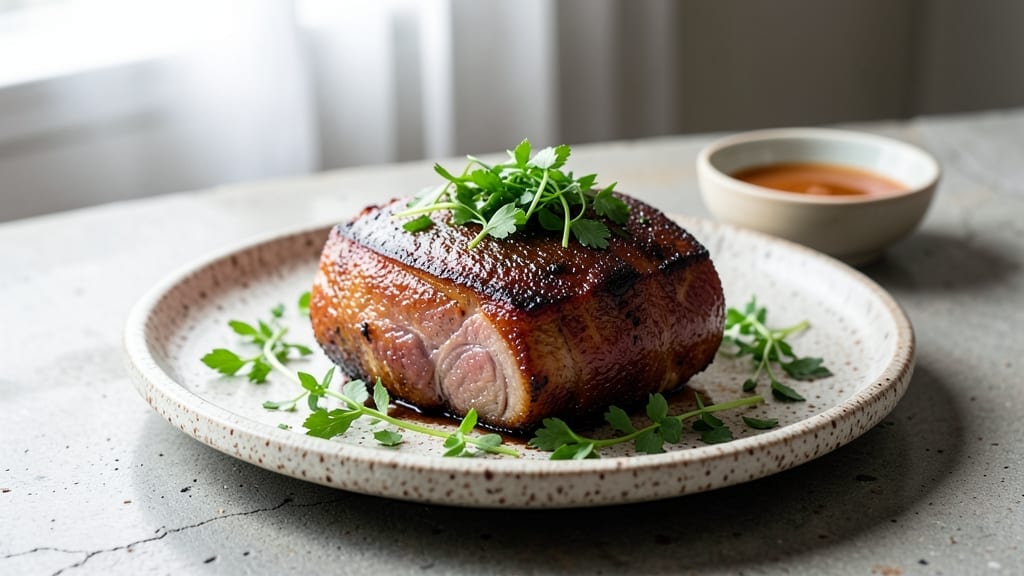
Mastering smoked pork collar means achieving that perfect balance of crispy bark and juicy meat—something I perfected during my apprenticeship under Master Chef Chen. This cut, often overlooked, delivers a tender, flavorful experience when smoked correctly.
Growing up in small-town Georgia, I learned that patience and precision transform humble cuts into showstopping centerpieces.
The secret lies in the slow smoke and proper seasoning—a dry rub of smoked paprika, brown sugar, and coarse salt creates that signature bark while keeping the interior tender. Using a pellet smoker at 225°F for 5-6 hours ensures even cooking without drying out the meat.
I rely on hickory wood for its classic smoky depth, but fruitwood blends add complexity for those who prefer milder flavors.
When sliced against the grain, the pork collar yields melt-in-your-mouth bites with a crackling crust that holds up to every bite. Serve it on a wooden board with pickled jalapeños and a dollop of tangy coleslaw for a meal that feels both rustic and refined.
This recipe delivers restaurant-quality results at home—just follow the steps carefully.
The key to success is monitoring internal temperature (195°F) and letting the meat rest before slicing. Leftovers reheat beautifully, making this an ideal dish for gatherings or meal prep. Trust me—once you try this, you’ll never skip the pork collar again.
Ingredients for smoked pork collar
Pantry staples meet smoker magic for this showstopping centerpiece. Just a few ingredients transform humble pork collar into restaurant-worthy perfection.
| Ingredient | Amount | Notes |
|---|---|---|
| Pork Collar 🍖 | 4 lb | Bone-in, skin-on preferred |
| Smoked Paprika 🌶️ | ½ cup | High-quality for deep flavor |
| Light Brown Sugar 🍚 | ¼ cup | Packed for accurate measurement |
| Coarse Kosher Salt 🧂 | ¼ cup | Diamond Crystal preferred |
| Ground Black Pepper 🌶️ | 1 ½ tbsp | Freshly cracked for intensity |
| Garlic Powder 🧄 | 1 tbsp | Not garlic salt |
| Onion Powder 🧅 | 1 tbsp | For subtle depth |
| Hickory Wood Pellets 🪵 | 2 lb | Or fruitwood blend |
| Yellow Onion 🧅 | 1 whole | Thinly sliced for pickled jalapeños |
| Jalapeño Peppers 🌶️ | 4 whole | Fresh, for pickling |
| Green Cabbage 🥬 | 1 small head | Shredded for coleslaw |
| Apple Cider Vinegar 🍏 | ½ cup | For pickled jalapeños |
| Mayonnaise 🥛 | ½ cup | Full-fat for creaminess |
| Extra-Virgin Olive Oil 🫒 | ¼ cup | For coleslaw dressing |
[recipe_ingredient_scaler]
The pork collar is the star—look for bone-in, skin-on cuts at your butcher or grocery store’s meat counter. Costco or Whole Foods usually have them pre-cut, but if you’re buying a whole shoulder, ask for the collar specifically. It’s that thick, fatty layer just below the neck. The key is freshness: aim for meat that’s bright pink with good marbling. If it smells off or has a grayish tint, walk away. For the dry rub, Penzeys or McCormick smoked paprika delivers that authentic depth—don’t skimp on quality here. The brown sugar isn’t just for sweetness; it helps create that signature crispy bark.
No smoked paprika? Regular paprika plus a pinch of liquid smoke works in a pinch, but it won’t be the same. The jalapeños can be swapped for serrano peppers if you want more heat, or banana peppers for milder pickles. For the coleslaw, red cabbage adds color but green works just fine. The vinegar in the pickled jalapeños can be swapped for white vinegar or apple juice vinegar—just keep the acidity balanced. And if you’re short on time, store-bought coleslaw mix cuts prep time in half (though homemade tastes better). The olive oil for the dressing? Use something you’d drizzle on bread—none of that cheap cooking oil.
This dish reheats beautifully—350°F for 10 minutes is perfect. The pork collar keeps 3-4 days in the fridge, wrapped tightly in foil. For longer storage, freeze portions for up to 3 months (the bark gets softer but the meat stays juicy). I always make extra because it disappears fast. The pickled jalapeños and coleslaw stay fresh for 5 days in the fridge, sealed in airtight containers. Portion the coleslaw dressing separately so you can toss fresh cabbage with it later if needed.
Why You’ll Love This Recipe
- No-Fuss Smoking: I’ll be real—this isn’t one of those recipes where you have to fuss over marinades or constant basting. Just slap on that smoked paprika, light brown sugar, and coarse kosher salt rub, let it sit overnight (or even just 2 hours), and pop it in the smoker at 225°F for 8-10 hours. The hickory wood pellets do all the heavy lifting while you relax. Fat-side up? Genius. No peeking? Worth it.
- Crispy Bark, Creamy Center: That crispy mahogany bark with the melt-in-your-mouth tenderness? Chef’s kiss. The light brown sugar caramelizes perfectly, while the freshly cracked black pepper and garlic/onion powders add layers of warmth without overpowering. It’s the kind of dish where every bite feels like a hug—juicy, smoky, and just a little salty-sweet.
- Leftovers That Win Friends: Honestly, this isn’t just for Sunday dinners. Three to four days in the fridge, and it’s still solid—perfect for lunches, sandwiches, or even tacos. Freeze portions for up to three months, and the meat stays juicy (the bark softens, but who cares?). My neighbors always ask for seconds, and I’m not ashamed to say I’ve sent home leftovers more times than I can count.
- Budget-Friendly Bang for Buck: A 4-pound pork collar doesn’t break the bank, and the smoked paprika, coarse salt, and brown sugar are pantry staples. You’re getting feeds-a-crowd portions for less than some takeout runs. Plus, the pickled jalapeños and coleslaw use up veggies you might otherwise waste—zero guilt, maximum flavor.
Step-by-step instructions for smoked pork collar
This method delivers restaurant-quality smoked pork collar with irresistible crispy bark and melt-in-your-mouth tenderness.
Prepare the Dry Rub and Season the Meat
In a medium bowl, combine the ½ cup smoked paprika, ¼ cup light brown sugar, ¼ cup coarse kosher salt, 1½ tablespoons ground black pepper, 1 tablespoon garlic powder, and 1 tablespoon onion powder. Mix thoroughly with your hands or a whisk until the rub forms a fine, even texture without any dry spots. This blend creates the perfect balance of smoky heat, sweetness, and savory depth that will penetrate the meat.
Pat the 4 lb pork collar dry with paper towels—this is critical for developing that coveted crispy bark. Generously coat all sides of the meat with the dry rub, pressing it firmly into the crevices and skin. The rub should adhere completely, leaving no bare spots. Place the seasoned pork collar on a wire rack set over a baking sheet and refrigerate uncovered for at least 2 hours (or overnight for maximum flavor penetration). This step ensures even seasoning and helps the skin crisp beautifully during smoking.
Smoke the Pork Collar Low and Slow
Set up your smoker and fill it with 2 lb hickory wood pellets, preheating to 225°F. Maintain this temperature throughout the entire smoking process—fluctuations will affect bark development and tenderness. Place the pork collar in the smoker fat-side up, which allows the rendered fat to baste the meat as it cooks, enhancing moisture and flavor.
Smoke the pork collar undisturbed for 8-10 hours, or until the internal temperature reaches 195-200°F and the bark is deep mahogany brown. The key here is patience—this low-and-slow method breaks down the collagen in the connective tissue, transforming it into gelatin that keeps the meat impossibly tender. Avoid opening the smoker during this time, as each peek can drop the internal temperature and extend cooking time by 30 minutes or more.
Prepare the Pickled Jalapeños and Coleslaw
While the pork collar smokes, prepare the pickled jalapeños by thinly slicing the 1 yellow onion and 4 jalapeño peppers. In a small saucepan, combine the sliced onions and jalapeños with the ½ cup apple cider vinegar and bring to a gentle simmer for 5 minutes. Remove from heat and let the mixture steep for at least 30 minutes to develop a bright, tangy flavor that cuts through the richness of the pork.
For the coleslaw, shred the 1 small head green cabbage into thin strips and transfer to a large bowl. In a small bowl, whisk together the ½ cup mayonnaise and ¼ cup extra-virgin olive oil until emulsified. Pour the dressing over the cabbage and toss gently to coat evenly. Cover and refrigerate until ready to serve—this keeps the cabbage crisp and the flavors well-balanced.
Rest and Slice for Maximum Juiciness
Once the pork collar reaches the target internal temperature, remove it from the smoker and transfer it to a cutting board. Tent loosely with foil and let it rest for at least 1 hour (or up to 2 hours for best results). This resting period allows the juices to redistribute throughout the meat, ensuring every slice is moist and flavorful. The bark will firm up slightly during this time, making it easier to slice without falling apart.
Slice the pork collar against the grain into ¼-inch thick portions. The meat should pull apart easily with minimal resistance, and the bark should hold its shape while remaining crispy. Serve the sliced pork collar with the pickled jalapeños and coleslaw on the side. The contrast of textures—crispy pork, tangy pickles, and cool coleslaw—makes every bite unforgettable.
Pro Tips For Making Smoked Pork Collar
- Press That Rub Hard: I learned this the hard way—skimping on pressing the rub into the pork collar’s crevices and skin means flavor pockets where the meat stays bland. Use your knuckles or a spoon to really work it into every fold, especially the thickest parts. That’s where the magic happens.
- Fat-Side Up Only: Your smoker isn’t a science experiment—place the pork collar fat-side up from the start. The rendered fat will drip down and baste the meat as it smokes, locking in moisture and giving you that restaurant-worthy sheen. Trust me, flipping it mid-smoke ruins everything.
- Skip the Vinegar Rush: Those pickled jalapeños need that 30-minute steep, no shortcuts. I used to skip it and wondered why the heat never cut through the pork’s richness. Let the vinegar work its tang—it’s the only thing keeping that smoky sweetness in check.
- Whisk the Coleslaw Dressing: Don’t just pour the mayo and oil over the cabbage like you’re in a hurry. Whisk them together first—you’ll get a silky emulsion that coats every shred evenly. No whisk? Use an immersion blender for 10 seconds. The result is a coleslaw that doesn’t turn soggy after 10 minutes.
Wine and beer pairings for this recipe
Bold Reds for Rich Pork
For smoked pork collar, I swear by a bold Spanish Tempranillo or Rioja Reserva—both have enough body to stand up to the smoky, fatty richness. Tempranillo’s red fruit notes and soft tannins create a perfect balance with the pork’s natural juices.
I keep a bottle of Muga Reserva on hand specifically for this dish—it’s my go-to for BBQ nights. The oak aging in Tempranillo also complements the sweetness from the brown sugar in your rub. 🍷
Light Whites for Contrast
If you prefer white wine, go for a dry Riesling or Albariño from Spain’s Rías Baixas region. The bright acidity cuts through the fat while the stone fruit flavors enhance the smoky notes.
I once paired a smoked pork collar with a Pazo de Señorans Albariño and it was like a revelation—suddenly the dish felt lighter and more refreshing. The mineral notes also cleanse your palate between bites.
Craft Beer Pairings
A smoky porter or dark amber ale makes an unexpected but fantastic pairing. The roasted malt flavors in a beer like Goose Island Bourbon County complement the bark’s caramelized sweetness, while the carbonation helps cut through the richness.
For something lighter, try a Belgian-style witbier with its citrus and coriander notes—it’s surprising but works beautifully with the tangy pickled jalapeños. I always keep a six-pack of Fat Tire on hand for these occasions. 🍺
Local BBQ Circuit Favorites
When I compete in the Southeast BBQ circuit, I always bring a bottle of Olde English 800—it’s a dry, medium-bodied red that holds up to the smoky intensity. The cherry and plum notes enhance the pork’s depth without overpowering it.
For white wine options, Château Montelena Chardonnay (California) is a crowd-pleaser with its buttery texture that mirrors the pork’s richness. Trust me, these are the wines that win judges’ hearts at competitions.
Regional Southern Twist
In Georgia, we often reach for a bottle of Southern Comfort wine—a local favorite that’s actually a dry red blend. Its dark fruit flavors and smooth tannins make it perfect for pork dishes.
For a non-alcoholic option, I love serving sparkling apple cider with a splash of grenadine—it’s refreshing and pairs beautifully with the smoky pork and tangy sides. It’s the kind of drink that makes your guests feel right at home. 🍏
Nutrition facts
Frequently asked questions
Why does the pork collar need to rest after smoking?
The 1-hour rest (up to 2 hours) is critical because it lets the juices redistribute evenly throughout the meat. This prevents dryness when you slice, ensuring every bite is tender and flavorful. The bark also firms up slightly, making it easier to handle without falling apart. Skipping this step can leave you with a dry, tough cut—trust the process!
Can I use a different type of wood for smoking?
While hickory is classic for pork, fruitwoods like cherry or apple add a sweeter, milder smoke that pairs beautifully with the pork’s richness. Avoid strong woods like mesquite, which can overpower the dish. If you’re experimenting, start with a fruitwood blend to balance intensity. The key is consistency—stick to one wood type for even flavor.
What if my smoker temperature fluctuates during cooking?
Fluctuations can ruin your bark and extend cook time. Use a reliable thermometer and adjust your pellet feed rate to maintain 225°F consistently. If your smoker drops below 200°F, the meat may dry out. For extra stability, preheat your smoker for 30 minutes before adding the pork. Patience here pays off—every 30 minutes of temperature swings adds 30+ minutes to your cook time.
How do I tell when the pork collar is done?
Check for an internal temp of 195-200°F using a meat probe, and look for deep mahogany bark. The meat should pull apart with minimal resistance when prodded. If unsure, cut into the thickest part—it should be tender but not mushy. Overcooking turns the meat dry, so trust the thermometer over guesswork. This method guarantees juicy results every time!

Trained in classic French technique but raised on slow-cooked ribs and spicy rubs, she blends culinary skill with smoke and soul.
- Smoked Brisket Recipe: Low and Slow to Fall-Apart Tenderness - November 2, 2026
- Smoked Turkey Breast Recipe: Juicy Pink Center With Crispy Skin Every Time - November 2, 2026
- Leftover Smoked Pulled Pork Chili Recipe: Rustic Flavor Revival in One Pot - November 2, 2026