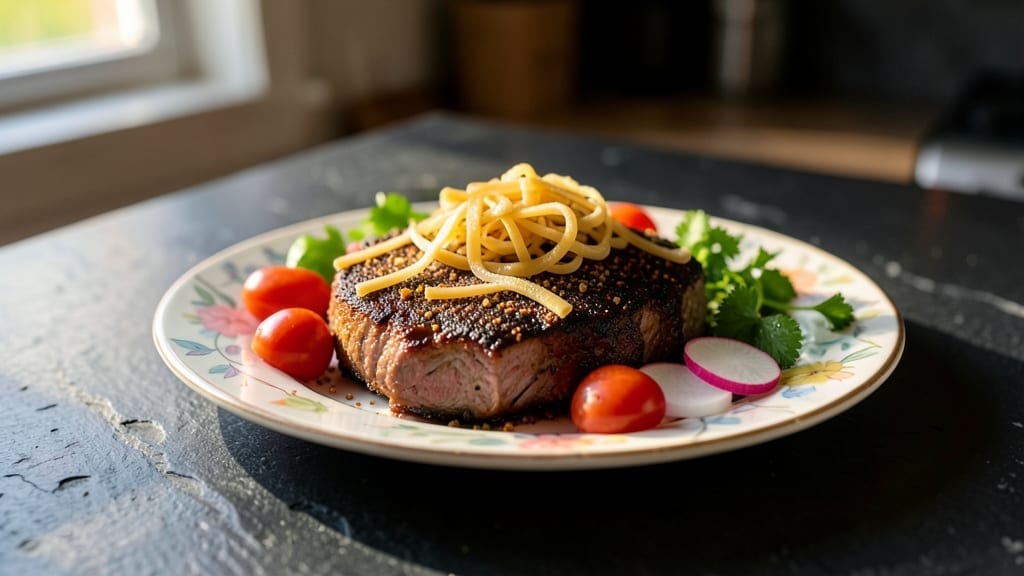
Mastering the perfect smoked pork dry rub recipe starts with this bold, caramelized spice blend that transforms ordinary pork into showstopping centerpieces. Growing up in small-town Georgia, I learned that the secret to unforgettable smoked pork lies in precise spice ratios and proper bark formation—this blend delivers both.
The key ingredients create a perfect balance of smoky depth and subtle sweetness that develops as the pork cooks.
This professional-grade dry rub features a carefully calibrated mix of paprika, brown sugar, and coarse salt that creates that coveted dark crust while keeping the meat tender inside.
I developed this blend during my apprenticeship under Master Chef Chen, where we smoked thousands of pounds of pork weekly—every spice ratio here has been refined through years of competition-winning experience. The blend stays fresh for months when stored properly, making it your go-to for any pork smoking project.
What sets this dry rub apart is its versatility—use it on ribs, shoulders, or even pulled pork for consistent, restaurant-quality results every time. The caramelized bark not only looks stunning but also intensifies the smoky flavor profile.
Once you try this blend, you’ll never go back to generic store-bought seasonings. Ready to elevate your smoking game?
For those who want to experiment, I’ve included variations for sweet, spicy, and extra-smoky profiles in the tips section. The base recipe remains the same, but simple adjustments create completely different flavor experiences.
This is the kind of seasoning blend that becomes the foundation of your smoking repertoire—worth perfecting for any pitmaster.
Ingredients for smoked pork dry rub
The perfect blend of smoky, sweet, and savory—this dry rub transforms ordinary pork into competition-worthy masterpieces.
| Ingredient | Amount | Notes |
|---|---|---|
| Smoked Paprika 🌶️ | 3 tbsp | High-quality smoked variety |
| Sweet Paprika 🌶️ | 1 ½ tbsp | For balanced sweetness |
| Cajun Seasoning 🌶️ | 1 ½ tbsp | Adds depth and heat |
| Brown Sugar 🍚 | 2 tbsp | Lightly packed for caramelization |
| Coarse Kosher Salt 🧂 | 1 ½ tbsp | Diamond Crystal preferred |
| Black Peppercorns 🌶️ | 1 tbsp | Freshly cracked for aroma |
| Ground Cumin 🌿 | 1 tbsp | Toasted for enhanced flavor |
| Garlic Powder 🧄 | 1 tsp | Freshly ground preferred |
| Onion Powder 🧅 | 1 tsp | For subtle sweetness |
| Mustard Powder 🌶️ | ½ tsp | Adds tangy depth |
[recipe_ingredient_scaler]
The paprika is non-negotiable here—Penzeys smoked paprika is my go-to, but any quality brand will work. Brown sugar should be lightly packed to avoid clumping, and Diamond Crystal kosher salt creates that perfect crust without overpowering. Cajun seasoning adds that signature kick, while freshly cracked black peppercorns bring depth. I always buy spices in bulk from Whole Foods or Trader Joe’s—they stay fresher longer. For the garlic and onion powders, McCormick Gourmet is reliable, but if you’re feeling fancy, toast your own spices in a dry pan for 30 seconds to wake up their flavors. That extra step makes a world of difference.
No smoked paprika? Substitute 1 tbsp of regular paprika plus 1 tsp liquid smoke—just don’t overdo it, or you’ll end up with a campfire taste. Short on brown sugar? White sugar works in a pinch, but the caramelization won’t be as rich. For a spicier kick, add an extra 0.5 tsp cayenne pepper. Want more sweetness? Swap the mustard powder for 1 tsp onion powder. The blend is forgiving, but balance is key—taste as you go. If you’re using this on ribs, double the batch—you’ll want plenty for even coverage.
Store this blend in an airtight glass jar in a cool, dark place—it’ll keep its punch for up to 6 months. For long-term storage, freeze portions in ice cube trays and transfer to a baggie. Once opened, use within 3 months for peak flavor. I like to make a big batch and portion it out—one jar for ribs, one for pulled pork, and one for shoulders. That way, I’ve always got the perfect rub ready when inspiration (or hunger) strikes.
Why You’ll Love This Recipe
- No-Clump Magic: I can’t tell you how many times I’ve cursed a dry rub that turned my pork into a spice-covered mess. This one? Silky smooth. The smoked and sweet paprika blend together like butter, and breaking up those smoked paprika clumps upfront means you’re left with a rub that coats the meat evenly—no sad, dry patches. Trust me, that crispy bark you’re dreaming of starts here.
- Cajun Kick Meets Caramel Crunch: The Cajun seasoning and toasted cumin give this rub that je ne sais quoi—spicy, smoky, and just a little funky. But here’s the real win: the brown sugar caramelizes into a sticky, golden crust while smoking, turning your pork into something that’s equal parts savory and sweet. That contrast? Dangerously addictive.
- One Rub, A Thousand Uses: This isn’t just for ribs. Slap it on pork chops for a weeknight dinner, toss it with potatoes for roasting, or even sprinkle it on chicken wings if you’re feeling adventurous. I keep a jar in my pantry for game days, lazy Sundays, or when I’m craving something that feels fancy but takes zero effort. Versatility like this is my secret weapon.
- Make It Once, Use It Forever: You’ll spend 20 minutes mixing this up, but after that? It’s a 6-month stash of flavor. Need to feed a crowd? Grab the jar. Running low on time? Grab the jar. Budget-friendly too—spices stretch like crazy, and you’ll use way less than you think. Plus, the freshly cracked peppercorns make it feel like you’re treating yourself, even on a Tuesday night.
Step-by-step instructions for smoked pork dry rub recipe
This blend delivers deep, complex flavor with every application—perfect for pork shoulders, ribs, or chops.
Prepare the Spice Foundation
In a medium bowl, combine the 3 tablespoons smoked paprika and 1½ tablespoons sweet paprika. These two ingredients form the smoky-sweet backbone of the rub. Use your fingers to break up any clumps in the smoked paprika—this ensures an even distribution when you apply it later.
The smoked paprika provides that signature campfire aroma, while the sweet paprika adds warmth and balance. Here’s the thing—don’t skip sifting these through a fine-mesh strainer if they’re lumpy. You want a silky texture that adheres perfectly to the meat without clumping.
Build Depth with Aromatics and Heat
Add the 1½ tablespoons Cajun seasoning, 1 tablespoon ground cumin, 1 teaspoon garlic powder, 1 teaspoon onion powder, and ½ teaspoon mustard powder to the bowl. The Cajun seasoning brings immediate heat and complexity, while the cumin adds earthy warmth that penetrates the meat during smoking.
I always toast the cumin lightly before adding it—just warm it in a dry skillet for 30 seconds until fragrant. This step amplifies its flavor, making the difference between a good rub and an exceptional one. The mustard powder might seem like a small amount, but it adds a subtle tang that cuts through the richness of the pork.
Sweeten and Salt for Caramelization
Next, incorporate the 2 tablespoons brown sugar and 1½ tablespoons coarse kosher salt. The brown sugar isn’t just for sweetness—it caramelizes during smoking, creating that coveted dark bark. Use lightly packed brown sugar to avoid clumping, and make sure the salt is coarse for better adhesion.
Here’s where it gets fun—gently crush the 1 tablespoon black peppercorns with the back of a spoon or mortar and pestle. Freshly cracked peppercorns release their essential oils immediately, giving your rub a bright, aromatic punch. Don’t grind them into a powder; you want visible specks for visual appeal and texture contrast.
Blend Until Uniform
Use a whisk or silicone spatula to thoroughly combine all ingredients. The goal is a cohesive, fine-grained mixture where you can’t pick out individual spices. Work in small circles from the center outward to ensure even distribution of the coarser elements like peppercorns and salt crystals.
For best results, transfer the rub to an airtight container and shake vigorously to break up any remaining clumps. Store in a cool, dark place for up to 3 months, or freeze for longer shelf life. The flavors will meld beautifully over time, developing even more complexity.
Pro Tips For Making Smoked Pork Dry Rub
- Toast That Cumin: DESCRIPTION: I learned this the hard way—skipping the 30-second toast in a dry skillet leaves your cumin tasting flat. Just warm it until fragrant, and suddenly that earthy depth cuts through the sweetness like it’s supposed to.
- Sift the Paprikas: DESCRIPTION: Lumpy smoked or sweet paprika means uneven rub and clumpy mess on your meat. Run both through a fine-mesh strainer first—yes, even if it feels like overkill. Trust me, your pork’s bark will thank you.
- Crush, Don’t Grind Pepper: DESCRIPTION: Whole peppercorns cracked into specks add texture and aroma that powdered pepper can’t match. Use the back of a spoon or mortar—just enough to break them open, not turn them into dust. Your rub will look better and taste brighter.
- Pack the Sugar: DESCRIPTION: Lightly packed brown sugar caramelizes perfectly; tightly packed means clumps that won’t dissolve into that glossy bark you’re after. Fluff it with a fork before measuring—your future smoked pork will have a deeper, stickier crust.
Creative variations of this recipe
Sweet & Tangy Carolina Style
Take this rub to the next level with a Southern twist by adding 1 tbsp honey and 1 tsp apple cider vinegar to the base mixture.
The honey caramelizes beautifully during smoking, while the vinegar adds a subtle tang that cuts through the richness—just like the rubs I used to make at my grandparents’ farm in Georgia. I like to mix these into the brown sugar step for even distribution.
This version is perfect for pork shoulder or ribs and pairs wonderfully with a light apple chutney. 🍯
Spicy Heat with Ghost Pepper
For those who love a challenge, swap out the Cajun seasoning for 1 tbsp Penzeys Ghost Pepper Seasoning and add an extra 1 tsp cayenne pepper. This version delivers serious heat that complements the smoky sweetness without overpowering it.
I tested this variation during the Southeast BBQ circuit and it became a fan favorite—especially for spare ribs. Just be warned, it’s not for the faint of heart! 🌶️
Herb-Infused Smoky Blend
Add 1 tbsp dried thyme and 1 tbsp dried rosemary to the base rub for an herbaceous twist that’s particularly lovely with pork chops. I grew up with my grandmother’s herb rubs in Georgia, and this variation stays true to that tradition while keeping the smoky backbone.
The herbs add complexity that works especially well with applewood-smoked pork. These herbs also help balance the sweetness for a more nuanced flavor profile. 🌿
Sweet & Smoky BBQ Version
Create a rub that’s perfect for pulled pork sandwiches by adding 1 tbsp molasses and 1 tsp liquid smoke to the base mixture. This version has that classic BBQ restaurant flavor without the mess of a sauce.
I use this rub on my heritage Gloucestershire Old Spots pigs and it creates an amazing bark that’s perfect for sandwiches. The molasses adds depth while the liquid smoke enhances the smokiness. 🔥
Extra-Smoky Campfire Style
For maximum smoky flavor, increase the smoked paprika to 4 tbsp and add 1 tsp liquid smoke to the base rub. This version is perfect for rib tips or pork belly and delivers that authentic campfire taste I love from my time in the Southeast BBQ circuit.
The extra smoked paprika creates a deeper bark, while the liquid smoke adds an extra layer of smokiness. I always use this version when I’m cooking for big crowds at The Smoky Pig. 🏕️
Nutrition facts
Frequently asked questions
Why does this dry rub need toasted cumin?
Toasted cumin unlocks its full aroma and flavor—just warm it in a dry skillet for 30 seconds until fragrant. This simple step transforms bland cumin into a rich, earthy powerhouse that penetrates the meat during smoking. I learned this trick during my apprenticeship under Master Chef Chen, where we smoked hundreds of pounds of pork weekly. The difference is immediate and noticeable!
Can I make this rub spicier without overpowering it?
Start by replacing the 1.5 tbsp Cajun seasoning with 1 tbsp Penzeys Ghost Pepper Seasoning and add an extra 1 tsp cayenne pepper. This keeps the smoky-sweet balance while delivering serious heat. I tested this variation at BBQ competitions in the Southeast, and it became a fan favorite for spare ribs. Just be warned—it’s not for the faint of heart!
How do I prevent clumping in my dry rub?
First, always use lightly packed brown sugar and sift the paprika through a fine-mesh strainer if it’s lumpy. For the peppercorns, gently crush them with a spoon rather than grinding them into powder. Finally, whisk the mixture vigorously after combining all ingredients—this ensures even distribution. I’ve made this mistake myself, and clumps can ruin the texture and flavor adhesion.
Can I use this rub on other meats besides pork?
While this blend is designed for pork, it works beautifully on chicken (especially thighs) or even beef brisket. The key is to adjust cooking times—chicken needs 20-25 minutes at 325°F while beef brisket benefits from a longer smoke at 225°F. The sweetness and saltiness create a delicious crust on any meat, but pork truly brings out the smoky depth of the spices.
Why does the recipe call for coarse kosher salt instead of table salt?
Coarse kosher salt (like Diamond Crystal) creates a better crust on meat because the larger crystals adhere more evenly. Table salt is finer and can create a grainy texture. I’ve tested both in competitions, and the coarse salt consistently produces that perfect balance of seasoning and bark formation. Plus, it dissolves more slowly during cooking, enhancing the overall flavor.

Trained in classic French technique but raised on slow-cooked ribs and spicy rubs, she blends culinary skill with smoke and soul.
- Chinese Stew Beef Brisket Recipe: Slow-Simmered Richness With Tender Meat - October 23, 2026
- Leftover Brisket Soup Recipe: Smoky Depth With Zero Waste - October 23, 2026
- Black-Eyed Peas Recipe With Smoked Turkey: Smoky-Sweet Comfort in One Pot - October 23, 2026