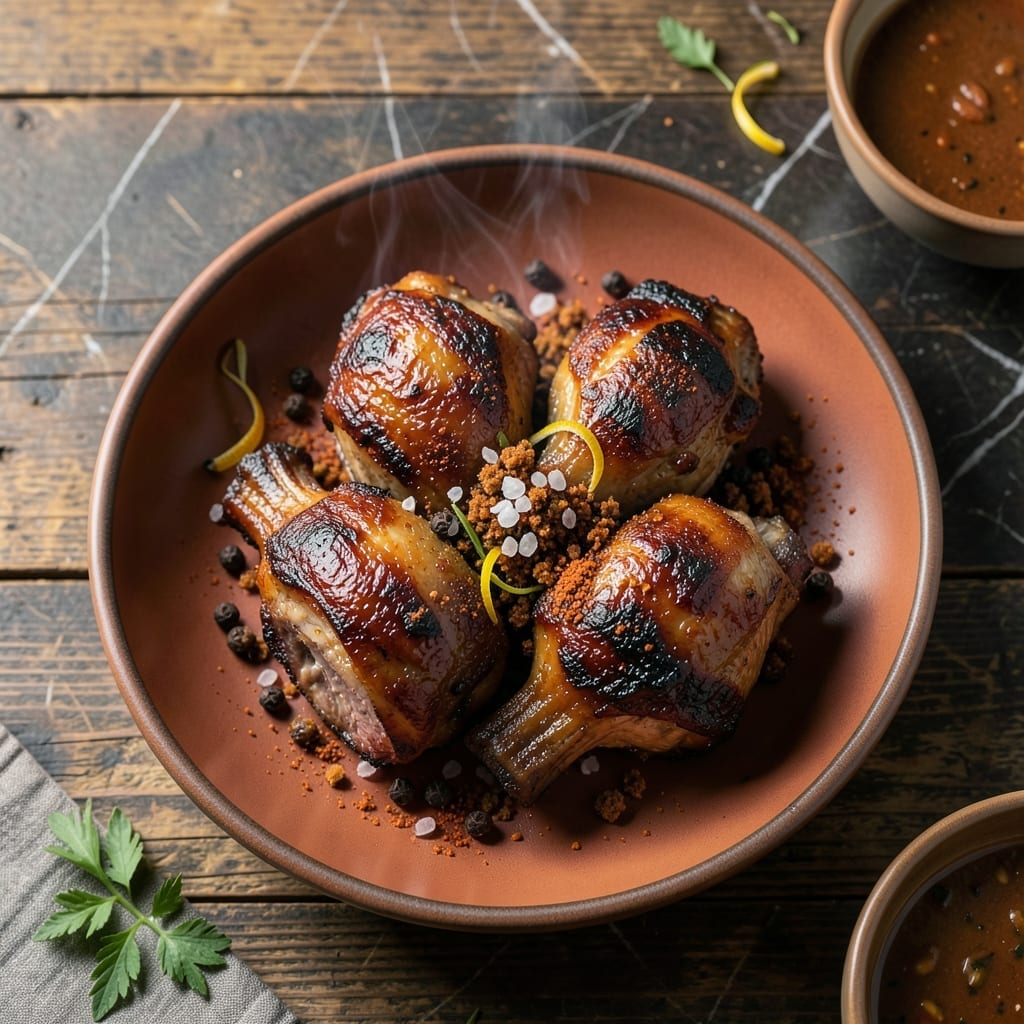
Getting my first whiff of hickory smoke at a family cookout still brings back memories of perfect fall-off-the-bone results.
This method blends slow smoking with precise technique to deliver smoky depth in every bite. The low and slow approach ensures tender meat that separates effortlessly.
Ingredients for Smoked Pork Hocks
These ingredients transform pork hocks into tender, smoky perfection with every bite.
| Ingredient | Amount | Notes |
|---|---|---|
| Pork Hocks 🐖 | 4 whole | About 1.5 lb each, skin-on |
| Hickory Wood Chunks 🪵 | 4 cups | For smoking, soaked in water |
| Coarse Kosher Salt 🧂 | ¼ cup | Diamond Crystal preferred |
| Black Peppercorns 🌶️ | 2 tbsp | Freshly cracked for best flavor |
| Brown Sugar 🍚 | ¼ cup | Light or dark variety |
| Paprika 🌶️ | 1 tbsp | Sweet or smoked variety |
| Garlic Powder 🧄 | 1 tbsp | Not garlic salt |
| Onion Powder 🧅 | 1 tbsp | Enhances dry rub depth |
| Cayenne Pepper 🔥 | ½ tsp | Adjust for heat preference |
| Yellow Mustard 🟡 | ½ cup | For binding dry rub |
| Apple Cider Vinegar 🍏 | ½ cup | For mopping during smoking |
| Honey 🍯 | ¼ cup | Optional for glaze finish |
| Olive Oil 🫒 | 2 tbsp | For crisping skin after smoking |
[recipe_ingredient_scaler]
The pork hocks are the foundation—source from a trusted butcher or Whole Foods for consistent quality and size (aim for 1.5 lb each). Hickory wood chunks are non-negotiable for authentic smoke flavor; avoid chips as they burn too quickly. The dry rub ingredients should be fresh: Penzeys or bulk spice bins at natural food stores ensure potency. Look for pork hocks with good skin coverage for that perfect crisp finish.
No hickory? Pecan or apple wood offer milder but complementary smoke profiles. Brown sugar can be swapped for turbinado or coconut sugar at a 1:1 ratio. For a sweeter glaze, increase honey to half a cup—just balance with extra vinegar. If you lack a smoker, a kettle grill with indirect heat works in a pinch. The mustard binder can be replaced with olive oil for a milder flavor.
Pork hocks can be dry-brined overnight for enhanced flavor penetration. Store unused wood chunks in a dry place to prevent mold. Smoked hocks keep in the fridge for 4-5 days or frozen for 3 months. Reheat gently in a covered dish to maintain moisture.
Why You’ll Love This Recipe
- Set It and Forget: I rub the hocks with salt, peppercorns, and brown sugar, then let the hickory smoke do the rest—no babysitting required.
- Hickory Kissed: That deep, smoky sweetness from the wood and brown sugar crust makes every bite ridiculously good.
- Feeds the Crew: One batch serves my whole family with leftovers for sandwiches the next day—between us, it’s even better cold.
- Pantry to Table: Hocks are cheap, the spice rub is already in my cupboard, and the whole thing costs less than a fancy steak.
Step-by-Step Instructions for Smoked Pork Hocks
Master the art of slow-smoked pork hocks with this precise, professional technique for unmatched tenderness and depth.
Step 1: Prepare and Cure the Pork Hocks
Begin by thoroughly rinsing the 4 whole Pork Hocks and patting them dry with paper towels. This ensures the dry rub adheres properly to the skin. In a bowl, combine the 0.25 cup Coarse Kosher Salt, 0.25 cup Brown Sugar, 2 tbsp Black Peppercorns (freshly cracked), 1 tbsp Paprika, 1 tbsp Garlic Powder, 1 tbsp Onion Powder, and 0.5 tsp Cayenne Pepper. This blend creates a robust, balanced crust.
Rub the 0.5 cup Yellow Mustard evenly over each pork hock—it acts as a binder for the dry rub. Coat the hocks liberally with the spice mixture, pressing firmly to ensure full coverage. Place them on a wire rack set over a baking sheet and refrigerate uncovered for 12-24 hours to allow the cure to penetrate deeply.
Step 2: Set Up the Smoker and Begin Cooking
Soak the 4 cups Hickory Wood Chunks in water for at least 1 hour before smoking. This prevents them from burning too quickly and ensures a steady, flavorful smoke. Preheat your smoker to 225-250°F, using charcoal or wood as your heat source.
Once the smoker reaches temperature, add a few of the soaked Hickory Wood Chunks to produce a clean, thin blue smoke. Place the cured pork hocks directly on the grates, skin-side up. Maintain the temperature between 225-250°F throughout the cook, adding more wood chunks as needed to sustain the smoke.
Step 3: Smoke and Mop for Maximum Flavor
Smoke the pork hocks undisturbed for the first 4 hours. After this initial period, begin mopping the hocks every 45-60 minutes with a mixture of 0.5 cup Apple Cider Vinegar and 0.25 cup Honey. This step keeps the meat moist and adds a subtle sweet-tangy glaze.
Use a spray bottle for an even application, ensuring you cover all surfaces. The pork hocks are ready when the internal temperature reaches 195-203°F and the meat pulls away from the bone with minimal resistance. This typically takes 8-10 hours, depending on the size of the hocks.
Step 4: Crisp the Skin and Rest Before Serving
Once the pork hocks are probe-tender, remove them from the smoker and transfer to a baking sheet. Brush the skin generously with 2 tbsp Olive Oil to promote crisping. Place under a preheated broiler for 3-5 minutes, watching closely to avoid burning.
Alternatively, heat the Olive Oil in a skillet over medium-high heat and sear the hocks skin-side down for 2-3 minutes until deeply browned and crispy. Let the pork hocks rest for 15-20 minutes before serving to allow the juices to redistribute, ensuring fall-off-the-bone tenderness in every bite.
Pro Tips For Making Smoked Pork Hocks
- Score the Skin: Cut 1/4-inch deep crosshatches in the pork hock skin before seasoning—this lets the salt and brown sugar penetrate deeper and gives the bark that perfect texture.
- Soak the Wood: Submerge your hickory chunks in water for at least 30 minutes before smoking to prevent them from burning too fast and creating bitter flavors.
- Skip the Rush: I learned this the hard way—low and slow is non-negotiable here. Keep the smoker between 225-250°F and plan for 6-8 hours, depending on size.
- Rest Before Serving: After pulling the hocks off, wrap them in foil and rest for 20 minutes—this keeps all those juices inside instead of on your cutting board.
Flavor Customization for This smoked pork hocks
Spice Level Adjustments
For a milder version, reduce the cayenne pepper to ¼ tsp or omit entirely. I sometimes add 1 tsp ground coriander for a citrusy note that balances the heat beautifully. 🌶️
Sweet Heat Glaze
Swap the honey for maple syrup and increase to ⅓ cup for a deeper sweetness. Add 1 tbsp sriracha to the mopping mixture for a spicy-sweet finish that caramelizes perfectly during the final crisping.
Herb-Infused Rub
I love adding 1 tbsp dried thyme or rosemary to the dry rub for an earthy depth. Fresh herbs work too—just double the amount. Forage wild herbs when I’m not on my motorcycle rides for unique flavor profiles.
Smoke Wood Variations
For a lighter smoke, use 2 cups apple wood with 2 cups hickory. Cherry wood adds a fruity note that pairs wonderfully with pork. Always soak wood for at least 1 hour to prevent bitter flavors.
Asian-Inspired Twist
Replace paprika with 1 tbsp five-spice powder and add 1 tbsp grated ginger to the rub. Use rice vinegar instead of apple cider vinegar for mopping. This fusion style brings coastal flavors to your backyard.
Coffee-Enhanced Depth
Add 1 tbsp finely ground coffee to your dry rub for a deep, complex flavor. The coffee enhances the smokiness without overpowering. I learned this trick at a local BBQ competition and it’s been a game-changer.
Nutrition Facts
Frequently Asked Questions
What’s the best wood for smoking pork hocks?
Hickory delivers the classic bold flavor, but apple or cherry wood adds a sweeter touch. Soak chunks for 1 hour to prevent bitter smoke.
How do I know when they’re done?
Use a probe thermometer—195-203°F internally means perfect tenderness. The meat should pull away from the bone with minimal resistance.
Can I skip the overnight curing step?
Not recommended. The 12-24 hour cure ensures deep flavor penetration and proper texture. Skipping it risks a less tender result.
Why is my skin not crispy?
Broil or sear with olive oil for 3-5 minutes after smoking. This final step guarantees that coveted crunch.

Trained in classic French technique but raised on slow-cooked ribs and spicy rubs, she blends culinary skill with smoke and soul.
- Hamburgers in Sauce Recipe Crock Pot: Slow-Cooked Savory Delight - October 3, 2026
- Sanjeev Kapoor Egg Biryani Recipe: Fragrant Spiced Rice With Boiled Eggs - October 3, 2026
- Recipe for French Pork Spread Gorton: Savory Gallic Flavors in a Spreadable Delight - October 3, 2026