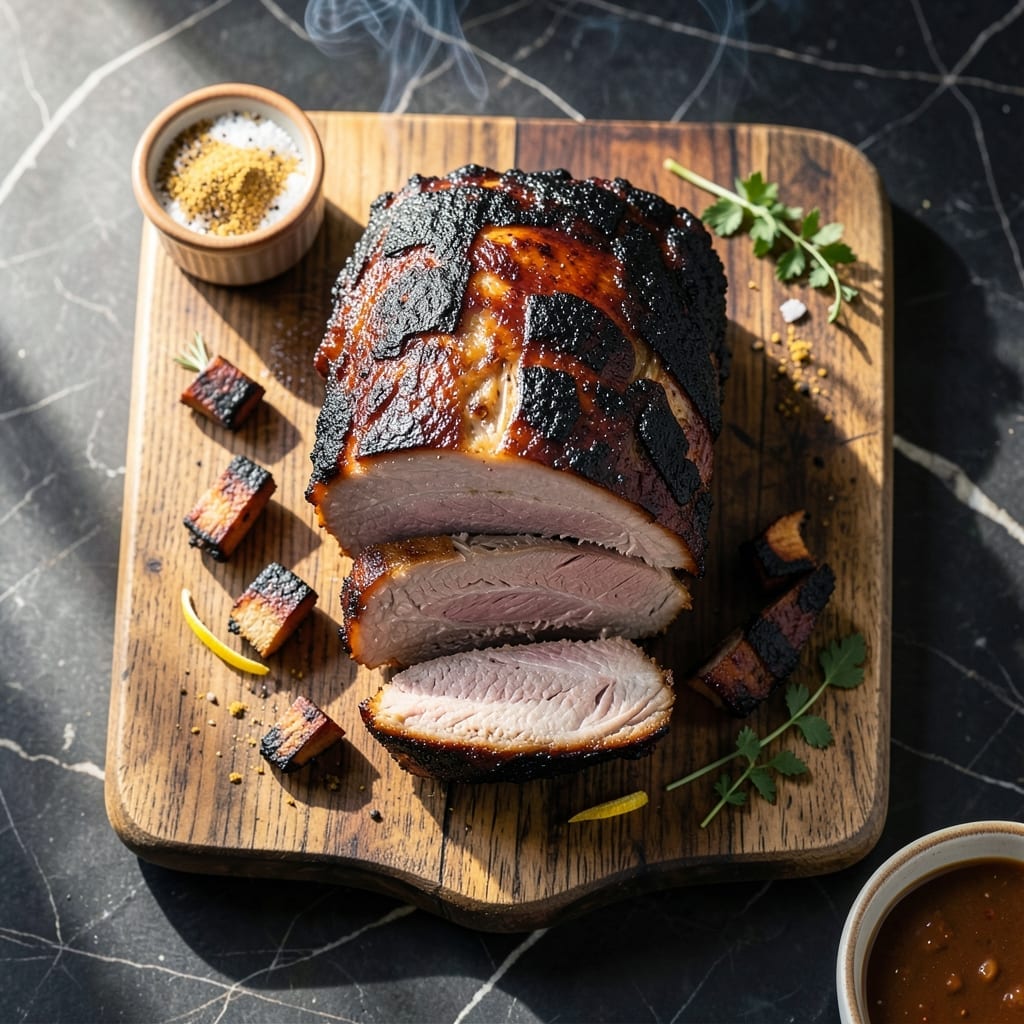
There’s nothing quite like the deep, smoky aroma of pork loin slow-cooked over oak. This method delivers tender, flavorful meat with a perfect bark every time.
I’ve refined this technique over years of competition cooking. The key is maintaining a steady 225°F temperature and letting the smoke work its magic.
Ingredients for Smoked Pork Loin
Oak-smoked pork loin requires quality meat and a bold dry rub. Nothing else comes close.
| Ingredient | Amount | Notes |
|---|---|---|
| Pork Loin Roast 🥩 | 3 lb | Boneless, center-cut preferred |
| Oak Wood Chunks 🪵 | 4 pieces | For smoking, soaked in water |
| Coarse Kosher Salt 🧂 | 2 tbsp | Diamond Crystal preferred for even coating |
| Freshly Ground Black Pepper 🌶️ | 1 tbsp | Coarse grind for texture |
| Garlic Powder 🧄 | 1 tbsp | Not garlic salt |
| Onion Powder 🧅 | 1 tbsp | Fine grind for adhesion |
| Smoked Paprika 🌶️ | 1 tbsp | Sweet or hot variety |
| Dried Thyme 🍃 | 1 tsp | Rubbed between palms to release oils |
| Olive Oil 🫒 | 2 tbsp | For binder in rub |
| Apple Cider Vinegar 🍏 | ¼ cup | For spritz during smoking |
| Brown Sugar 🍚 | 2 tbsp | Light or dark, for bark formation |
| Mustard Powder 🟡 | 1 tsp | Optional for rub complexity |
[recipe_ingredient_scaler]
The pork loin quality is paramount. Center-cut, boneless roasts from Costco or a trusted butcher ensure even cooking and consistent texture. Look for marbling throughout—this fat renders during the long smoke, basting the meat from within. Diamond Crystal kosher salt is preferred by competition cooks for its clean flavor and even distribution. Avoid pre-seasoned or enhanced loins, as they can overpower the rub’s nuanced profile.
Substitutions are limited for smoked pork loin, but hickory or pecan wood can replace oak if needed—hickory offers a stronger smoke profile. No brown sugar? Maple sugar or turbinado works, though the bark may darken faster. For the vinegar spritz, white vinegar or apple juice are acceptable alternatives. Mustard powder can be omitted, but it adds a subtle tang that balances the sweetness.
Store the pork loin in its original packaging in the coldest part of your refrigerator for up to 5 days before smoking. Once cooked, wrap slices tightly in foil—they’ll keep for 4 days refrigerated or 3 months frozen. Reheat gently in a covered dish with a splash of apple juice to maintain moisture.
Why You’ll Love This Recipe
- Set It and Forget: I just season, smoke, and let the oak do its magic—no babysitting required.
- Smoky Garlic Punch: The oak chunks and garlic powder create a deep, savory crust that’s ridicuously good.
- Crowd-Pleasing Centerpiece: It’s my go-to for Sunday dinners, potlucks, or even a fancy Tuesday night.
- Leftovers for Days: One smoked loin gives me sandwiches, tacos, and fried rice all week long.
Step-by-Step Instructions for Smoked Pork Loin
Master the technique for perfectly smoked pork loin with a bark that impresses every time.
Step 1: Prepare and Season the Pork Loin
Pat the 3 lb Pork Loin Roast completely dry with paper towels. In a small bowl, combine the 2 tbsp Coarse Kosher Salt, 1 tbsp Freshly Ground Black Pepper, 1 tbsp Garlic Powder, 1 tbsp Onion Powder, 1 tbsp Smoked Paprika, 1 tsp Dried Thyme, and 1 tsp Mustard Powder.
Rub the 2 tbsp Olive Oil evenly over the pork loin, then apply the spice mixture, pressing it firmly into the meat to ensure full adhesion. The oil acts as a binder for the dry rub, creating a flavorful crust. Let the seasoned roast sit at room temperature for 30-45 minutes while you prepare the smoker.
Step 2: Set Up the Smoker with Oak Wood
Soak the 4 pieces Oak Wood Chunks in water for at least 30 minutes to prevent them from burning too quickly. Preheat your smoker to 225°F using indirect heat. Once the smoker reaches temperature, add the soaked oak wood chunks to the firebox or smoker box.
You want clean, thin blue smoke—not thick white smoke, which can impart a bitter flavor. Place a water pan in the smoker to maintain moisture and stabilize the temperature. This setup ensures the pork loin cooks low and slow, absorbing the subtle oak flavor.
Step 3: Smoke the Pork Loin to Perfection
Place the seasoned pork loin directly on the smoker grates, fat-side up. Insert a meat thermometer into the thickest part of the roast, avoiding the bone if present. Smoke the pork loin undisturbed for 2-3 hours, or until the internal temperature reaches 145°F.
Every 45-60 minutes, spritz the pork loin with the 0.25 cup Apple Cider Vinegar to keep the surface moist and enhance bark formation. The vinegar also adds a subtle tang that complements the smoky flavor. Resist the urge to open the smoker unnecessarily—each time you do, you lose heat and extend the cooking time.
Step 4: Add the Finishing Touches
Once the pork loin reaches 145°F internally, transfer it to a cutting board and let it rest for 10-15 minutes. During this time, the internal temperature will rise to 150-155°F due to carryover cooking, and the juices will redistribute for maximum tenderness.
While the pork loin rests, combine the 2 tbsp Brown Sugar with a small amount of water to create a light glaze. Brush this mixture over the pork loin for added shine and a touch of sweetness that balances the smoky, savory rub. Slice against the grain into ½-inch thick pieces and serve immediately.
Pro Tips For Making Smoked Pork Loin
- Dry the Meat: Pat the pork loin completely dry with paper towels before seasoning—this guarantees the salt and pepper stick properly and you get that perfect bark.
- Rest the Roast: Pull the pork at 140°F and let it rest for 15-20 minutes under foil; the temperature will climb to 145°F and the juices will redistribute.
- Skip Green Wood: Use fully dried oak chunks only—green or damp wood creates bitter smoke that ruins the flavor, no matter how long you cook it.
- Season Overnight: Rub the loin with salt, pepper, and garlic powder the night before; it penetrates deeper and saves you time on cooking day.
Essential Equipment for This Recipe
Quality Smoker
I swear by my Traeger Pro 575 for consistent temperature control—it maintains that perfect 225°F without constant babysitting. The pellet system feeds fuel automatically, so I can focus on perfecting my rub instead of tending the fire. 🔥
Meat Thermometer
A reliable meat thermometer is non-negotiable. I use the ThermoWorks Smoke with dual probes—one for the smoker temp and one for the pork loin. It alerts me when we hit that 145°F sweet spot, so I never overcook.
Water Pan
Place a stainless steel water pan in your smoker to stabilize temperature and add moisture. This prevents the pork loin from drying out during the 2-3 hour smoke. I fill mine with hot water at the start for better efficiency.
Wood Chunks
For that authentic oak flavor, I use Western Premium BBQ Products oak chunks. Soak them for 30 minutes before adding to the smoker. They burn slower than chips, giving you that steady, clean blue smoke.
Spritz Bottle
A simple glass spray bottle for the apple cider vinegar spritz is essential. I spritz every 45-60 minutes to keep the surface moist and build that beautiful bark. The vinegar’s acidity helps tenderize the meat too.
Resting Setup
Once the pork loin hits 145°F, transfer it to a cutting board and let it rest for 10-15 minutes. I tent it loosely with foil to keep it warm while the juices redistribute. This step makes all the difference in tenderness. ✨
Nutrition Facts
Frequently Asked Questions
What temperature should I maintain in the smoker?
Keep your smoker steady at 225°F throughout the cook. This low temperature allows the pork loin to absorb smoke flavor while staying juicy. Use a quality thermometer to monitor.
How do I know when it’s done?
Use a meat thermometer to check the internal temperature. It’s ready at 145°F, which will rise to 150-155°F during the 10-15 minute rest. Never guess—precision is key.
Can I use a different type of wood?
While oak is classic, hickory or pecan work well. Hickory offers a stronger smoke profile, while pecan adds a milder, sweeter note. Soak any wood for 30 minutes first.
Why is my bark not forming properly?
The bark needs moisture to develop. Spritz with apple cider vinegar every 45-60 minutes and avoid opening the smoker unnecessarily. Also, ensure your rub contains sugar for caramelization.

Trained in classic French technique but raised on slow-cooked ribs and spicy rubs, she blends culinary skill with smoke and soul.
- Recipe for Boneless Pork Chops in Cast Iron Skillet: Sear and Baste to Juicy Perfection - October 3, 2026
- Recipe for Boneless Cross Rib Roast: Slow-Roasted Beef with Herb Crust - October 3, 2026
- Hamburgers in Sauce Recipe Crock Pot: Slow-Cooked Savory Delight - October 3, 2026