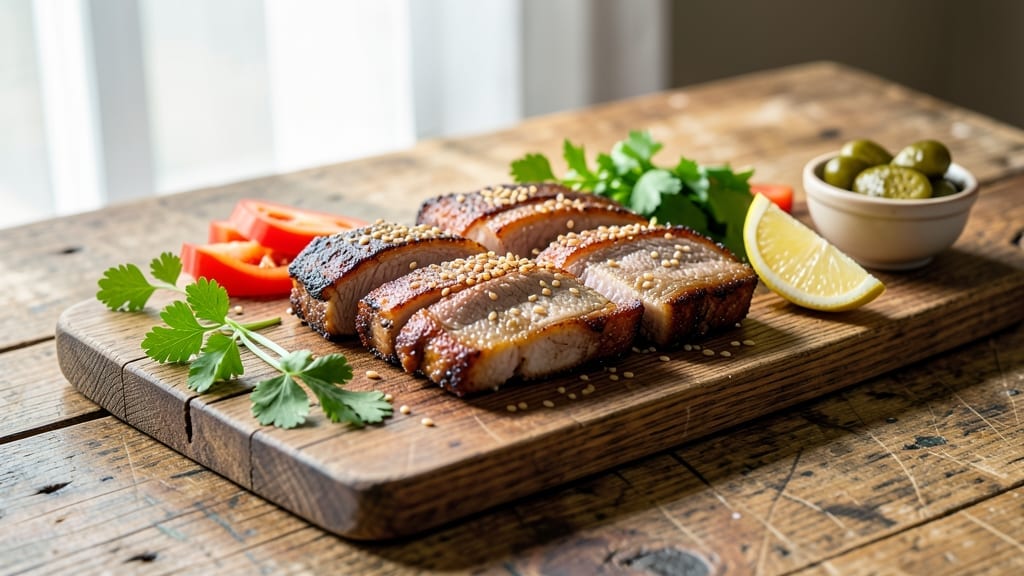
Mastering smoked pork riblets delivers that signature fall-off-the-bone tenderness we all crave, and I’ve perfected a method that achieves it in just 2 hours. 🔥 Growing up in small-town Georgia, I learned pork transforms from tough to tender when smoked low and slow—this recipe captures that same magic in your backyard or smoker.
The secret lies in precise temperature control and proper prep: trimming the ribs to uniform size, applying a dry rub of brown sugar and smoked paprika, then smoking at 225°F until the internal temperature hits 195°F.
This slow cook ensures the connective tissue breaks down while the meat stays juicy, not dry. My heritage Gloucestershire Old Spots pigs provide the ideal fat-to-meat ratio for this technique.
What you’ll end up with is meat so tender it practically melts on the bone, with a smoky aroma that fills your kitchen long before the timer goes off.
The rub creates a light bark on the outside, while the inside remains moist and rich—perfect for serving on a platter with tangy coleslaw or crusty bread to soak up every bit of that smoky goodness.
Pro tip: Let the ribs rest for 15 minutes after smoking before slicing—this ensures clean cuts and maximum juiciness. Ready to transform tough ribs into a showstopping centerpiece? Let’s get started.
Ingredients for smoked pork riblets
Pork ribs that practically melt in your mouth—just a handful of pantry staples and a smoker.
| Ingredient | Amount | Notes |
|---|---|---|
| Gloucestershire Old Spots Pork Riblets 🥓 | 2 ½ lb | Bone-in, trimmed to uniform size |
| Yellow Onion 🧅 | 1 whole | Large, sliced into rings |
| Brown Sugar 🍚 | ¼ cup | Packed, light brown preferred |
| Smoked Paprika 🌶️ | 2 tbsp | High-quality, not pre-mixed |
| Kosher Salt 🧂 | 1 ½ tbsp | Coarse grain preferred |
| Ground Black Pepper 🌶️ | 1 tbsp | Freshly cracked preferred |
| Garlic Powder 🧄 | 1 tbsp | Not garlic salt |
| Mustard Powder 🌶️ | 1 tsp | Yellow or Dijon preferred |
| Apple Cider Vinegar 🍏 | 1 tbsp | For mopping sauce |
| Wood Chips (Hickory) 🌳 | 1 package | Unsoaked, for smoker |
| Yellow Mustard 🍯 | 2 tbsp | For serving, optional |
| Fresh Parsley 🌿 | ¼ cup | Chopped, for garnish |
| Honey 🍯 | 1 tbsp | Wildflower preferred |
| Beer (Light Lager) 🍺 | ½ cup | For spritzing during smoke |
[recipe_ingredient_scaler]
The pork is everything here. Gloucestershire Old Spots ribs have the perfect fat-to-meat ratio, but any bone-in pork riblets work—just trim them to uniform size before smoking. I usually grab mine from local butchers or specialty meat counters (they’ll cut them for you if you ask). The key is trimming the membrane and excess fat—this ensures even cooking and that signature bark. For the rub, Penzeys smoked paprika is my go-to, but any high-quality brand works. If you’re short on time, Costco sells pre-trimmed riblets that cut prep down to 10 minutes.
No hickory chips? Oak or cherry wood gives a slightly different but still delicious flavor. Running out of apple cider vinegar? White vinegar or lemon juice works in a pinch—just use the same amount. The mustard powder adds depth, but if you’re avoiding it, extra 1 tsp of garlic powder keeps things balanced. For the beer spritz, any light lager or even sparkling water does the trick—just keep it cold. Pro tip: if your smoker runs hot, add ice cubes to the water pan to keep temps steady.
Smoked ribs reheat poorly—they’re best served fresh off the smoker. Wrap leftovers in foil and refrigerate for up to 4 days (they’ll be drier but still delicious). For longer storage, freeze in portions for up to 3 months. I like to slice them thin and serve with homemade coleslaw—the tang cuts through the richness perfectly. The rub keeps well in an airtight container for 2 weeks, so make extra for future smokes.
Why You’ll Love This Recipe
- No-Fuss Smoking: Honestly, this isn’t the kind of recipe that requires a Pinterest-worthy setup. Just pat the riblets dry, slather them with that sweet-spicy rub (¼ cup brown sugar + smoked paprika + kosher salt), and let them sit while you fire up the smoker. The real magic happens in the smoke, not the prep—so you’re basically done in 30 minutes of active time.
- Smoky-Sweet Perfection: Between the hickory wood chips and that ¼ cup brown sugar in the rub, these riblets develop a bark so crispy it cracks under your teeth, while the inside stays impossibly tender. The beer spritz (½ cup light lager + apple cider vinegar) keeps them from drying out, and the honey mustard wrap at the end? Chef’s kiss. It’s like having a smoky, sweet hug for your taste buds.
- Double-Duty Crowd-Pleaser: I serve these at game day parties, but honestly, they’re just as good for a lazy Sunday lunch or even a weeknight dinner if you’re feeling ambitious. Leftovers keep for up to 4 days in foil, so you can always have a backup plan. And let’s be real—everyone loves pork, even the picky eaters who won’t touch your fancy brunch dishes.
- Budget-Friendly Luxury: Gloucestershire Old Spots pork might sound fancy, but it’s often cheaper than you’d think, and 2.5 pounds feeds a small army. The ingredients? Most of them are pantry staples—smoked paprika, brown sugar, even beer—so you’re not dropping cash on specialty items. For the price, you’re getting melt-in-your-mouth meat that tastes like a restaurant, without the bill.
Step-by-step instructions for smoked pork riblets
Here’s how to transform tough riblets into melt-in-your-mouth perfection with just a smoker and patience.
🔥 Step 1: Prepare the Riblets and Dry Rub
Pat the 2½ lb Gloucestershire Old Spots Pork Riblets completely dry with paper towels. This step is non-negotiable—moisture creates steam instead of smoke penetration. Trim any excess fat to about ¼-inch thickness to ensure even cooking and better bark formation.
In a small bowl, combine ¼ cup Brown Sugar, 2 tbsp Smoked Paprika, 1½ tbsp Kosher Salt, 1 tbsp Ground Black Pepper, 1 tbsp Garlic Powder, and 1 tsp Mustard Powder. Mix well until the sugar dissolves slightly and forms a coarse paste. Here’s the thing—this dry rub needs to cling to the meat, so generously coat each riblet on all sides, pressing firmly so it adheres. Let them sit uncovered on a wire rack for 30 minutes at room temperature while you prepare the smoker.
🔥 Step 2: Set Up the Smoker and Start Cooking
Fill your smoker with 1 package Wood Chips (Hickory) and preheat to 225°F. You’ll know it’s ready when you see clean, thin blue smoke (not thick white vapor). Place the riblets bone-side down on the smoker grates, leaving about ½-inch space between each piece. This spacing prevents them from steaming and allows smoke to circulate.
Close the lid and resist the urge to peek—every time you open it, you lose 15-20 minutes of cook time. Smoke the riblets for 90 minutes, then spritz with a mixture of ½ cup Beer (Light Lager) and 1 tbsp Apple Cider Vinegar. This step is crucial—it keeps the meat moist during the long cook and adds subtle depth of flavor. After spritzing, return the riblets to the smoker and continue cooking.
🔥 Step 3: Monitor and Wrap for Maximum Tenderness
After 2 hours total, check the internal temperature using a meat thermometer. You’re aiming for 195-200°F—this is where the collagen breaks down and transforms into gelatin, creating that legendary fall-off-the-bone texture. If the temperature stalls (a common phenomenon), it’s time to wrap.
Line a large piece of aluminum foil with a thin layer of 2 tbsp Yellow Mustard (this prevents sticking and adds flavor). Place the riblets on the foil, drizzle with 1 tbsp Honey, then tightly wrap the package, squeezing out as much air as possible. Return the wrapped riblets to the smoker and cook for another 30-45 minutes until the internal temperature reaches 203°F. The mustard and honey will create a sticky glaze that enhances the bark and keeps the meat juicy.
🍽️ Step 4: Rest and Serve with Garnish
Remove the riblets from the smoker and let them rest on a cutting board for 15-20 minutes. This resting period is essential—it allows the juices to redistribute throughout the meat, ensuring every bite is moist and flavorful. While they rest, chop ¼ cup Fresh Parsley finely for garnish.
Slice the riblets against the grain into ½-inch thick pieces and arrange them on a platter. Drizzle any accumulated juices from the foil over the top and sprinkle with the chopped parsley. Serve immediately with extra 2 tbsp Yellow Mustard on the side if desired. The result? Riblets so tender they practically melt in your mouth, with a smoky-sweet bark that’s impossible to resist.
Pro Tips For Making Smoked Pork Riblets
- Trim Fat Precisely: That ¼-inch fat cap isn’t just about flavor—it’s about even cooking. Too much fat means uneven bark, and too little means dry meat. I used to eyeball it and ended up with crispy edges and tough centers. Grab a sharp knife and trim consistently, or your riblets will fight you the whole way.
- Spritz Like a Pro: Don’t just drown them—spritz lightly but thoroughly with that beer and vinegar mix after 90 minutes. A quick spray bottle works best; you want the liquid to cling, not pool. I learned this after watching my first batch turn into sad, rubbery sticks because I went overboard. Less is more, even if it feels counterintuitive.
- Wrap Tight, Wrap Smart: The mustard on the foil isn’t just for flavor—it’s the secret to that sticky, caramelized bark. Spread it thin, then wrap so tight you can’t fit a business card inside. I’ve seen people rush this, and their riblets end up steamed instead of glazed. Take the extra 30 seconds to squeeze out every bit of air—your future self will notice.
- Test the Honey Glaze: That 1 tablespoon of honey isn’t just a sweetener—it’s the glue that holds the bark together. If your honey is thick (like wildflower often is), warm it slightly before drizzling so it spreads evenly. I’ve had batches where the honey stayed clumpy, and the bark came off in sad little flakes. A quick dip in warm water fixes it—trust me.
Best sauces and condiments for these flavors
Sweet Heat Sauces
For a Southern-inspired twist, drizzle your riblets with 3 tbsp homemade hot honey mixed with 1 tsp smoked paprika from your rub. I make mine by simmering 1 cup honey with 2 tbsp finely chopped jalapeños and 1 tsp cayenne pepper for 15 minutes.
The smoky-sweet combo balances the riblets’ richness beautifully. This sauce also works as a quick mop during the final 30 minutes of smoking. 🔥
Tangy Mustard Glaze
My go-to for serving is a tangy mustard glaze made with 2 tbsp yellow mustard, 1 tbsp apple cider vinegar, and 1 tsp honey. Whisk these together and drizzle generously over sliced riblets.
The acidity cuts through the fat while the honey adds a subtle sweetness. I like to serve this with crusty sourdough bread for dipping. This sauce makes the riblets feel even more indulgent.
Spicy Pineapple BBQ
For adventurous eaters, try a spicy pineapple BBQ sauce made with ½ cup store-bought BBQ sauce (like Sweet Baby Ray’s), 1 tbsp pineapple juice, and ½ tsp chili flakes. Simmer these together for 5 minutes until slightly thickened.
The tropical sweetness pairs surprisingly well with pork’s natural richness. This sauce is perfect for those who love bold flavors with a kick. 🌶️
Herb-Infused Oil
A simple but elegant option is infused olive oil with fresh herbs. Mix ¼ cup olive oil with 1 tbsp chopped rosemary, 1 tbsp chopped thyme, and 1 minced garlic clove.
Let it sit for 30 minutes before drizzling over sliced riblets. The herbs add a bright, aromatic contrast to the smoky meat. I serve this with roasted sweet potatoes for a complete meal.
Classic BBQ Sauce
Nothing beats classic BBQ sauce for pork ribs. I recommend a thick, vinegar-based sauce like Bull’s-Eye or Stella Artois BBQ. Brush it on during the last 45 minutes of smoking for a caramelized finish.
The tangy, smoky sauce enhances the riblets’ natural flavors while adding a sticky, saucy element that’s irresistible. Serve with pickled red onions for extra brightness. 🍴
Nutrition facts
Frequently asked questions
Why does my smoker need to reach 225°F
for these riblets?
The low-and-slow method at 225°F is key for tenderizing tough pork. This gentle heat breaks down collagen into gelatin, creating that melt-in-your-mouth texture while allowing the hickory smoke to penetrate deeply. Higher temps cook faster but risk drying out the meat. The 2-hour window lets the fat render and flavors develop perfectly.
What if my meat thermometer reads 195°F
but the ribs still feel tough?
This happens when the internal temperature stalls—common with pork! Wrap the ribs tightly in foil with 2 tbsp yellow mustard and 1 tbsp honey, then return to the smoker for 30-45 minutes. The steam and glaze finish cooking the meat while keeping it moist. The stall usually resolves once the temperature reaches 203°F.
Can I use a different type of wood for smoking?
While hickory is classic, oak adds a milder sweetness and cherry brings fruity notes. Avoid strong woods like mesquite unless you prefer an overpowering flavor. Just ensure your wood chips are unsoaked and fresh for best results. Pro tip: Soak wood chips only if using them in a pellet smoker, not traditional charcoal smokers.
How do I prevent my riblets from sticking to the foil when wrapping?
Line the foil with a thin layer of yellow mustard before adding the ribs—it acts as a natural release agent while infusing flavor. Press the ribs gently into the mustard, then drizzle with honey before wrapping tightly. This creates a sticky glaze while preventing the meat from sticking to the foil. Squeeze out excess air for even cooking.

Trained in classic French technique but raised on slow-cooked ribs and spicy rubs, she blends culinary skill with smoke and soul.
- Smoked Brisket Recipe: Low and Slow to Fall-Apart Tenderness - November 2, 2026
- Smoked Turkey Breast Recipe: Juicy Pink Center With Crispy Skin Every Time - November 2, 2026
- Leftover Smoked Pulled Pork Chili Recipe: Rustic Flavor Revival in One Pot - November 2, 2026