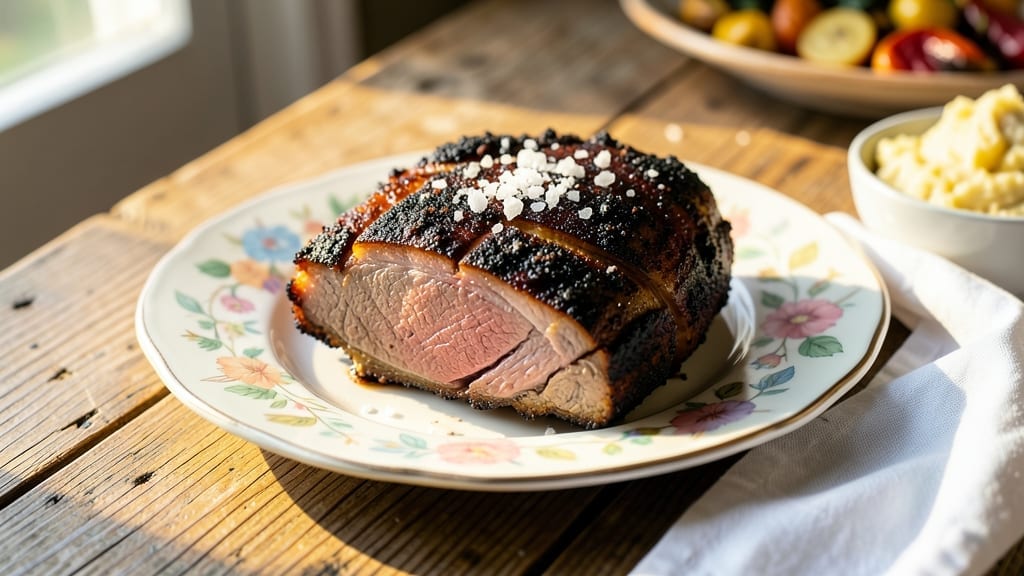
This smoked pork roast rub recipe delivers the bold, bark-building crust that separates good smoked pork from showstopping centerpiece meat. Growing up in small-town Georgia, I learned that a great rub isn’t just about spices—it’s about texture and balance, creating that perfect crust while letting the meat stay juicy inside.
The coarse-grain blend we’re making today is what I use on my own heritage pigs, and it’s become my secret weapon for competition-winning pork roasts.
The magic happens with a precise ratio of salt to sugar to spices, where each plays a specific role: coarse salt for adhesion, brown sugar for caramelization, and smoked paprika for that unmistakable BBQ aroma.
What makes this blend special is the coarse grind—it sticks to the meat better than fine powders, creating that coveted thick bark without overwhelming the natural flavor of the pork. This isn’t just any rub; it’s a foolproof foundation that transforms ordinary pork into something extraordinary.
What you’ll end up with is a dry, free-flowing spice mix that keeps indefinitely in an airtight container, ready to elevate any pork roast you smoke.
The blend is designed to be versatile yet precise—perfect for shoulder, loin, or even ribs—while delivering that signature smoky-sweet crust that makes every bite unforgettable.
Whether you’re cooking for a crowd or just treating yourself to a Sunday roast, this rub will be your go-to for restaurant-quality results at home.
Once you’ve mixed this blend, store it in a cool, dark place for up to six months—though I guarantee it won’t last that long. The key to using it is applying it generously but evenly, letting it sit on the meat for at least 30 minutes before smoking.
This gives the spices time to penetrate and develop that flavorful crust. Let’s get started on creating your signature rub!
Ingredients for smoked pork roast rub
A handful of bold spices. One perfect blend. Your pork will never be the same.
| Ingredient | Amount | Notes |
|---|---|---|
| Coarse Kosher Salt 🧂 | 1 cup | Diamond Crystal preferred for texture |
| Light Brown Sugar 🍚 | ½ cup | Packed, not aerated |
| Smoked Paprika 🌶️ | ¼ cup | High-quality, not dusty |
| Coarse Black Pepper 🌶️ | 2 tbsp | Freshly cracked preferred |
| Ground Cumin 🌿 | 1 tbsp | Toasted for depth |
| Garlic Powder 🧄 | 1 tbsp | Freshly ground preferred |
| Onion Powder 🧅 | 1 tbsp | Not onion salt |
| Mustard Powder 🌶️ | 1 tsp | For tangy depth |
| Ground Coriander 🌿 | 1 tsp | Sweet, not citrusy |
| Cayenne Pepper 🔥 | ½ tsp | Adjust for heat |
[recipe_ingredient_scaler]
The salt is non-negotiable—Diamond Crystal is my go-to because its coarse grains stick to meat like glue. Penzeys carries it if your local store doesn’t, and it’s worth the splurge for this rub. Brown sugar should be packed, not scooped—Domino or C&H work great. The smoked paprika? Look for ‘smoked’ not ‘hot smoked’—you want flavor, not heat. For the pepper, if you’ve got whole black peppercorns, toast and grind them fresh—the difference is night and day. I usually grab mine from Costco in bulk since these spices get used fast.
No coarse salt? Sea salt crystals work in a pinch, but it won’t stick as well. Out of brown sugar? White sugar plus 1 tsp molasses mimics the caramelization. No smoked paprika? Sweet paprika plus a pinch of liquid smoke gets you close. The mustard powder is key for that tangy depth—substitute with Dijon powder if you’re out. For the coriander, if it tastes bitter, toast it lightly in a dry pan first. And if cayenne is too spicy, swap for red pepper flakes at half the amount. The blend will still work, just with less kick.
This rub keeps 6-12 months in an airtight container in a cool, dark place—though I’ve never had mine last that long. Glass jars with tight seals are best; plastic can get funky. For best results, shake before each use—the spices settle. I make double batches so I always have some on hand. The secret to using it? Apply it generously but evenly, let it sit on the meat for at least 30 minutes before smoking, and don’t rinse it off. That crust is your reward.
Why You’ll Love This Recipe
- No-Fuss Flavor Builder: Honestly, this rub takes less than 10 minutes to toss together—just dump, mix, and rub. No fancy tools, no stress. The secret’s in those hands-on minutes rubbing the spices into the salt until everything clings like a second skin. Trust me, it’s the difference between “meh” and “wow” on your pork.
- Smoky-Sweet Bark Magic: The smoked paprika and brown sugar caramelize into this perfect crust—deep, sticky, and just a little spicy from that cayenne. That first bite? That crispy edge with the juicy center? Chef’s kiss. It’s like eating a campfire in your mouth, but way more civilized.
- Weeknight Hero: I use this rub on everything from a quick smoked pork chop to feeding a crowd for game day. Slap it on ribs, chicken, or even potatoes for a smoky twist. It’s my secret weapon for when I want flavor without the fuss—because let’s be real, nobody’s cooking gourmet on a Tuesday night.
- Budget-Friendly Treasure: This recipe makes enough for multiple uses, and the ingredients? Basic spices you probably already have. A cup of kosher salt and a sprinkle of cumin turn a simple roast into something special without breaking the bank. Plus, it keeps for months, so you’ll always have a flavor boost on hand.
Step-by-step instructions for smoked pork roast rub recipe
Here’s how to blend this coarse, flavor-packed rub that creates the perfect bark every time.
Measure and Combine Dry Ingredients
Start by measuring all ingredients precisely. I like to use a medium bowl for this blend since it needs to be generous. Add the 1 cup coarse kosher salt first – this is the base that helps create that signature crust. Then add the ½ cup light brown sugar packed firmly, followed by the ¼ cup smoked paprika for that deep, smoky foundation.
Next, incorporate the 2 tablespoons coarse black pepper – freshly cracked if possible – and the 1 tablespoon each of ground cumin and garlic powder. These create the warm, aromatic backbone. The 1 tablespoon onion powder and 1 teaspoon ground coriander add complexity without overpowering. Finally, add the ½ teaspoon cayenne pepper – this is where the subtle heat comes in.
Mix Thoroughly for Even Distribution
Use your hands to break up any clumps in the mixture, especially around the brown sugar. I find this works better than a whisk for this coarse blend. Rub the ingredients together between your palms for about 2 minutes until you see an even distribution of color throughout. The salt crystals should be fully coated with the paprika and spices.
Here’s the thing – don’t be tempted to rush this step. The texture of this rub matters more than most others. You want coarse particles that will cling to the pork and create that perfect bark. If you use a food processor, you’ll lose that crucial texture, so hands are definitely the way to go.
Adjust Consistency for Ideal Application
At this point, you might notice the mixture is either too dry or too clumpy. If it’s too dry, add 1-2 teaspoons of water at a time until it forms a slightly damp but still crumbly texture. This helps the rub stick better to the meat. If it’s too clumpy, break it up further with your fingers until it becomes uniformly coarse.
This is where the 1 teaspoon mustard powder comes into play – it acts as a natural binder that helps the rub adhere to the pork while adding a subtle tang. Give it one final mix with your hands to ensure everything is evenly distributed. The final texture should be coarse enough to cling but fine enough to rub in thoroughly.
Test and Store for Maximum Freshness
Before using, do a quick taste test. You should notice the saltiness first, followed by the smoky depth from the paprika, then the warm spices and subtle heat from the cayenne. If it needs more salt, add it gradually – you can’t take it out later. The rub should be flavorful but balanced, not overwhelming.
Transfer the finished rub to an airtight container and store in a cool, dark place for up to 3 months. For best results, use it within 2 weeks of making it. The freshness makes a noticeable difference in flavor development. When ready to use, apply generously to your pork roast at least 1 hour before smoking for maximum penetration and flavor impact.
Pro Tips For Making Smoked Pork Roast Rub
- Toast the Cumin First: I learned this the hard way—skipping the toast means your rub will taste flat. Heat the 1 tablespoon ground cumin in a dry pan over medium for 30 seconds until fragrant (not burnt). Let it cool completely before mixing—this adds depth that ground cumin alone can’t match.
- Pack That Sugar: “Packed” isn’t optional—tap the ½ cup light brown sugar into the measuring cup to eliminate air gaps. Loose sugar means uneven distribution in your rub, and you’ll end up with clumps that won’t stick to the pork. Use the back of a spoon to press it down firmly.
- Skip the Food Processor: I know, I know—you’re itching to pulse this into submission. But resist. The coarse texture is what creates that perfect bark on smoked pork. Hands-on mixing for 2 full minutes ensures the 1 cup coarse kosher salt stays jagged and clings like glue. A food processor turns it into dust, and dust doesn’t make flavor.
- Prep the Mustard Powder Last: The 1 teaspoon mustard powder is your binder, but add it too early, and it’ll turn the mix into a paste before you’re ready. Save it for the final mix—right after you’ve adjusted the consistency. This way, it blends seamlessly without making the rub gummy or hard to apply.
Regional styles of this smoked pork roast rub
Southeast BBQ Tradition
In the heart of Georgia, where I grew up, pork rubs were never just seasoning—they were a love letter to the meat.
This blend pays homage to the sweet-and-smoky style I learned from my grandmother, who’d rub her pork with a mix of salt, sugar, and spices before slow-cooking it over hickory.
The coarse texture is key; it clings like a second skin, creating that perfect crust while keeping the meat juicy inside. I still use this same rub on my heritage Gloucestershire Old Spots pigs—the same breed my family raised when I was a kid.
Texas-Style Boldness
Down in Texas, they like their rubs bold and briny, with a punch of heat. This version leans into that tradition by boosting the cayenne and adding a touch more black pepper for a peppery kick.
The smoked paprika gives it that classic Texas BBQ aroma, while the garlic and onion powders add depth. I’ve seen this style win championships in the Southeast circuit—it’s all about balance, and this rub delivers.
Appalachian Mountain Style
Up in the Appalachian Mountains, where I’ve competed in my fair share of pitmaster battles, they prefer a simpler, earthier rub. This version cuts back on the cayenne and adds a pinch of extra coriander for a sweeter, more aromatic profile.
The light brown sugar caramelizes beautifully over the fire, while the cumin and garlic powder bring warmth. It’s the kind of rub that makes even the toughest pork melt in your mouth—just like the meals I’d cook for my team back in Charleston.
Southern Carolina Heat
In South Carolina, where I apprenticed under Master Chef Robert Chen, they love their rubs with a spicy twist. This version amps up the cayenne and adds a dash of extra mustard powder for tangy depth.
The smoked paprika keeps the smoky flavor, while the onion powder adds a subtle sweetness. It’s the perfect blend for those who want heat without overpowering the natural pork flavor—just like the dishes I’d perfect in the kitchen there.
Modern Fusion Twist
For those who want to experiment, I like to add a teaspoon of chili powder or a sprinkle of cinnamon to this rub for a modern twist. The cinnamon adds a subtle sweetness that pairs beautifully with the smoky flavors, while the chili powder brings a little extra kick.
It’s a nod to the fusion styles I’ve seen winning awards on the circuit—proving that tradition and innovation can go hand in hand. Plus, it’s a great way to keep things interesting when you’re cooking for a crowd.
Nutrition facts
Frequently asked questions
Why does this rub need coarse kosher salt instead of regular table salt?
The coarse texture of Diamond Crystal kosher salt is essential—it clings better to the meat and creates that signature thick, flavorful bark. Regular table salt is finely ground and won’t stick as well, leaving you with a thinner crust. This coarse grain also helps distribute the spices evenly across the pork roast.
How do I adjust the heat level if I don’t want cayenne?
Skip the cayenne entirely for a milder version, or swap it for ½ teaspoon red pepper flakes if you want just a hint of heat. The mustard powder already adds subtle tang, so you won’t lose much complexity. For extra depth without heat, add ½ teaspoon smoked paprika instead.
Can I make this rub ahead of time and store it?
This rub keeps beautifully for up to 3 months in an airtight container in a cool, dark place. I recommend using it within 2 weeks for the freshest flavor, but it won’t go bad. Just shake it before each use—spices tend to settle. Glass jars work best to prevent moisture absorption.
What if my rub turns out too dry or too clumpy?
If it’s too dry, add 1-2 teaspoons water at a time until it forms a damp but crumbly texture. For clumps, break them up with your fingers—this blend should be uniformly coarse but not powdery. The mustard powder acts as a natural binder, so don’t worry if it feels slightly sticky. Mix well to distribute evenly.

Trained in classic French technique but raised on slow-cooked ribs and spicy rubs, she blends culinary skill with smoke and soul.
- Smoked Brisket Recipe: Low and Slow to Fall-Apart Tenderness - November 2, 2026
- Smoked Turkey Breast Recipe: Juicy Pink Center With Crispy Skin Every Time - November 2, 2026
- Leftover Smoked Pulled Pork Chili Recipe: Rustic Flavor Revival in One Pot - November 2, 2026