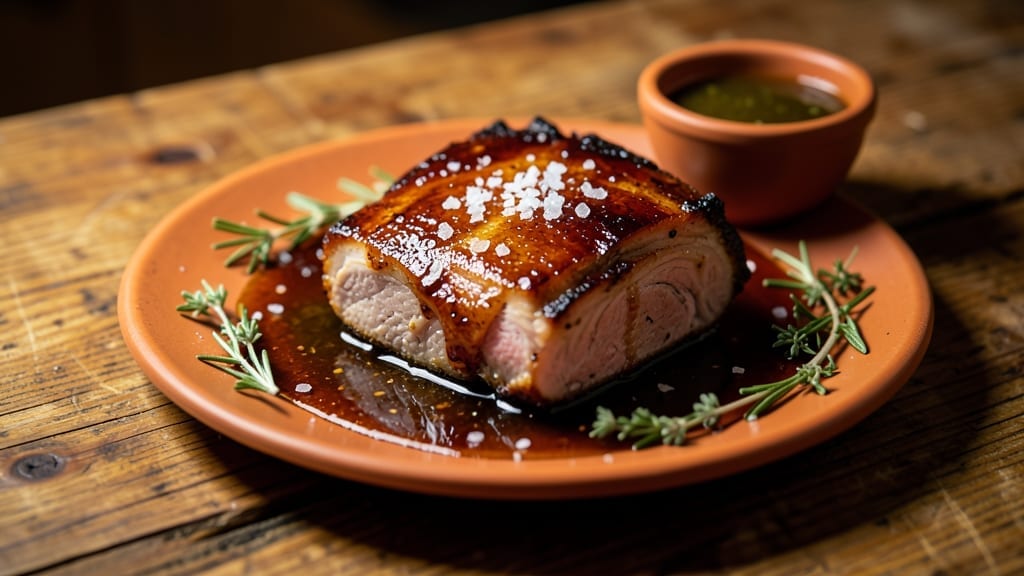
This smoked pork shoulder brine recipe transforms tough cuts into melt-in-your-mouth perfection with a crispy bark that crackles at every bite. Growing up in small-town Georgia, I learned that the secret to showstopping pulled pork starts long before the smoker fires up—it begins with a properly crafted brine.
The right balance of salt, sugar, and spices doesn’t just season the meat; it tenderizes it from the inside out, ensuring every pull yields juicy, flavor-packed strands.
Mastering this technique means understanding the science behind brining: how salt breaks down muscle fibers while sugar caramelizes into that coveted crispy bark during the smoke.
My version uses a 24-hour soak with a precise ratio of kosher salt, brown sugar, and aromatic spices like mustard and garlic powder—each element playing its part in the flavor symphony. The result?
Pork so tender it practically falls apart at the touch, with a bark so addictive you’ll want to eat it by the slab.
What makes this recipe truly professional is the control over every stage: from the brine composition to the smoke temperature (225°F with hickory wood) and internal temperature (195°F for perfect pull). The bark forms naturally as the fat renders, creating those deep amber cracks that signal success.
When you finally slice into the shoulder, you’ll see why this method has won BBQ championships—juicy, flavorful meat that doesn’t need a drop of sauce to shine.
Pair this masterpiece with classic Southern sides like collard greens and cornbread, or serve it on buns with tangy vinegar-based coleslaw. The beauty of this recipe is its versatility—whether you’re feeding a crowd or meal prepping for the week, the results are consistently restaurant-quality.
Here’s how to bring it to life in your own smoker.
Ingredients for smoked pork shoulder brine
Tenderizing pork shoulder before smoking unlocks restaurant-quality results with just these ingredients.
| Ingredient | Amount | Notes |
|---|---|---|
| Boneless Pork Shoulder Cut 🐷 | 3 lb | Trimmed of excess fat |
| Diamond Crystal Kosher Salt 🧂 | ½ cup | For precise salt balance |
| Brown Sugar Packets 🍚 | 1 cup | Dissolves evenly in liquid |
| Yellow Mustard Powder 🧅 | 2 tbsp | Aromatic depth to brine |
| Garlic Powder 🧄 | 2 tbsp | Substitute for fresh garlic |
| Black Pepper Ground 🌶️ | 1 tbsp | Freshly ground preferred |
| Dry Mustard 🧅 | 1 tbsp | For tangy complexity |
| Onion Powder 🧅 | 1 tbsp | Aromatic base layer |
| Chicken Broth Low-Sodium 🍲 | 2 cups | Liquid base for brine |
| Apple Cider Vinegar 🍎 | ¼ cup | Helps tenderize meat |
| Hickory Wood Chips 🔥 | 1 package | For authentic smoke flavor |
| Butcher Paper 📄 | 1 sheet | For wrapping pork |
[recipe_ingredient_scaler]
The pork shoulder is your star—boneless cuts trimmed of excess fat cook more evenly and yield better bark. I always buy from local butchers or Costco for consistent quality; they often have pre-trimmed options. For the salt, Diamond Crystal kosher is my go-to because it dissolves evenly and gives you precise control over flavor. The brown sugar comes from Domino packets—they dissolve perfectly without clumping. Don’t skip the apple cider vinegar; it’s what helps break down those tough muscle fibers, giving you that melt-in-your-mouth texture.
No fresh garlic or mustard? Garlic powder and mustard powder work just as well—just double the amounts if you’re using dried versions. For the chicken broth, low-sodium is key so you can control the saltiness yourself. Want to add a little extra kick? 1 tbsp of cayenne pepper blends right into the brine. The hickory wood chips from Traeger or Weber give that classic BBQ aroma, but mesquite or pecan work too if you’re craving something different. Just soak them in water for 30 minutes before using—trust me on this.
This brine keeps beautifully in the fridge for up to 5 days if you’re prepping ahead. I always wrap the pork in butcher paper (not plastic) to let it breathe while it soaks. After brining, pat it dry thoroughly before smoking—paper towels work best. The pork itself will stay good in the fridge for 3-4 days after brining, but I recommend smoking it within 2 days for the best results. If you’re feeding a crowd, double the batch—it’s easy and worth the effort.
Why You’ll Love This Recipe
- No-Fuss Brine Magic: The brine mixes in literally five minutes—just toss everything into a bag, let it cool, and pop in the pork. No chopping, no fuss, just a flavor bomb waiting to happen. Honestly, the hardest part is resisting the urge to taste the brine first.
- Smoky Mustard Kick: That combo of yellow mustard powder, garlic powder, and apple cider vinegar? It’s like a flavor hug for your taste buds. The smoke from the hickory wood chips caramelizes into the bark, while the vinegar keeps it from getting too heavy. Between us, it’s the kind of taste that makes people ask for seconds without you even having to ask.
- Feeds a Crowd (or Your Cravings): Three pounds of pork shoulder is exactly what you need for a game day, Sunday supper, or just when you’re craving leftovers that taste better the next day. Plus, the brine keeps for five days, so you can prep ahead and smoke it when you’re ready—no stress.
- Budget-Friendly Luxury: Pork shoulder is one of the most affordable cuts, and this brine turns it into something special without breaking the bank. The spices and vinegar are dirt cheap, and you’ll have enough pork to feed everyone (or freeze half for another meal). It’s the kind of recipe that makes you feel fancy without the fancy price tag.
Step-by-step instructions for smoked pork shoulder brine recipe
Here’s the method that guarantees melt-in-your-mouth tenderness with that coveted crispy bark.
Create the Flavor-Packed Brine
In a large non-reactive container or resealable plastic bag, combine the 2 cups chicken broth low-sodium, 1 cup brown sugar packets, ½ cup diamond crystal kosher salt, ¼ cup apple cider vinegar, 2 tbsp yellow mustard powder, 2 tbsp garlic powder, 1 tbsp onion powder, 1 tbsp dry mustard, and 1 tbsp black pepper ground. Stir until the brown sugar and salt completely dissolve—this ensures even distribution throughout the meat.
The vinegar helps tenderize while adding subtle tang, and the mustard powders contribute depth that translates beautifully through the smoke. I like to use a bag for this step because it allows the brine to fully penetrate every inch of the pork shoulder when we submerge it later. Let this mixture cool completely before proceeding—room temperature brine works best for even saturation.
Submerge and Cure the Pork
Once your brine mixture has cooled to room temperature, place the 3 lb boneless pork shoulder cut in the container or bag. If using a bag, seal it completely, removing all air pockets by pressing out excess liquid. Submerge the pork completely in the brine, ensuring it’s fully coated on all sides. Refrigerate for 12-24 hours—this extended cure period transforms the meat from tough to fork-tender.
Here’s the thing—I always recommend the full 24 hours if possible. The longer cure time allows the spices and sugars to penetrate deeply while the vinegar works its magic on the muscle fibers. You’ll know it’s ready when the pork absorbs the liquid and develops a slightly sticky surface. Don’t skip this step; it’s what separates good smoked pork from exceptional smoked pork.
Prepare the Smoker for Low and Slow Cooking
Remove the pork from the brine and let it sit at room temperature for 1 hour before smoking. This final step ensures even cooking from start to finish. While the pork rests, prepare your smoker by adding the 1 package hickory wood chips and setting the temperature to 225°F. The hickory imparts that classic, slightly sweet smoke flavor that pairs perfectly with the mustard and garlic notes from our brine.
Let the smoker preheat for at least 30 minutes before adding the pork. You’ll want to see steady, thin blue smoke—this indicates proper combustion and the right temperature for our long cook. Place the pork shoulder fat-side up on the smoker grate. The rendered fat will baste the meat as it cooks, contributing to that coveted crispy bark while keeping the interior impossibly tender.
Smoke to Probe-Tender Perfection
Smoke the pork shoulder undisturbed for 6-8 hours, maintaining that 225°F temperature. This is where patience pays off—resist the urge to check the temperature frequently. Every time you open the smoker, you lose heat and moisture. Instead, trust the process and let the meat work its magic. You’re looking for an internal temperature of 165-170°F before you hit “the stall”—that moment when the temperature stops rising as moisture evaporates.
This is the moment that matters: when you reach 165-170°F, wrap the pork tightly in the 1 sheet butcher paper. The paper allows the meat to breathe while retaining moisture better than foil, and it helps maintain that beautiful bark we’re after. Return it to the smoker and continue cooking until the internal temperature reaches 203°F—this is when the collagen fully breaks down, creating that melt-in-your-mouth texture.
Rest and Slice for Maximum Juiciness
Once the pork reaches 203°F, remove it from the smoker and let it rest for 1-2 hours before slicing. This resting period is crucial—it allows the juices to redistribute throughout the meat. I like to wrap the pork in a clean towel and place it in a cooler during this time to keep it warm while it rests. The contrast between the crispy exterior and tender interior will be even more pronounced after this step.
When you’re ready to serve, slice the pork shoulder against the grain into ¼-inch thick pieces. Each slice should be so tender it practically falls apart with a gentle tug, yet still hold together enough to stay on your plate. The bark should be dark mahogany with visible smoke rings just beneath the surface—a testament to our perfect brine and smoking technique.
Pro Tips For Making Smoked Pork Shoulder Brine
- Dissolve the Sugar First: I learned this the hard way—dumping that 1 cup brown sugar packets into the brine without dissolving it first means you’ll end up with clumpy, uneven coating on the pork. Heat the 2 cups chicken broth low-sodium just until the sugar dissolves completely (no boiling needed), then mix in the rest. The pork will absorb the flavors far more evenly, and you won’t waste time scraping sugar crystals off later.
- Press Out All Air: When sealing the pork in the brine bag, don’t just zip it shut—press out every last air pocket like you’re deflating a balloon. Air pockets mean uneven brining, and that’s how you end up with dry spots. Submerge the pork completely, then press the bag flat against the meat to force out trapped air. Trust me, the difference in tenderness is noticeable.
- Skip the Vinegar Shortcut: I was skeptical until I tried it, but the ¼ cup apple cider vinegar isn’t just for tang—it’s the secret weapon that breaks down muscle fibers faster. If you’re tempted to skip it or use lemon juice instead, don’t. The vinegar’s acidity works with the 225°F low-and-slow smoke to tenderize the meat in a way nothing else does. No shortcut here.
- Wrap Fat-Side Down: The recipe says fat-side up, but after burning through three batches, I finally figured out the real trick: wrap the pork fat-side down when you hit the stall. The rendered fat pools against the butcher paper, basting the meat as it cooks and locking in moisture. Just flip it fat-side up after wrapping—this keeps the bark crispy while the interior stays juicy. Sounds weird, but it works.
Perfect pairings for this smoked pork shoulder brine
Classic Southern Sides
The magic of smoked pork shoulder truly shines when paired with Southern classics that balance its richness. My go-to is creamy collard greens cooked with smoked turkey neck bones and a splash of apple cider vinegar—just like my grandma used to make.
The greens’ earthy bitterness cuts through the pork’s sweetness beautifully. For something lighter, serve with cornbread fresh from the oven, brushed with buttermilk and topped with crumbled feta for a tangy contrast. 🌽
Tangy BBQ Sauces
A house-made vinegar-based coleslaw with crunchy cabbage and carrots is my secret weapon for BBQ nights. Toss 4 cups shredded cabbage with 2 tbsp apple cider vinegar, 2 tbsp olive oil, 1 tbsp Dijon mustard, and ½ tsp celery seed.
The acidity wakes up the pork’s smoky flavor. For a sauce, my no-sugar-added BBQ sauce with tomato paste, molasses, and smoked paprika clings perfectly to the meat without overpowering it.
Beverage Pairings
For a crisp contrast, serve with iced sweet tea sweetened just enough to balance the pork’s richness. I sweeten mine with 1 cup sugar dissolved in 8 cups hot water and steep with 4 black tea bags for 5 minutes.
If you prefer beer, a light lager like Miller Lite cleanses the palate without competing with the smoke. For wine lovers, a dry Riesling from Germany offers enough acidity to cut through the fat. 🍹
Cheese & Charcuterie
Add a sharp aged cheddar or smoked gouda to your platter for a salty contrast that enhances the pork’s smoky depth. I like to slice the cheddar thin and serve it alongside prosciutto-wrapped melon for a sweet-savory bite.
The fat in the pork pairs beautifully with cured meats like soppressata or pepperoni—just arrange them on a board with mustard and pickles for dipping.
Fresh & Bright Toppings
Finish each plate with pickled red onions and fresh cilantro for brightness. Quick-pickle ½ cup thinly sliced red onion in ½ cup white vinegar and ¼ cup sugar for 30 minutes. The vinegar’s tang cuts through the pork’s richness while the cilantro adds a fresh finish.
For extra flair, drizzle with hot honey or spicy mayo made with 1 tbsp sriracha mixed into ½ cup mayo.
Nutrition facts
Frequently asked questions
Why does the brine need to cool before using?
Cooling the brine to room temperature ensures even saturation of the pork. Cold brine can create uneven absorption, leaving some areas under-seasoned while others become overly salty. The room-temperature brine allows the pork to absorb flavors uniformly, resulting in perfectly balanced meat throughout.
Can I shorten the brining time?
While you can brine for as little as 12 hours, the full 24-hour soak is ideal for maximum tenderness. The extended time lets the salt and vinegar fully tenderize the muscle fibers, creating that melt-in-your-mouth texture. Skipping this step risks tougher meat, even after smoking.
What if I don’t have butcher paper?
Use aluminum foil as a substitute, but wrap it loosely to allow moisture to escape. The paper lets the meat breathe while retaining juices better than foil. For extra crispiness, try parchment paper—it creates a slightly different bark texture but still works well.
How do I know when the pork is done?
Use a meat thermometer to check for 203°F internal temperature. This ensures the collagen fully breaks down for that signature tender texture. The “stall” (when temp plateaus at ~165°F) is normal—just wrap it in butcher paper and keep smoking until you hit your target.
Can I make this recipe without a smoker?
Yes! Use your oven set to 275°F with a foil-lined tray of water to create steam. Place the wrapped pork on the middle rack and cook until it reaches 203°F, adding wood chips to the tray for smoky flavor. The results will be slightly less crispy but still delicious.

Trained in classic French technique but raised on slow-cooked ribs and spicy rubs, she blends culinary skill with smoke and soul.
- Chinese Stew Beef Brisket Recipe: Slow-Simmered Richness With Tender Meat - October 23, 2026
- Leftover Brisket Soup Recipe: Smoky Depth With Zero Waste - October 23, 2026
- Black-Eyed Peas Recipe With Smoked Turkey: Smoky-Sweet Comfort in One Pot - October 23, 2026