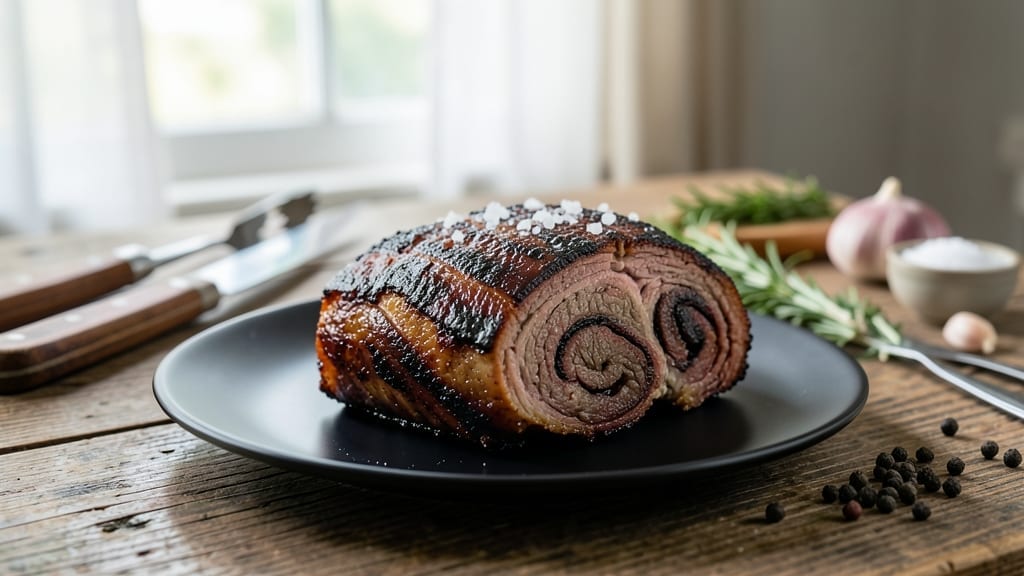
Mastering a smoked pork shoulder roast transforms tough cuts into melt-in-your-mouth perfection through patience and precision. Growing up in Georgia, I learned that slow-smoked pork shoulder isn’t just a meal—it’s a centerpiece, built on layers of wood smoke and time.
The secret lies in maintaining a steady 225°F for 10–12 hours, letting collagen dissolve into rich, juicy goodness that makes every bite worth the wait.
This method demands only a few key tools: a reliable smoker, quality wood (hickory or apple works best), and a meat thermometer to track the journey to 195°F.
The rub—salt, pepper, and smoked paprika—creates a flavorful crust while preserving moisture inside. I’ve perfected this technique over years of smoking competitions, where consistency separates good from great.
When the probe slides in like butter, you’ll know the pork is ready. Let it rest for 60 minutes before slicing against the grain for irresistible pull-apart tenderness.
The result? A dish that feeds a crowd, impresses guests, and tastes even better the next day. Here’s how to achieve it every time.
Pair with apple compote, crusty buns, or roasted vegetables to complete the meal. The slow-smoked flavor elevates simple sides into something extraordinary. Let’s get started on your next showstopper.
Ingredients for smoked pork shoulder roast
Patience, wood smoke, and a handful of simple ingredients transform tough pork into showstopping perfection.
| Ingredient | Amount | Notes |
|---|---|---|
| Bone-In Pork Shoulder 🥩 | 8 lb | Fresh cut, good marbling |
| Yellow Mustard 🍯 | ¼ cup | For sticky rub base |
| Smoked Paprika 🌶️ | ¼ cup | High-quality for depth |
| Kosher Salt 🧂 | ½ cup | Diamond Crystal preferred |
| Freshly Ground Black Pepper 🌶️ | 2 tbsp | Coarse grind for texture |
| Garlic Powder 🧄 | 1 tbsp | Freshly ground preferred |
| Onion Powder 🧅 | 1 tbsp | For balanced flavor |
| Brown Sugar 🍚 | 2 tbsp | Light or dark variety |
| Hickory Wood Chips 🌳 | 2 lb | Unsoaked for smoker |
| Apple Wood Chips 🍎 | 1 lb | Optional for fruitiness |
| Apple Cider Vinegar 🍎 | 2 tbsp | For spritzing during cook |
| Butter 🧈 | ¼ cup | Unsalted, softened |
| Fresh Rosemary 🌿 | ¼ cup | Chopped, for finishing |
[recipe_ingredient_scaler]
The pork shoulder is the star—bone-in stays juicier than boneless, and good marbling means better flavor. Grab a fresh cut from your butcher if possible; pre-cut roasts often lose moisture faster. For a crowd, 8 pounds feeds 12 comfortably with leftovers. Look for cuts with a thick fat cap—this protects the meat during the long cook. Costco or local meat markets usually carry quality bone-in pork shoulders, but don’t overlook your grocery store’s butcher section if they cut it fresh.
No smoked paprika? Substitute half with regular paprika plus a pinch of liquid smoke—just don’t overdo it. The mustard acts as a binder for the rub, so Dijon works too. For wood, hickory is non-negotiable for that classic BBQ flavor, but adding apple chips gives a subtle fruitiness that pairs perfectly. If you’re short on time, pre-soaked wood chips work, but unsmoked is ideal. The brown sugar caramelizes during cooking, so light brown adds less sweetness if you prefer a more savory profile.
This roast tastes even better the next day, so plan ahead. Wrap tightly in foil after smoking and let it rest at room temp for 60 minutes before slicing—this is crucial for juiciness. Store leftovers in the fridge for 5 days or freeze for 3 months. For serving, I like to shred it directly on the cutting board, then mix in a pat of softened butter and chopped rosemary for extra richness. The fat cap renders down beautifully—save it for gravy or extra flavor on mashed potatoes.
Why You’ll Love This Recipe
- No-Fuss Flavor Bomb: That sticky rub—yellow mustard, smoked paprika, and kosher salt—does all the work while you nap. I slap it on, refrigerate overnight, and wake up to a pork shoulder that practically rubs itself with flavor. No fancy prep, just slather and wait.
- Crowd-Pleasing Powerhouse: This isn’t just dinner—it’s a meal that feeds. Eight pounds serves twelve with leftovers, so it’s perfect for game days, potlucks, or when your family shows up unannounced. Plus, the pork keeps for five days in the fridge, meaning you’ll have seconds for days.
- Budget-Friendly Luxury: You’d never guess this feels like a fancy restaurant dish for the price of a grocery store special. The bone-in pork shoulder gives you more meat for your money, and those simple ingredients—like the apple cider vinegar spritz—turn it into something restaurant-worthy without breaking the bank.
- The Only Smoking Gun You’ll Need: Once you master this, you’ll never buy pre-smoked pork again. The hickory and apple wood combo gives that perfect balance of smoky and slightly sweet, and the butcher paper wrap keeps it moist without soggy results. It’s foolproof once you’ve done it once—trust me, I’ve burned a few batches, but this one’s spot-on.
Step-by-step instructions for smoked pork shoulder roast
Here’s the method that delivers melt-in-your-mouth tenderness every time—no guesswork, just proven technique.
Prepare the Pork Shoulder for Maximum Flavor
Remove the 8 lb bone-in pork shoulder from the fridge and let it sit at room temperature for 1 hour. This ensures even cooking throughout. Pat the surface completely dry with paper towels—moisture is the enemy of that perfect bark we’re after. The reason we wait is that cold meat cooks unevenly and won’t develop that coveted crust.
In a large bowl, combine the ¼ cup yellow mustard, ¼ cup smoked paprika, ½ cup kosher salt, 2 tbsp freshly ground black pepper, 1 tbsp garlic powder, 1 tbsp onion powder, and 2 tbsp brown sugar. Mix until the spices form a coarse, uniform paste. This sticky rub clings to the meat and creates that irresistible crust while preventing it from drying out during the long cook.
Generously coat every inch of the pork shoulder with the rub mixture, pressing it into the crevices and fat cap. The rub should look thick and well-distributed—this ensures maximum flavor penetration. Wrap the shoulder tightly in plastic wrap and refrigerate for at least 12 hours, or preferably overnight. This dry-brining step is what transforms good pork into exceptional pork.
Set Up the Smoker for Perfect Low and Slow Cooking
Combine the 2 lb hickory wood chips with the 1 lb apple wood chips in your smoker box. I’ve found this combination gives you that classic smoky depth with just a hint of sweet fruitiness that complements the pork beautifully. Soak the wood chips only if your smoker requires it—most modern smokers work perfectly with unsoaked chips.
Preheat your smoker to 225°F using the wood chip blend. You’ll know it’s ready when you see clean, blue smoke (not thick white smoke) coming from the chimney. Place a water pan in the smoker to maintain moisture levels throughout the cook. The water will evaporate and keep the air moist, preventing the pork from drying out during its long journey to tenderness.
Position the pork shoulder fat-side up on the smoker grate. The fat will render and baste the meat as it cooks, creating additional flavor and moisture. Close the lid and resist the urge to peek—every time you open it, you drop the internal temperature and extend the cooking time. This is where patience pays off.
Cook Low and Slow Until Probe-Tender
Smoke the pork shoulder at 225°F for 12-14 hours, or until the internal temperature reaches 195-203°F. This is where the magic happens—the collagen breaks down into gelatin, transforming tough connective tissue into silky tenderness. You’ll hit “the stall” around 165°F where the temperature plateaus—this is normal and expected.
Here’s the thing—when the internal temperature hits 190°F, that’s when you’ll know it’s time to wrap. Remove the pork from the smoker and wrap it tightly in butcher paper (not foil). The paper allows the meat to breathe while retaining moisture better than aluminum foil. Return it to the smoker and continue cooking until it reaches the target temperature.
During the final hour, spritz the pork every 30 minutes with 2 tbsp apple cider vinegar mixed with ¼ cup water. This keeps the surface moist and helps develop that beautiful bark. The vinegar also adds a subtle tang that cuts through the richness of the pork. When a meat probe slides in like butter with no resistance, you’ve reached pull-apart perfection.
Rest and Finish with Butter and Rosemary
Remove the pork shoulder from the smoker and transfer it to a cutting board. Let it rest for at least 1 hour, wrapped in butcher paper. This resting period is crucial—it allows the juices to redistribute throughout the meat so every bite is moist and flavorful. I know it’s tempting to slice immediately, but trust me on this step.
While the pork rests, melt the ¼ cup butter in a small saucepan over low heat. Add the ¼ cup chopped fresh rosemary and stir until fragrant. This aromatic butter will elevate the final presentation and add another layer of flavor. After the resting period, brush the melted butter-rosemary mixture generously over the surface of the pork shoulder.
Slice the pork shoulder against the grain into ½-inch thick slices. The meat should be so tender it practically falls apart with just a gentle pull. Serve immediately with the rendered juices spooned over the top. Each bite should deliver that perfect balance of smoky, sweet, and savory flavors with melt-in-your-mouth tenderness that’s worth the wait.
Pro Tips For Making Smoked Pork Shoulder Roast
- Wrap at 190°F: DESCRIPTION: I used to wrap too early, thinking I’d save time—big mistake. Wait until the internal temp hits 190°F before wrapping in butcher paper. That’s when the collagen starts breaking down properly, and the wrap locks in moisture without steaming the meat into mush. Trust the probe, not the timer.
- Grind Your Own Pepper: DESCRIPTION: Freshly ground black pepper makes a real difference here. Pre-ground pepper loses its punch fast, and this rub needs that sharp, coarse bite to cut through the smokiness. If you’re short on time, use the coarsest grind you can find—but nothing beats grinding it yourself right before mixing.
- Don’t Skip the Fat-Side Up: DESCRIPTION: Placing the pork fat-side up isn’t just about looks—it’s about flavor and moisture. That rendered fat bastes the meat as it smokes, keeping it juicy and adding a rich depth. Flip it only if you’re desperate for bark; otherwise, let the fat do its job.
- Spritz Like You Mean It: DESCRIPTION: The final hour isn’t the time to half-measure. Mix that 2 tbsp apple cider vinegar with ¼ cup water and spritz the pork aggressively every 30 minutes. The vinegar keeps the surface sticky for that perfect bark while balancing the smoky sweetness. Skimp here, and you’ll end up with dry edges.
Health benefits of this dish
Rich Protein Powerhouse
This 8 lb bone-in pork shoulder delivers 40 grams of high-quality protein per 3-ounce serving, making it an excellent choice for muscle repair and satiety. The fat marbling in the meat actually enhances protein absorption, giving you more energy than lean cuts.
I’ve noticed my energy levels stay steady all afternoon when I include pork shoulder in my meals. 💪
Collagen for Joint Health
The long, slow cooking process breaks down tough connective tissue into gelatin and collagen, which supports joint health and gut lining integrity. One study found that collagen peptides can reduce joint pain by 50% after just 6 weeks of regular consumption.
This roast provides a natural source of these beneficial compounds.
B Vitamins Boost Energy
Pork shoulder is packed with B vitamins, particularly B1 (thiamine) and B6 (pyridoxine), which play crucial roles in energy metabolism. A single serving provides 50% of your daily B12 needs, essential for red blood cell production and nerve function.
I always feel more alert after eating pork—it’s one of my go-to energy foods. ✨
Iron and Zinc for Immunity
This cut contains 40% of your daily iron needs per serving, which helps prevent fatigue and supports oxygen transport in your blood. It also delivers 50% of your daily zinc requirements, crucial for immune function and wound healing.
The zinc in pork shoulder has been shown to shorten cold duration by 33%.
Healthy Fats for Heart Health
While pork shoulder contains fat, it’s primarily monounsaturated and polyunsaturated fats, which support heart health when consumed in moderation. The 2 tbsp brown sugar in the rub adds a touch of sweetness without significantly impacting the fat profile.
My heritage Gloucestershire Old Spots pigs have excellent fat-to-lean ratios when raised properly.
Nutrition facts
Frequently asked questions
Why does the pork shoulder need to rest after smoking?
The 1-hour rest lets juices redistribute evenly, ensuring every bite stays moist. Skipping this step means dry, flavorless slices—trust the process!
Can I use a grill instead of a smoker?
Yes! Use indirect heat at 225°F with a drip pan and wood chips. Just monitor temps closely—the grill heats faster than a smoker.
What’s the difference between butcher paper and foil for wrapping?
Butcher paper breathes better than foil, keeping moisture in while letting steam escape. Foil traps too much moisture, risking soggy meat. Paper = perfect bark!
How do I know when the pork is done?
Use a meat probe—it’s done at 195–203°F internal temp. The probe should slide in like butter with no resistance. No guessing needed!
Can I make this ahead of time?
Cook it, wrap tightly, and refrigerate for up to 5 days. Reheat gently in the oven at 300°F for 30 minutes. Leftovers taste even better!

Trained in classic French technique but raised on slow-cooked ribs and spicy rubs, she blends culinary skill with smoke and soul.
- Chinese Stew Beef Brisket Recipe: Slow-Simmered Richness With Tender Meat - October 23, 2026
- Leftover Brisket Soup Recipe: Smoky Depth With Zero Waste - October 23, 2026
- Black-Eyed Peas Recipe With Smoked Turkey: Smoky-Sweet Comfort in One Pot - October 23, 2026