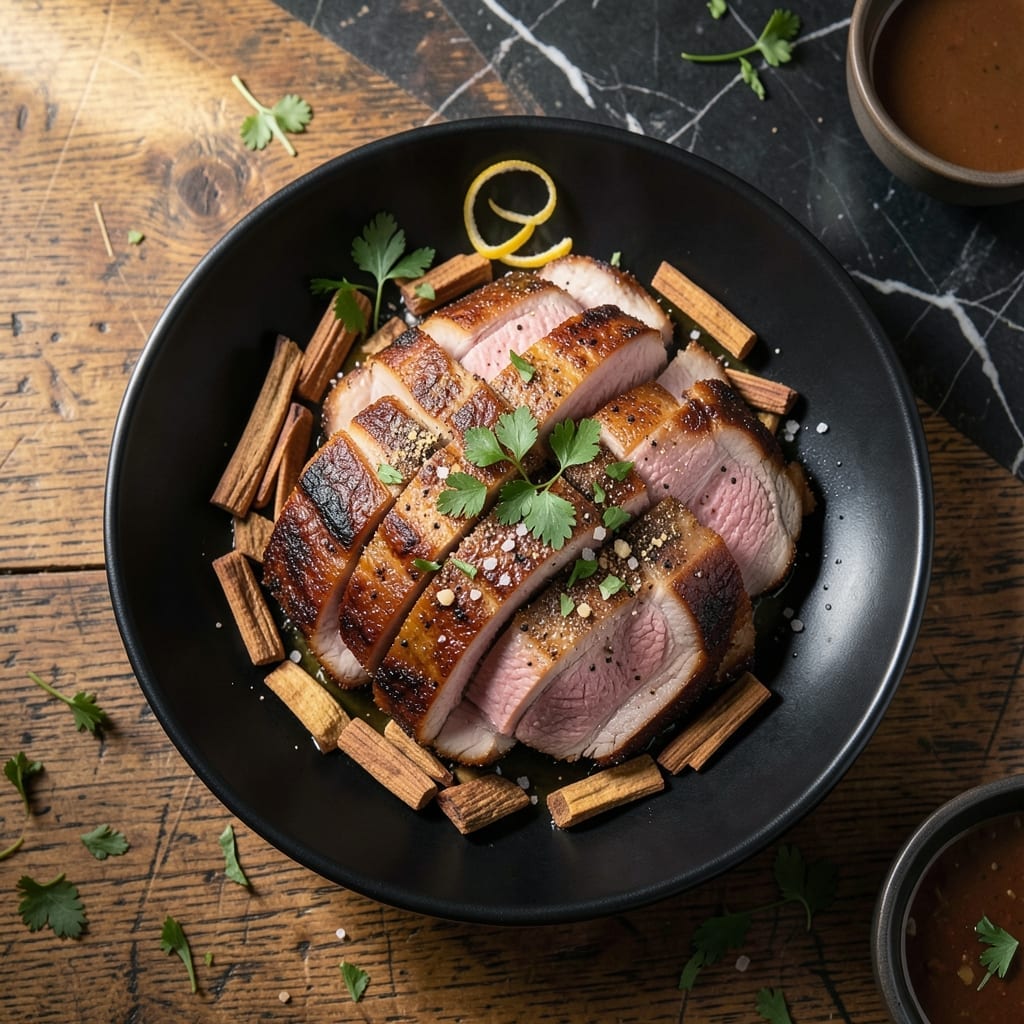
There’s a reason applewood-smoked pork tenderloin remains my signature dish. The gentle fruitwood smoke infuses every bite with a subtle sweetness that complements the meat’s natural richness.
This method guarantees a tender result every time, with a delicate crust that gives way to juicy perfection inside. No complicated steps—just patience and the right wood.
Ingredients for Smoked Pork Tenderloin
Quality meat and fruitwood smoke create this restaurant-worthy centerpiece with minimal effort.
| Ingredient | Amount | Notes |
|---|---|---|
| Pork Tenderloin 🥩 | 2 lb | Trimmed of excess fat |
| Applewood Chips 🪵 | 2 cups | Soaked in water 30 minutes |
| Coarse Kosher Salt 🧂 | 2 tsp | Diamond Crystal preferred |
| Freshly Ground Black Pepper 🌶️ | 1 tsp | Coarse grind for texture |
| Garlic Powder 🧄 | 1 tsp | Not garlic salt |
| Onion Powder 🧅 | 1 tsp | Balances sweetness of wood |
| Dried Thyme 🍃 | 1 tsp | Crushed between fingers |
| Dried Rosemary 🌿 | 1 tsp | Finely minced before adding |
| Olive Oil 🫒 | 2 tbsp | For rub and searing |
| Apple Cider Vinegar 🍏 | 1 tbsp | Adds brightness to crust |
| Brown Sugar 🍚 | 2 tbsp | Light or dark variety |
| Mustard Powder 🟡 | ½ tsp | Enhances bark formation |
[recipe_ingredient_scaler]
The pork tenderloin is non-negotiable here. Look for uniform thickness—about 3-4 inches in diameter—which ensures even cooking. Whole Foods or Costco carry excellent options, but most supermarkets stock it near the pork chops. Avoid anything labeled ‘enhanced’ or pre-marinated. The applewood chips must be 100% applewood; avoid blends with hickory or mesquite, which can overpower the subtle sweetness.
No applewood? Cherry or pecan wood offer similar mild sweetness. Short on time? Skip the soaking (though it’s worth it). The brown sugar can be omitted for a savory crust, but add 1 extra tsp of salt to compensate. If you lack mustard powder, Dijon mustard at half the amount works, though it’ll create a slightly different texture. Thyme and rosemary can be swapped for sage or marjoram.
The pork can rest in the dry rub for up to 24 hours for deeper flavor. Smoked tenderloin keeps 4-5 days refrigerated or 3 months frozen. Slice just before serving to retain juices (don’t do it early—it’ll dry out).
Why You’ll Love This Recipe
- Set and Forget: I toss the pork with salt, pepper, and garlic powder, add the applewood chips, and let the smoker do the work.
- Smoky Sweetness: The applewood chips give it this deep, rich flavor that makes every bite taste like a backyard BBQ.
- Crowd Pleaser: Great for Sunday dinner, game day, or even a casual weeknight when I want to impress.
- Leftovers for Days: One tenderloin feeds us twice – shred it for tacos or slice it for sandwiches the next day.
Step-by-Step Instructions for Smoked Pork Tenderloin
Master the art of low-and-slow smoking for juicy, flavorful pork with a perfect bark.
Step 1: Prepare and Season the Pork Tenderloin
Pat the 2 lb pork tenderloin completely dry with paper towels to ensure the rub adheres properly. Trim any remaining excess fat, as the tenderloin is naturally lean.
In a small bowl, combine the 2 tsp coarse kosher salt, 1 tsp freshly ground black pepper, 1 tsp garlic powder, 1 tsp onion powder, 1 tsp dried thyme, and 1 tsp dried rosemary. Rub this mixture evenly over all surfaces of the pork, pressing gently to help it stick.
Next, create a wet paste by mixing the 2 tbsp olive oil, 1 tbsp apple cider vinegar, 2 tbsp brown sugar, and 0.5 tsp mustard powder. Brush this mixture over the seasoned pork, ensuring an even coating. This layer will form a sticky base for the bark to develop during smoking.
Step 2: Soak Applewood Chips and Preheat the Smoker
Place the 2 cups applewood chips in a large bowl and cover completely with water. Let them soak for at least 30 minutes to ensure they produce clean, steady smoke rather than burning quickly.
While the wood chips soak, preheat your smoker to 225°F. Maintain this temperature consistently throughout the cook—fluctuations can affect the tenderness and cooking time. Use an indirect heat setup if your smoker allows for it, as direct heat can dry out the lean pork tenderloin.
Step 3: Smoke the Pork to Perfection
Drain the soaked applewood chips and add them directly to the smoker’s wood chip tray or wrap them in foil with holes poked through for better smoke control. Place the pork tenderloin on the smoker grates, ensuring it is not directly over the heat source.
Smoke the pork at 225°F for approximately 2.5 to 3 hours, or until the internal temperature reaches 145°F. Use a reliable meat thermometer to monitor the temperature, inserting it into the thickest part of the tenderloin. The pork is done when it reaches the target temperature and feels slightly firm to the touch.
Step 4: Rest and Slice for Maximum Tenderness
Once the pork reaches 145°F, carefully remove it from the smoker and transfer it to a cutting board. Tent it loosely with aluminum foil and let it rest for 10 to 15 minutes. This resting period allows the juices to redistribute throughout the meat, ensuring it stays moist when sliced.
After resting, slice the pork tenderloin into ½-inch thick medallions. The meat should be tender and juicy with a light pink center and a beautifully caramelized bark. Serve immediately to enjoy the full depth of the applewood flavor and the perfect texture.
Pro Tips For Making Smoked Pork Tenderloin
- Preheat the Smoker: I learned this the hard way—always give your smoker a full 15 minutes to stabilize at 225°F before adding the pork. Applewood chips need that consistent heat to produce clean smoke.
- Pat the Pork Dry: Use paper towels to remove every bit of moisture from the tenderloin before seasoning. Coarse salt and pepper stick better, and you’ll get a more even smoke penetration.
- Don’t Over-Smoke: After burning a few tenderloins, I finally figured out that 2-3 hours max is plenty for applewood chips—any longer and the pork tastes bitter, not smoky.
- Rest Before Slicing: Tent the smoked pork under foil for at least 10 minutes after pulling it off. Sounds weird, but it keeps the juices from running all over your cutting board.
Health Benefits of This Recipe
Lean Protein Powerhouse
Pork tenderloin is one of the leanest cuts you can smoke, packing 26g of protein per ounce with just 4g of fat. This makes it ideal for muscle maintenance without excess calories. I love that it fuels my coastal motorcycle rides without weighing me down. 💪
Rich in B Vitamins
This cut delivers a significant dose of vitamin B6 and B12, essential for energy metabolism and nerve function. A 6-ounce serving provides about 30% of your daily B6 and 70% of B12 needs, helping keep energy levels high during long cookouts.
Iron and Zinc Boost
Smoked pork tenderloin is a great source of heme iron, which your body absorbs more easily than plant-based iron. It also contains zinc, crucial for immune function. I notice I recover faster from local BBQ competitions when I include this in my diet.
Low Sodium Option
With only 65mg of sodium per ounce naturally, this cut allows you to control added salt. My dry rub uses Diamond Crystal kosher salt to enhance flavor without overdoing it. Perfect for those watching their sodium intake while still enjoying bold tastes.
Selenium Content
You’ll get about 45mcg of selenium per 6-ounce serving, which is 80% of your daily value. This antioxidant mineral supports thyroid health and protects cells from damage. Wild herb foraging complements this perfectly with additional antioxidants. 🌿
Versatile Nutrition
At about 160 calories per 3-ounce serving, this dish fits into most dietary plans. The applewood smoke adds flavor without extra calories, making it a favorite at my family gatherings. It’s nutrition that doesn’t sacrifice taste.
Nutrition Facts
Frequently Asked Questions
What internal temperature should I aim for?
Smoke until the center reaches 145°F. This ensures perfect tenderness and juiciness while being fully cooked. Use a meat thermometer for accuracy.
Can I use a different type of wood?
Cherry or pecan wood work well as substitutes. They offer a similar mild sweetness to applewood, complementing the pork’s natural flavor without overpowering it.
How long should I let it rest before slicing?
Rest the pork for 10-15 minutes after smoking. This allows the juices to redistribute, ensuring each slice stays moist and flavorful.
Why is my pork tenderloin dry?
Overcooking or skipping the resting step often causes dryness. Keep the smoker at 225°F and remove the pork as soon as it hits 145°F.

Trained in classic French technique but raised on slow-cooked ribs and spicy rubs, she blends culinary skill with smoke and soul.
- Recipe for Boneless Pork Chops in Cast Iron Skillet: Sear and Baste to Juicy Perfection - October 3, 2026
- Recipe for Boneless Cross Rib Roast: Slow-Roasted Beef with Herb Crust - October 3, 2026
- Hamburgers in Sauce Recipe Crock Pot: Slow-Cooked Savory Delight - October 3, 2026