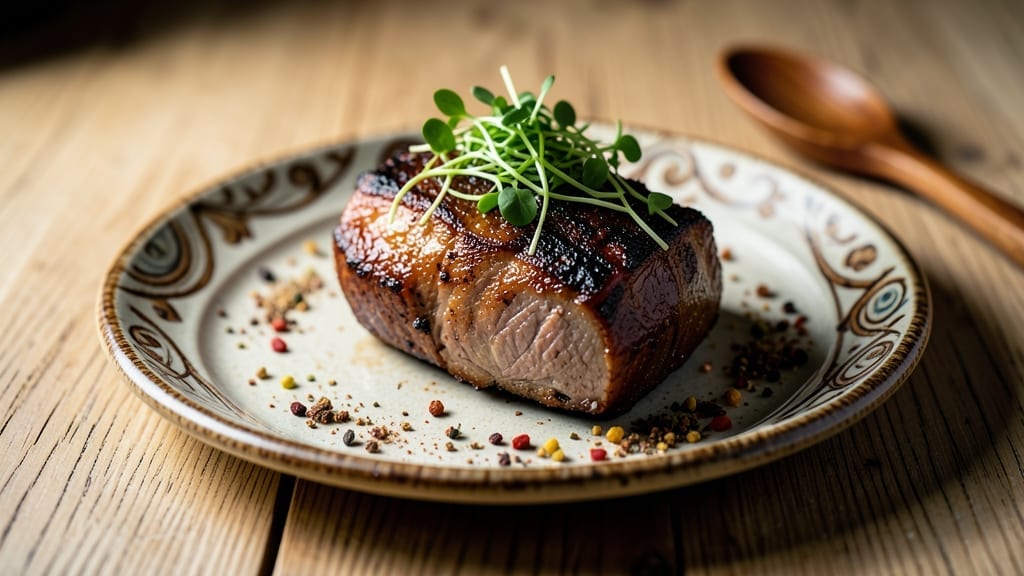
This smoked stuffed pork loin recipe delivers the show-stopping centerpiece your gatherings deserve—juicy, herb-stuffed perfection that rivals competition-style BBQ without requiring a full pit.
Growing up in small-town Georgia, I learned pork isn’t just meat; it’s the heart of any meal, and this technique preserves that tradition while elevating it with modern precision. The secret lies in balancing a flavorful stuffing that stays moist while the exterior develops that signature bark from low-and-slow smoking.
The process begins with selecting a herb-stuffed pork loin—packed with garlic, thyme, and fresh rosemary—that gets seared before hitting the smoker. Using hickory and apple wood creates that classic smoky depth without overpowering the delicate pork.
At 225°F, the meat cooks slowly, allowing the juices to redistribute while the stuffing absorbs the smoky aroma. This isn’t just a recipe; it’s a method that transforms a simple cut into a restaurant-quality centerpiece that commands attention.
By the time it emerges from the smoker, your pork loin will be juicy, tender, and packed with flavor—the crust perfectly charred while the inside remains moist. The stuffing infuses every bite with aromatic herbs, and the wood smoke adds layers of complexity.
This is the kind of dish that makes guests ask for seconds and leaves them talking about your cooking for weeks. Ready to master it? Let’s get started.
Whether you’re hosting a holiday feast or a weeknight dinner, this recipe scales beautifully. The same technique works for competition-style ribs or a simple family meal—just adjust the wood and seasoning. My farm-raised Gloucestershire Old Spots pork makes all the difference, but even store-bought loin delivers impressive results.
The key is patience and precision, two things that always pay off in the end.
Ingredients for smoked stuffed pork loin
Herb-infused pork loin meets smoky precision—crafting a restaurant-quality centerpiece with simple ingredients.
| Ingredient | Amount | Notes |
|---|---|---|
| Gloucestershire Old Spots Pork Loin 🐷 | 3 lb | Center-cut, bone-in preferred |
| Fresh Rosemary 🌿 | ½ cup | Stems removed, finely chopped |
| Fresh Thyme Leaves 🌿 | ¼ cup | From sprigs, finely chopped |
| Garlic Cloves 🧄 | 8 cloves | Peeled, minced finely |
| Dijon Mustard 🧂 | 2 tbsp | High-quality, unsweetened |
| Dry White Wine 🍷 | ¼ cup | Dry Sauvignon Blanc preferred |
| Unsalted Butter 🧈 | ¼ cup | Cubed, softened slightly |
| Diamond Crystal Kosher Salt 🧂 | 1 ½ tbsp | For brining and seasoning |
| Freshly Ground Black Pepper 🌶️ | 1 tsp | Coarse grind preferred |
| Hickory Wood Chips 🌳 | 1 lb | Brined, for smoking |
| Apple Wood Chips 🍎 | ½ lb | Brined, for smoking |
| Butterfly Pork Loins 🐖 | 3 pieces | For stuffing preparation |
| Fresh Breadcrumbs 🍞 | 1 cup | Panko preferred, dry |
[recipe_ingredient_scaler]
The Gloucestershire Old Spots pork loin is your secret weapon—its marbling and lean-to-fat ratio create the perfect balance of tenderness and flavor. For optimal quality, seek out USDA Prime cuts from specialty butchers like Culinary Depot or Smithfield Premium. If using store-bought, opt for center-cut loins with visible marbling; the bone-in version adds depth but requires careful trimming. The hickory and apple wood chips should be soaked in cold water for at least 2 hours before use—brining prevents flare-ups and ensures consistent smoke delivery. Never reuse soaked wood chips; fresh batches guarantee the best flavor profile.
Substitutions demand precision. Dry Sauvignon Blanc is ideal, but Chardonnay or Pinot Grigio work in a pinch—avoid sweet wines. Panko breadcrumbs are non-negotiable for texture; regular breadcrumbs will yield a soggy stuffing. No Dijon mustard? Whole-grain mustard at half the quantity preserves acidity. For the herb blend, dried rosemary and thyme can replace fresh at one-third the amount, though vibrant color and aroma are lost. The butter should be unsalted—salted butter disrupts the seasoning balance.
To maximize flavor and convenience, prepare the stuffing mixture ahead and refrigerate for up to 24 hours—this allows the herbs to meld fully. The pork loin itself should be brined for 12-24 hours in a solution of 1 cup kosher salt to 1 gallon water for unparalleled juiciness. Store the prepped loins, wrapped tightly in plastic, in the fridge for up to 3 days. For smoking, use a two-stage process: 225°F for 3 hours, then increase to 250°F for the remaining time to develop the bark without drying the meat. The stuffing will reach 160°F internally—use a meat thermometer to ensure food safety.
Why You’ll Love This Recipe
- I’ll be real: setting up the smoker with hickory and applewood takes maybe 10 minutes, but the results? Game-changing. You’re not just cooking—you’re crafting that perfect balance of smoky depth and herb-forward brightness with zero extra pans or fuss.
- Herb Infusion Magic: The rosemary, thyme, and garlic blend into that herb paste? It’s like giving your pork a little vacation—those flavors marinate right into the meat while you smoke it. No guesswork, just pure, aromatic goodness that makes every bite sing.
- One-Smoker Wonder: I’ll be real: setting up the smoker with hickory and applewood takes maybe 10 minutes, but the results? Game-changing. You’re not just cooking—you’re crafting that perfect balance of smoky depth and herb-forward brightness with zero extra pans or fuss.
- Leftovers That Shine: Smoked pork loin is one of those dishes that improves the next day. Slice it up, reheat gently, and toss it into grain bowls, wraps, or even a quick pasta dish. My kids don’t even notice it’s not fresh-off-the-smoker—until they do, and then they beg for seconds.
Step-by-step instructions for smoked stuffed pork loin
Master this technique and you’ll deliver a showstopping centerpiece with tender meat and bold herb flavors.
Prepare the Herb-Stuffed Butterfly Pork Loins
Begin by butterflying the 3 butterfly pork loins between sheets of plastic wrap using a sharp boning knife. Aim for even ½-inch thick sections. In a mixing bowl, combine the ½ cup fresh rosemary, ¼ cup fresh thyme leaves, 8 minced garlic cloves, 2 tablespoons Dijon mustard, ¼ cup dry white wine, and 1 teaspoon freshly ground black pepper. Mix until thoroughly blended, creating a vibrant herb paste.
Spread this mixture evenly across each butterflied pork loin, pressing gently to ensure full coverage. Fold the edges inward to create a neat package, then secure with kitchen twine. This preparation ensures the herbs infuse deeply while maintaining structural integrity during smoking. The wine and mustard combination adds complexity that balances the smoky profile.
Season and Smoke the Main Pork Loin
Rub the 3 lb Gloucestershire Old Spots pork loin generously with 1½ tablespoons diamond crystal kosher salt and 1 teaspoon freshly ground black pepper, focusing on the exterior and any exposed cut surfaces. Let it sit uncovered in the refrigerator for 24 hours to develop flavor and create a flavorful crust.
Meanwhile, set up your smoker using 1 lb hickory wood chips and ½ lb apple wood chips for a balanced smoke profile. Soak the wood chips in water for 30 minutes before using. Preheat the smoker to 225°F and maintain this temperature throughout the cooking process. Place the seasoned pork loin fat-side up on the smoker grates, allowing the rendered fat to baste the meat as it cooks.
Smoke Until Probe-Tender and Rest Properly
Smoke the pork loin for 6-8 hours until the internal temperature reaches 145°F at the thickest part. The applewood chips will impart subtle sweetness that complements the savory herbs. During the final 30 minutes, increase the smoker temperature to 250°F to create a slightly crisp exterior while maintaining juiciness.
Remove the pork loin from the smoker and let it rest for 30 minutes before slicing. This resting period allows juices to redistribute, ensuring each slice remains moist and flavorful. While resting, prepare the stuffed pork loin slices by removing the twine and gently opening each butterflied section. The herb mixture should be visible and aromatic, indicating proper infusion during smoking.
Create the Crispy Breadcrumb Crust and Serve
In a shallow dish, combine 1 cup fresh breadcrumbs with ¼ cup unsalted butter, melted, and 1 teaspoon freshly ground black pepper. Toss until the breadcrumbs are evenly coated. Roll each herb-stuffed pork loin slice in this mixture, pressing gently to adhere the crust.
Heat a skillet over medium heat and sear each crusted slice for 2-3 minutes per side until golden brown and crispy. The breadcrumb crust adds texture contrast to the tender, herb-infused meat. Serve immediately with pan juices drizzled over the top, accompanied by roasted vegetables or a fresh herb salad to complement the rich pork flavors.
Pro Tips For Making Smoked Stuffed Pork Loin
- Prep Herbs Like a Pro: DESCRIPTION: I used to just roughly chop the rosemary and thyme, but after burning my tongue on a chunk of stem, I learned to really focus—strip those stems completely, then chop the leaves into a fine paste with the garlic. The wine and mustard will blend better, and your stuffed slices won’t taste like you skipped the good stuff.
- Don’t Rush the 24-Hour Salt: DESCRIPTION: That 24-hour dry-brine isn’t just flavor prep—it’s the secret to a crispy crust without over-salting the meat. I know, I know, you want to start smoking immediately, but trust me: the salt needs time to penetrate and draw out moisture. Skip it, and you’ll end up with a mealy exterior.
- Butter Up the Breadcrumbs: DESCRIPTION: Melt that ¼ cup unsalted butter first, then toss it hot into the breadcrumbs—this coats every crumb instantly, not just the top layer. Cold butter = dry crust. Sounds weird, but it works: your seared slices will be golden and addictive, not greasy or crumbly.
- Sear Fast, Don’t Crowd: DESCRIPTION: After smoking, sear the stuffed slices in batches—no more than two at a time—or they’ll steam instead of crisp. I learned this the hard way when my first batch came out soggy. A hot skillet and patience (yes, even if you’re impatient like me) guarantee that perfect crunch.
Regional styles of these flavors
Southeast BBQ Tradition
In the heart of Georgia, where I grew up, pork isn’t just meat—it’s a way of life. This regional style leans on hickory wood for that classic smoky depth, a staple at every family gathering.
The herb stuffing of rosemary, thyme, and garlic reflects the Southern love for bold, aromatic flavors. We’d smoke whole hogs for days, and this technique captures that same slow-cooked perfection. The key is patience—just like my grandma’s secret method of letting the pork rest before slicing. 🔥
Appalachian Mountain Style
Up in the Appalachian foothills, they prefer a two-wood blend—hickory for strength and apple for sweetness—that creates a balanced smoke. Here, the stuffing often includes local foraged herbs like mint or sage, adding a rustic twist.
I’ve seen pitmasters wrap the pork in butcher paper during the final hour to crisp the exterior without drying the meat. It’s a technique I’ve adopted for competition-style results.
Texas-Style Smoked Pork
Down in Texas, they take it a step further with mesquite wood for a stronger, more assertive smoke. The stuffing might incorporate spicy chipotle powder or a touch of sweet paprika to complement the bold flavors.
Texas pitmasters also love adding a sweet glaze post-smoke, but I prefer keeping it simple—letting the natural flavors shine. The result is a pork loin with a smoky kick that’s hard to resist. 🌟
Modern Competition Approach
In the Southeast BBQ circuit, I’ve seen judges favor a reverse-sear method—smoking first at 225°F for 3 hours, then searing at 450°F for 5 minutes to develop that perfect bark. The stuffing here is often more complex, with additions like grilled onions or caramelized shallots.
It’s all about precision, and I’ve learned a lot from watching the pros at the Atlanta BBQ Festival.
Carolina Low-and-Slow
North Carolina’s style focuses on applewood smoke and a lighter touch, avoiding overpowering flavors. The stuffing might include peach preserves or honey for a subtle sweetness that pairs beautifully with the pork.
I’ve seen pitmasters use a two-stage smoke—starting with applewood, then finishing with hickory—to create a nuanced flavor profile. It’s a style that lets the pork shine without overwhelming it.
Nutrition facts
Frequently asked questions
How do I know when the pork loin is fully cooked?
Use a meat thermometer to check the internal temperature—it should reach 145°F at the thickest part of the loin. The stuffing will also hit 160°F internally, ensuring both are safe and tender. Pulling it off the smoker too soon can leave it tough, so patience is key!
Can I use dried herbs instead of fresh?
Yes, but reduce the amount to one-third of the fresh herb quantity. Fresh rosemary and thyme bring vibrant color and aroma, but dried herbs still work—just expect slightly muted flavor. For example, use 1 tablespoon dried rosemary instead of ½ cup fresh.
Why does the recipe call for resting the pork?
Resting is non-negotiable for juicy results! After smoking, the pork’s juices redistribute evenly, preventing them from draining out when sliced. Skip this step, and you’ll end up with dry meat. Let it rest for 30 minutes before carving.
What if I don’t have a smoker?
No problem! Use your oven on low heat (275°F) with a foil-lined tray filled with soaked apple and hickory wood chips (or even soaked wood chunks) on the rack below the pork. Smoke for 4-5 hours until the internal temp hits 145°F. The results will be close to smoky perfection!
Can I make the stuffed pork loin ahead of time?
Prepare the herb mixture up to 24 hours ahead and refrigerate. Store prepped loins, wrapped tightly in plastic, in the fridge for up to 3 days. Smoke just before serving for the best texture.

Trained in classic French technique but raised on slow-cooked ribs and spicy rubs, she blends culinary skill with smoke and soul.
- Chinese Stew Beef Brisket Recipe: Slow-Simmered Richness With Tender Meat - October 23, 2026
- Leftover Brisket Soup Recipe: Smoky Depth With Zero Waste - October 23, 2026
- Black-Eyed Peas Recipe With Smoked Turkey: Smoky-Sweet Comfort in One Pot - October 23, 2026