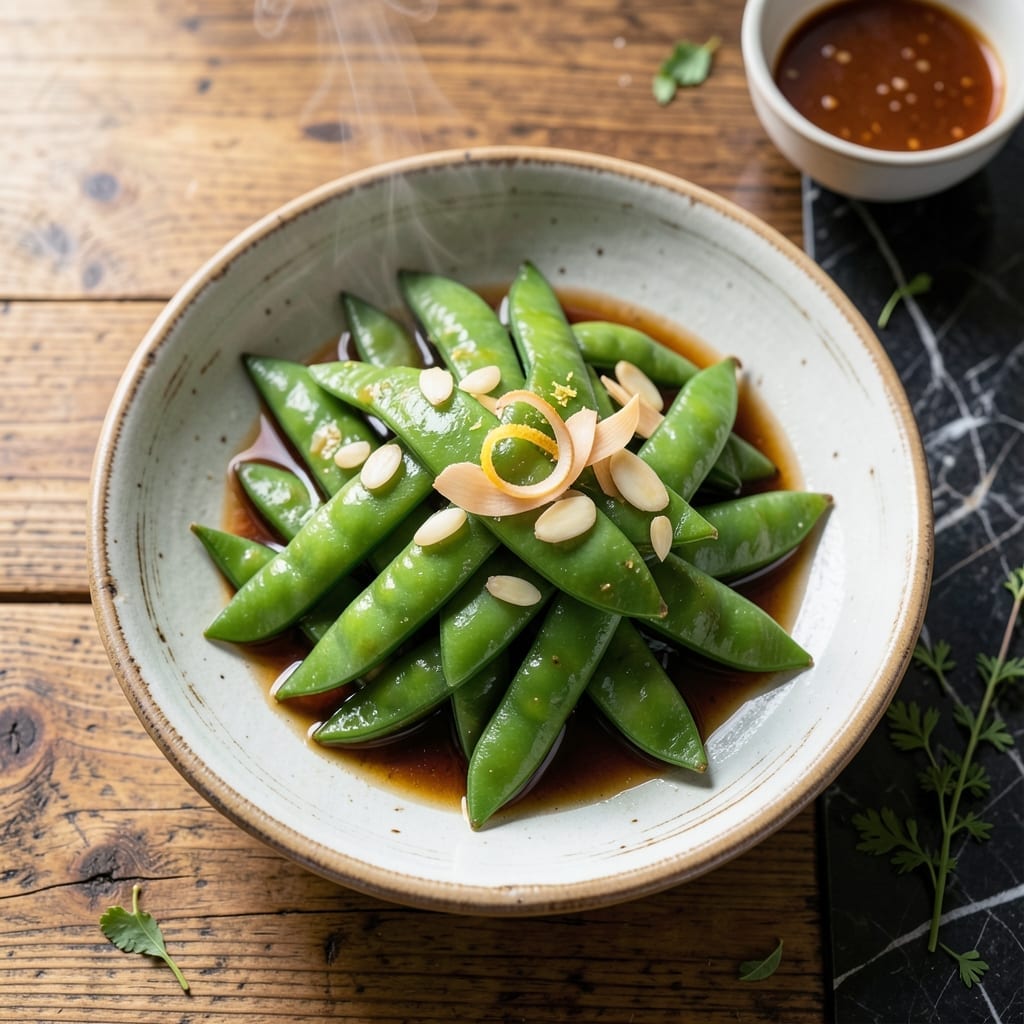
This wok-tossed snow pea dish delivers perfect texture and vibrant flavor in minutes. The high heat of stir-frying preserves the natural snap while enhancing sweetness.
I developed this method to highlight the vegetable’s natural qualities, using simple ingredients that complement rather than overpower. The key is quick cooking over intense heat.
The result is tender-crisp snow peas with a glossy sauce that clings beautifully. Each bite offers a balance of sweetness and subtle umami notes.
Ready in under 15 minutes, this dish pairs well with any Asian-inspired meal. The technique ensures consistent results every time.
Ingredients for Snow Peas Asian
Fresh snow peas meet bold Asian flavors in this quick, vibrant wok dish.
| Ingredient | Amount | Notes |
|---|---|---|
| Snow Peas 🥬 | 1 lb | Fresh, strings removed |
| Vegetable Oil 🫒 | 2 tbsp | High smoke point, neutral flavor |
| Garlic Cloves 🧄 | 4 cloves | Minced finely |
| Fresh Ginger 🌿 | 1 tbsp | Peeled, grated or minced |
| Soy Sauce 💧 | 3 tbsp | Low-sodium preferred |
| Rice Vinegar 🍶 | 1 tbsp | Unseasoned variety |
| Agave Nectar 🍯 | 1 tsp | Vegan sweetener alternative |
| Sesame Oil 🫒 | 1 tsp | Toasted, for finishing |
| Cornstarch 🌾 | 1 tsp | Mixed with 1 tbsp water |
| Red Pepper Flakes 🌶️ | ½ tsp | Adjust for heat preference |
| Green Onions 🧅 | 3 whole | Thinly sliced for garnish |
| Toasted Sesame Seeds 🌰 | 1 tbsp | For garnish |
[recipe_ingredient_scaler]
The snow peas must be ultra-fresh—look for bright green pods with no signs of wilting. Asian markets often have the best selection, but Whole Foods or any well-stocked grocery store should carry them. For the soy sauce, Kikkoman low-sodium is a reliable choice, though I prefer the depth of Tamari for gluten-free needs. The ginger and garlic should be aromatic—avoid any with soft spots or sprouting.
No rice vinegar? Apple cider vinegar works in a pinch, though the flavor profile shifts slightly. Out of agave? Maple syrup or coconut sugar can substitute, but use sparingly to avoid overpowering the dish. For heat, Sriracha or chili paste can replace the red pepper flakes—add gradually. If avoiding gluten, ensure your soy sauce is labeled gluten-free.
This dish is best served immediately but reheats well for up to 2 days. Store leftovers in an airtight container in the fridge. The snow peas will soften slightly upon reheating, so undercook them initially if you plan to store. Freezing is not recommended as it ruins the texture.
Why You’ll Love This Recipe
- One Pan Wonder: I toss everything in a single pan—snow peas, garlic, ginger—and it’s ready before the rice finishes cooking.
- Garlic-Ginger Magic: The sizzle of fresh ginger and garlic in hot oil makes the whole kitchen smell incredible, and the flavor? Even better.
- Weeknight Hero: It pairs with chicken, tofu, or just rice, making it my go-to for busy evenings (yes, even on a Tuesday night).
- Budget Keeper: Snow peas stretch further than you’d think, and a handful of pantry staples keeps this dish light on the wallet.
Step-by-Step Instructions for Wok-Tossed Snow Peas
Master the technique for vibrant, crisp-tender snow peas with authentic Asian flavors every time.
Step 1: Prepare the Snow Peas and Aromatics
Begin by washing the 1 lb Snow Peas and removing any strings from the seams. This ensures a smooth texture in the final dish. Pat them dry thoroughly—residual moisture will steam rather than stir-fry the peas.
Mince the 4 cloves Garlic Cloves finely and peel and grate the 1 tbsp Fresh Ginger. I keep these separate until cooking to preserve their distinct flavors. Thinly slice the 3 whole Green Onions, separating the white and green parts for layered garnishing.
Step 2: Create the Stir-Fry Sauce
In a small bowl, combine the 3 tbsp Soy Sauce, 1 tbsp Rice Vinegar, 1 tsp Agave Nectar, and 0.5 tsp Red Pepper Flakes. Whisk until the agave dissolves completely. This balance of salty, tangy, sweet, and spicy creates the signature profile.
In a separate ramekin, mix the 1 tsp Cornstarch with 1 tbsp water to make a slurry. This will thicken the sauce slightly at the end. Have both mixtures ready before you start cooking—stir-frying happens quickly and you won’t have time to prep while cooking.
Step 3: Stir-Fry the Aromatics and Snow Peas
Heat a wok or large skillet over high heat until a drop of water sizzles and evaporates immediately. Add the 2 tbsp Vegetable Oil and swirl to coat the surface. The oil should shimmer but not smoke.
Add the minced garlic and grated ginger, stir-frying for 15-20 seconds until fragrant but not browned. Immediately add the snow peas and toss constantly with a spatula. Cook for 2-3 minutes until the peas turn bright green and develop slight blistering.
Step 4: Finish with Sauce and Garnish
Pour the soy sauce mixture over the snow peas and toss to coat evenly. Stir in the cornstarch slurry and cook for another 30-45 seconds until the sauce thickens slightly and glosses the vegetables. The sauce should cling to the peas without pooling at the bottom of the pan.
Remove from heat and drizzle with the 1 tsp Sesame Oil. Toss once more to distribute. Transfer to a serving plate and garnish with the sliced green onions and 1 tbsp Toasted Sesame Seeds. The sesame seeds add a nutty crunch that contrasts beautifully with the tender peas.
Pro Tips For Making Snow Peas Asian
- Blanch First: Toss the snow peas in boiling water for 30 seconds before stir-frying—this keeps them crisp while softening just enough. I learned this the hard way after serving too many tough, undercooked pods.
- Slice Ginger Thin: Cut the ginger into paper-thin slices or fine julienne so it infuses the oil quickly without overpowering the dish. My grandmother swore by this, and she was right.
- Skip the Crowding: Stir-fry the snow peas in batches if needed—overcrowding the pan steams them instead of searing. After burning three batches, I finally figured out the wok needs breathing room.
- Toast the Aromatics: Cook the garlic and ginger in hot oil until fragrant but not brown, about 20-30 seconds. Sounds weird, but it works: this builds the base flavor without bitterness.
Regional Styles of These Flavors
Sichuan Spicy Style
For a bold, numbing heat, add 1 tsp Sichuan peppercorns to the hot oil before the aromatics. Toast briefly until fragrant, then proceed with the recipe. I also increase the red pepper flakes to 1 tsp for extra kick. This version pays homage to the fiery flavors of China’s Sichuan province. 🔥
Thai Basil Twist
Swap the green onions for ½ cup fresh Thai basil leaves, adding them at the very end. The anise-like flavor pairs beautifully with the soy-ginger base. Use fish sauce instead of soy sauce for an authentic Thai profile. I love how the basil’s aroma fills my kitchen.
Japanese Ginger-Forward
Increase the ginger to 2 tbsp and use mirin in place of agave. The sweet, tangy depth of mirin is quintessential in Japanese cooking. Garnish with pickled ginger for a bright, vinegary contrast that cuts through the richness.
Korean Gochujang Version
Mix 1 tbsp gochujang into the sauce for a sweet-spicy depth. I like Sempio brand for its balance. Top with crushed roasted peanuts for crunch. This adaptation reflects Korea’s love of bold, fermented flavors. 💛
Vietnamese Light Style
Reduce the soy sauce to 1 tbsp and add 2 tbsp nuoc cham (Vietnamese dipping sauce) to the mix. The result is lighter but packed with complex, herbaceous notes. Garnish with fresh cilantro and mint for a refreshing finish.
Malaysian Satay Influence
Add 1 tbsp creamy peanut butter to the sauce for a satay-inspired twist. Thin with a splash of water if needed. The nutty richness pairs wonderfully with the crisp snow peas. I discovered this combo at a night market in Penang.
Nutrition Facts
Frequently Asked Questions
What’s the best way to prep snow peas?
Wash and remove strings from the seams. Pat 1 lb completely dry to prevent steaming instead of stir-frying.
Can I make this without a wok?
Yes, use a large skillet on high heat. Ensure it’s hot enough to sizzle water before adding oil and ingredients.
How do I adjust the spice level?
Reduce red pepper flakes to ¼ tsp or omit entirely. For more heat, increase to 1 tsp or add chili paste.
What if my snow peas are tough?
They were likely overcooked. Stir-fry just until bright green, about 2-3 minutes. Fresh peas should snap when bent.

Trained in classic French technique but raised on slow-cooked ribs and spicy rubs, she blends culinary skill with smoke and soul.
- Recipe for Boneless Pork Chops in Cast Iron Skillet: Sear and Baste to Juicy Perfection - October 3, 2026
- Recipe for Boneless Cross Rib Roast: Slow-Roasted Beef with Herb Crust - October 3, 2026
- Hamburgers in Sauce Recipe Crock Pot: Slow-Cooked Savory Delight - October 3, 2026