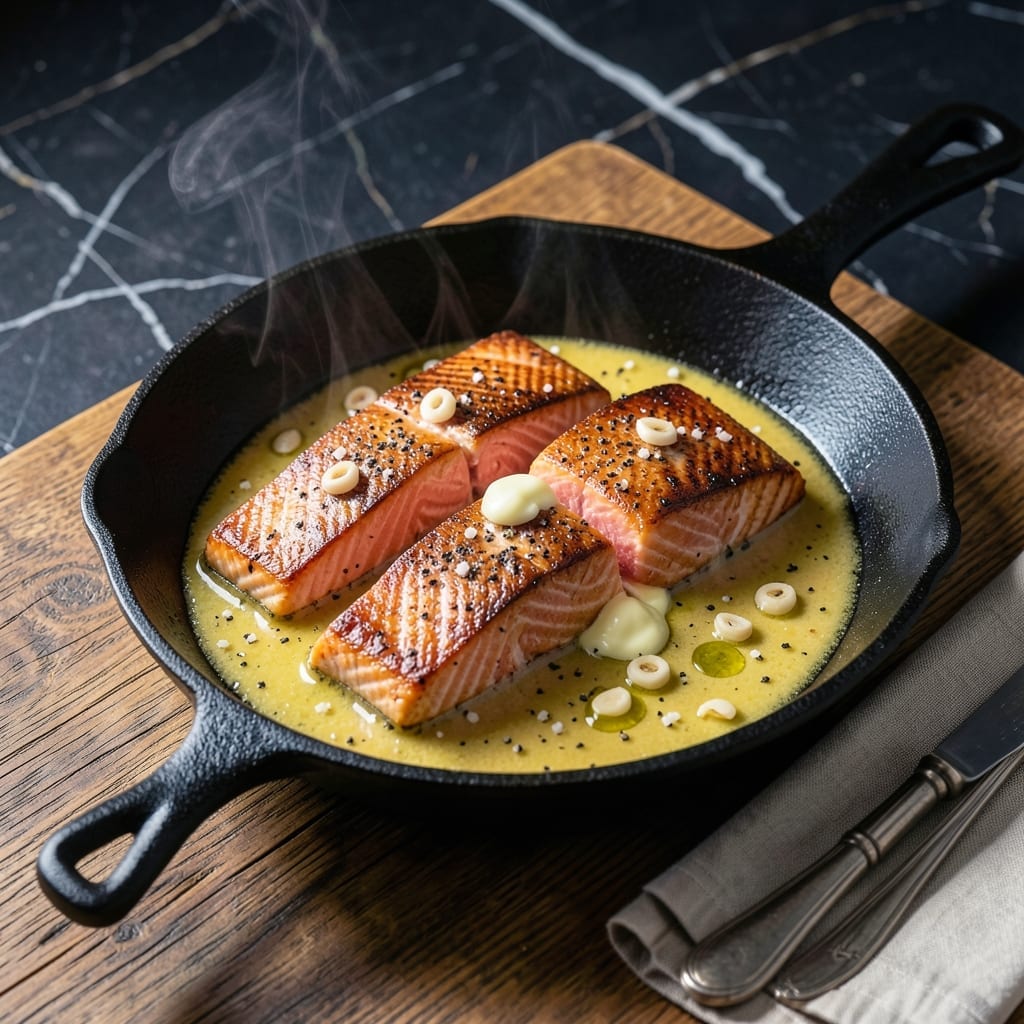
I’ve spent years perfecting pan-seared sockeye salmon to achieve crisp skin and buttery flakes every time.
This method uses precise heat control and a hot pan to create restaurant-quality results at home with minimal effort.
Ingredients for Sockeye Salmon Recipe Pan
Crisp skin and buttery flakes start with these quality ingredients and precise technique.
| Ingredient | Amount | Notes |
|---|---|---|
| Sockeye Salmon Fillets 🐟 | 4 whole | Skin-on, about 6 oz each |
| Kosher Salt 🧂 | 1 ½ tsp | Diamond Crystal preferred for texture |
| Black Pepper 🌶️ | ½ tsp | Freshly ground for best flavor |
| Extra-Virgin Olive Oil 🫒 | 2 tbsp | High smoke point for searing |
| Unsalted Butter 🧈 | 2 tbsp | For basting and finish |
| Garlic Cloves 🧄 | 3 cloves | Thinly sliced for aroma |
| Fresh Thyme Sprigs 🌿 | 4 whole | For aromatic garnish |
| Fresh Lemon 🍋 | 1 whole | For brightness and acidity |
| Dijon Mustard 🟡 | 1 tsp | Optional for serving |
| Fresh Dill 🌿 | 2 tbsp | Chopped for garnish |
| Vegetable Oil 🫒 | 1 tbsp | High smoke point alternative |
[recipe_ingredient_scaler]
The salmon quality is non-negotiable here. Wild-caught sockeye from Alaska offers the best balance of rich flavor and firm texture—avoid farmed Atlantic salmon for this preparation. Look for fillets with vibrant orange-red color and no browning. The skin should be moist, not dried out. Whole Foods or a reputable fishmonger are ideal sources, but most supermarkets carry acceptable options if fresh.
No fresh thyme? Dried thyme at one-third the amount works fine. Out of Dijon? Whole-grain mustard adds a nice texture. The butter can be ghee for higher smoke point if you’re concerned about burning. For a lighter finish, swap butter for extra-virgin olive oil. The lemon can be substituted with white wine vinegar if that’s what you have on hand.
Salmon is best cooked immediately after purchase. If storing, keep it wrapped in paper towels in a sealed container for no more than 1-2 days. Leftovers reheat gently—5 minutes at 275°F in the oven keeps the texture intact. Never microwave, as it ruins the flakes.
Why You’ll Love This Recipe
- I’ll be real: cold sockeye on salad the next day is even better.
- One Pan Wonder: I love that everything cooks together in a single pan—just season, sear, and serve.
- Buttery Richness: The combo of olive oil and butter gives the sockeye this luxurious, melt-in-your-mouth finish.
- Weeknight Hero: Honestly, it’s my go-to for busy evenings when I need something fast but impressive.
Step-by-Step Instructions for Sockeye Salmon Pan
Master the technique for restaurant-quality salmon with crisp skin and tender, buttery flakes.
Step 1: Prep and Season the Fillets
Pat the 4 whole Sockeye Salmon Fillets completely dry with paper towels—moisture prevents crispy skin. Season both sides evenly with the 1.5 tsp Kosher Salt and 0.5 tsp Black Pepper, pressing gently to adhere. I always use Diamond Crystal kosher salt for its texture and even distribution.
Let the seasoned fillets sit at room temperature for 10-15 minutes while you prep the remaining ingredients. This step ensures even cooking and helps the skin crisp up perfectly in the pan.
Step 2: Sear the Salmon Skin-Side Down
Heat the 2 tbsp Extra-Virgin Olive Oil in a large skillet over medium-high heat until it shimmers but doesn’t smoke. For an alternative, you can use the 1 tbsp Vegetable Oil instead. Place the fillets skin-side down in the hot oil, pressing gently with a fish spatula for 10 seconds to prevent curling.
Cook undisturbed for 4-5 minutes until the skin is golden brown and crisp. Resist the urge to move the fillets—letting them develop a crust is key. You’ll see the edges turn opaque and rise up the sides of the fish as it cooks.
Step 3: Baste with Garlic, Butter, and Herbs
Reduce heat to medium. Add the 2 tbsp Unsalted Butter, 3 cloves Garlic Cloves (thinly sliced), and 4 whole Fresh Thyme Sprigs to the skillet. Tilt the pan slightly and spoon the foaming butter over the fillets continuously for 1-2 minutes.
This basting technique infuses the fish with aromatic flavor while ensuring the top stays moist. The garlic should turn lightly golden but not brown—if it starts to darken, remove the pan from heat briefly to cool it down.
Step 4: Finish Cooking and Check Doneness
Flip the fillets and cook for an additional 1-2 minutes until the salmon is just opaque throughout and flakes easily with a fork. The internal temperature should reach 125-130°F for perfect doneness—sockeye salmon is best served medium to medium-rare.
Transfer the fillets to a serving platter. Squeeze the 1 whole Fresh Lemon over the top for brightness, and garnish with the 2 tbsp Fresh Dill (chopped). For an extra touch, serve with the 1 tsp Dijon Mustard on the side.
Pro Tips For Making Sockeye Salmon Recipe Pan
- Skin Side Down First: Always start with the skin side down in a hot pan—about 2 tablespoons of olive oil—and resist the urge to move it for at least 3-4 minutes. I learned this the hard way after peeling too-early flips left me with stuck-on salmon and a mess.
- Pat Dry Thoroughly: Blot the fillets with paper towels until they’re bone-dry, even the skin. Sounds tedious, but it’s the only way to get that crispy crust instead of steamed fish.
- Pull at 125°F: Use a meat thermometer and yank the salmon off the heat at 125°F—it’ll coast to 130°F while resting. After overcooking one too many dinners, I finally accepted that color alone lies.
- Baste with Butter: Tilt the pan in the last 2 minutes and spoon that foaming butter over the top repeatedly. It’s not fancy, just the fastest way to add rich flavor without extra effort.
Wine and Beer Pairings for This Dish
White Wine Pairings
A crisp Sauvignon Blanc from New Zealand cuts through the richness beautifully—its citrus notes complement the lemon and dill. I love Kim Crawford for its bright acidity and herbal finish. 🍷
Rich White Options
For a fuller-bodied experience, try a buttery Chardonnay from California. Kendall-Jackson Vintner’s Reserve offers vanilla notes that pair perfectly with the browned butter in this dish.
Rosé Selections
A dry Provence rosé like Whispering Angel provides a refreshing contrast. Its subtle berry notes won’t overpower the salmon’s delicate flavor.
Beer Pairings
A light pilsner such as Stella Artois cleanses the palate with its crisp finish. For craft lovers, Allagash White offers citrusy coriander notes that echo the lemon. 🍺
Light Red Option
If you prefer red, a chilled Pinot Noir from Oregon works beautifully. Domaine Serene has the light body and red fruit notes to complement without overwhelming.
Non-Alcoholic Choice
For a zero-proof option, try sparkling water with a squeeze of lemon and a sprig of dill. The effervescence mimics wine’s palate-cleansing effect.
Nutrition Facts
Frequently Asked Questions
What temperature should the pan be?
Use medium-high heat for searing. The oil should shimmer but not smoke when ready.
How do I prevent the skin from sticking?
Pat the fillets completely dry and press gently with a spatula for 10 seconds after placing in the pan. Don’t move them until crisp!
Can I use skinless fillets?
Yes, but reduce cooking time by 1-2 minutes. You’ll miss the crisp texture, though.
How can I tell when it’s done?
Look for opaque flesh and an internal temp of 125-130°F. It should flake easily with a fork.

Trained in classic French technique but raised on slow-cooked ribs and spicy rubs, she blends culinary skill with smoke and soul.
- Recipe for Boneless Pork Chops in Cast Iron Skillet: Sear and Baste to Juicy Perfection - October 3, 2026
- Recipe for Boneless Cross Rib Roast: Slow-Roasted Beef with Herb Crust - October 3, 2026
- Hamburgers in Sauce Recipe Crock Pot: Slow-Cooked Savory Delight - October 3, 2026