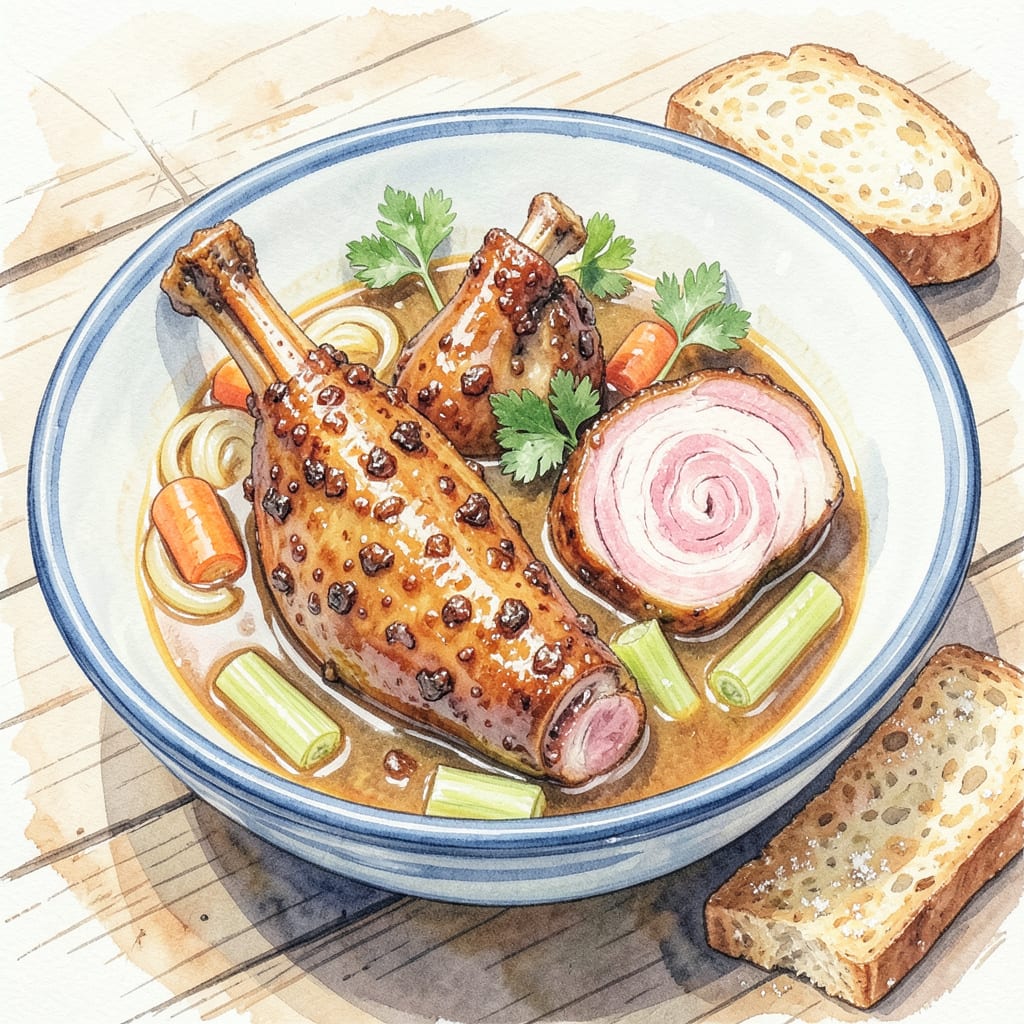
This soul food pork souse delivers the perfect balance of tangy vinegar, tender pork, and aromatic spices that define Caribbean comfort cooking. The slow-simmered broth transforms humble cuts like pig’s feet or ears into fall-off-the-bone perfection, infused with thyme, Scotch bonnet, and allspice for authentic depth.
What sets this recipe apart is the careful layering of flavors—first building a rich pork broth, then brightening it with vinegar and vegetables. The result is a hearty stew that’s both rustic and refined, ideal for serving over rice or with crusty bread to soak up every drop of the vibrant broth.
Ingredients for Soul Food Pork Souse
This soulful combination of pork, vinegar, and Caribbean spices creates the perfect balance of tangy and savory flavors.
| Ingredient | Amount | Notes |
|---|---|---|
| Pig's Feet 🐷 | 2 lb | Cleaned and split |
| Pork Hocks 🐖 | 1 lb | Smoked preferred |
| White Vinegar 🍶 | 2 cups | Distilled for sharpness |
| Yellow Onion 🧅 | 1 whole | Large, quartered |
| Carrots 🥕 | 2 whole | Peeled, cut in chunks |
| Celery Stalks 🌿 | 2 whole | Cut in 2-inch pieces |
| Scotch Bonnet Pepper 🌶️ | 1 whole | Pierced for heat control |
| Fresh Thyme Sprigs 🌿 | 4 whole | Tied with kitchen twine |
| Allspice Berries 🌰 | 10 whole | Lightly crushed |
| Bay Leaves 🍃 | 2 whole | Dried preferred |
| Kosher Salt 🧂 | 2 tbsp | Diamond Crystal preferred |
| Black Peppercorns 🌶️ | 1 tbsp | Whole, lightly crushed |
| Potatoes 🥔 | 2 whole | Yukon Gold, quartered |
| Green Onions 🧅 | 4 whole | Sliced for garnish |
[recipe_ingredient_scaler]
The pork selection is critical for authentic texture. Pig’s feet and smoked pork hocks are traditional choices, available at Caribbean markets or specialty butchers. Look for fresh, not previously frozen, cuts with good fat marbling. The vinegar should be distilled white vinegar—its sharpness balances the richness. For the Scotch bonnet, fresh is essential (dried loses its fruity complexity), and Caribbean grocery stores typically carry them when mainstream supermarkets don’t.
No pig’s feet? Pork shoulder cut into chunks works, though the texture differs. For a milder heat, substitute habanero at half quantity. Fresh thyme is non-negotiable—dried loses 80% of its potency. Allspice berries can be replaced with ground allspice at one-quarter the amount, but whole berries (lightly crushed) release flavor more gradually during simmering. The potatoes are traditional, but sweet potatoes or yams add interesting variation.
The broth develops more depth when refrigerated overnight—flavor improves for up to 3 days. Store pork and broth separately if making ahead. Reheat gently to preserve texture. Leftovers keep 4-5 days refrigerated or 3 months frozen, though the vinegar tang mellows with time. The green onion garnish should be added fresh when serving to maintain its bright, oniony contrast against the rich broth.
Step-by-Step Instructions for Soul Food Pork Souse
This method delivers perfectly tender meat with the signature tangy-sweet balance that defines great souse.
Step 1: Prepare and Blanch the Meats
Begin by thoroughly rinsing the 2 lb Pig’s Feet and 1 lb Pork Hocks under cold water to remove any bone fragments or impurities. Place them in a large stockpot and cover with cold water by 2 inches. Bring to a rolling boil over high heat, then reduce to medium and simmer for 10 minutes.
This initial blanching step removes excess fat and impurities that would otherwise cloud your final broth. You’ll notice foam rising to the surface—skim this off with a slotted spoon. After 10 minutes, drain the meats in a colander and rinse them again under cold water to remove any remaining residue.
Step 2: Build the Aromatic Base
Return the cleaned meats to the stockpot and add the 2 cups White Vinegar, 1 whole Yellow Onion, 2 whole Carrots, 2 whole Celery Stalks, 1 whole Scotch Bonnet Pepper, 4 whole Fresh Thyme Sprigs, 10 whole Allspice Berries, 2 whole Bay Leaves, 2 tbsp Kosher Salt, and 1 tbsp Black Peppercorns. Add enough water to cover everything by 1 inch.
The vinegar provides the signature tang while the Scotch bonnet (left whole and pierced) infuses heat without overwhelming. Bring the mixture to a boil over high heat, then immediately reduce to low to maintain a gentle simmer. Partially cover the pot to allow steam to escape while preventing excessive evaporation.
Step 3: Simmer to Tender Perfection
Allow the souse to simmer undisturbed for 2 to 2½ hours, or until the meats are fork-tender and nearly falling from the bones. You’ll know it’s ready when a fork inserted into the thickest part of the pig’s feet meets no resistance. Skim any fat that rises to the surface during cooking to keep the broth clear and flavorful.
About 30 minutes before the cooking time is complete, add the 2 whole Potatoes to the pot. They should become tender but still hold their shape. The potatoes will absorb the vinegary broth while contributing their natural starch to slightly thicken the liquid.
Step 4: Finish and Serve
Once the meats and potatoes are perfectly tender, remove the pot from heat. Discard the thyme sprigs and bay leaves. Taste the broth and adjust seasoning if needed—the balance should be tangy from the vinegar with a subtle heat from the Scotch bonnet. Let the souse rest for 10 minutes before serving to allow the flavors to meld.
Ladle the souse into deep bowls, ensuring each serving contains both meats and potatoes. Garnish with the 4 whole Green Onions, thinly sliced on the diagonal. The final dish should have a clear, golden broth with tender meat that easily separates from the bones, and potatoes that have absorbed the tangy essence of the cooking liquid.
Essential Equipment for This Recipe
Large Stockpot
A heavy-bottomed 8-quart stockpot is essential for even heat distribution and preventing scorching. I prefer enamel-coated cast iron like Le Creuset because it maintains steady temperatures during the long simmer. The high sides prevent splattering when the vinegar broth bubbles. 🔥
Slotted Spoon
You’ll need a sturdy stainless steel slotted spoon for skimming impurities during blanching and fat during simmering. I use my OXO Good Grips spoon—its deep bowl and comfortable handle make quick work of removing foam. The slots should be ¼-inch wide to catch small particles without losing broth.
Kitchen Twine
For bundling thyme sprigs and securing bay leaves, unbleached cotton kitchen twine is my go-to. I keep a roll of De Buyer brand in my drawer—it doesn’t fray when wet and holds knots securely. Tie herbs tightly so they don’t unravel during the 2-hour simmer.
Fine Mesh Strainer
When straining the broth for serving, a fine mesh strainer (like the Cuisinox 7-inch) catches all the allspice berries and peppercorns while letting the rich liquid pass through. I place it over a clean pot and pour the souse through for a perfectly clear broth every time.
Instant-Read Thermometer
While not traditional, I always use my ThermoWorks Thermapen to check the pork’s internal temperature. The meats should reach 195°F for that fall-off-the-bone tenderness. It’s especially helpful when using alternative cuts like pork shoulder.
Caribbean Mortar & Pestle
For crushing allspice berries and peppercorns, a granite mortar and pestle gives better control than pre-ground spices. I found mine at a Jamaican market—its rough surface grips whole spices perfectly. Lightly crushing releases flavors gradually during cooking rather than all at once.
Nutrition Facts

Trained in classic French technique but raised on slow-cooked ribs and spicy rubs, she blends culinary skill with smoke and soul.
- Recipe for Boneless Pork Chops in Cast Iron Skillet: Sear and Baste to Juicy Perfection - October 3, 2026
- Recipe for Boneless Cross Rib Roast: Slow-Roasted Beef with Herb Crust - October 3, 2026
- Hamburgers in Sauce Recipe Crock Pot: Slow-Cooked Savory Delight - October 3, 2026