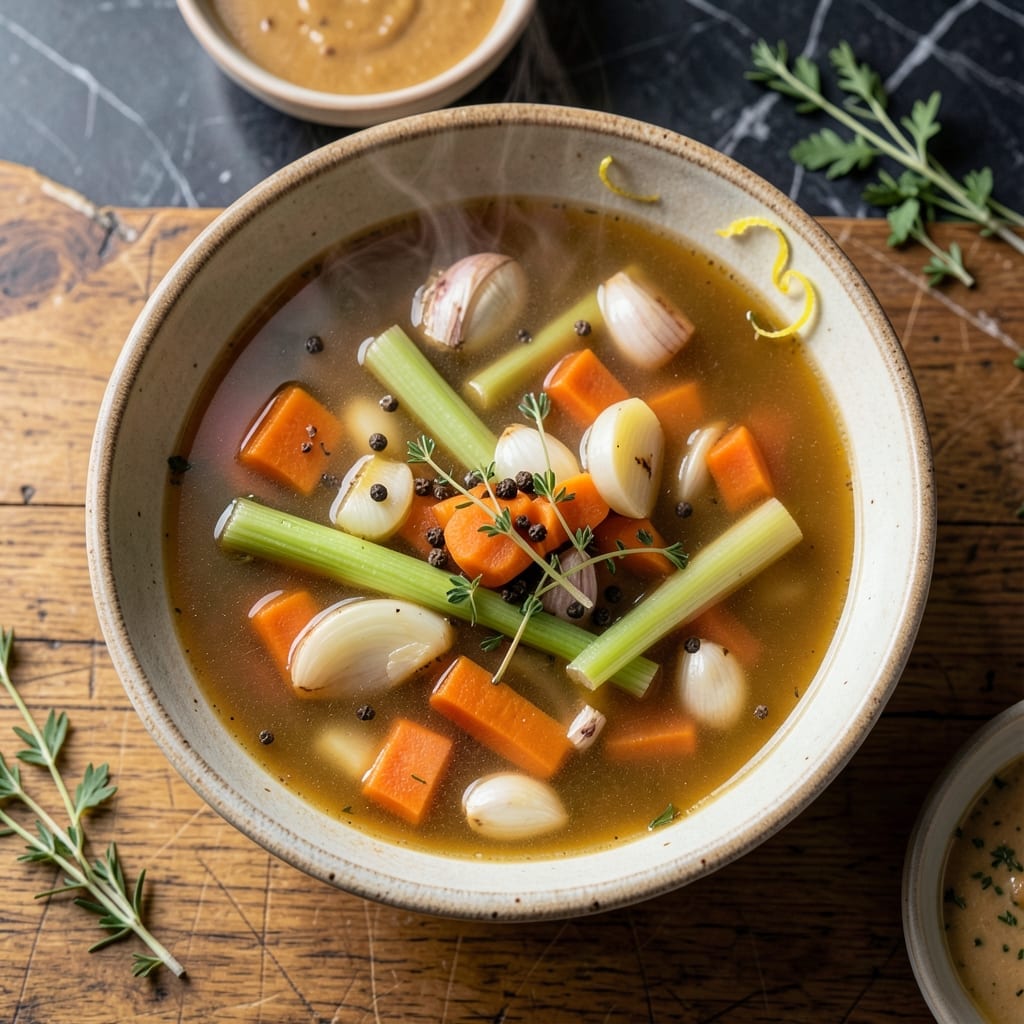
This chicken stock recipe creates a rich foundation for soups, sauces, and countless dishes with minimal effort.
Slow simmering bones and vegetables extracts deep, savory flavor that elevates any recipe calling for stock.
Ingredients for Soup Stock Recipe Chicken
Rich, savory depth starts with bones, vegetables, and time. Nothing complicated here.
| Ingredient | Amount | Notes |
|---|---|---|
| Chicken Bones 🍗 | 2 lb | Necks, backs, or carcasses preferred |
| Cold Water 💧 | 4 cups | Enough to cover all ingredients |
| Yellow Onion 🧅 | 1 whole | Quartered, skin on for color |
| Carrots 🥕 | 2 whole | Cut into large chunks |
| Celery Stalks 🥬 | 2 whole | Cut into large pieces |
| Garlic Cloves 🧄 | 4 cloves | Unpeeled, smashed lightly |
| Bay Leaves 🍃 | 2 whole | Dried, for aromatic depth |
| Black Peppercorns 🌶️ | 1 tsp | Whole, not pre-ground |
| Fresh Parsley Stems 🌿 | ½ cup | Optional but recommended |
| Fresh Thyme Sprigs 🌿 | 4 whole | Optional for extra flavor |
| Apple Cider Vinegar 🍏 | 1 tbsp | Or white vinegar for acidity |
| Kosher Salt 🧂 | 1 tsp | Adjust to taste after straining |
[recipe_ingredient_scaler]
The bones are everything here. Chicken backs and necks give the most gelatinous result, but leftover carcasses from roasted chickens work perfectly. Ask your butcher for free bones—most will give them away. If using raw bones, roast them first at 400°F for 20 minutes for deeper color and flavor. Whole Foods and local butchers usually have what you need.
No chicken bones? Beef or turkey bones work in a pinch (adjust simmering time). Short on fresh herbs? Dried thyme or parsley at half the amount does the trick. The vinegar isn’t just for acidity—it helps extract calcium from the bones. If you’re out, a squeeze of lemon works too. Don’t skip the onion skins—they add that golden color.
Stock keeps 5 days in the fridge, but it’s best used within 3 days for peak flavor. Freeze for up to 6 months in airtight containers. Leave the fat—it’ll solidify at the top, making it easy to skim off before using. Pro tip: freeze in ice cube trays for easy portioning.
Why You’ll Love This Recipe
- Set and Forget: I toss the bones and veggies in a pot, cover with cold water, and walk away for hours—no stirring, no fuss.
- Rich, Clean Taste: The slow simmer pulls every bit of flavor from the chicken and celery, giving me a stock that’s deep but never bitter.
- Meal Prep Hero: I make a big batch and freeze it in jars, so soups, risottos, and gravies taste homemade in minutes.
- Pennywise Flavor: Those leftover chicken bones and wilting carrots? They turn into liquid gold instead of going to waste.
Step-by-Step Instructions for Chicken Stock
Master this foundational technique and you’ll have a rich, flavorful base for soups and sauces.
Step 1: Prepare and Par-Cook the Chicken Bones
Place the 2 lb chicken bones in a large stockpot. Add the 4 cups cold water—this should just cover the bones. Bring to a boil over medium-high heat, then reduce to a simmer for 5 minutes.
This initial blanching step removes impurities that would otherwise cloud your stock. You’ll see foam rise to the surface as the proteins coagulate. Skim this off with a fine mesh strainer or spoon for a cleaner final product.
Drain the bones in a colander and rinse them under cold water to remove any remaining residue. Give the stockpot a quick rinse as well to eliminate any scum buildup.
Step 2: Sauté the Aromatic Vegetables
Return the cleaned bones to the stockpot. Add the 1 whole yellow onion (quartered with skin on), 2 whole carrots (cut into large chunks), 2 whole celery stalks (cut into large pieces), and 4 cloves garlic cloves (unpeeled and smashed).
Dry-heat the vegetables with the bones over medium heat for 5 minutes, stirring occasionally. The residual moisture will steam the vegetables slightly, deepening their flavor before the long simmer.
This step develops the base flavors that will infuse your stock. The onion skin adds a beautiful golden color to the finished product.
Step 3: Add Remaining Ingredients and Simmer
Add the 2 whole bay leaves, 1 tsp black peppercorns, 0.5 cup fresh parsley stems, 4 whole fresh thyme sprigs, 1 tbsp apple cider vinegar, and 1 tsp kosher salt to the pot.
Pour in fresh cold water to cover all ingredients by about 2 inches. Bring to a boil over high heat, then immediately reduce to a gentle simmer. A proper simmer should produce small bubbles that occasionally break the surface.
Partially cover the pot and maintain this simmer for 3-4 hours. Skim off any foam that rises to the surface during the first 30 minutes of simmering. This ensures a clean, clear stock with maximum flavor extraction from the bones and vegetables.
Step 4: Strain and Finish
After simmering, carefully strain the stock through a fine-mesh sieve into a large bowl or another clean pot. Press gently on the solids with a spoon to extract all the liquid, but don’t force it—this can make your stock cloudy.
Discard all the solids. Taste the stock and adjust seasoning with additional kosher salt if needed. For immediate use, let the stock settle for 10 minutes so any remaining impurities can sink to the bottom.
For storage, cool the stock completely before refrigerating (up to 5 days) or freezing (up to 3 months). The fat will solidify on the surface when chilled, making it easy to skim off for a leaner stock if desired.
Pro Tips For Making Soup Stock Recipe Chicken
- Start with Cold Water: Always cover the chicken bones with cold water and bring to a simmer slowly—it draws out impurities gradually for a clearer, cleaner stock. I learned this the hard way after ending up with cloudy broth every time I used hot water.
- Roast the Bones First: Toss the chicken bones in a 400°F oven for 20-30 minutes until golden—this adds a deep, caramelized flavor that raw bones just can’t deliver.
- Skim the Foam: As the stock simmers, skim off the frothy impurities that rise to the top with a fine-mesh strainer or spoon. Skip this and you’ll end up with a bitter, murky stock.
- Use the Veg Scraps: Save onion skins, carrot peels, and celery ends in the freezer—toss them in with the whole veggies for extra depth without extra cost. Sounds weird, but it works.
Perfect Pairings for soup stock recipe chicken
Soup Pairings
This rich stock forms the base for countless soups. Use it for a classic chicken noodle soup with egg noodles and shredded chicken. I also love it in creamy tomato soup where the depth enhances the sweet acidity perfectly. 🥣
Sauce Foundations
Reduce the stock by half to create a concentrated base for pan sauces after roasting chicken. It’s also perfect for risotto—add ½ cup at a time during cooking. The gelatin from the bones gives sauces a luxurious mouthfeel.
Grain Cooking
Use this stock instead of water when cooking rice, quinoa, or farro. For rice, use a 1:1 ratio of stock to grain. The result is infinitely more flavorful than plain water cooking.
Braising Liquid
This stock excels as a braising liquid for chicken thighs or vegetables. Combine with 1 cup white wine and 2 tbsp tomato paste for a French-inspired braise. The stock’s collagen breaks down into gelatin during cooking.
Beverage Pairings
A light Sauvignon Blanc with its crisp acidity complements the stock’s richness. For non-alcoholic options, sparkling water with lemon cleanses the palate. I find the stock’s umami pairs beautifully with citrus notes. ✨
Nutrition Facts
Frequently Asked Questions
How long should I simmer the bones?
Simmer for 3-4 hours for maximum flavor extraction. Longer cooking breaks down collagen, creating a richer, more gelatinous stock. Avoid boiling, as this can make your stock cloudy.
Can I use a slow cooker instead?
Yes! Cook on low for 8-10 hours or high for 4-6 hours. A slow cooker makes the process hands-off while still delivering excellent results. Just skim foam during the first hour.
Why did my stock turn out cloudy?
Cloudiness usually comes from boiling too hard or not skimming impurities. Start with cold water, keep at a gentle simmer, and skim foam regularly. A fine-mesh strainer helps too.
Is it okay to skip the vinegar?
Yes, but it helps extract calcium from bones. If omitted, add a squeeze of lemon for similar benefits. The acidity brightens the flavor subtly.

Trained in classic French technique but raised on slow-cooked ribs and spicy rubs, she blends culinary skill with smoke and soul.
- Recipe for Boneless Pork Chops in Cast Iron Skillet: Sear and Baste to Juicy Perfection - October 3, 2026
- Recipe for Boneless Cross Rib Roast: Slow-Roasted Beef with Herb Crust - October 3, 2026
- Hamburgers in Sauce Recipe Crock Pot: Slow-Cooked Savory Delight - October 3, 2026