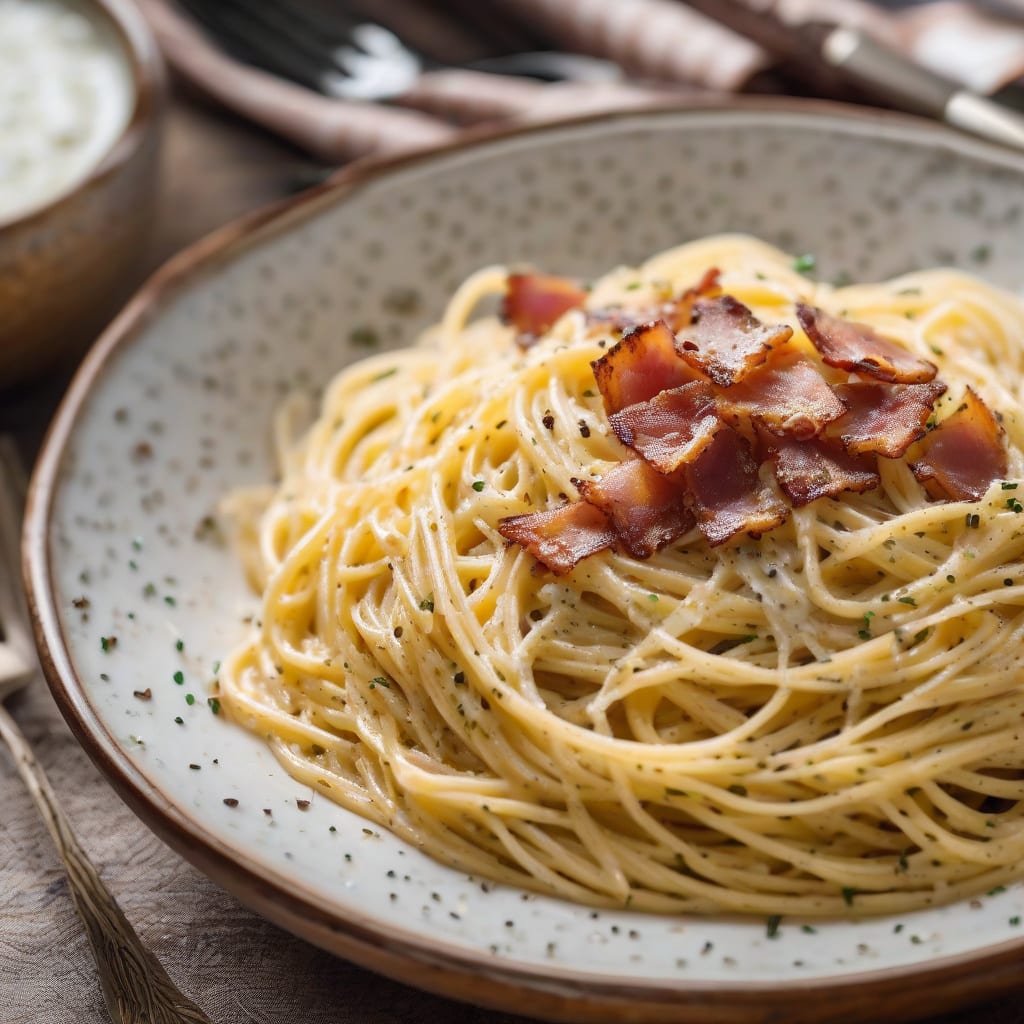
Spaghetti carbonara is a timeless Italian classic that never fails to impress. 🔥 This rich and creamy dish combines tender spaghetti, crispy bacon, and a silky egg sauce, all elevated by the sharpness of parmesan cheese and a generous crack of black pepper.
The secret to a great carbonara lies in its simplicity. By using just a few high-quality ingredients and mastering a straightforward technique, you can create a dish that’s both comforting and sophisticated. The key is to cook the pasta al dente and combine it with the bacon and egg mixture at just the right moment.
What you’ll end up with is a creamy, indulgent pasta dish that’s perfect for a special occasion or a cozy night in. With this recipe, you’ll be able to achieve that perfect balance of flavors and textures that makes carbonara a beloved classic. Serve immediately and enjoy!
Ingredients for Spaghetti Carbonara
Gather these simple ingredients for a rich, creamy carbonara that never fails.
| Ingredient | Amount | Notes |
|---|---|---|
| Spaghetti 🍝 | 12 oz | High-quality, Italian-made preferred |
| Thick-Cut Bacon 🥓 | 6 slices | Preferably applewood-smoked or thick-cut |
| Large Eggs 🥚 | 3 whole | Fresh, large eggs for best results |
| Parmesan Cheese 🧀 | 1 cup | Freshly grated Parmigiano-Reggiano |
| Black Pepper 🌶️ | 1 tsp | Freshly ground, coarsely cracked |
| Kosher Salt 🧂 | ½ tsp | For pasta water, adjust to taste |
| Extra-Virgin Olive Oil 🫒 | 2 tbsp | For finishing, if needed |
The bacon makes or breaks this dish. Thick-cut, smoked bacon gives that perfect balance of crunch and smokiness. Most grocery stores carry it, but butcher shops often have better options. For the parmesan, Parmigiano-Reggiano is non-negotiable—don’t even think about the pre-shredded stuff.
No spaghetti? Linguine or fettuccine work as substitutes, though spaghetti is traditional. Want to get fancy? Guanciale instead of bacon is amazing, but it’s a specialty item. The eggs should be fresh—room temperature helps when mixing with hot pasta. If you’re worried about undercooked eggs, temper them slowly with a bit of hot pasta water before adding to the rest.
Leftover carbonara? Reheat gently over low heat, adding a splash of pasta water if it’s too thick. Keeps for 1-2 days in the fridge, though it’s best fresh. Don’t freeze—the egg sauce doesn’t recover well. If you have leftover parmesan, wrap it tightly and store in the fridge for up to 2 months.
Step-by-Step Instructions for Spaghetti Carbonara
Here’s the method that delivers that perfect creamy, bacon-rich carbonara every single time.
🍳 Step 1: Cook the Bacon Until Crispy
Cut the 6 slices Thick-Cut Bacon into ½-inch pieces and cook in a large skillet over medium heat. I like to start with cold bacon so the fat renders slowly. Cook for 8-10 minutes, stirring occasionally, until the bacon becomes golden brown and crispy. You’ll know it’s ready when the fat has rendered out and the pieces are crunchy.
Remove the cooked bacon from the skillet with a slotted spoon and transfer to a paper towel-lined plate. Leave the rendered fat in the pan as it will be the base of your sauce. If you’re worried about the fat being too greasy, you can drain off some of it, but I find that it adds to the richness of the dish.
👨🍳 Step 2: Prepare the Egg and Cheese Mixture
In a medium bowl, whisk together the 3 whole Large Eggs, 1 cup Parmesan Cheese, and a generous amount of 1 tsp Black Pepper. The mixture should be smooth and well combined. I like to use a fork to whisk the eggs as it incorporates air better than a whisk.
Make sure to use high-quality Parmesan Cheese for the best flavor. The eggs should be at room temperature to prevent them from scrambling when mixed with the hot pasta.
🍳 Step 3: Cook the Spaghetti
Bring a large pot of water to a boil and add 0.5 tsp Kosher Salt to the water. The water should taste like seawater, so don’t be shy with the salt. Cook the 12 oz Spaghetti until it’s 1 minute shy of al dente. Reserve 1 cup of pasta water before draining the spaghetti.
The reserved pasta water is crucial for achieving the right sauce consistency. If the sauce becomes too thick, you can thin it out with some of the reserved water.
🥘 Step 4: Combine Everything
Add the drained spaghetti to the skillet with the reserved bacon fat. Toss to coat the pasta in the fat over low heat. Then, add the egg and cheese mixture to the pasta and toss everything together until the eggs are cooked to your liking. If the mixture seems too thick, add some of the reserved pasta water 1 tablespoon at a time.
Return the cooked 6 slices Thick-Cut Bacon to the pasta and toss everything together. The heat from the pasta and bacon fat will cook the eggs to a creamy consistency. Season with additional Black Pepper if needed.
🍽️ Step 5: Serve Immediately
Transfer the carbonara to individual plates and serve immediately. You can drizzle a small amount of 2 tbsp Extra-Virgin Olive Oil on top if you like, though it’s not necessary. The dish should be creamy, rich, and full of bacon flavor. Enjoy your perfectly cooked spaghetti carbonara!
Pro Tips for Making spaghetti carbonara
- **Temper Eggs Slowly**: When combining eggs with hot pasta, do it off the heat and slowly pour the hot pasta water into the egg mixture to temper it, preventing scrambled eggs. I learned this the hard way—after ruining a few batches, I finally got it right.
- **Don’t Overcook Bacon**: Cook the thick-cut bacon until it’s crispy but not burnt, as it will continue to cook a bit after you remove it from the heat. This ensures a perfect balance of crunch and chew.
- **Reserve Pasta Water**: Save a generous amount of pasta water before draining the spaghetti, as you’ll need it to achieve the right creamy consistency when mixing with the egg and bacon mixture. Sounds weird, but it works: the starch in the water helps bind everything together.
- **Grind Pepper Fresh**: Use a pepper mill to grind black pepper directly over the dish just before serving, as pre-ground pepper can’t match the flavor and aroma of freshly ground pepper. My grandmother swore by this, and she was right: it makes a real difference in the overall flavor profile.
Common Mistakes When Making This Dish
The most common mistake in making carbonara is overcooking the eggs, which turns them into scrambled eggs rather than a silky sauce. To avoid this, remove the pasta from the heat before adding the egg mixture, and stir constantly using a gentle tossing motion. The residual heat will cook the eggs to a creamy consistency without scrambling them.
Another frequent error is not reserving enough pasta water. The starchy water is crucial for achieving the right sauce consistency. Reserve at least 1 cup of pasta water before draining, and add it gradually as needed to thin out the sauce. This helps create a smooth, emulsified sauce that coats the pasta evenly.
Using low-quality ingredients can also ruin an otherwise great carbonara. Invest in thick-cut, smoked bacon or guanciale for the best flavor. For the cheese, only use freshly grated Parmigiano-Reggiano—the pre-shredded stuff won’t melt properly and lacks depth. Fresh, large eggs at room temperature make a big difference too.
Overcooking the pasta is another pitfall. Cook your spaghetti until it’s 1 minute shy of al dente, then finish cooking it with the sauce. This ensures the pasta retains its texture and doesn’t become mushy when mixed with the egg mixture. The slight firmness in the center helps the pasta hold onto the sauce better.
Finally, be careful not to drain the bacon fat completely. Leaving some of that rendered fat in the pan is essential for creating a rich, flavorful sauce. The fat helps emulsify the egg mixture with the pasta water, resulting in a creamy, well-coated dish. Just be sure to use it in moderation to avoid a greasy carbonara.
By avoiding these common mistakes, you’ll be able to create a creamy, indulgent carbonara that’s sure to impress. The key is to keep things simple, use high-quality ingredients, and pay attention to the details. With a bit of practice, you’ll master this classic Italian dish and be able to enjoy it whenever you want. 🔥
Tips & Tricks for Perfect Spaghetti Carbonara
A few simple techniques make all the difference in creating this Italian classic.
The Bacon Factor: Cooking the 6 slices of bacon slowly over medium heat for 8-10 minutes is crucial. This renders the fat properly, creating that rich, velvety sauce we love in carbonara. Stir occasionally to prevent burning, and watch for that perfect golden brown color. 🔥
Temperature Control: Using room temperature eggs is essential. Cold eggs can scramble when mixed with hot pasta, ruining the creamy texture. I like to take mine out 30 minutes before starting to cook. Trust me, it makes a difference!
Pasta Timing: Cooking the 12 oz of spaghetti until it’s 1 minute shy of al dente is key. This ensures it won’t be mushy when you finish cooking it with the egg mixture. Reserve that 1 cup of pasta water – it’s your secret ingredient for achieving perfect sauce consistency.
Finishing Touches: When combining everything in Step 4, work quickly over low heat. Add the reserved pasta water 1 tablespoon at a time until you reach your desired creaminess. The residual heat will cook the eggs just enough to create that signature silky texture without scrambling them.
Nutrition Facts

Trained in classic French technique but raised on slow-cooked ribs and spicy rubs, she blends culinary skill with smoke and soul.
- Recipe for Boneless Pork Chops in Cast Iron Skillet: Sear and Baste to Juicy Perfection - October 3, 2026
- Recipe for Boneless Cross Rib Roast: Slow-Roasted Beef with Herb Crust - October 3, 2026
- Hamburgers in Sauce Recipe Crock Pot: Slow-Cooked Savory Delight - October 3, 2026