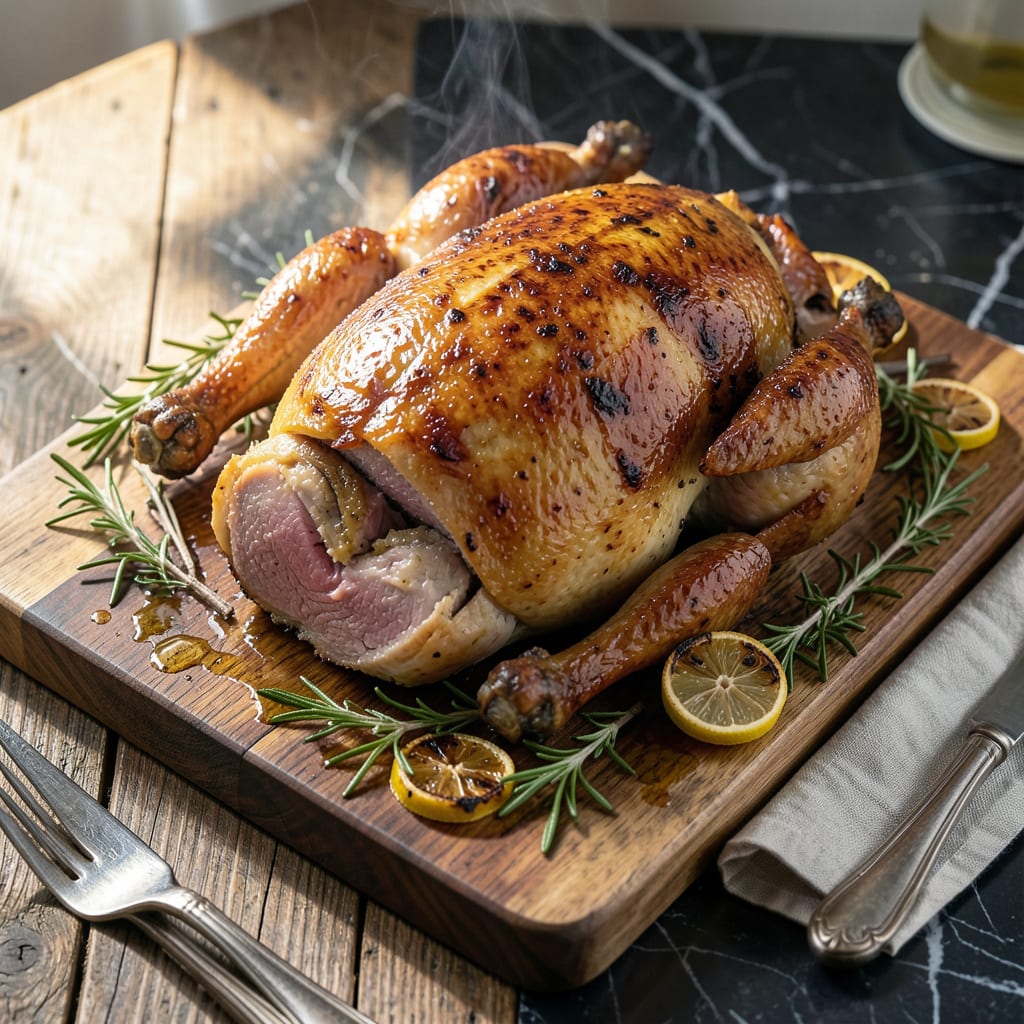
This method transforms turkey with smoky char and herb-infused juiciness on the grill. Spatchcocking ensures even cooking and crispy skin.
I developed this approach to achieve perfectly grilled turkey with professional results. The technique delivers consistent flavor and texture every time.
Ingredients for Spatchcock Turkey Grill
A whole turkey plus fresh herbs create that smoky, herb-infused grilled perfection you crave.
| Ingredient | Amount | Notes |
|---|---|---|
| Whole Turkey 🦃 | 12 lb | Fresh or thawed, giblets removed |
| Olive Oil 🫒 | ¼ cup | Extra-virgin for best results |
| Kosher Salt 🧂 | 2 tbsp | Diamond Crystal preferred |
| Black Pepper 🌶️ | 1 tbsp | Freshly cracked for maximum flavor |
| Fresh Rosemary 🌿 | 3 tbsp | Finely chopped, stems discarded |
| Fresh Thyme 🍃 | 3 tbsp | Leaves stripped from stems |
| Fresh Sage 🌿 | 2 tbsp | Chopped, for herb rub |
| Garlic Cloves 🧄 | 6 cloves | Minced for herb paste |
| Lemon 🍋 | 1 whole | Zested and juiced |
| Dijon Mustard 🟡 | 2 tbsp | Smooth, for binding rub |
| Unsalted Butter 🧈 | ½ cup | Softened for basting |
| Apple Wood Chips 🪵 | 2 cups | Soaked in water for smoking |
[recipe_ingredient_scaler]
The turkey is the centerpiece. Opt for a fresh, high-quality bird around 12 pounds—organic or free-range if available. Spatchcocking (butterflying) is essential for even cooking; use sharp kitchen shears to remove the backbone. Most Whole Foods or local butchers will do this for you if you ask. Ensure the skin is intact and dry before seasoning for maximum crispiness.
No fresh herbs? Dried herbs at one-third the amount work, though fresh delivers superior flavor. Short on time? Pre-minced garlic from a jar is acceptable (though fresh is better). For the wood chips, hickory or cherry can substitute for apple wood. The Dijon mustard in the rub can be swapped for whole-grain mustard for a rustic texture.
Leftovers keep well—store in the fridge for up to 4-5 days or freeze for 3 months. The herb butter can be made a day ahead and stored in the fridge. Soak wood chips for at least 30 minutes before grilling for optimal smoke.
Why You’ll Love This Recipe
- No-Fuss Method: I butterfly the turkey once and it lays flat on the grill—no flipping, no stress.
- Herb-Infused Crisp: The olive oil and fresh rosemary make the skin so crispy I sneak bites before serving.
- Feeds Everyone: One bird, one grill, and suddenly I’ve got a centerpiece for Sunday dinner or game day.
- Leftovers for Days: Honestly, I make sandwiches with the extras for three days straight.
Step-by-Step Instructions for Spatchcock Turkey on the Grill
Master the technique for evenly cooked turkey with crispy skin and smoky depth.
Step 1: Spatchcock and Season the Turkey
Place the whole turkey breast-side down on a sturdy cutting board. Using kitchen shears, cut along both sides of the backbone from neck to tail, then remove it completely. Flip the turkey over and press down firmly on the breastbone until it cracks—this flattens the bird for even cooking.
In a bowl, combine the olive oil, kosher salt, black pepper, fresh rosemary, fresh thyme, fresh sage, minced garlic cloves, lemon zest, lemon juice, and dijon mustard. Rub this mixture all over the turkey, including under the skin. Let it sit at room temperature for 30 minutes while you prepare the grill.
Step 2: Set Up the Grill for Indirect Heat
Soak the apple wood chips in water for at least 30 minutes, then drain. Prepare a charcoal or gas grill for indirect heat: for charcoal, bank the coals to one side; for gas, preheat all burners then turn off one side. The temperature should stabilize at 350°F.
Add the soaked apple wood chips directly to the coals or place them in a smoker box on the gas grill. You want a steady stream of thin, blue smoke—white smoke indicates the chips aren’t burning properly. Place a drip pan under the grate where the turkey will go to catch juices and prevent flare-ups.
Step 3: Grill the Turkey with Indirect Heat
Place the turkey skin-side up on the cool side of the grill. Cover and cook for 1 hour, maintaining the temperature between 325-350°F. Check the coals or gas as needed to keep the heat steady.
After the first hour, baste the turkey with the softened unsalted butter and rotate it 180 degrees for even browning. Continue cooking, basting every 30 minutes, until the thickest part of the thigh reaches 165°F on an instant-read thermometer—this should take about 2 to 2.5 hours total, depending on your grill.
Step 4: Rest and Carve
Carefully transfer the turkey to a cutting board and tent loosely with foil. Let it rest for 30 minutes—this allows the juices to redistribute, ensuring moist, flavorful meat. The internal temperature will rise a few degrees during this time.
Carve the turkey by removing the legs and thighs first, then slicing the breast against the grain. Serve immediately with the accumulated juices from the drip pan for extra flavor.
Pro Tips For Making Spatchcock Turkey Grill
- Dry the Skin: Pat the turkey completely dry before seasoning—I learned this the hard way after my first soggy-skinned bird. The drier the skin, the crispier it gets on the grill.
- Cut the Backbone: Use kitchen shears to remove the backbone cleanly, and save it for stock. This flattens the turkey so it cooks evenly without hot spots.
- Skip Cold Turkey: Let the spatchcocked turkey sit at room temperature for 30-45 minutes before grilling. Cold meat seizes up and cooks unevenly—been there, regretted that.
- Use Rosemary Sprigs: Tuck fresh rosemary sprigs under the skin before grilling for maximum flavor. Sounds small, but it actually changes the outcome more than just sprinkling herbs on top.
Troubleshooting spatchcock turkey grill
Uneven Cooking Issues
If one side browns faster, rotate the turkey 180 degrees every 30-45 minutes. Spatchcocking should prevent this, but grills have hot spots. I always mark the turkey’s starting position with a grill-safe marker to track rotation. 🌡️
Dry or Tough Meat
This usually means the grill ran too hot or the bird wasn’t rested properly. Check your thermometer—325-350°F is the sweet spot. If the skin browns too quickly, tent with foil and reduce heat. I learned this the hard way at my first BBQ competition.
Smoke Problems
White smoke means your wood chips aren’t burning properly. Soak them for 30 minutes and use a chimney starter for charcoal. You want thin, blue smoke—that’s the sign of perfect combustion. Apple wood gives that sweet, mellow flavor I love.
Sticking to Grates
Clean and oil your grates thoroughly before cooking. If the turkey sticks, don’t force it—wait for it to release naturally. I use a grill brush and high-smoke-point oil like avocado oil. The herb rub helps create a natural non-stick surface too.
Undercooked Dark Meat
Always check the thickest part of the thigh, not just the breast. It should reach 165°F internally. If the breast finishes first, move the turkey so the dark meat is closer to the heat source. My pitmaster friend taught me this trick years ago.
Flare-Ups
Fat dripping onto coals causes flare-ups. Keep a spray bottle of water nearby for emergencies. The drip pan catches most of it, but I always keep tongs ready to move coals if needed. Safety first, flavor second. 🔥

Trained in classic French technique but raised on slow-cooked ribs and spicy rubs, she blends culinary skill with smoke and soul.
- Recipe for Boneless Pork Chops in Cast Iron Skillet: Sear and Baste to Juicy Perfection - October 3, 2026
- Recipe for Boneless Cross Rib Roast: Slow-Roasted Beef with Herb Crust - October 3, 2026
- Hamburgers in Sauce Recipe Crock Pot: Slow-Cooked Savory Delight - October 3, 2026